

GUMMI guide
What Gummi manufactures and what sets it apart
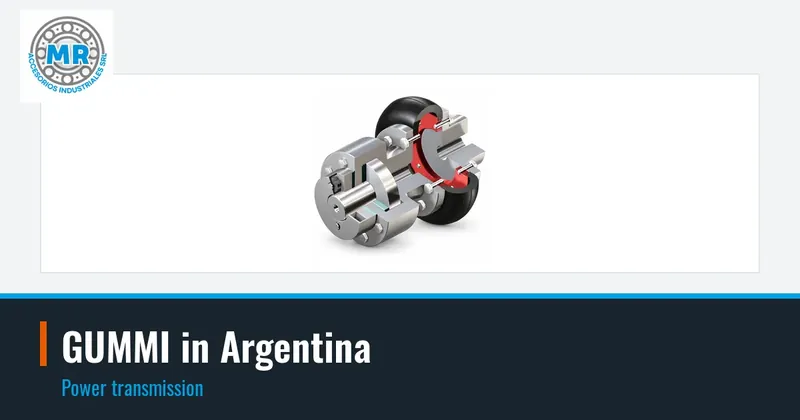
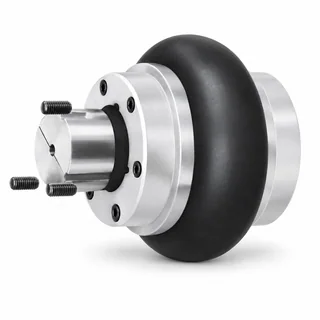
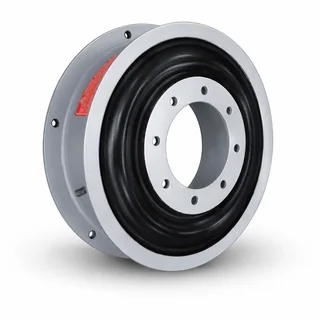
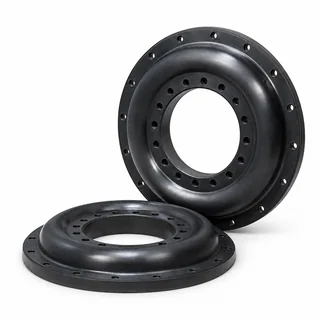
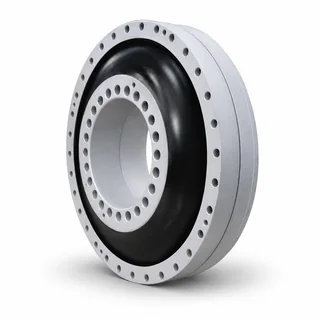
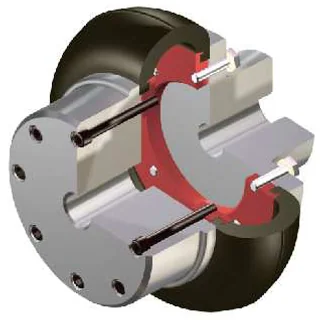
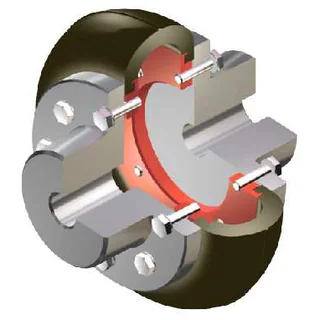
Gummi manufactures elastic couplings for power transmission. These components join two shafts and absorb angular, radial and axial misalignments, as well as dampen vibrations and torsional shocks. The elastic element, generally made of rubber, allows smooth and quiet operation, protecting the connected equipment.
The brand stands out for offering robust and easy-to-mount couplings, suitable for a wide range of industrial applications. Its modular design allows configurations with integral hub or with spacer, adapting to different maintenance and space requirements.
Gummi lines sold by MR
At MR Accesorios Industriales we sell the Gummi couplings line within the Power transmission category.
We work with the A series of elastic couplings, which includes configurations with two normal hubs (CN), with integral hub (CI), with spacer (ES) and other variants. Each reference is identified with a unique code that you can search directly on our site to see technical data sheet and photo.
Main Gummi series
Gummi's main series is the A Series, which covers elastic couplings of different sizes and configurations. Below we detail the most common variants.
A Series with two normal hubs (CN)
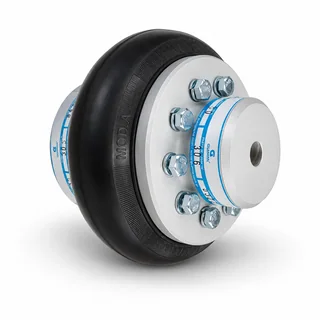
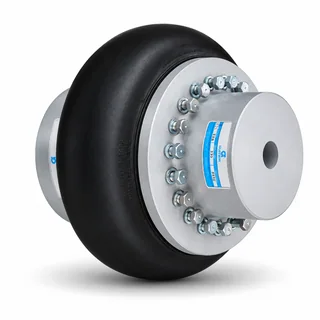
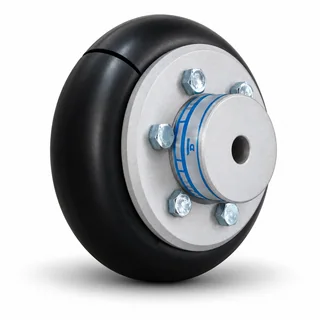
The Gummi Type A elastic coupling with two normal hubs (CN) is the base model. It joins two shafts through an elastic rubber center that absorbs misalignments and vibrations. It is used in pumps, fans, compressors and conveyors. The code consists of the letter A and a number indicating the size, for example A-20 and A-25.
A Series CI (integral hub)
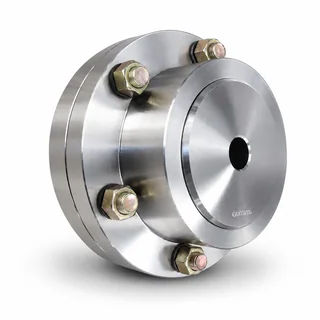
The CI configuration has a hub machined in a single piece, which provides rigidity and simplifies mounting. It is ideal for applications where a compact and resistant coupling is required. Examples: A-20 CI and A-30 CI.
A Series with spacer (ES)
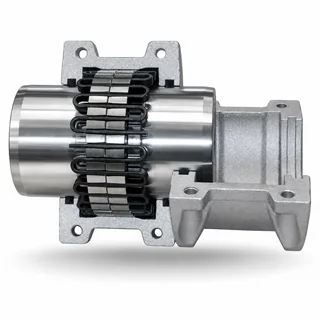
Couplings with spacer allow removing the pump rotor without moving the motor or the piping. They are typical in back-pull-out pumps. The code includes the size designation and the spacer length in millimeters, for example A-20/25 ES 100.
How to read a Gummi code
The designation of a Gummi coupling follows a logical structure that indicates the type, size and configuration. Understanding it allows you to quickly identify the product and verify its compatibility.
Example: A-20
The code A-20 is read as: A indicates the elastic couplings line; 20 is the coupling size. The number is not a direct diameter, but a code that correlates with the nominal torque and maximum bore. To know if it works, you must consult the technical table of the model.
Example: A-30 CI
In A-30 CI, A-30 is the coupling size and CI indicates integral hub. This configuration allows a larger maximum bore than the standard, for example 44 mm for the A-30 CI.
Example: A-20/25 ES 100
The code A-20/25 ES 100 is broken down as follows: A-20/25 is the size designation of the model with spacer (it is not a range of shaft diameters; the bore is confirmed in the technical table); ES means it has a spacer; 100 is the spacer length in millimeters. This format is typical in back-pull-out pumps.
Frequent Gummi prefixes and suffixes
Gummi codes use suffixes to indicate special configurations. The most common are:
CI: Integral Hub. The hub is a single piece and allows a larger bore than the normal hub of the same size, which gives greater rigidity and facilitates mounting.
ES: Spacer. Indicates that the coupling includes a spacer of a determined length, useful for maintenance without disassembling equipment.
Numbers after ES: Spacer length in millimeters (for example, 75, 100, 140, 180).
Applications by industry in Argentina
Gummi couplings are used in numerous industries in Argentina. Below are some examples of application by sector.
Metallurgical
In the metallurgical industry, Gummi couplings are used in roller tables, conveyors, pumps, fans and auxiliary drives where impact and vibration absorption is required. The integral hub configuration is practical when a single-piece hub is needed.
Agricultural
In agriculture, elastic couplings are used in irrigation pumps, augers and grain conveyors. The ability to compensate misalignments is key in mobile equipment or equipment installed on bases that are not perfectly rigid.
Naval
In naval applications, Gummi couplings are used in bilge pumps, cooling systems and auxiliary machinery. Resistance to humidity and vibration absorption are important in marine environments.
Oil
In the oil industry, couplings are installed in transfer pumps, compressors and auxiliary process equipment. The spacer configuration facilitates pump maintenance.
Food
In food plants, Gummi couplings are used in sanitary pumps, mixers and conveyors. In these environments it is advisable to verify that the elastic element compound is suitable for the washing and cleaning environment.
Mining
In mining, elastic couplings are applied in conveyor belts, pumps and fans. The ability to absorb torsional shocks protects equipment under variable loads.
Paper
In the paper industry, Gummi couplings are used in pulp pumps, agitators and fans. Vibration absorption reduces bearing wear.
Cement
In cement plants, couplings are installed in fans, pumps and conveyors. Robustness and the ability to compensate misalignments are critical in dusty environments.
Energy
In power generation, Gummi couplings are used in feed pumps, fans and auxiliary systems. Low maintenance is a key requirement.
Automotive
In the automotive industry, elastic couplings are used in test benches, line conveyors and pumping systems. Vibration absorption protects connected equipment.
Plastics
In the plastics industry, Gummi couplings are used in extruders, injection molding machines and cooling systems. The ability to absorb irregular torsions protects screws and motors.
Refrigeration
In refrigeration plants, couplings are installed in compressors, brine pumps and conveyors. Vibration absorption is important, and the elastic element compound must be suitable for the working temperature.
Sugar
In the sugar industry, Gummi couplings are used in juice pumps, fans and conveyors. Robustness and the ability to absorb variable loads are essential during the harvest.
How to choose the right Gummi coupling
To select the appropriate Gummi coupling, consider the following criteria:
Torque and power: verify that the coupling supports the nominal and maximum torque of the application. The size (number in the code) correlates with torque capacity.
Shaft diameters: the maximum bore of the hub must be greater than or equal to the shaft diameter. In configurations with spacer, confirm the bore in the technical table of the model (for example, A-20/25).
Rotation speed: make sure the coupling is balanced for the working speed. Elastic couplings usually allow high RPM, but the limit must be verified.
Misalignments: evaluate the expected angular, radial and axial misalignment. Gummi couplings compensate moderate misalignments, but an excess reduces service life.
Environment: consider temperature, humidity, presence of chemicals or dust. The rubber elastic element may require special compounds for aggressive environments.
Maintenance: if you need to disassemble the equipment without moving the pump, choose the configuration with spacer (ES).
Equivalences and interchangeability
Gummi couplings may have equivalents in other brands, but they are not always directly interchangeable. It is important to compare the key dimensions: hub diameter, maximum bore, total length and nominal torque.
If you have a coupling from another brand and want to replace it with a Gummi one, send us the code or the measurements. Our technical team can suggest the equivalent model from the A series.
Frequent mistakes when replacing or buying Gummi
Choosing only by the number: the number in the code (for example, 20 in A-20) is not a diameter or a direct torque. Always verify the technical table.
Ignoring the configuration: a standard A-20 is not the same as an A-20 CI or an A-20/25 ES. The configuration affects mounting and maintenance.
Not considering the maximum bore: if the shaft is larger than the maximum bore of the hub, you will not be able to mount the coupling without additional machining.
Underestimating misalignments: an excess of angular or radial misalignment can damage the elastic element and reduce service life.
Not verifying torque: an undersized coupling can fail prematurely. Calculate the application torque and apply an adequate service factor.
Mounting, lubrication and maintenance
Correct mounting is key for the service life of the Gummi coupling. Make sure the shafts are aligned within the permitted limits. Use gauges or laser to verify angular and radial alignment.
Gummi elastic couplings do not require lubrication in the elastic element, but the hubs may need adjustment with keyways and set screws. Periodically verify the tightening of the screws.
Inspect the rubber element for cracks, deformations or wear. If deterioration is observed, replace it to avoid failures. In environments with chemicals, clean the coupling regularly.
Why get a Gummi quote at MR Accesorios Industriales
MR Accesorios Industriales is official distributor of Gummi in Argentina. We work with power transmission and offer technical advice to choose the right coupling.
Our online catalog allows you to search by code, see photos and technical data sheets. If you have the code of a Gummi coupling or another brand, send it to us via WhatsApp or email and we will quote you shortly.
We are in Buenos Aires, Argentina, and we serve the whole country. You can also send us a photo of your current coupling to identify the appropriate replacement.
Frequently asked questions about GUMMI
- What is a Gummi coupling?
- A Gummi coupling is a power transmission component that joins two shafts and absorbs misalignments, vibrations and torsional shocks. It uses an elastic rubber element for smooth and quiet operation, protecting the connected equipment.
- How to read the code of a Gummi coupling?
- The code consists of the letter A (line), a number indicating the size (for example, 20, 25, 30) and optional suffixes such as CI (integral hub) or ES (spacer). In configurations with spacer, the ES abbreviation and the spacer length in millimeters are added, for example A-20/25 ES 100.
- What does CI mean in a Gummi coupling?
- CI means Integral Hub. It indicates that the coupling hub is machined in a single piece, which provides greater rigidity and simplifies mounting. It is common in applications requiring a compact and resistant coupling.
- What does ES mean in a Gummi coupling?
- ES means Spacer. It indicates that the coupling includes a spacer of a determined length (for example, 75, 100, 140 mm). This configuration allows removing the pump rotor without moving the motor or the piping, and is typical in back-pull-out pumps.
- How to choose the correct size of Gummi coupling?
- You must consider the application torque, the shaft diameters, the rotation speed and the expected misalignments. The number in the code (for example, 20 in A-20) correlates with the torque capacity and maximum bore; consult the technical table of the model.
- Do Gummi couplings require lubrication?
- No, the rubber elastic element does not require lubrication. However, the hubs may need adjustment with keyways and set screws. It is recommended to periodically inspect the tightening of the screws and the condition of the rubber.
- Can I replace a coupling from another brand with a Gummi one?
- Yes, in many cases it is possible. You must compare key dimensions such as hub diameter, maximum bore, total length and nominal torque. Send us the code or measurements of your current coupling and we will suggest the Gummi equivalent.
- Where to buy Gummi couplings in Argentina?
- You can get a quote for Gummi couplings at MR Accesorios Industriales, official distributor in Buenos Aires, Argentina. Search the code in our online catalog or send us your inquiry via WhatsApp or email with the code, measurement or photo of the part.
Updated September 29, 2026