
Blog
How to choose a Gummi coupling based on load, speed, environment, and mounting
Gummi couplings are selected based on load, speed, work environment, and mounting type. We explain how to identify them and what data to send for a quote.
Technical team at MR Accesorios Industriales · Updated on October 9, 2026
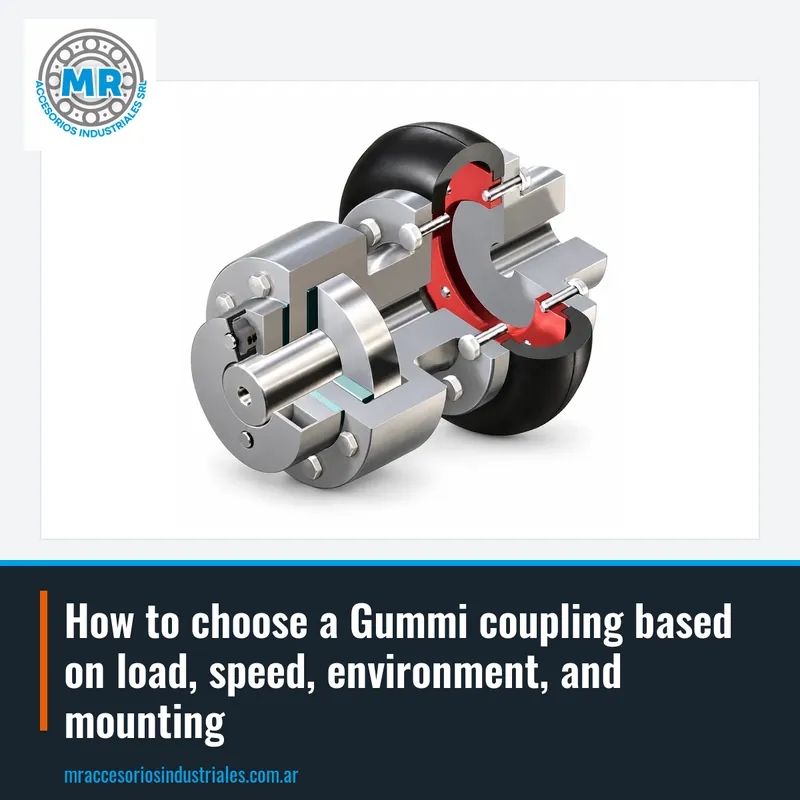
What is a Gummi coupling and what is it for?
A Gummi coupling is a transmission element that joins two shafts to transfer power and motion. Its design incorporates an elastic element that absorbs misalignments, vibrations, and small shocks. This protects bearings and other machine components. It is used in pumps, compressors, gearboxes, and industrial equipment in general.
The main function of the coupling is to compensate for angular, parallel, and axial misalignments between shafts. It also reduces the transmission of vibrations from one side of the coupling to the other. This extends the service life of the connected components. In Argentine industry, they are commonly seen in production lines, pumping systems, and road machinery.
Gummi couplings are distinguished by their robust construction and flexible rubber element. The elastic material allows some torsion and damping without losing torque transmission. Therefore, they are a practical option when there are variable loads or frequent starts. They are sold in different sizes and models according to shaft diameter and power to be transmitted.
How to identify a Gummi coupling by its code
Each Gummi coupling has a code engraved or printed on the body or on the elastic element. For example, A-20, A-50, and A-90 are codes from the Gummi line. It is always advisable to verify the exact code before ordering a replacement.
In addition to the code, it is useful to measure the outer diameter, total length, and bore diameter of each hub. You can also observe the type of elastic element: it may be a star, a bushing, or a rubber disc. This data helps confirm that the coupling is correct for the application. If the code is erased, a photo with a ruler next to it facilitates identification.
In many cases, the coupling comes with two metal hubs and an interchangeable elastic element. The code of the complete assembly may differ from that of the replacement element. Therefore, it is important to clarify whether the complete coupling or only the rubber is needed. At MR we help you identify the exact part with the information you send us.
Selection by load and torque
The load or torque to be transmitted is the first data to consider when choosing a Gummi coupling. Each model is designed to withstand a range of nominal and maximum torque. If the coupling is too small, the elastic element wears quickly or breaks. If it is too large, sensitivity is lost and unnecessary space is taken up.
To estimate torque, the motor power and rotation speed are needed. With these two values, torque is calculated in Newton-meters or kilogram-meters. Then a coupling is chosen whose nominal torque is equal to or greater than the calculated one. The service factor must also be considered according to the type of machine: centrifugal pumps, reciprocating compressors, or mills have different requirements.
It is always advisable to consult the manufacturer's selection table or ask for advice. At MR we quote the appropriate model according to your application data.
Rotation speed and vibrations
Rotation speed influences the choice of coupling because it affects balancing and centrifugal force. At higher speeds, it is more important that the coupling is well balanced and centered. Gummi couplings are designed to work over a wide range of speeds. However, each model has a maximum limit recommended by the manufacturer.
Vibrations are another key factor. The rubber elastic element dampens torsional vibrations and reduces noise. This is especially useful in equipment with sudden starts or pulsating loads. A rigid coupling would transmit these vibrations to the bearings and structure, shortening their service life.
If the machine shows excessive vibrations, it may be a sign of misalignment or an inadequate coupling. In such cases, it is advisable to check the mounting and verify that the elastic element is not damaged. A well-selected Gummi coupling helps maintain smooth operation. You can send us a video or a description of the problem for better guidance.
Work environment: temperature, humidity, and chemical agents
The environment where the coupling works conditions the choice of material for the elastic element. Standard rubber withstands moderate temperatures and dry environments. If oil, solvents, or high temperatures are present, a special compound may be required. In such cases, it is essential to indicate the working conditions at the time of quoting.
Humidity and water also affect coupling performance. Some elastomers degrade with prolonged contact with hot water or steam. In corrosive environments, metal hubs may need surface treatment or stainless steel. Therefore, it is always advisable to verify the environment before choosing.
If the coupling works outdoors, UV radiation and temperature changes must be considered. Rubber can harden or crack over time. Preventive maintenance that includes visual inspection of the elastic element helps avoid unexpected downtime. At MR we advise you on the best option according to your plant's environment.
Mounting and dismounting the Gummi coupling
Correct mounting of the Gummi coupling is essential for its durability. First, the shafts must be cleaned and checked for burrs or dents. Then each hub is mounted on its shaft, respecting the position indicated by the manufacturer. It is important not to force the coupling with direct blows on the elastic element.
The alignment between the two shafts must be verified with a dial indicator or a straightedge. Excessive misalignment causes premature wear of the elastic element and vibrations. Gummi couplings allow some misalignment, but always within specified limits. A neat mounting prevents failures and reduces maintenance costs.
For dismounting, the set screws or fixing bushings are loosened. If the hub is very tight, a mechanical puller can be used. Never heat the hub with a torch if the elastic element is nearby. At MR we guide you on the recommended practices for each Gummi coupling model.
Common mistakes when ordering or mounting a Gummi coupling
One of the most frequent mistakes is ordering the coupling only by the code without verifying the measurements. Sometimes the same code is used for versions with different bore or hub length. Therefore, it is advisable to measure the shaft diameter and keyway. It is also useful to know whether the coupling is star, spider, or jaw type.
Another common mistake is not considering the service factor when selecting the size. If the machine has load peaks or heavy starts, the coupling must be more robust. Using a coupling right at the limit can cause frequent breakage of the elastic element. On the other hand, an oversized coupling takes up more space than necessary.
In mounting, a typical mistake is not respecting the distance between hubs indicated by the manufacturer. If the hubs are too close or too far apart, the elastic element works poorly. Also, screws are often over-tightened, deforming the hub or damaging the thread. If in doubt, you can consult us and we will guide you through the correct procedure.
Frequently asked questions
How do I know which Gummi coupling my machine needs?
You need to know the code of the current coupling or, if you don't have it, the shaft measurements, the distance between them, and the motor power. With this data, we will quote the appropriate model.
What does the number in the Gummi coupling code mean?
The code identifies the model within the Gummi line, such as A-20, A-50, or A-90. To confirm the part, it is advisable to accompany it with the actual measurements of the shafts and the coupling.
Can I replace only the rubber elastic element?
Yes, in most Gummi couplings the elastic element is interchangeable. You only need the coupling code or the element measurements for us to quote the replacement.
Do Gummi couplings withstand misalignment between shafts?
Yes, they are designed to absorb angular, parallel, and axial misalignments within certain limits. Excessive misalignment reduces the service life of the elastic element.
How do I request a quote for a Gummi coupling?
You can send us via WhatsApp or email the coupling code, shaft measurements, or a photo of the part. We will respond promptly with the quote.
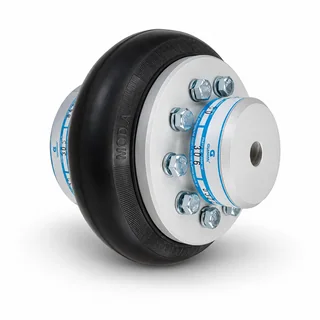
Products with photos in the catalogue
Keep reading
- GUMMI Couplings: Vibration Absorption and Reliable Power Transmission for Industry
GUMMI elastic couplings absorb vibrations and misalignments, protect machinery, and ensure reliable power transmission. Learn about their configurations and how to choose the right model.
- How to Read Gummi Codes: Designation Structure, Prefixes, Suffixes and Real Examples
Practical guide to understand Gummi coupling nomenclature. Decode codes and designations to identify the correct coupling for your application.
- Gummi Couplings: applications, selection and maintenance to make them last
Discover where Gummi couplings are used, how to choose the right model for your application and the best assembly and maintenance practices to extend their service life.
Continue here
Need a quote?
Send us the code, size or a photo of the part and we'll quote you shortly.