

EMMAR guide
What EMMAR manufactures and what sets it apart
EMMAR is the own-manufacturing brand of MR Accesorios Industriales, with a plant in Buenos Aires, Argentina. It focuses on power transmission components: V-belt pulleys and roller chains. Local manufacturing allows controlling machining, materials and dimensional tolerances, and offering parts adapted to the requirements of Argentine industry.
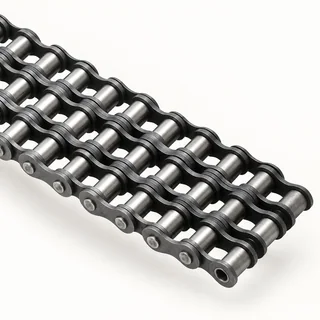
EMMAR pulleys are manufactured in sections A, B and C, with diameters from 50 mm and up to multiple grooves, to cover different powers and transmission ratios. Roller chains are produced under ASA (American) and BS / ISO 606 (British/international) standards, in single, double and triple strand versions, and in ASA also up to sextuple. This variety allows solving from light drives to high-load transmissions.
In addition to standard products, EMMAR manufactures special pulleys to drawing, with non-standard diameters or grooves. This is key for maintenance and engineering projects where a commercial part is not available.
EMMAR lines sold by MR
MR Accesorios Industriales sells the EMMAR power transmission line, with two main subcategories: pulleys and roller chains. Below, the detail of each one with the real codes that appear in the online catalog.
EMMAR pulleys
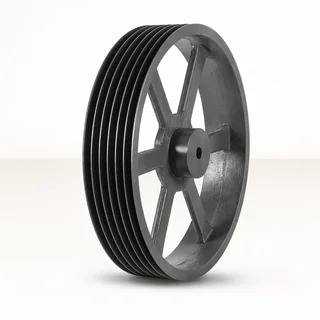
EMMAR pulleys are manufactured in sections A, B and C for V-belts. The catalog includes pulleys from 1 to 18 grooves, with diameters from 50 mm. They are used in fans, pumps, compressors, conveyor belts and machine tools. The codes are formed with the word POLEA, the diameter in mm and the number of grooves with the section letter. Examples: POLEA 50 1A, POLEA 50 1B, POLEA 50 2A, POLEA 50 2B.
EMMAR roller chains
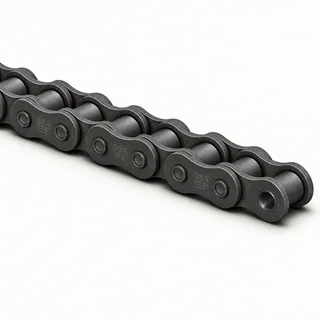
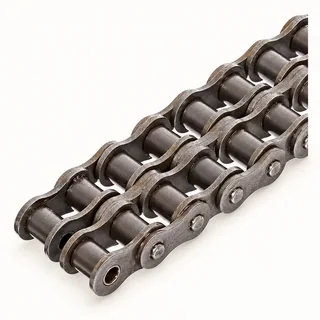
EMMAR roller chains are manufactured under ASA and BS / ISO 606 standards. The ASA series includes pitches from 12.7 mm (ASA 40) to 50.8 mm (ASA 160), in single, double and triple strand, and up to sextuple. The BS series follows the BS / ISO 606 standard (series B), with designations such as 04-B1, 05-B1, 05-B2, 06-B1 and 12-B3. They are used in conveyors, elevators, agricultural machinery and packaging lines.
Main EMMAR series
EMMAR organizes its products into two main series: POLEA for pulleys and ASA for roller chains according to the American standard. In addition, BS chains are identified with the size number, the letter B and the number of strands. Below, each series with its characteristics and example codes.
POLEA series
The POLEA series covers V-belt pulleys in sections A, B and C. The code indicates the diameter in mm and the number of grooves. For example, POLEA 50 1A is a 50 mm pulley with one groove for section A belt; POLEA 50 1B is the same but for section B. They are manufactured from 1 to 18 grooves, which allows transmitting more power by mounting several belts in parallel. They are suitable for shafts of different diameters and are machined with precise fit.
ASA series
The ASA series corresponds to roller chains according to the American standard. The number after ASA indicates the pitch: ASA 40 has a pitch of 12.7 mm, ASA 50 15.87 mm, ASA 60 19.05 mm, ASA 80 25.4 mm, ASA 120 38.1 mm and ASA 160 50.8 mm. The suffix /2 or /3 indicates double or triple strand. Examples: ASA 40, ASA 50, ASA 60/3, ASA 80/2, ASA 120, ASA 160. They are dimensionally compatible with chains from other brands of the same standard and size.
BS series
BS chains follow the BS / ISO 606 standard, series B (European). The first number identifies the pitch size: in general they are sixteenths of an inch (08 = 1/2", 10 = 5/8", 12 = 3/4", 16 = 1", 20 = 1 1/4", 24 = 1 1/2", 32 = 2"), and sizes 04, 05 and 06 correspond to smaller pitches. The letter B indicates the series and the final number the number of strands: B1 single, B2 double, B3 triple. Examples: 04-B1, 05-B1, 05-B2, 06-B1, 12-B3, 32-B1. They are used in equipment of European origin and in applications where the BS / ISO 606 standard is required.
How to read an EMMAR code
EMMAR codes are descriptive and follow a clear logic. For pulleys, the type, diameter and section with number of grooves are indicated. For chains, the standard and pitch are indicated, and in some cases the number of strands. Below, real examples from the catalog.
POLEA 50 1A
This code reads: POLEA (product type), 50 (diameter in mm), 1 (number of grooves), A (V-belt section). It is a 50 mm diameter pulley with one groove for section A belt. It is used in light transmissions, such as fans or small pumps.
POLEA 50 1B
Similar to the previous one, but the letter B indicates section B, which has a larger belt profile and transmits more power. The code POLEA 50 1B corresponds to a 50 mm pulley with one groove for section B belt. It is common in machine tools and more demanding equipment.
ASA 40
In chains, ASA indicates the American standard. The number 40 corresponds to a pitch of 12.7 mm (1/2 inch). It is a single strand chain, suitable for moderate loads and medium speeds. It is used in small conveyors and auxiliary drives.
ASA 50
The code ASA 50 indicates a pitch of 15.87 mm (5/8 inch). It is a single strand chain with greater load capacity than ASA 40. It is used in agricultural machinery, grain elevators and general transmission systems.
04-B1
In the BS series, the first number identifies the pitch size (04 is one of the smallest in the standard), the letter B indicates the European series and the 1 the single strand. It is not replaced by an ASA: each BS / ISO 606 size is chosen by its dimension table. It is used in light transmissions.
05-B2
The code 05-B2 reads: size 05 of the BS / ISO 606 standard, series B, double strand (B2). A double strand chain transmits more power than a single one of the same size without increasing the pitch. It is used when more capacity is needed in the same space.
Frequent EMMAR prefixes and suffixes and what they indicate
EMMAR codes use prefixes and suffixes to indicate key characteristics. In pulleys, the prefix POLEA and the section letter (A, B, C) are fundamental. In chains, the prefix ASA indicates the American standard; in BS, the size number and the letter B indicate the standard and series, and the suffixes indicate the number of strands.
Below, the most common ones:
POLEA: prefix for V-belt pulleys.
A, B, C: belt section; A is the narrowest, C the widest. They determine the groove profile.
Number after POLEA: diameter in millimeters.
Number before the letter in pulleys: number of grooves (1, 2, 3, etc.).
ASA: American standard for roller chains.
BS: British/international standard (BS / ISO 606) for roller chains; codes carry size number and letter B.
Number after ASA: chain pitch (40, 50, 60, 80, 120, 160).
First number in BS chains: identifies the pitch size according to the BS / ISO 606 table (04, 05, 06, 08, 10, 12, 16).
B1, B2, B3: series B of the standard and number of strands in BS chains (single, double, triple).
/2, /3: number of strands in ASA chains (double, triple).
Applications by industry in Argentina
EMMAR products are used in a wide variety of industries in Argentina. Below, the main ones with application examples.
Metallurgical
In the metallurgical industry, EMMAR pulleys are used in machine tools, presses and transmission systems. Roller chains are used in chip conveyors, paint lines and part handling equipment. Robustness and dimensional precision are key to withstand loads and vibrations.
Agricultural
In agriculture, ASA and BS chains are used in harvesters, seeders, augers and grain elevators. Pulleys are used in dryer fans, irrigation pumps and mill drives. Resistance to dust and ease of maintenance are important.
Naval
In the naval industry, EMMAR chains are used in cranes and deck equipment. Pulleys are used in fans, pumps and auxiliary transmissions. Corrosion resistance and reliability in humid environments are required.
Oil
In the oil industry, pulleys are used in belt transmission of pumping units, fans and compressors. Roller chains are used in auxiliary drives and service equipment. High strength and durability under severe conditions are required.
Food
In the food industry, EMMAR chains are used in bottle, can and package conveyors, as well as in ovens and cooling tunnels. Pulleys are used in mixers and blenders. Cleanliness and the possibility of lubrication with food-grade products are valued.
Mining
In mining, roller chains are used in ore conveyors, feeders and screens. Pulleys are used in mine fans and pumps. High abrasion resistance and impact loads are required.
Paper
In the paper industry, EMMAR chains are used in roll conveyors, cutting systems and packaging lines. Pulleys are used in pulp pumps and drying fans. Precision and moisture resistance are important.
Cement
In the cement industry, chains are used in bucket elevators, clinker conveyors and auxiliary equipment. Pulleys are used in kiln fans and transport systems. High resistance to dust and high temperatures is required.
Energy
In the energy sector, EMMAR pulleys are used in fans, circulation pumps and auxiliary plant compressors. Chains are used in biomass conveyors and maintenance equipment. Reliability and low maintenance are key.
Automotive
In the automotive industry, EMMAR chains are used in assembly lines, body conveyors and paint systems. Pulleys are used in paint booth fans and compressors. Precision and durability are required.
Plastics
In the plastics industry, chains are used in cooling lines and part conveyors. Pulleys are used in vacuum pumps and recycling systems. Chemical resistance and cleanliness are important.
Refrigeration
In refrigeration plants, EMMAR chains are used in hook conveyors, slaughter lines and cold chambers. Pulleys are used in evaporator fans and ammonia compressors. Resistance to low temperatures and frequent washing is required.
Sugar
In the sugar industry, chains are used in cane conveyors, mills and diffusers. Pulleys are used in juice pumps and drying fans. Wear and moisture resistance is fundamental.
How to choose the right EMMAR
Choosing the right EMMAR pulley or chain requires considering several technical factors. Below, the main criteria for each type of product.
For pulleys
Power to transmit: determines the belt section (A, B or C) and the number of grooves. The higher the power, the larger section or more grooves are required.
Pulley diameter: influences belt speed and transmission ratio. It must be compatible with the available space and shaft diameter.
Rotation speed: at high speeds, balanced pulleys with good surface finish are recommended to reduce vibrations.
Environmental conditions: in environments with dust, humidity or extreme temperatures, the material and surface treatment must be considered.
For roller chains
Working load: determines the pitch and number of strands. The higher the load, the larger pitch or more strands are needed.
Chain speed: at high speeds, small pitches are recommended to reduce the polygonal effect and noise.
Center distance: influences chain length and number of links. It must be calculated to avoid excessive or loose tension.
Environmental conditions: in abrasive or corrosive environments, special lubrication and resistant materials must be considered.
Required standard: if the equipment is of American origin, ASA is used; if European, BS. Although some sizes share the pitch, ASA and BS are not interchangeable with each other: they differ in roller and inner width, and the standard and sprockets of the equipment must be respected.
Equivalences and interchangeability
EMMAR roller chains are dimensionally compatible with chains from other brands of the same standard and size. For example, an EMMAR ASA 50 chain is equivalent to a DONGHUA ASA 50 chain. The same happens with BS chains: an EMMAR 12-B3 code is equivalent to a DIAMOND 12-B3.
In the MR catalog, you can find equivalent codes from other brands for the same reference. For example, ASA 50 from EMMAR has its equivalent in DONGHUA, and 12-B3 from EMMAR has its equivalent in DIAMOND. This facilitates comparison and selection according to technical criteria or customer preference.
It is important to verify that the standard is the same (ASA or BS) and that the pitch and number of strands match. EMMAR pulleys work with standard V-belts of any brand, as long as the section and diameter are compatible.
Frequent mistakes when replacing or buying EMMAR
When replacing an EMMAR pulley or chain, it is common to make mistakes that can affect performance or service life. Below, the most frequent ones and how to avoid them.
Confusing the pulley section
Using a section A pulley with a section B belt (or vice versa) causes premature wear and power loss. Always verify the section letter in the code and on the existing belt.
Not considering the number of grooves
If the original pulley has 2 grooves and is replaced by a 1-groove one, the transmission capacity is reduced. Count the grooves and respect that number.
Choosing the wrong chain pitch
Confusing ASA 40 with ASA 50 or BS 04 with BS 05 can prevent the chain from meshing with the sprockets. Measure the pitch or verify the code on the old chain.
Ignoring the number of strands
A single chain does not replace a double strand in high-load applications. Verify if the code has B1, B2, /2, /3, etc.
Not lubricating properly
Roller chains require periodic lubrication. Lack of lubricant accelerates wear of pins and bushings. Use the lubricant recommended for the application.
Assembly, lubrication and maintenance
Correct assembly and maintenance extends the service life of EMMAR pulleys and chains. Below, general recommendations.
Pulley assembly
Verify that the shaft is clean and free of burrs. Mount the pulley with adequate fit (interference or with keyway according to design). Align the driving and driven pulleys to avoid premature wear of belts and grooves. Tension the belt according to the manufacturer's specifications.
Chain assembly
Make sure the sprockets are aligned in the same plane. The chain must have adequate tension sag (generally 2-3% of the center distance). Use a connecting link or half link to adjust the length. Lubricate the chain before start-up.
Chain lubrication
Lubrication reduces friction between pins and bushings, and protects against corrosion. Use oil or grease according to speed and temperature. In high-speed applications, drip or oil bath lubrication is recommended. In dusty environments, use lubricants with anti-wear additives.
Preventive maintenance
Periodically inspect the wear of pulley grooves and chain links. Replace parts when wear exceeds allowable limits. Keep records of service hours and operating conditions to plan replacements.
Why get a quote for EMMAR at MR Accesorios Industriales
MR Accesorios Industriales is the manufacturer of the EMMAR brand in Buenos Aires, Argentina, since 1945. By getting a quote with us, you speak directly with the manufacturer, which gives you access to specialized technical advice and the possibility of manufacturing special pulleys to drawing.
Our online catalog allows you to search by code, size or description, and see the photo of each product. If you have a worn pulley or chain, you can send us a photo or the code and we will quote the exact replacement.
We work with industries throughout the country: metallurgical, agricultural, naval, oil, food, mining, paper, cement, energy, automotive, plastics, refrigeration and sugar. We understand the demands of each sector and help you choose the right component.
Get a quote now: send us a WhatsApp or email with the EMMAR code, the size or a photo of the part. We will respond shortly with the information you need.
Frequently asked questions about EMMAR
- What does EMMAR mean?
- EMMAR is the own brand of MR Accesorios Industriales, an Argentine manufacturer of power transmission components since 1945. The brand covers V-belt pulleys and roller chains under ASA and BS standards. It is the commercial name of the own-manufacturing line.
- Where are EMMAR products manufactured?
- EMMAR products are manufactured at the MR Accesorios Industriales plant in Buenos Aires, Argentina. Local manufacturing allows controlling quality, adapting parts to special requirements and offering direct technical support to Argentine customers.
- How do I read the code of an EMMAR pulley?
- The code of an EMMAR pulley reads: POLEA + diameter in mm + number of grooves + section letter. For example, POLEA 50 1A is a 50 mm pulley with one groove for section A belt. POLEA 70 3B is 70 mm with three grooves for section B.
- What is the difference between ASA and BS chains?
- ASA is the American standard and BS the British/international one (BS / ISO 606). Both define pitch and roller dimensions, but the codes are different. For example, ASA 40 has a pitch of 12.7 mm, the same as size 08 of series B, but they are not interchangeable with each other because they differ in roller and inner width. The equipment standard must always be respected.
- Does EMMAR manufacture double or triple strand chains?
- Yes, EMMAR manufactures roller chains in single, double and triple strand, and in ASA up to sextuple. In the ASA series, the suffix /2 indicates double and /3 triple. In the BS series, B1 is single, B2 double and B3 triple. This allows transmitting more power without increasing the pitch.
- Can I order an EMMAR pulley with special dimensions?
- Yes, since it is own manufacturing, MR can produce EMMAR pulleys with special diameters, grooves or machining to drawing. Send us your requirement with the dimensions and the application, and we will quote the custom manufacturing.
- Are EMMAR chains compatible with other brands?
- Yes, EMMAR chains comply with ASA and BS standards, so they are dimensionally compatible with chains from other brands of the same standard and size. For example, an EMMAR ASA 50 is equivalent to a DONGHUA ASA 50. Always verify the pitch and number of strands.
- How do I get a quote for an EMMAR product?
- You can get a quote via WhatsApp or email by sending the EMMAR code, the size or a photo of the part. Our technical team will respond shortly with the information you need. You can also search the online catalog of MR Accesorios Industriales.
Updated September 29, 2026