
Blog
How to remove a bearing without damaging the shaft: a practical guide to pullers
Removing a bearing without marking the shaft is a matter of method and tooling. We explain how to choose between a 2- or 3-leg puller, mechanical or hydraulic, and what to do when there is no space behind the part.
SKF bearings in Argentina: guide and quotes
Technical team at MR Accesorios Industriales · Updated on November 14, 2026
The main rule: pull on the correct ring
When a bearing is tight on the shaft, the extraction force is applied to the inner ring. If you pull on the outer ring, the force passes through the balls or rollers and marks the races. That bearing is no longer usable, even if it looks like it came out whole.
Never hit it with a hammer and punch to remove a bearing. The impact concentrates the force at one point, deforms the ring and can scratch the shaft seat. Once the seat is damaged, the new bearing does not seat properly and the failure repeats.
Before starting, identify which ring has the interference fit. On most rotating shafts, the inner ring is tight and the outer is free in the housing. If in doubt, check the assembly drawing or the equipment manufacturer's recommendations.
2- or 3-leg puller: which one to use
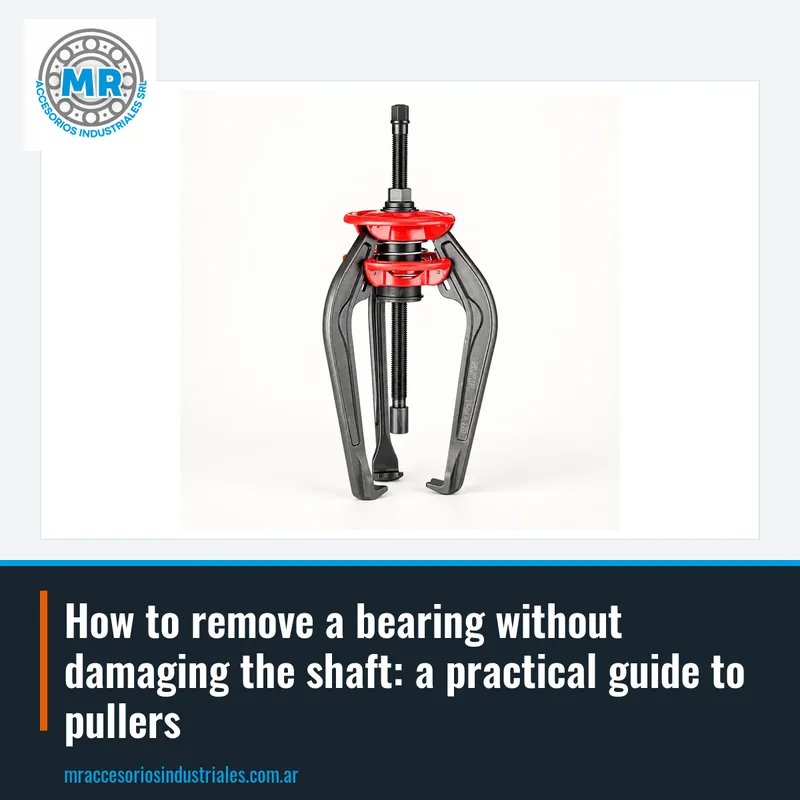
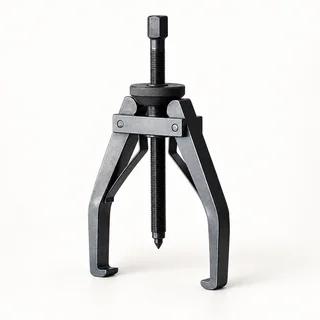
The 3-leg puller distributes force evenly and self-centers on the shaft. It is the first choice when there is room to position the three legs behind the bearing. Most maintenance jobs are handled with this type.
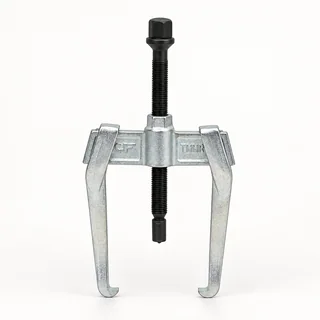
The 2-leg puller fits where space is tight, for example when there is a shoulder or a housing close to the bearing. With only two support points, it requires more care to keep the spindle centered and avoid unbalancing the extraction.
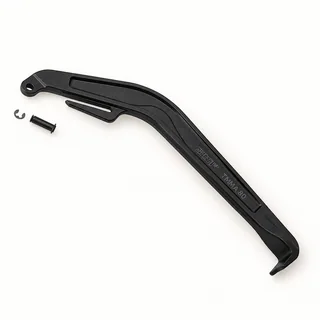
The puller size is chosen by the diameter of the part and the reach of the legs behind the bearing. The legs must grip the inner ring without forcing the outer. If the leg does not reach, do not extend it with shims: use a larger puller.
Mechanical or hydraulic: when to use each
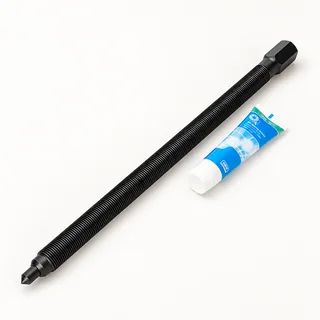
The mechanical puller, with a threaded spindle, is enough for small and medium bearings. It is operated with a wrench or a lever and gives good force control. For most electric motor and pump bearings, a mechanical puller is sufficient.
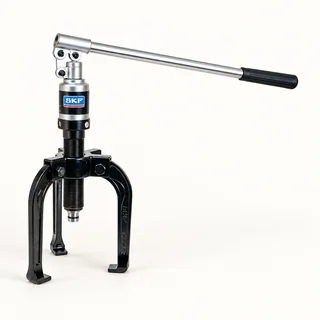
The hydraulic puller delivers more force with less effort and evenly. It is used for large or very tight bearings, where the mechanical spindle requires too much leverage. The hydraulic system pushes the central spindle and the legs pull the bearing without impacts.
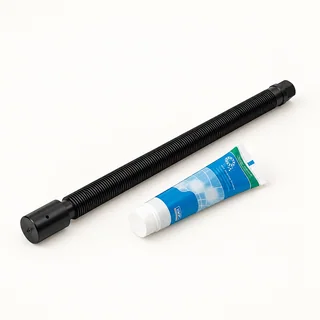
In the mechanical puller line, models TMMA 60, TMMA 80 and TMMA 120 go from smaller to larger. The TMMA 100H is from the same series with a hydraulic spindle. For heavy extractions, the TMHP 10E is a hydraulic puller.
When there is no space behind the bearing
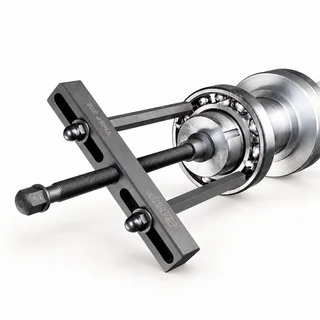
If the bearing is against a shoulder or the space behind is minimal, the puller legs do not fit. There you use a separator plate, also called a blade plate, which is inserted between the bearing and the shaft shoulder. The plate closes around the shaft, behind the bearing, and the puller pulls on it.
When there is an accessible edge, a classic jaw puller is enough, such as the TMMP 2X170 or the TMMP 3X230. The jaws close behind the part and grip the bearing ring, and the spindle pushes against the shaft end.
When the bearing is in a blind housing, with no access from behind, a blind housing puller is used. The TMBP 20E is designed for that job: it grips the bearing from the front, through the race, and extracts it without rear access. It is a specific tool that avoids disassembling the entire equipment.
Step by step for a safe extraction
First lock out the machine and cut the power. Clean the area around the bearing to clearly see the retainers, nuts and lock washers. Remove all fastening elements before mounting the puller. If there is rust, apply a penetrant and let it act for a few minutes.
Protect the shaft center with a bronze piece or a soft shim so the spindle does not mark it. Center the puller spindle with the bearing axis. Grip the correct ring with the legs or the separator plate and tighten gradually, evenly.
Wear safety glasses and use a protective blanket over the puller. Do not stand in line with the puller while tightening: if something slips, the part flies off. Work calmly and check that the legs do not slip off the ring.
If it won't come off: what to do and what not to do
Do not extend the lever with a pipe or hit the puller spindle. These practices break the tool and can damage the shaft. If the bearing does not come off with a mechanical puller, switch to a hydraulic puller such as the TMHP 10E.
The inner ring of a cylindrical roller bearing, when left alone on the shaft, is removed with heat using a heater ring. The heat expands the ring and releases it from the shaft. Never use a direct flame on the shaft: uneven heat deforms it and changes its properties.
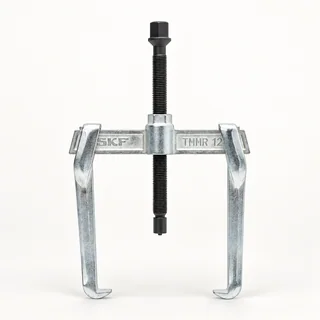
When only the inner ring, also called the race, remains, it is removed with a separator plate and puller. If the race is very tight, the heat from the heater ring helps loosen it. The reversible puller TMMR 120F has legs that flip to grip the part from outside or inside.
After removal and how to get a puller quote
Once the bearing is extracted, inspect the shaft seat. Look for marks, burrs or deformation. If the seat is damaged, the new bearing will not last. Correct the imperfections before mounting the new part.
To get a puller quote, send us the shaft diameter, the outer diameter and width of the bearing, and the free space behind the part. A photo of the assembly helps choose the correct model. With that data we indicate the right tool.
We supply mechanical and hydraulic pullers, 2- and 3-leg, jaw type and for blind housings. We distribute the SKF mounting and maintenance tool line in Buenos Aires, Argentina. Write to us by WhatsApp or email and we will quote the puller you need.
Frequently asked questions
Which puller do I use for a bearing stuck on the shaft?
If the bearing is very tight, use a hydraulic puller such as the TMHP 10E. It delivers more force with less effort and evenly. Do not extend the lever or hit the spindle of a mechanical puller.
How do I remove a bearing with no space behind it?
Use a separator plate that is inserted between the bearing and the shaft shoulder. The puller pulls on the plate. If the bearing is in a blind housing, use a blind housing puller such as the TMBP 20E.
Can I hit the bearing to remove it?
No. Hitting it with a hammer and punch marks the races and damages the shaft seat. The extraction force must be even and applied to the correct ring with a puller.
What do I do if the inner race remains on the shaft?
Remove the race with a separator plate and a puller. If it is very tight, use a heater ring to expand it. Never use a direct flame on the shaft.
What data do I need to get a puller quote?
Send us the shaft diameter, the outer diameter and width of the bearing, and the free space behind the part. A photo of the assembly helps choose the correct model.
Products with photos in the catalogue
Keep reading
- SKF Chains: Reliable Power Transmission for Industrial Applications
SKF roller chains offer strength and precision for power transmission in industrial machinery. Learn about the PHC series, ASA and BS standards, and how to identify the correct chain for your equipment.
- SKF tools for industrial maintenance: pullers, heaters, aligners and calibrated shims
SKF tools simplify bearing mounting and dismounting, shaft alignment and instrument calibration. Discover TMMA and TMHP pullers, induction heaters, TKSA aligners and calibrated shims.
- How to Choose SKF Bearings by Application: Load, Speed, Environment, and Mounting
Choosing the right SKF bearing requires analyzing load, speed, environment, and mounting. We explain the main types and how to get a quote with the exact code.
Continue here
Need a SKF quote?
Send us the SKF part number, the size or a photo of the part and we will get back to you with a quote.