
Blog
SKF TMMA puller: how to choose the size and use it without damaging the shaft
SKF TMMA mechanical pullers remove bearings and other parts with a fit on the shaft. We explain how to choose the correct size based on the outer diameter, the width of the part and the available space, and how to use them without damaging the shaft.
SKF bearings in Argentina: guide and quotes
Technical team at MR Accesorios Industriales · Updated on November 14, 2026
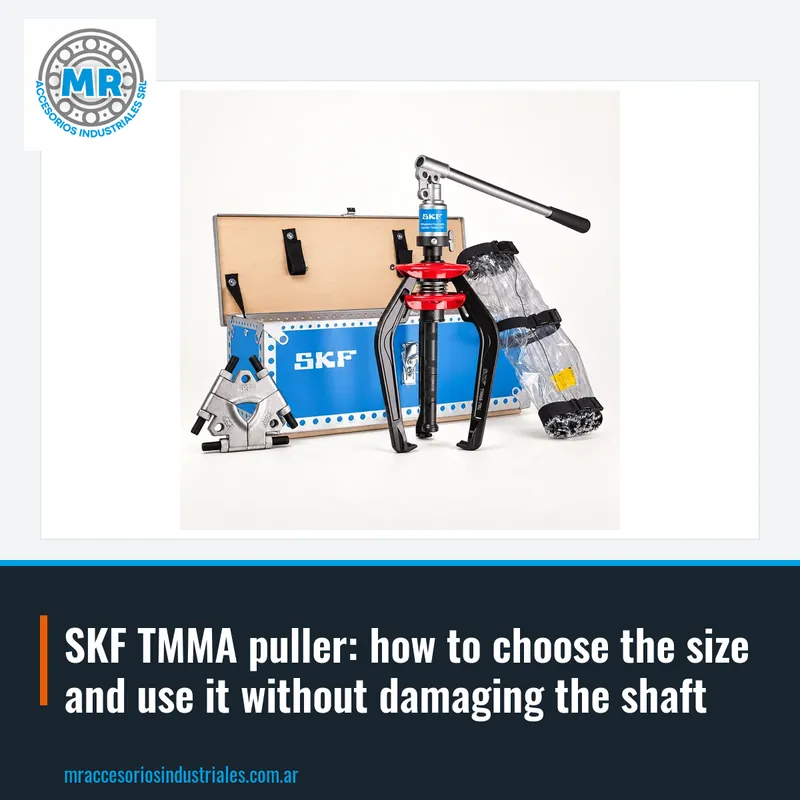
What an SKF TMMA mechanical puller is and what it is used for
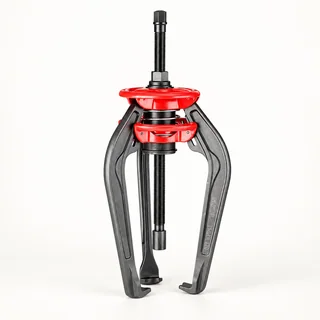
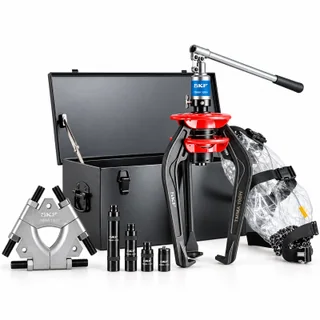
The SKF TMMA puller is a mechanical arm tool used to remove bearings, pulleys, gears and other parts mounted with a fit on a shaft. Its design allows a controlled pulling force to be applied from the center, while the arms grip the part by its rear face or by the outer ring, depending on the case. In industrial maintenance, it is a basic tool for replacing bearings without damaging the shaft or neighboring parts.
In the TMMA series you will find models of different sizes, such as TMMA 3, TMMA 60 or TMMA 120. Each one is designed for a range of part diameters and widths, so choosing the correct one is key for a safe removal. Mechanical pullers are the most common option when a hydraulic puller, such as those in the TMHP series, is not justified, or when space is limited.
We sell these SKF pullers in Buenos Aires, Argentina. If you are about to remove a bearing and do not know which size suits you, below we explain how to measure the part and the space so you get it right.
How to choose the TMMA puller size according to the part
To choose the correct SKF TMMA puller, first measure the outer diameter of the part you are going to remove. The puller arms must be able to open enough to grip that measurement without being at their limit. For example, between the TMMA 60, the TMMA 80 and the TMMA 120 the size of part each one can take changes. If you use a puller that is too small, the arms stay too closed and the force is applied poorly, with a risk of slipping or bending.
You also have to look at the width of the part and the space behind it. The arms need to go behind the bearing or pulley to grip it properly. If there is not enough room, you may need a puller with thinner arms or a jaw model. If space is tight, send us the measurements and we will tell you which model in the TMMA series fits.
Another important point is where you are going to grip the part. If the fit is on the inner ring, the correct thing is to pull on that ring, not the outer one. That avoids damaging the bearing and the shaft. If you are not sure which model suits you, send us the measurements of the part and the available space, and we will quote the right puller.
The models in the TMMA series: from TMMA 3 to TMMA 120
The SKF TMMA series includes several sizes to cover from light work to heavy removal. The TMMA 60, the TMMA 80 and the TMMA 120 go from smaller to larger: each one takes larger parts than the previous one. The TMMA 3, the TMMA 5 and the TMMA 8 are three other codes in the series, which we quote with the part measurements.
Mechanical pullers are used in the maintenance of motors, pumps, gearboxes, conveyor belts and fans. The TMMA 100H is a model in the series with a hydraulic spindle, for when hand force is not enough. We quote it with its code.
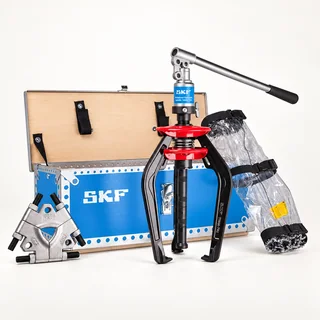
In addition, the TMMA 75H/SET is a set in the series, also with a hydraulic spindle. If you already know which code you need, we will quote it promptly. If not, tell us what you are going to remove and we will guide you on the size.
How to use the TMMA puller without damaging the shaft
Before using the SKF TMMA puller, clean the area and check that the arms are in good condition. Center the spindle on the shaft of the part and adjust the arms so they grip the correct ring. If the fit is on the inner ring, the arms must go there, not on the outer one. A common mistake is pulling on the outer ring when the fit is inner, which can break the bearing and damage the shaft.
When applying force, do it evenly and progressively. Do not hit the spindle with a hammer, because you can misalign the tool and mark the shaft tip. If the part does not come out, check that there are no obstructions or that the fit is not too tight. In those cases, a TMHP hydraulic puller or heating the part with an induction heater may be advisable.
Always use personal protection: gloves and safety glasses. A puller used incorrectly can injure you or damage the equipment. If you have doubts about the procedure, ask us and we will give you a hand.
Common mistakes when choosing or using a TMMA puller
One of the most frequent mistakes is choosing an SKF TMMA puller that is too small for the part. That makes the arms stay too open or too closed, and the force is applied poorly. The result can be that the puller slips, bends or simply does not fit. Always measure the outer diameter and width before ordering.
Another mistake is not checking the space behind the part. If the arms cannot go in, you will not be able to grip it properly. In those cases, you may need a model with thinner arms or a jaw puller. It is also common to forget to center the spindle: if it is not aligned with the shaft, the force deviates and you can damage the thread or the shaft.
Finally, do not force the puller if the part does not come out. That can break the tool or the part. Stop, review the situation and, if necessary, use a complementary method such as heating or a hydraulic puller. We advise you so the job turns out well.
In which industries and equipment the TMMA puller is used
The SKF TMMA puller is used in the maintenance of all types of industrial machinery. In food plants, for example, bearings are removed from conveyor belts and pumps. In metallurgical plants, pulleys and gears are removed from lathes and milling machines. In mining and construction, the large sizes in the series, such as the TMMA 120, are used on larger equipment.
It is also common in electric motor repair shops, where bearings at the shaft ends are changed. In that case a small puller is enough, one that fits in the space left by the disassembled motor. In the paper or textile industry they are used for roller and cylinder bearings.
Whatever your sector, if you have to remove a part with a fit, a TMMA puller will make the job easier. We sell the TMMA series and help you choose the correct size.
How to order your SKF TMMA puller at MR
To get a quote for your SKF TMMA puller, send us a message via WhatsApp or email with the model code you need, for example TMMA 3 or TMMA 100H. If you do not know the code, give us the measurements of the part to be removed: outer diameter, width and available space behind it. With that we will tell you the right puller.
You can also send us a photo of the part or the bearing, and we will help you identify the size. We work with the TMMA series and with other SKF pullers, such as the TMHP hydraulic ones or the jaw ones. We will quote you promptly.
We are in Buenos Aires, Argentina. Do not hesitate to ask us: choosing the right puller saves you time and prevents damage to the equipment.
Frequently asked questions
How do I know what size of SKF TMMA puller I need?
Measure the outer diameter of the part to be removed and the space behind it. The puller arms must be able to open to grip the part and go in behind it. If you are not sure, send us the measurements and we will guide you.
Can I use a small TMMA puller for a large part?
It is not recommended. A small puller can slip or bend if the part is very large or very tight. Always use the right size according to the diameter and width of the part.
Is the TMMA puller useful for removing bearings from blind holes?
TMMA mechanical pullers are designed for parts accessible from behind. For bearings in blind holes, blind housing pullers are used, such as those in the TMBP series. Ask us and we will tell you the correct tool.
How do I avoid damaging the shaft when using the TMMA puller?
Center the spindle on the shaft, grip the part by the ring that has the fit and apply even force. Do not hit the spindle with a hammer. If the part does not come out, review the procedure or use a complementary method.
What is the difference between the TMMA 100H and the TMMA 75H/SET?
Both have a hydraulic spindle: the TMMA 100H is a model in the series and the TMMA 75H/SET is a set. If you have doubts about which one suits you, tell us your application and we will advise you.
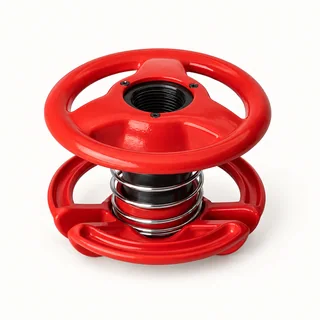
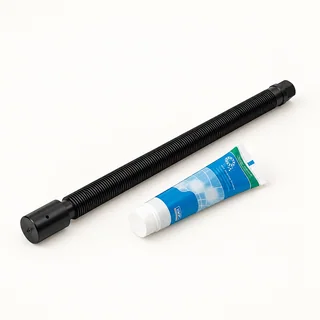
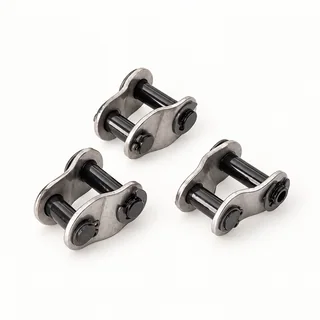
Products with photos in the catalogue
Keep reading
- SKF Chains: Reliable Power Transmission for Industrial Applications
SKF roller chains offer strength and precision for power transmission in industrial machinery. Learn about the PHC series, ASA and BS standards, and how to identify the correct chain for your equipment.
- SKF tools for industrial maintenance: pullers, heaters, aligners and calibrated shims
SKF tools simplify bearing mounting and dismounting, shaft alignment and instrument calibration. Discover TMMA and TMHP pullers, induction heaters, TKSA aligners and calibrated shims.
- How to Choose SKF Bearings by Application: Load, Speed, Environment, and Mounting
Choosing the right SKF bearing requires analyzing load, speed, environment, and mounting. We explain the main types and how to get a quote with the exact code.
Continue here
Need a SKF quote?
Send us the SKF part number, the size or a photo of the part and we will get back to you with a quote.