
Blog
SKF automatic lubricators: when they beat manual greasing
SKF automatic lubricators dispense grease at critical points without manual intervention. We explain when they're worth it, how to choose the cartridge and period, and what to check during mounting.
SKF bearings in Argentina: guide and quotes
Technical team at MR Accesorios Industriales · Updated on October 14, 2026
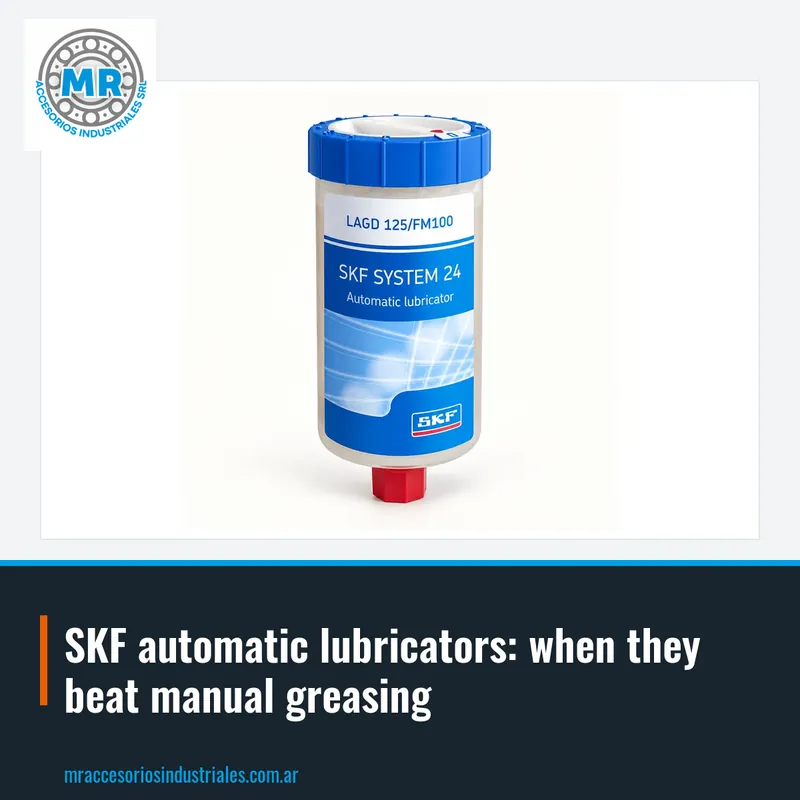
What SKF automatic lubricators are and what they're for
SKF automatic lubricators are devices that dispense grease in a controlled way at a lubrication point, without manual intervention. They are installed directly on the grease fitting or on the bearing and release a programmed amount of lubricant over time. This keeps a constant grease film, even on equipment that runs continuously or in hard-to-reach places.
In Argentine industry they are used on electric motors, pumps, fans, conveyors and machine tools, among other equipment. They are especially useful when manual greasing is risky, uncomfortable or simply impossible due to the location of the point. By automating lubrication, the likelihood of failures from insufficient or excessive lubrication is reduced, two common causes of premature bearing deterioration.
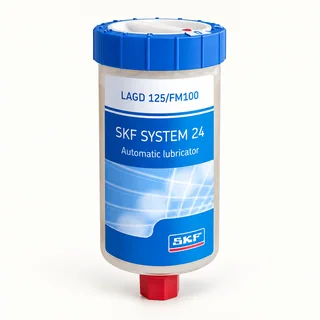
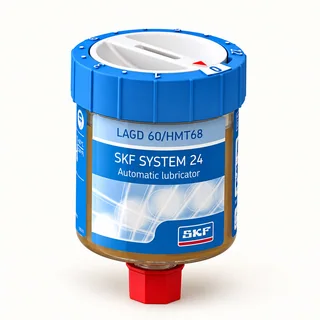
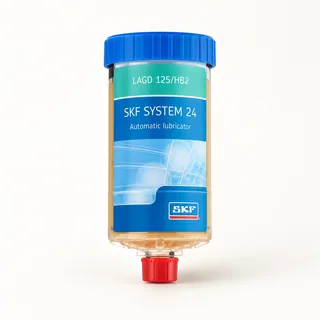
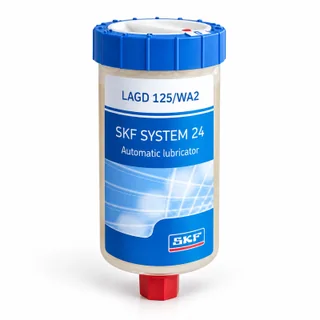
SKF offers several series of automatic lubricators, such as LAGD, TLSD and TLMR. Each is designed for different mounting conditions and flow requirements. For example, code LAGD 125/U corresponds to a lubricator from the LAGD series, while TLSD 1-DU and TLMR 101 belong to the TLSD and TLMR series respectively. When requesting a quote, it's best to indicate the exact code or the dimensions of the point to be lubricated.
When an automatic lubricator is worth it compared to manual greasing
Manual greasing is still valid for many pieces of equipment, but it has limitations. If the lubrication point is at height, near moving parts or in a hot environment, the operator is exposed to unnecessary risks. An automatic lubricator eliminates that exposure because it is installed once and works on its own for weeks or months, depending on the configured period.
It's also worth it when there are many points to grease on the same machine or line. Manual lubrication of dozens of grease fittings consumes maintenance time and increases the chance of oversights or quantity errors. With automatic lubricators, each point receives the programmed dose without depending on the operator's memory or skill.
Another typical case is equipment that cannot be stopped for lubrication. In continuous processes, such as furnaces, boilers or packaging lines, an automatic lubricator keeps lubrication going without stopping production. Also, in contaminated or humid environments, the lubricator's seal protects the grease and prevents particles from entering.
How to choose the cartridge grease for an SKF lubricator
Grease is the most important component of the system. It must be compatible with the bearing, the working temperature and the equipment speed. SKF offers cartridges pre-filled with greases of different consistencies and additives, designed for general or specific applications. For example, code LAGD 60/WA2 corresponds to a lubricator from the LAGD series loaded with WA2 grease.
To choose well, you need to know the grease the equipment currently uses. If the bearing came factory-lubricated with a lithium grease, it's ideal to keep that type of base. Mixing incompatible greases can cause softening, oil separation or loss of properties. If in doubt, it's best to consult the bearing or equipment datasheet.
Ambient temperature and load must also be considered. For high temperatures, greases with a higher dropping point and oxidation resistance are needed. For high loads or vibrations, greases with extreme pressure additives are preferred. At MR we help you select the correct cartridge according to the bearing code and service conditions.
How to set the lubricator's discharge period
The discharge period is the time it takes the lubricator to deliver all the grease content. It is adjusted according to the demand of the lubrication point: the higher the speed, load or temperature, the more frequent the grease supply should be. SKF lubricators allow different periods to be configured via a dial or an adjustment system, depending on the model.
A common mistake is setting too long a period to avoid replacing the lubricator frequently. That can cause insufficient lubrication and premature wear. Conversely, too short a period generates excess grease, temperature rise and possible seal leaks. The key is to observe the bearing's behavior and adjust based on experience.
To define the initial period, you can start from the manual greasing frequency recommended by the equipment manufacturer. What matters is that the amount of grease the lubricator delivers in that time is similar to what the point received with manual greasing. Then monitor the temperature and the condition of the purged grease to fine-tune the adjustment.
Where and how SKF automatic lubricators are mounted
Mounting depends on the type of lubricator and the point to be lubricated. In general, a lubricator can be threaded directly onto the grease point or installed remotely, with a tube that carries the grease to the bearing. The mounting method for each model, such as LAGD 125/U, TLSD 1-DU or TLMR 101, should be confirmed with the exact code before installation.
It's important that the lubricator is firm and protected from impacts or excessive vibrations. If installed in a place exposed to water or dust, it's best to use protective accessories or place it in a box. The connection tube must not be bent or obstructed, because that would alter the grease delivery.
Before mounting, the system must be purged to remove air and ensure the grease reaches the point. You should also verify that the grease fitting is not clogged with dry or contaminated grease. At MR we advise you on the correct mounting of each model and the accessories needed for your application.
What to check in the maintenance round with automatic lubricators
Although the lubricator works on its own, the point should not be abandoned. In each maintenance round, check that the lubricator is not empty, damaged or disconnected. You should also check that the grease is reaching the bearing: you can observe whether there is fresh grease at the seals or purge through the drain.
Bearing temperature is a key indicator. A sudden increase can indicate excess or lack of lubrication, or a mechanical problem. If abnormal temperature is detected, the configured period and the lubricator's condition should be reviewed. It's also useful to record the installation date and the programmed period to plan replacement.
SKF lubricators have a limited service life based on the grease load and the configured period. When the cartridge is used up, it is replaced with a new one or refilled depending on the model. At MR we sell the lubricators and replacement cartridges, and we help you build a lubrication plan suited to your equipment.
How to get a quote for SKF automatic lubricators at MR
To get a quote for an SKF automatic lubricator, the most practical thing is to send us the exact code of the model you're using or need. For example, TLSD 1-SP or TLMR 201. If you don't have the code, you can send us a photo of the label or of the installed lubricator, and with that we identify the series and the type of cartridge.
It's also useful to tell us what equipment it's mounted on, how many points you want to lubricate and how often it's currently greased. With that data we recommend the right model and discharge period. If you're replacing a lubricator from another brand, tell us the brand and code so we can find the equivalent.
You can write to us via WhatsApp or email with the details of the lubrication point. We'll reply promptly with the quote and the technical information you need. We work with SKF automatic lubricators for various industrial applications in Buenos Aires, Argentina.
Frequently asked questions
How long does an SKF automatic lubricator last?
The duration depends on the configured discharge period and the cartridge size. A lubricator can deliver grease for weeks or months, depending on the setting. For example, a longer period extends the cartridge's service life, but you must ensure lubrication remains sufficient.
Can an SKF automatic lubricator be refilled?
It depends on the model: some are replaced completely when the grease runs out and others allow the cartridge to be changed. To know what applies in your case, send us the exact lubricator code and we'll quote the replacement it takes.
What grease does an SKF automatic lubricator use?
The grease must be compatible with the bearing and the working conditions. SKF offers cartridges pre-filled with greases of different specifications, such as the WA2 of code LAGD 60/WA2. To choose correctly, you need to know the equipment's current grease and the service temperatures.
Where is an SKF automatic lubricator installed?
It is installed directly on the bearing's grease point or remotely via a tube. The mounting method depends on the model, so it's best to confirm it with the exact code. It's important that the lubricator is protected from impacts and contamination.
How do I know if the automatic lubricator is working well?
In the maintenance round you should check that the lubricator is not empty or damaged, and that the grease reaches the bearing. A temperature increase can indicate lubrication problems. It's also advisable to record the installation date and the programmed period to plan replacement.
Products with photos in the catalogue
Keep reading
- SKF Chains: Reliable Power Transmission for Industrial Applications
SKF roller chains offer strength and precision for power transmission in industrial machinery. Learn about the PHC series, ASA and BS standards, and how to identify the correct chain for your equipment.
- SKF tools for industrial maintenance: pullers, heaters, aligners and calibrated shims
SKF tools simplify bearing mounting and dismounting, shaft alignment and instrument calibration. Discover TMMA and TMHP pullers, induction heaters, TKSA aligners and calibrated shims.
- How to Choose SKF Bearings by Application: Load, Speed, Environment, and Mounting
Choosing the right SKF bearing requires analyzing load, speed, environment, and mounting. We explain the main types and how to get a quote with the exact code.
Continue here
Need a quote?
Send us the code, size or a photo of the part and we'll quote you shortly.