
Blog
How an induction bearing heater works and at what temperature a bearing is mounted
The induction heater heats the bearing evenly and without flame so it can be mounted with interference fit. We explain the principle, the correct temperature, the probe, demagnetization and the safe steps.
SKF bearings in Argentina: guide and quotes
Technical team at MR Accesorios Industriales · Updated on November 14, 2026
What hot mounting of a bearing is
When a bearing is mounted with an interference fit on the shaft, the bore of the inner ring is slightly smaller than the shaft diameter. So that it goes in without blows or damage, the bearing is heated and the bore expands. As it cools, the bearing sits firmly in its seat and transmits motion without slipping. This procedure is called hot mounting and is the correct way to install bearings with interference fit.
Hot mounting avoids forcing the part with a hammer or press, which can mark the raceways or break the edges. Heating the bearing evenly is key so that the bore expands uniformly. If only one area is heated, the bearing deforms and does not seat properly. That is why induction heaters are used, which heat the part in a controlled way and without flame.
In Argentine industry, this method is applied in electric motors, pumps, gearboxes, fans and all equipment where the bearing is fitted tight to the shaft. It is also used in preventive and corrective maintenance, when a bearing is replaced and neither the shaft nor the new part is to be damaged. An induction heater allows the process to be repeated safely and precisely, without depending on the operator's experience to control the temperature.
How induction works in a bearing heater
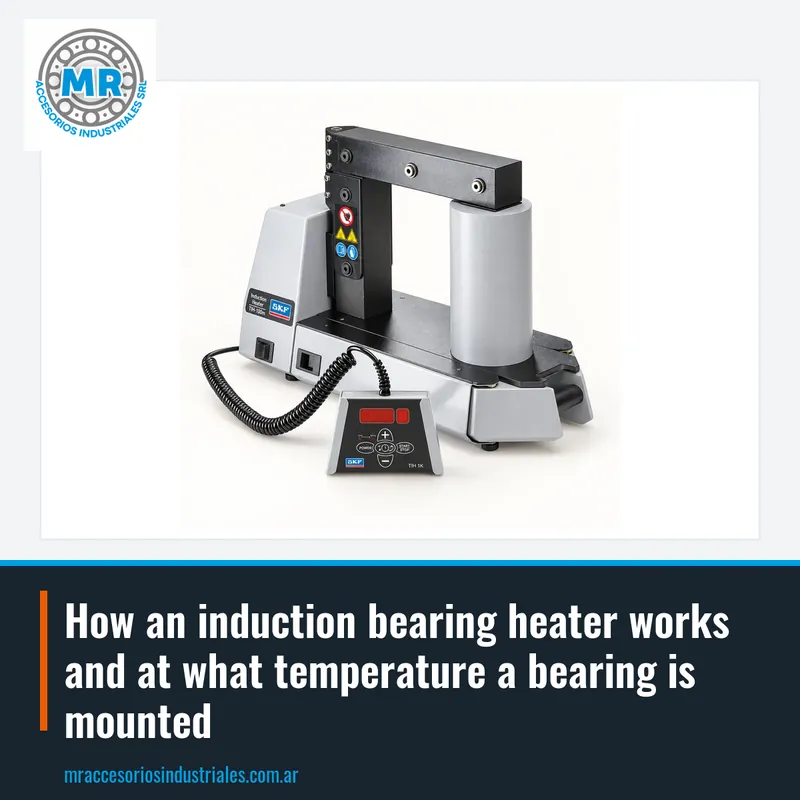
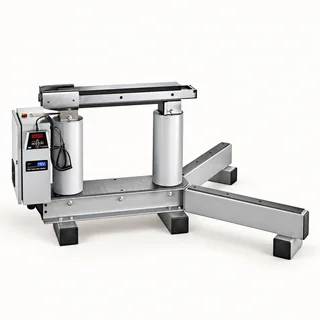
The induction heater works like a transformer. The coil with its core is the primary and the bearing, placed around the yoke that closes the magnetic circuit, acts as a single-turn secondary. The current induced in the bearing is what heats it, so the part is heated, not the equipment. The heating is even, clean and without flame.
The yoke is a metal part that is inserted through the bearing bore and rests on the heater core. When the coil is energized, a magnetic field is generated that passes through the bearing and produces internal currents. Those currents, by Joule effect, raise the temperature of the steel uniformly. There is no direct contact with resistances or fire, so the risk of local overheating is low.
This principle allows bearings of different sizes to be heated just by changing the yoke. Bench heaters, such as those in the TIH series, work with yokes of different sections to adapt to different bore diameters. The operator chooses the largest yoke that passes through the bearing bore, places it and turns on the equipment. Induction does the rest, with no need for oils or stoves.
At what temperature a bearing is mounted
For most mountings, the bearing is brought to about 110 °C. That temperature expands the bore enough for it to enter the shaft with interference fit, without damaging the steel or the lubricant. It is not advisable to exceed 125 °C because the heat treatment of the steel can be altered and the grease degraded. Sealed or shielded bearings that come greased, such as those with 2RS or 2Z, have a lower limit given by the manufacturer.
A bearing must never be heated with a direct flame. The torch generates hot spots, deforms the part and burns the lubricant. The hot oil bath is the traditional method, but with it the temperature is harder to control and the oil can contaminate the bearing. The induction heater allows the exact temperature to be set and cuts the cycle when it is reached.
Temperature control is essential so as not to ruin the bearing. Excessive heating can change the hardness of the steel and reduce service life. That is why modern heaters include a temperature probe and operating modes. The operator sets the desired value and the equipment cuts off when it is reached, which avoids manual errors.
The temperature probe and the time mode
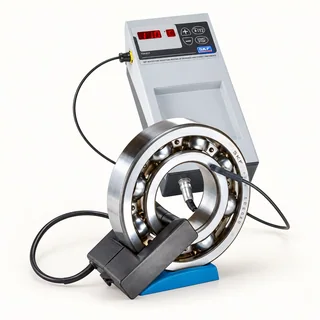
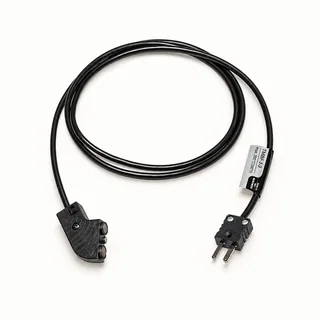
The temperature probe is magnetic and rests on the inner ring of the bearing, near the bore. It measures the actual temperature of the part and sends the signal to the heater. When the bearing reaches the set temperature, the equipment cuts the cycle automatically. This avoids overheating and the mounting comes out the same every time.
In TIH heaters, the temperature probe is accessory TIH P20. It is placed in contact with the inner ring, which is the part that must expand. If the probe is not well seated, the equipment may read the temperature incorrectly and heat too much or too little. That is why it is necessary to verify that the magnet makes good contact with the clean metal surface.
In addition to the temperature mode, there is the time mode. It is useful when mounting series of identical parts and the time needed to reach the desired temperature is known. The operator programs the minutes and the heater works without a probe. However, for critical parts or varying sizes, the temperature mode is safer.
Demagnetization after heating
At the end of the heating cycle, the heater demagnetizes the bearing. During induction, the steel can retain residual magnetism. A magnetized bearing attracts metal particles that later mark the raceways and cause premature failures. That is why demagnetization is an automatic step in modern equipment.
If the cycle is cut manually before time, the equipment must be allowed to demagnetize. The part should not be removed before the equipment finishes. It is important not to skip this step, especially in bearings that will work in environments with metal dust or chips.
Demagnetization is achieved by passing a decreasing alternating current through the coil. The magnetic field reduces its intensity until the residual magnetism is eliminated. The process requires no operator intervention. Afterwards, the bearing is ready to mount without risk of attracting particles.
Steps for mounting with a heater and safety measures
First, choose the largest yoke that passes through the bearing bore. Place the bearing on the yoke, with the inner ring accessible for the probe. Rest the magnetic probe on the inner ring and set the desired temperature. Then turn on the heater and wait until it reaches the programmed value.
During heating, thermal protective gloves, such as TMBA G11, must be used to handle the hot bearing. Keep people with pacemakers and loose metal objects away, because the magnetic field can affect them. The work area must be clean and clear to move safely.
When the bearing reaches temperature, remove it from the heater and mount it on the shaft without delay. Push it against the stop and hold it until it grips, without striking it. The bearing must never be hammered, because the raceways get marked. If it does not go in at once, do not force it: remove it, heat it again and repeat the procedure.
Which heater to choose and how to get a quote
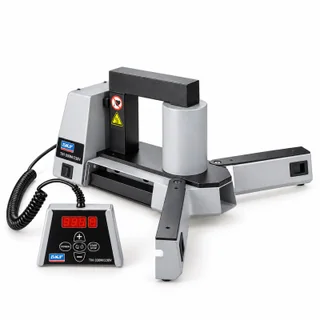
The bench heaters of the TIH series are offered in different sizes. TIH 030M/230V, TIH 100M/230V and TIH 220M/LV are models from smaller to larger size. For field work or reduced spaces, TMBH 1 is a portable heater. The choice depends on the size of the bearings being mounted and the frequency of use.
To get a quote for a heater, it is advisable to send the code of the largest and the smallest bearing to be heated. Also the number of mountings per day or per week and the electrical voltage available in the workshop. With that data, at MR we indicate the appropriate equipment and send you the quote promptly.
We distribute SKF induction heaters and accessories such as probes and gloves. If you already have a heater and need spare parts, we also quote them. Write to us by WhatsApp or email with the product code or a photo of the part, and we advise you without obligation.
Frequently asked questions
At what temperature is a bearing heated to mount it?
For most mountings, the bearing is brought to about 110 °C. It is not advisable to exceed 125 °C because the steel and the lubricant can be altered. Sealed or shielded bearings have a lower limit given by the manufacturer.
How does an induction bearing heater work?
It works like a transformer: the coil is the primary and the bearing, placed around the yoke, acts as a single-turn secondary. The current induced in the bearing heats it evenly, cleanly and without flame.
What is demagnetization in a bearing heater?
It is the process that eliminates the residual magnetism of the bearing after heating. A magnetized bearing attracts metal particles that damage the raceways. The heater demagnetizes automatically at the end of the cycle.
Can a bearing be heated with a torch?
No, a bearing must never be heated with a direct flame. The torch generates hot spots, deforms the part and burns the lubricant. An induction heater must be used, which controls the temperature uniformly.
What data do I need to get a quote for a bearing heater?
To get a quote for a heater, send us the code of the largest and the smallest bearing you are going to heat, the number of mountings per day and the electrical voltage available. With that we indicate the appropriate equipment.
Products with photos in the catalogue


Keep reading
- SKF Chains: Reliable Power Transmission for Industrial Applications
SKF roller chains offer strength and precision for power transmission in industrial machinery. Learn about the PHC series, ASA and BS standards, and how to identify the correct chain for your equipment.
- SKF tools for industrial maintenance: pullers, heaters, aligners and calibrated shims
SKF tools simplify bearing mounting and dismounting, shaft alignment and instrument calibration. Discover TMMA and TMHP pullers, induction heaters, TKSA aligners and calibrated shims.
- How to Choose SKF Bearings by Application: Load, Speed, Environment, and Mounting
Choosing the right SKF bearing requires analyzing load, speed, environment, and mounting. We explain the main types and how to get a quote with the exact code.
Continue here
Need a SKF quote?
Send us the SKF part number, the size or a photo of the part and we will get back to you with a quote.