

LINK-BELT guide
What Link-Belt manufactures and what it stands out for
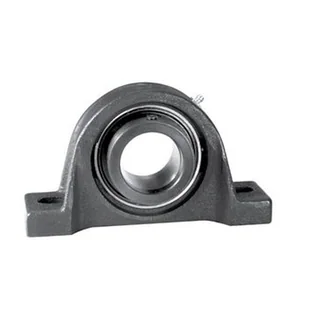
Link-Belt is recognized for its mounted bearings and bearing housings, which integrate the housing and the bearing into a single unit. These products are used in equipment where the shaft must be supported on a structure, such as conveyor belts, elevators, mixers and industrial fans.
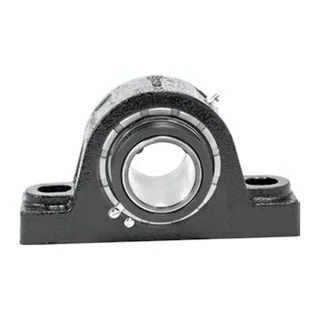
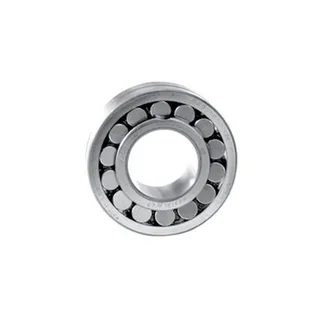
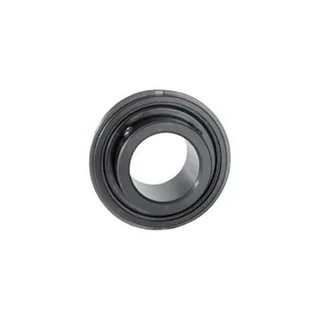
The brand stands out for the robustness of its pillow block and flange housings, as well as its insert bearings with extended inner ring, which facilitate assembly and disassembly. It also manufactures spherical roller bearings, for high load and misalignment, and cylindrical roller bearings, for high radial loads.
Link-Belt lines that MR sells
In our catalog, Link-Belt is organized into two categories: Bearing housings and Bearings. Within them, the main subcategories are:
Bearing housings
Includes housings (pillow block, split, flange) and Y housing with insert bearing (complete units ready to mount).
Bearings
Comprises Y bearing (insert), spherical roller bearings and cylindrical roller bearings.
Main Link-Belt series
Link-Belt series are identified by prefixes and numbers that indicate the product type and size. Below are the main series in the catalog.
PLB series
Heavy-duty pillow block housings, for spherical roller bearings. They are used in conveyors and heavy equipment. Examples: PLB22244, PLB22248.
22xx series
Double-row spherical roller bearings, with spherical outer raceway for self-alignment. They withstand high radial loads and misalignment. Examples: 22209LBC3, 22210LBC3.
P series
Flange housings with insert bearing (the P identifies the flange housing; the number that follows indicates the number of holes). Examples: P2U314, P2U315.
F series
Four-bolt flange housings with insert bearing. Common in conveying and process applications. Examples: F3S210E, F3S211E.
23xx series
Spherical roller bearings with greater width and capacity than the 22xx series. For very high loads. Examples: 23044LBC3, 23048LBC3.
PL series
Pillow block housings with insert bearing, for medium-sized shafts. Examples: PL3S210E, PL3S211E.
32xx series
Pillow block housings from the Flex-block line, 32xx series. Examples: 3210FT1, 3210FT3.
FC series
Flange housings with insert bearing, from the F series line. Examples: FC3S220E, FC3S222E.
FX series
Flange housings with insert bearing, a variant of the FC series. Examples: FX3S210E, FX3S211E.
TH series
Take-up housings with insert bearing, for conveyors. Examples: TH3S212E, TH3S214E.
How to read a Link-Belt code
The designation of a Link-Belt product combines letters and numbers that indicate the type, size and variants. Below are real examples from the catalog.
ER insert bearing
The prefix ER identifies the line of inserts with extended inner ring. The number that follows (8, 10, 12, etc.) expresses the shaft diameter in sixteenths of an inch. For example, ER8 corresponds to a 1/2 inch shaft, ER10 to 5/8, ER12 to 3/4, and so on.
ER KCL insert bearing
In codes such as ER8KCL, the prefix ER indicates the line, the number the shaft size, K a variant of the line and CL the Centrik-Lok locking system.
222xx spherical roller bearing
In 22209LBC3, the first three digits (222) indicate the series (spherical roller bearings, dimension series 22), the next two (09) the bore code (multiplied by 5 gives the bore diameter in mm: 09 → 45 mm). The suffix LB identifies the Link-Belt execution and C3 the internal radial clearance greater than standard.
PLB pillow block housing
In PLB22244, PLB indicates a pillow block housing for spherical roller bearing and the number 22244 corresponds to the bearing it houses (series 222, 220 mm bore).
P3U Y housing with insert bearing
In P3U210N, P indicates flange housing, 3 the number of holes, U that it is a unit with insert bearing, 210 the insert size (series 200) and N a design variant.
Frequent Link-Belt prefixes and suffixes
Suffixes in Link-Belt codes indicate design, sealing or internal clearance characteristics. Some of the most common are:
LB
Identifies the Link-Belt execution in spherical roller bearings (for example, 22209LB).
C3
Internal radial clearance greater than standard, useful for tight-fit assemblies or high temperatures.
K
In ER inserts, indicates a variant of the line (for example, ER8K).
CL
Centrik-Lok locking system of the insert to the shaft (for example, ER8KCL).
E
Variant suffix in housings (for example, F3S210E); always state the full code when ordering.
N
Housing variant suffix in Y housings (for example, P3U210N); always state the full code.
Applications by industry in Argentina
Link-Belt products are used in various industries in the country. Below are examples by sector.
Metallurgy
Pillow block housings and insert bearings in sheet transport lines, roller tables and cutting equipment.
Agriculture
Insert bearings and Y housings in augers, norias, grain conveyors and agricultural machinery.
Naval
Housings and insert bearings in conveyors, fans and auxiliary deck equipment.
Oil and gas
Housings and spherical roller bearings in pumps, compressors and auxiliary surface equipment.
Food
Housings and insert bearings in conveyors, mixers and packaging lines.
Mining
Large spherical roller bearings in mills, screens and ore conveyor belts.
Paper
Spherical roller bearings and housings in conveyors, auxiliary rollers and reel handling equipment.
Cement
Split housings and spherical roller bearings in kilns, ball mills and clinker conveyors.
Energy
Housings and bearings in fans, pumps and auxiliary power plant equipment.
Automotive
Insert bearings in assembly lines, parts conveyors and painting equipment.
Plastics
Y housings and insert bearings in extruders, injection molding machines and cooling systems.
Cold storage
Housings and insert bearings in conveyor belts and refrigeration equipment.
Sugar
Spherical roller bearings and housings in mills, cane conveyors and centrifuges.
How to choose the correct Link-Belt
To select the right product, consider these criteria:
Load and speed
Determine the radial and axial load, and the rotation speed. Spherical roller bearings withstand high loads and misalignment; ball inserts are for moderate loads and medium speeds.
Housing type
Choose between pillow block, flange or take-up housing according to the mounting structure. Split housings, when the series offers them, facilitate bearing replacement without dismounting the shaft.
Sealing
In environments with dust, moisture or washdowns, opt for versions with reinforced seals or double seal.
Internal clearance
If the assembly is a tight fit or the working temperature is high, use C3 clearance to prevent bearing seizure.
Shaft locking
Inserts with the Centrik-Lok system allow firm locking to the shaft, useful on shafts with vibration.
Equivalents and interchangeability
Some Link-Belt codes share a designation with other brands in the catalog. For example, Link-Belt ER inserts match SEALMASTER ones in several sizes.
ER inserts
Link-Belt codes ER27, ER23, ER24, ER208, ER28, ER46, ER31 and ER35 have a code with the same ER designation in SEALMASTER. This makes it easier to find an alternative; nevertheless confirm dimensions and locking type.
What to compare
When looking for equivalents, compare dimensions (bore, outer diameter, width), locking type and load capacity. Not all similar codes are interchangeable; always verify the specifications.
Frequent mistakes when replacing or buying Link-Belt
Avoid these common mistakes to ensure a correct replacement:
Confusing the insert number with the diameter in millimeters
In ER inserts, the number (8, 10, 12) is not the diameter in mm, but a size reference. For example, ER8 corresponds to 1/2 inch, not 8 mm.
Ignoring the internal clearance suffix
A bearing without C3 can fail prematurely if mounted with a tight fit or operating at high temperature. Verify the full suffix.
Choosing the wrong housing
Not all pillow block housings are the same: split housings allow the bearing to be removed without taking out the shaft, while one-piece ones require sliding the assembly.
Not considering sealing
In contaminated environments, an inadequate seal shortens bearing life. Choose the variant with protection suited to the environment.
Assembly, lubrication and maintenance
Correct assembly and adequate lubrication extend the service life of Link-Belt products.
Insert assembly
Lock the insert to the shaft following the procedure for the corresponding system (set screws or Centrik-Lok) and tighten to the torque indicated by the manufacturer. Do not strike the bearing directly; use a tube that rests on the inner ring.
Lubrication
Use good quality grease, compatible with the application. Relubricate according to service hours and environmental conditions. Avoid excess grease, which generates heat.
Alignment
Verify alignment between housings to avoid additional loads. Spherical roller bearings tolerate more misalignment than ball inserts, which allow less misalignment.
Periodic inspection
Check vibrations, temperature and noise. If there is an abnormal increase, stop the equipment and inspect the bearing.
Why get a Link-Belt quote at MR Accesorios Industriales
At MR Accesorios Industriales we sell Link-Belt with technical advice. We are an Argentine company with a track record since 1945, located in Buenos Aires, Argentina.
We work with an online catalog that allows you to search by code and view the references. If you have the product code, the measurement or a photo of the part, we will quote you promptly via WhatsApp or email.
Frequently asked questions about LINK-BELT
- What is a Link-Belt insert bearing?
- It is a ball bearing with an extended inner ring, designed to be mounted in pillow block or flange housings. It is used in conveyors, fans and agricultural machinery. The extended ring facilitates locking to the shaft and mounting in the housing.
- How do I read the code of a Link-Belt bearing?
- The code combines letters and numbers. For example, in 22209LBC3, 222 indicates the series, 09 the bore diameter (09 x 5 = 45 mm), LB the Link-Belt execution and C3 the internal clearance. In ER inserts, the number is a size reference, not the diameter in mm.
- What does the C3 suffix mean in a Link-Belt bearing?
- C3 indicates an internal radial clearance greater than standard. It is used when the bearing is mounted with a tight fit or operates at high temperatures, to prevent the clearance from closing and causing failures.
- Does Link-Belt have equivalents with other brands?
- Yes, some codes match other brands. For example, Link-Belt ER inserts have equivalents in SEALMASTER with the same designation. Always verify dimensions and specifications before replacing.
- What Link-Belt housings are in the catalog?
- Among the Link-Belt housings in the catalog are the PLB and PL series, pillow block, and the P, F and TH series with insert bearing, common in conveyors and process equipment. The choice depends on the mounting type and load.
- How do I choose the correct Link-Belt bearing for my application?
- Consider the radial and axial load, speed, housing type, sealing and internal clearance. If there is misalignment, use spherical roller bearings; for moderate loads and simple mounting, ball inserts.
- What advice does MR offer for Link-Belt?
- We work with the manufacturer's catalog and advise you on selection according to the code, the measurement or the application.
- How do I get a quote for a Link-Belt product at MR?
- You can send us the product code, the measurement or a photo of the part via WhatsApp or email. We will reply promptly with the quote and the necessary technical advice.
Updated September 29, 2026