
Blog
How to choose Link-Belt by application: load, speed, environment and mounting
Practical guide to select Link-Belt bearings and housings according to working conditions. Includes example codes and key data for quoting.
LINK-BELT catalog by part number
Technical team at MR Accesorios Industriales · Updated on October 8, 2026
Y bearing (insert): the option for quick mounting
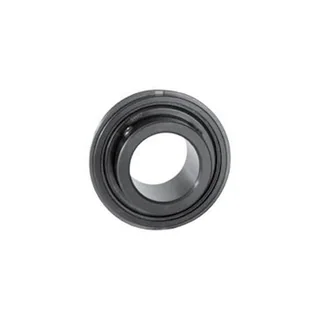
The Y bearing, also called insert, is recognized by its spherical outer ring and an inner ring that protrudes on both sides. This construction allows it to be housed in pillow block or flange housings and absorb small shaft misalignments. In the Link-Belt line, codes ER27, ER23 and ER24 are typical examples of this subcategory. They are widely used in conveyors, agricultural machinery and material handling equipment.
To choose the correct insert, first define the shaft diameter in inches or millimeters. Then check the locking type: some have set screws, others eccentric or adapter sleeve. The environment also matters: if there is dust or moisture, an insert with additional seals is recommended.
When requesting a quote, send the complete code and shaft size. If the bearing is damaged, a photo of the part helps identify the series. Avoid confusing inserts with standard deep groove ball bearings: the spherical outer ring is the key difference. At MR we distribute Link-Belt inserts and indicate the correct alternative for your application.
Spherical roller bearings: for heavy loads and misaligned shafts
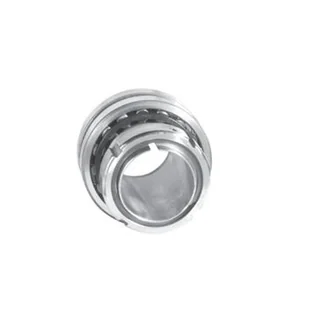
Spherical roller bearings have two rows of barrel-shaped rollers and an outer ring with a spherical raceway. This allows them to support high radial loads and axial loads in both directions, and to tolerate shaft misalignments. In the Link-Belt line, codes 6203U, 6608U and B623L are examples of this subcategory. They are used in fans, pumps, gearboxes and heavy machinery.
When selecting a spherical roller bearing, consider the magnitude of the radial load and the rotational speed. If the shaft can flex or the housings are not perfectly aligned, this type of bearing is a good option. Check the internal clearance: a C3 clearance may be necessary if there are temperature differences between shaft and housing.
To quote, send the complete code and the bore, outer diameter and width dimensions. If you don't have the code, a photo with a ruler next to it helps estimate dimensions. Avoid mounting a spherical roller bearing by striking directly on the rollers: use a sleeve that presses on the inner ring. We distribute Link-Belt spherical roller bearings and help you confirm the reference.
Cylindrical roller bearings: speed and rigidity in one piece
Cylindrical roller bearings are characterized by their cylindrical rollers and straight raceways. They support very high radial loads and allow high speeds, but do not tolerate significant misalignments. In the Link-Belt line, series 6200, 1000 and 1200 represent this subcategory. They are used in electric motors, gearboxes and machine tools.
When choosing a cylindrical roller bearing, pay attention to the ring design: it may have flanges on one or both rings, which defines whether it supports axial load in any direction. The cage also matters: sheet metal cages are common, bronze or polyamide cages appear in specific applications.
To quote, indicate the series and shaft diameter, or the complete code if you have it. If the bearing failed due to overheating, check lubrication and fit before replacing it. Avoid using cylindrical roller bearings on shafts with angular misalignment: they load on the edges and fail prematurely. At MR we quote Link-Belt cylindrical roller bearings according to your needs.
Housings: the base that defines the mounting
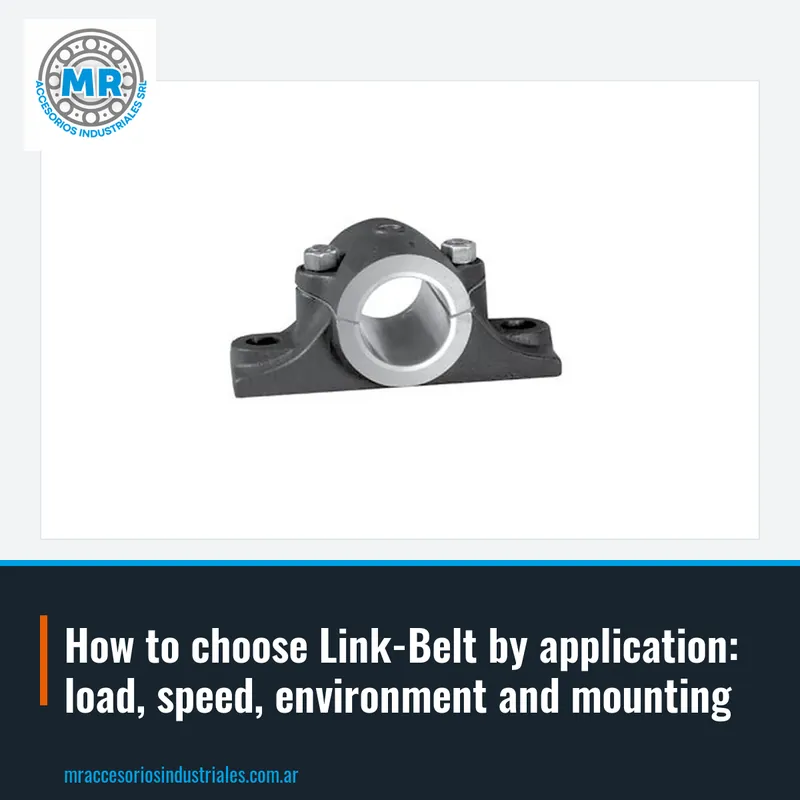
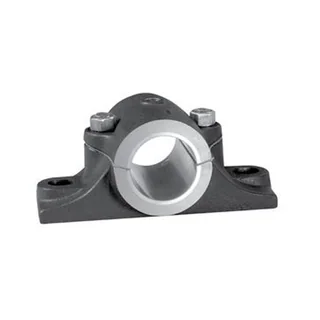
Link-Belt housings are the casings where insert bearings or spherical roller bearings are housed. They can be pillow block, flange, take-up or hanger, depending on the mounting type. Codes PU326, PU344 and 21247 are examples of this subcategory. They are used in conveyors, elevators, agitators and process equipment.
When choosing a housing, first define the mounting type: on a flat base, against a wall or at the end of a take-up shaft. Then verify the bore diameter and the distance between the centers of the mounting bolts. If the housing will be exposed to washdowns or moisture, mention it when requesting the quote.
To quote, send the housing code and the code of the bearing inside it, or the mounting dimensions. If the housing cracked, check for impacts or excessive vibration. Avoid welding the housing to the structure with the bearing installed: heat damages seals and lubricant. We distribute Link-Belt housings and advise you on selection.
Y housing with insert bearing: the complete unit
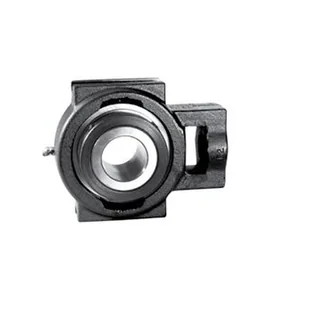
The Y housing with insert bearing is a ready-to-mount unit: it includes the housing and the corresponding Link-Belt insert. Codes TU322, TU336 and TU335 are examples of this subcategory. They are used in applications where simplicity of mounting and quick replacement are sought, such as in conveyors and agricultural machinery.
When choosing a complete unit, verify the shaft diameter and the housing type: pillow block, square flange, oval flange or take-up. Also consider the insert locking system: set screws, eccentric or adapter sleeve. The environment defines the seal type: inserts with rubber seals on both sides (2RS) are common in dusty environments.
To quote, send the complete unit code or the shaft and housing dimensions. If the bearing rotates in the housing, check the fit and the condition of the outer ring. Avoid disassembling the insert from the housing with levers that damage the spherical raceway. We distribute Link-Belt Y housings with insert bearing and quote the exact unit.
How to read a Link-Belt code and what data to send
Link-Belt codes combine letters and numbers that indicate the bearing type and size. For example, ER27 is a Y bearing (insert), 6203U is a spherical roller bearing and PU326 is a housing. Therefore, the complete code is the most important data to identify the part. To interpret other suffixes or prefixes, consult with the MR technical team.
When requesting a quote, the most useful thing is to send the complete code as engraved on the part. If it is not legible, measure the bore, outer diameter and width with a caliper. A photo of the part with a ruler or coin as reference also helps. It is not enough to say 'a small Link-Belt bearing': the variety of series is wide.
Avoid assuming that a similar code from another brand is equivalent without confirming it. Dimensions may match, but internal design and seals may vary. If you have the code from another brand, send it to us and we will indicate the corresponding Link-Belt alternative. At MR we work with Link-Belt and help you interpret the reference.
Common mistakes when choosing or mounting Link-Belt
One of the most frequent mistakes is choosing a bearing only by shaft diameter, without considering load and speed. A Y insert may be practical, but it does not support the same loads as a spherical roller bearing. Another mistake is ignoring the environment: without adequate seals, dust and moisture shorten service life. It is always advisable to review the actual working conditions.
During mounting, a typical mistake is striking the bearing directly with a hammer. This damages raceways and rollers, and can cause premature failures. Another mistake is not checking alignment between housings: excessive misalignment overloads the bearing. It is also common not to lubricate correctly: each bearing type has its method and frequency.
To avoid these problems, follow the manufacturer's instructions and consult if in doubt. If the bearing failed, try to identify the cause before replacing it: wear, spalling, overheating or corrosion. Send us photos of the failure and we will guide you. At MR we quote Link-Belt bearings and housings so your equipment works again.
Frequently asked questions
What does the 2RS suffix mean on a bearing?
The 2RS suffix indicates that the bearing has rubber seals on both sides. This protects against dust and moisture ingress, and retains lubricant. It is common in insert bearings and complete units for contaminated environments.
How do I identify a Link-Belt bearing if it has no visible code?
If the code is not legible, measure the bore, outer diameter and width with a caliper. Also take a photo of the part with a ruler as reference. With that data, at MR we help you identify the correct series and model.
Can I use a Link-Belt bearing instead of another brand?
Yes, in many cases it can be replaced by a Link-Belt equivalent. To confirm equivalence, send the original brand code and dimensions. We will indicate the corresponding Link-Belt alternative.
What is the difference between a Y bearing and a spherical roller bearing?
The Y bearing is an insert with a spherical outer ring that is housed in a housing, ideal for quick mounting and moderate loads. The spherical roller bearing has two rows of rollers and supports heavy loads and misalignments, but requires a suitable housing.
How do I request a quote for Link-Belt bearings?
You can write to us via WhatsApp or email with the bearing code, dimensions or a photo of the part. Also indicate the application and working conditions. We will reply promptly with the quote.
Products with photos in the catalogue
Keep reading
- Link-Belt Split Housings: Efficient Solutions for Demanding Industrial Applications
Discover the Link-Belt line of split housings and mounted bearings, designed to withstand heavy loads and adverse conditions in Argentine industry. We quote the exact model you need.
- How to read Link-Belt codes: designation structure, prefixes, suffixes and real examples
Practical guide to interpreting the nomenclature of Link-Belt housings and bearings. Understand what each part of the code indicates and get a quote for the correct part.
- Link-Belt by industry: where it is used, how to select it, mounting and maintenance to make it last
We tell you in which industries Link-Belt housings and bearings are used, how to choose the correct model and what mounting and maintenance care extends their service life.
Continue here
Need a quote?
Send us the code, size or a photo of the part and we'll quote you shortly.