
Blog
Frequent Link-Belt bearing failures: how to recognize them in time and prevent them with good mounting and maintenance
Learn about the most common Link-Belt bearing failures, how to detect them before they stop your equipment, and which mounting and maintenance practices help prevent them.
LINK-BELT catalog by part number
Technical team at MR Accesorios Industriales · Updated on October 14, 2026
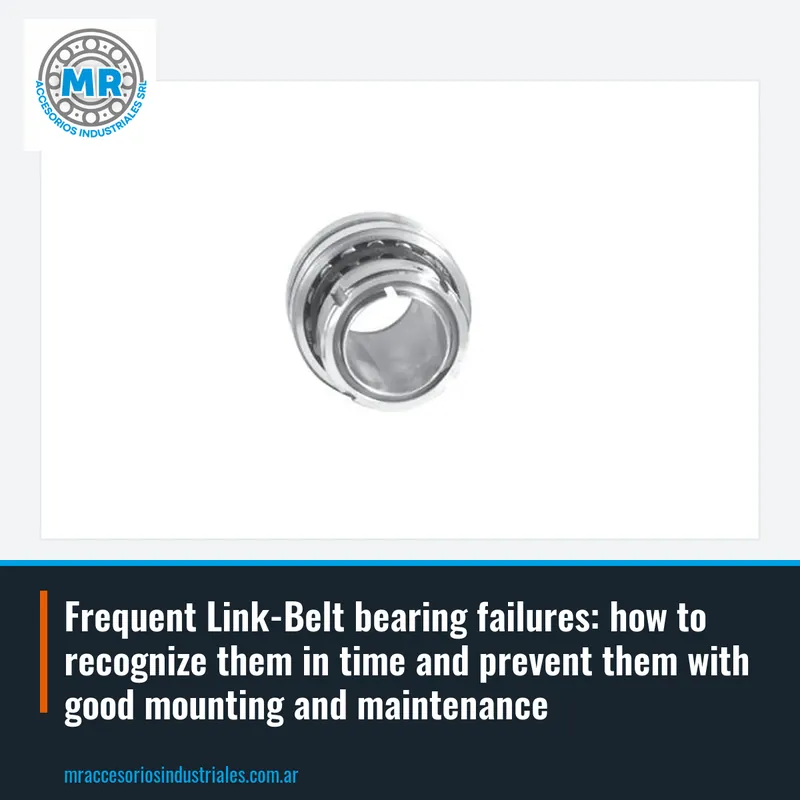
How to recognize an incipient failure in a Link-Belt bearing
Link-Belt bearing failures rarely appear suddenly: they almost always leave early signs that a trained ear and hand can detect. A metallic noise, a vibration that wasn't there before, or an increase in temperature at the housing are the first indications. If ignored, the damage progresses quickly and ends in an unplanned stoppage. Therefore, it is advisable to conduct inspection rounds with a mechanical stethoscope or a vibration meter.
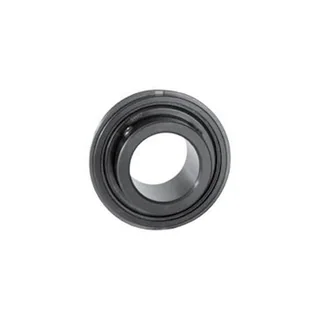
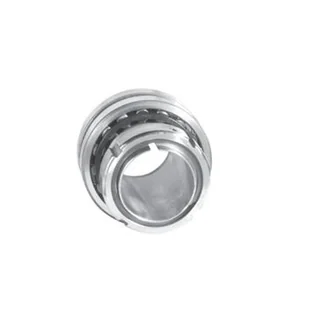
In insert bearings, such as ER27 or ER23, pay attention to radial play and the appearance of looseness in the housing. A loose insert inside the housing causes wear on the outer ring and can damage the housing. In spherical roller bearings, such as 6203U or 6608U, failure usually manifests as increased axial play or an uneven wear pattern on the raceways. A bearing that rotates with difficulty or seizes when moved by hand is already asking for replacement.
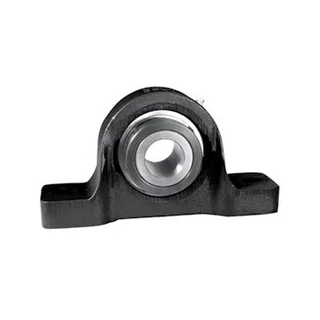
Temperature is another key indicator: if the housing is hotter than its neighbors, something is wrong. It could be lack of lubrication, excess grease, misalignment, or excessive load. In complete housings, such as PU326 or PU344, also check the base fixation and the condition of the seals. If in doubt, it's best to take a photo of the bearing and housing and send it to us for guidance.
Failures due to incorrect mounting in Link-Belt insert bearings
Mounting is the most critical moment for the service life of a Link-Belt insert bearing. A common mistake is forcing the insert onto the shaft with direct blows on the outer ring or seals. This can deform the raceways, damage the seal lips, and create pressure points that lead to premature failure. The correct approach is to use a controlled-fit mounting, preferably with a device that pushes evenly on the inner ring.
Another frequent mistake is not respecting the fit between the shaft and the insert bore. If the fit is too loose, the inner ring rotates on the shaft and causes fretting wear; if too tight, internal clearance is reduced and the bearing operates with excessive preload. In inserts with set screws, such as ER24, verify that the screws are properly tightened and that the shaft has no burrs or marks that prevent correct seating.
Alignment is also fundamental: misalignment between two housings sharing a shaft generates additional loads and drastically reduces bearing life. In applications with Y-housings, such as TU322 or TU336, the base must be flat and the fixing screws well tightened. If the housing is tilted or the shaft does not pass freely, correct the installation before starting the equipment.
Failures due to inadequate lubrication in Link-Belt bearings
Lubrication is responsible for a large part of avoidable failures in Link-Belt bearings. Both lack and excess grease are harmful: lack causes metal-to-metal contact and accelerated wear, while excess increases internal friction and raises temperature. In sealed insert bearings, grease comes from the factory; if the environment is very contaminated or there are frequent washdowns, check the seals frequently.
In bearings that allow relubrication, periodic relubrication is key to maintaining the lubricating film on the raceways. The frequency depends on speed, load, and operating temperature, but a lubrication program based on operating hours is good practice. Always use a grease compatible with the original and with the operating conditions, avoiding mixing incompatible bases.
A common mistake is adding grease without purging the old, which causes accumulation and overheating. Ideally, relubricate with the equipment running, adding grease slowly until a little comes out through the seal or relief valve. Then, clean the excess to avoid attracting contaminants. If the bearing operates in an environment with dust, water, or chemicals, choose an insert with reinforced seals or a housing with a protective cover.
Failures due to misalignment and excessive loads in Link-Belt spherical roller bearings
Link-Belt spherical roller bearings are designed to withstand misalignment and combined loads, but they have a limit. If misalignment exceeds the permissible angle, the rollers move toward the edges of the raceways and generate localized stresses that end in flaking. In applications with long shafts or separated housings, such as in conveyors or fans, it is essential to align the housings precisely before fixing the bearing.
Overload is also a common cause of failure in these bearings. If the equipment operates above its rated capacity, the raceways and rollers fatigue faster and premature pitting or flaking appears. In spherical roller bearings mounted with an adapter sleeve, excessive tightening can reduce internal clearance and cause abnormal heating. Always verify radial clearance after mounting.
To prevent these failures, periodically monitor vibration and temperature of the housings. A gradual increase in vibration may indicate raceway wear or increasing misalignment. In spherical roller bearings, a wear pattern at the ends of the rollers suggests misalignment, while wear in the center indicates excessive load. If these symptoms appear, review the installation and correct the cause before replacing the bearing.
Failures due to contamination and poor sealing in Link-Belt bearings
Contamination by solid particles or moisture is one of the main causes of premature failure in Link-Belt bearings. The ingress of dust, sand, or metal chips into the bearing causes scratching of the raceways and abrasive wear. In very dirty environments, such as quarries, aggregate plants, or metallurgical industries, it is essential to use inserts with effective seals and housings with additional protections.
Link-Belt insert bearings usually come with contact seals that offer good protection, but they are not infallible. If the equipment is washed with pressurized water or operates outdoors, water can enter and cause corrosion. In such cases, choose inserts with reinforced seals or add an external labyrinth. In housings, such as PU326 or PU344, also check that covers and caps are complete and in good condition.
Moisture also affects bearings that are not relubricated with adequate frequency. Grease acts as a barrier against contamination, but if it degrades or washes out, it loses that capacity. Therefore, in exposed applications, it is advisable to use greases with anti-corrosion additives and periodically check the condition of the seals. If rust is observed on the raceways or rollers, the bearing must be replaced.
Failures due to fatigue and end of service life in Link-Belt bearings
Even with correct mounting and maintenance, every Link-Belt bearing reaches the end of its service life due to material fatigue. Fatigue manifests as flaking or pitting on the raceways and rollers, and is a normal and inevitable process. However, good maintenance practices can significantly extend service life and prevent secondary failures that damage other equipment components.
To recognize incipient fatigue, pay attention to characteristic noises and vibrations. A fatigued bearing produces a rough, constant sound, different from the smooth hum of a healthy bearing. Fatigue usually begins on the raceways or rolling elements, and spreads quickly if not addressed. In spherical roller bearings, flaking may appear in the highest load zones.
When fatigue is detected, it is advisable to replace the bearing as soon as possible to avoid damage to the shaft or housing. In the case of complete housings, such as TU335, it is sometimes better to replace the entire assembly if the housing is already worn. Before installing the new bearing, clean the shaft and housing thoroughly, verify tolerances, and apply adequate lubrication. This ensures a full new service life.
Good preventive maintenance practices for Link-Belt bearings
Preventive maintenance is the most effective tool to avoid unexpected failures in Link-Belt bearings. A basic program includes periodic visual and auditory inspections, temperature and vibration measurement, and lubrication condition control. Inspection frequency depends on equipment criticality, but a weekly or biweekly round is a good starting point for most industrial applications.
During each inspection, verify that the housings are firm, that the seals show no grease leaks or damage, and that there are no signs of corrosion or contamination. In inserts with set screws, such as ER24, check screw tightness with a torque wrench. In spherical roller bearings, radial clearance can be measured with a dial indicator to detect internal wear. Recording values allows tracking evolution and planning replacement.
Training maintenance personnel is key: an operator who knows how to recognize early failure symptoms can avoid a costly stoppage. It is also important to use genuine Link-Belt spare parts, as counterfeit or questionable quality bearings have a much shorter service life and can damage equipment. If you have doubts about the condition of a bearing or need advice to set up a maintenance plan, write to us and we'll help.
Frequently asked questions
How do I know if a Link-Belt bearing is failing?
The most common symptoms are abnormal noise, excessive vibration, increased temperature at the housing, and radial or axial play outside normal limits. If you detect any of these signs, inspect the bearing and plan its replacement.
How often should I lubricate a Link-Belt bearing?
It depends on the bearing type and operating conditions. Sealed inserts do not require relubrication under normal conditions, while open spherical roller bearings need periodic relubrication. A program based on operating hours and manufacturer recommendations is most appropriate.
Can I mount a Link-Belt bearing without special tools?
Yes, but do it carefully to avoid damaging the bearing. Avoid hitting directly on the rings or seals, and use a controlled-fit mounting. If in doubt, write to us with the code or a photo.
What should I do if the Link-Belt housing is damaged but the bearing is fine?
In that case, you can replace only the housing, provided the bearing has not suffered damage from the poor condition of the housing. Verify that the new housing is compatible with the insert and that the housing is in good condition.
How do I request a quote for a Link-Belt bearing?
Send us the bearing code, dimensions, or a photo of the part via WhatsApp or email. With that data, we will quote the genuine Link-Belt spare part promptly.
Products with photos in the catalogue
Keep reading
- Link-Belt Split Housings: Efficient Solutions for Demanding Industrial Applications
Discover the Link-Belt line of split housings and mounted bearings, designed to withstand heavy loads and adverse conditions in Argentine industry. We quote the exact model you need.
- How to read Link-Belt codes: designation structure, prefixes, suffixes and real examples
Practical guide to interpreting the nomenclature of Link-Belt housings and bearings. Understand what each part of the code indicates and get a quote for the correct part.
- Link-Belt by industry: where it is used, how to select it, mounting and maintenance to make it last
We tell you in which industries Link-Belt housings and bearings are used, how to choose the correct model and what mounting and maintenance care extends their service life.
Continue here
Need a quote?
Send us the code, size or a photo of the part and we'll quote you shortly.