

DIAMOND guide
What Diamond manufactures and what makes it stand out
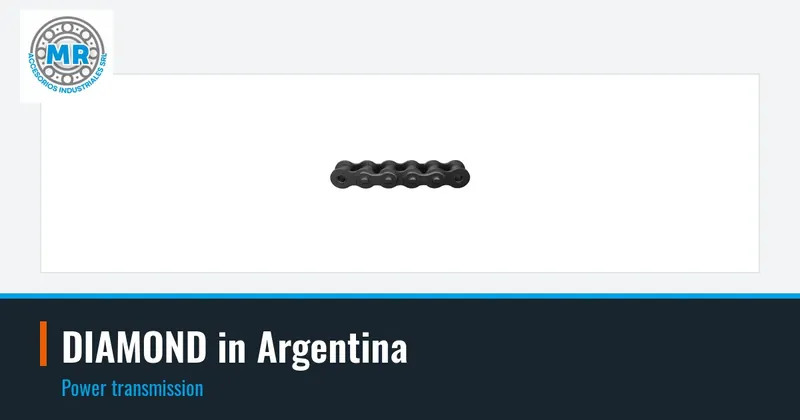
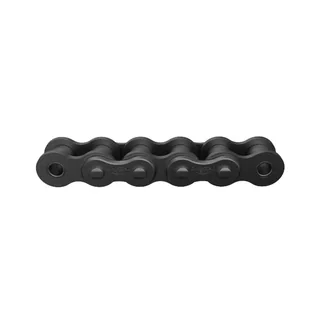
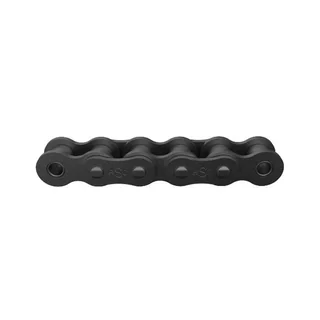
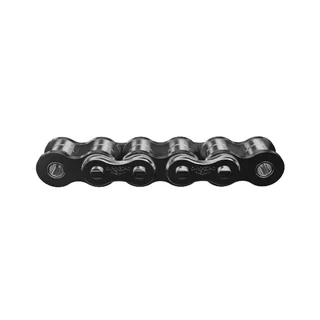
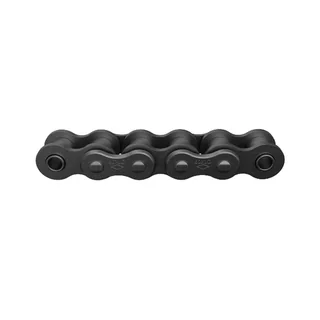
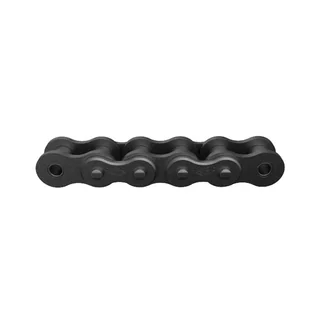
Diamond manufactures roller chains and conveyor chains for power transmission. Its products are used to transmit motion between shafts, drag materials or lift loads in industrial equipment.
The brand stands out for offering chains in carbon steel and stainless steel, with standard pitches according to ANSI/ASME and ISO/British Standard. This facilitates replacement of chains from other brands of the same standard and designation.
Diamond chains are used in conveyors, elevators, production machines and drive systems in various industries. Their construction with rollers and steel plates gives them wear resistance and continuous load capacity.
Diamond lines that MR sells
At MR Accesorios Industriales we sell Diamond roller chains and conveyor chains. Within the Power transmission category, we work with the following subcategories:
Roller chains, including series S, DMD, C and SC.
Conveyor chains, including series D, C, CA, SC and S.
Main Diamond series
Diamond organizes its chains into series according to the type of construction and the pitch standard. These are some series from the catalog:
Series S
Series S is Diamond's standard ANSI/ASME roller chain line. It includes from small pitches such as S25 and S35 to large pitches, with multiple-strand variants. It is used in general drives, conveyors and agricultural machinery.
Example codes: S25, S35.
Series DMD
Series DMD corresponds to roller chains according to ISO/British Standard. The codes include the pitch (05B, 06B, 08B, etc.) and the number of strands. They are common in equipment of European origin and in applications that specify ISO / British Standard.
Example codes: DMD-05B-1, DMD-06B-1.
Series C
Series C corresponds to double-pitch chains: roller and conveyor chains whose pitch is double that of the equivalent ANSI chain. It includes codes such as C2040, C2042, C2050 and C2052, and stainless steel versions with the SS suffix.
Example codes: C2040, C2042.
Series D
Series D corresponds to conveyor chains. The codes begin with D followed by figures that indicate the pitch and the construction variant. They are used in conveyors and elevators.
Example codes: D4012, D4016.
Series SC
Series SC includes double-pitch roller chains and conveyor chains. Codes SC2040 and SC2042 are examples of double-pitch roller chains, while SC2060H C and SC2060HNP C correspond to conveyor chains.
Example codes: SC2040, SC2042.
Series CA
Series CA is for conveyor chains (Conveyor Series). Codes CA550, CA555 and CA557 are used in conveyors and material elevators.
Example codes: CA550, CA555.
How to read a Diamond code
The designation of a Diamond chain follows international standards. Understanding the structure allows you to identify the pitch, the number of strands and the material. Below are real examples from the catalog:
Code 100
Code 100 corresponds to an ANSI roller chain with a pitch of 1 1/4 inches, single strand. It is a large-pitch chain for power transmission.
Code 105
Code 105 is another large-pitch roller chain reference from the Diamond catalog. Consult the data sheet to see its dimensions before choosing it as a replacement for a 100.
Code 120
Code 120 indicates an ANSI roller chain with a pitch of 1 1/2 inches, single strand. It is suitable for higher power and moderate speed drives.
Code 140
Code 140 is an ANSI roller chain with a pitch of 1 3/4 inches, single strand. It is used in heavy equipment such as mixers and high-load conveyors.
Code 43SB
Code 43SB corresponds to a Diamond conveyor chain, in the SB variant. It is used in conveyors and elevators; consult the data sheet for pitch and dimensions.
Code 63SB
Code 63SB is a Diamond conveyor chain, in the SB variant. Consult the data sheet for pitch, dimensions and breaking load.
Code S81X
Code S81X is a conveyor chain from Diamond's S series. Consult the data sheet for pitch and dimensions.
Code 43 SS
Code 43 SS is a stainless steel conveyor chain. The SS suffix indicates stainless steel, useful in humid or corrosive environments.
Frequent Diamond prefixes and suffixes
The suffixes and prefixes in Diamond codes provide key information about the chain configuration. These are the most common:
Suffix -1, -2, -3
Indicates the number of strands of the chain. For example, DMD-06B-1 is single, DMD-06B-2 is double and DMD-06B-3 is triple. The higher the number of strands, the greater the load capacity.
Suffix SS
Indicates stainless steel. Codes such as C2040SS or 43 SS are used in humid environments or with frequent washdowns.
Prefix S
Designates the standard ANSI/ASME series. Codes S25, S35, S40, etc., indicate in their first figures the pitch in eighths of an inch (S40 = 1/2 inch pitch).
Prefix DMD
Indicates roller chain according to ISO/British Standard. The number that follows (05B, 06B, 08B, etc.) identifies the size according to ISO 606, series B.
Prefix C
Used in double-pitch chains, roller and conveyor. The pitch is double that of the equivalent ANSI chain (C2040 = 1 inch pitch, double the ANSI 40).
Prefix D
Identifies conveyor chains. The first figures after the D correspond to the pitch (for example, D4012).
Applications by industry in Argentina
Diamond chains are used in a wide variety of industries in Argentina. These are the main applications by sector:
Metallurgy
In the metallurgical industry, Diamond roller chains transmit power in roller tables, scrap conveyors and part handling lines. Series S and C are preferred for their wear resistance and standard pitches.
Agriculture
In agriculture, Diamond chains are used in harvesters, seeders, augers, grain elevators and processing equipment. Series S and DMD are chosen to replace agricultural machinery chains of the same designation.
Naval
In the naval industry, conveyor and roller chains are used in cranes, deck equipment and auxiliary conveyors. Chains with anti-corrosion treatment or stainless steel (SS suffix) are chosen to resist the marine environment.
Oil
In the oil industry, Diamond chains are used in auxiliary drives, service equipment and conveyors. Multiple-strand chains and H series, with reinforced plates, are chosen for high loads and continuous work.
Food
In the food industry, stainless steel chains (SS suffix) are chosen for their resistance to corrosion and washdowns. They are used in food conveyors, packaging lines, washers and processing equipment. Series C…SS and 43 SS are examples.
Mining
In mining, Diamond conveyor and roller chains are used in ore conveyors, feeders and bucket elevators. High resistance to abrasion and impact is required.
Paper
In the paper industry, roller chains are used in auxiliary drives of paper machines, winders and roll conveyors. Series S and DMD are common for their precision and durability.
Cement
In cement plants, conveyor chains are used in bucket elevators, clinker conveyors and auxiliary equipment. They must withstand high temperatures and abrasive dust.
Energy
In the energy sector, Diamond chains are used in thermal power plants for fuel and biomass conveyors and in auxiliary transmission systems. They are selected according to load and environment.
Automotive
In the automotive industry, roller chains are used in assembly lines, part conveyors and painting equipment. Series S and DMD are suitable for their precision and low maintenance.
Plastics
In the plastics industry, Diamond chains are used in part and mold conveyors and in cooling systems. Standard roller chains with adequate lubrication for high temperatures are preferred.
Refrigeration
In refrigeration plants, stainless steel chains (SS suffix) are used in meat conveyors, washing systems and cold chambers. Resistance to corrosion and frequent washdowns is key.
Sugar
In the sugar industry, conveyor chains are used in cane conveyors and bagasse elevators. They must withstand heavy loads and humid environments.
How to choose the right Diamond
To select the appropriate Diamond chain, consider these technical criteria:
Working load: calculate the chain tension based on the transmitted power and speed. Choose a chain with sufficient tensile strength and an adequate safety factor (generally 5:1 or higher for uniform loads).
Speed: the higher the speed, the greater the wear and the need for lubrication. For high speeds, prefer small-pitch chains and multiple strands to reduce impact.
Environment: if there is humidity, chemicals or frequent washdowns, use stainless steel chains (SS suffix). In environments with abrasive dust, consider chains with hardened plates or seals.
Type of drive: for power transmission between shafts, use roller chains (series S, DMD, C). For dragging or transporting materials, use conveyor chains (series D, CA, SC).
Sprockets: verify that the sprockets have the same pitch and number of teeth compatible with the chain. Uneven wear on the sprockets reduces chain life.
Length: calculate the number of links needed; an even number is preferable to avoid offset links. The chain is closed with a connecting link, and the tensioner only compensates for elongation due to wear.
Equivalences and interchangeability
Many Diamond chains have equivalence with chains from other brands that follow the same standard. In our catalog, codes with the same designation are compatible in dimensions and pitch.
For example, Diamond code 06B-1 is equivalent to EMMAR code 06-B1. Both are ISO/British Standard roller chains of size 06B and single strand.
Other examples of equivalences: 24B-1, 32B-2, 10B-2, 20B-1, 10B-3, 12B-1 and 20B-2 have their counterpart in the EMMAR brand with the same designation.
When comparing equivalences, always verify the pitch, inner width, roller diameter and tensile strength. Although the designation is the same, there may be differences in material or heat treatment that affect service life.
Frequent errors when replacing or buying Diamond
Avoid these common errors when selecting or replacing a Diamond chain:
Confusing the pitch: an S40 chain (1/2" pitch) is not the same as an S50 (5/8" pitch). Verify the pitch on the sprocket or measure the distance between pin centers.
Ignoring the number of strands: a single chain does not replace a double or triple. If you need more load capacity, use the same number of strands or increase the pitch.
Not considering the material: in corrosive environments, a carbon steel chain will rust quickly. Use stainless steel (SS suffix) or chains with anti-corrosion treatment.
Not checking sprocket wear: if the sprockets are worn, the new chain will be damaged prematurely. Replace sprockets and chain together if necessary.
Inadequate lubrication: a chain without lubrication or with the wrong lubricant wears quickly. Follow the manufacturer's recommendations according to speed and environment.
Incorrect tension: a chain that is too tight or too loose reduces its life. Adjust the tension according to the equipment specifications.
Assembly, lubrication and maintenance
Correct assembly and maintenance extend the life of the Diamond chain. Follow these practices:
Assembly: align the shafts and sprockets to avoid lateral loads. Use connecting links of the same pitch and type. Verify that the chain has the proper tension: a sag of 2-3% of the center distance is normal.
Lubrication: apply lubricant in the articulation area between plates and rollers. For low speeds, periodic manual lubrication; for medium speeds, oil bath; for high speeds, circulation or mist lubrication.
Inspection: periodically check the wear of pins and rollers. If the chain elongates more than 3% of its original length, it is time to replace it.
Storage: store chains in a dry place protected from corrosion. If unused for a long time, apply a layer of protective oil.
Why quote Diamond at MR Accesorios Industriales
At MR Accesorios Industriales we sell Diamond chains for Argentine industry. We work with power transmission and know the needs of the local market.
Our online catalog allows you to search by Diamond code and view the references. If you have the code from another brand or an unidentified part, we help you find the equivalence.
We are in Buenos Aires, Argentina. Quote your Diamond chain via WhatsApp or email with the code, size or a photo of the part. We respond promptly.
Frequently asked questions about DIAMOND
- Where to buy Diamond chains in Argentina?
- At MR Accesorios Industriales we sell Diamond roller and conveyor chains. We are in Buenos Aires, Argentina. You can quote via WhatsApp or email with the chain code.
- How do I know which Diamond chain I need?
- Identify the code of the current chain or measure the pitch (distance between pin centers in inches or eighths). With that data, search the catalog or ask us. You can also send us a photo of the chain and sprocket.
- What does the SS suffix mean on a Diamond chain?
- The SS suffix indicates stainless steel. These chains are corrosion-resistant and are used in humid environments or with frequent washdowns. Examples: C2040SS, 43 SS.
- Are Diamond chains interchangeable with other brands?
- Yes, if the designation follows the same standard (ANSI or ISO), the dimensions are compatible. For example, Diamond 06B-1 is equivalent to EMMAR 06-B1. Always verify pitch, width and strength.
- What is the difference between roller chain and conveyor chain?
- Roller chain is used to transmit power between shafts, with sprockets that engage the rollers. Conveyor chain is designed to drag or move materials, with special plates or attachments.
- How is a Diamond chain lubricated?
- Lubrication depends on speed: manual for low speeds, oil bath for medium and circulation for high. Apply lubricant to the articulation between plates and rollers, and avoid excess that attracts dust.
- How long does a Diamond chain last?
- Service life depends on load, speed, lubrication and environment. With proper maintenance, a well-selected chain can last thousands of hours. Replace it if it elongates more than 3% of its original length.
- Can I use a Diamond chain in the food industry?
- Yes, with stainless steel chains (SS suffix), which resist corrosion and frequent washdowns. Consult the sanitary standards of your process.
Updated September 29, 2026