
Blog
How to identify a DIAMOND chain by its code and choose the right one
Learn about the DIAMOND chain lines we supply in Argentina: roller chains and conveyor chains. We explain what each one is for and how to quote them by code.
DIAMOND catalog by part number
Technical team at MR Accesorios Industriales · Updated on October 9, 2026
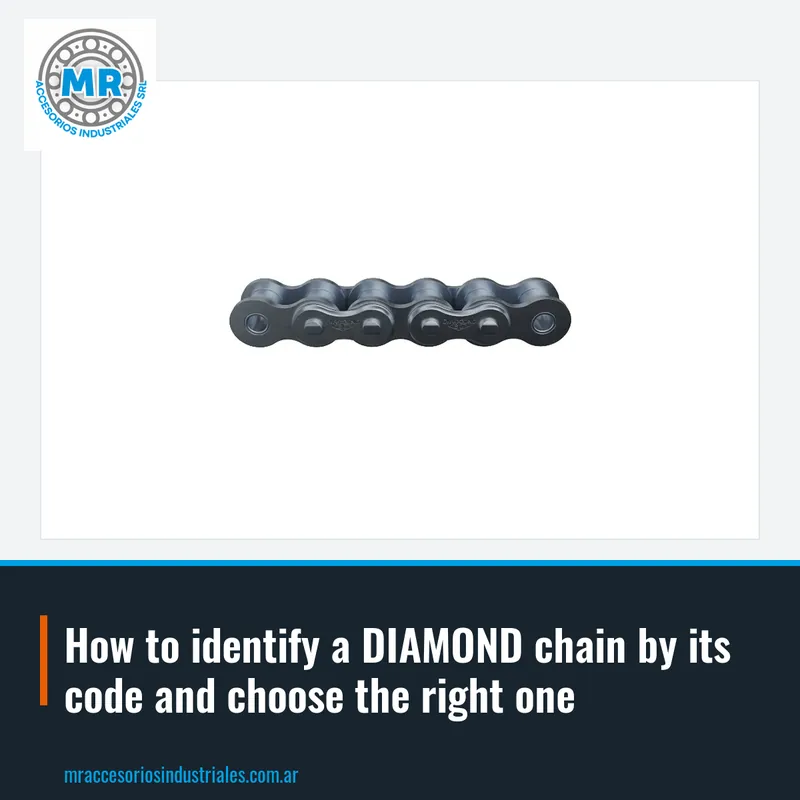
DIAMOND roller chains: the main line for power transmission
DIAMOND roller chains are used to transmit motion and power between shafts in machines of all kinds. Their rollers rotate on bushings mounted on pins, allowing smooth engagement with the sprocket. In the local market they are simply known as roller chains or transmission chains.
These chains appear in manufacturing, agro-industry, lifting and material handling equipment. For example, they are mounted on conveyors, agricultural machinery, pumps and compressors. They are also common in packaging lines and secondary transmission systems. In the American ANSI standard, chains are identified with numbers such as 50, 60, 80 and 120.
To identify a DIAMOND roller chain, it is advisable to look at the marking on the links. The code usually indicates the pitch and the type of construction. For example, the code 50-4 corresponds to a 5/8 inch pitch chain with four strands. Codes such as 80NP or 120H are also seen, corresponding to 1 inch pitch and 1 1/2 inch pitch chains, respectively. It is always useful to measure the pitch between pins and count the strands.
DIAMOND conveyor chains: design for moving loads
DIAMOND conveyor chains are designed for moving bulk materials or parts in line. Unlike common roller chains, they usually have plates, tabs or attachments to secure the items to be transported. They are used in industries such as food, wood, paper and packaging. They also appear in ovens, washing tunnels and assembly lines.
In conveyor chains in general there are variants such as bushing chains, plate chains and chains with special attachments. Some codes in this line are 63SB, S81X and 43SB; when in doubt, it is advisable to verify the measurements before ordering. These chains are chosen based on load, speed and working environment.
To quote a DIAMOND conveyor chain, it is key to send the complete code if it is marked. If it cannot be read, the pitch, inner width and pin diameter can be measured. A photo of the chain and the place where it is mounted also helps. With that data we can identify the exact model and send you a quote shortly.
How to identify a DIAMOND chain by its code
The code of a DIAMOND chain provides information about the pitch, type and number of strands. In ANSI roller chains, the figures before the last digit indicate the pitch in eighths of an inch. For example, a 50 chain has a 5/8 inch pitch, an 80 has a 1 inch pitch.
In conveyor chains, codes combine numbers and letters that define the geometry and attachments. Therefore, in codes such as 63SB or 43SB it is advisable to confirm pitch, width and type of attachment with the part in view. We always recommend not relying only on the code if there are doubts: a quick measurement avoids errors.
When the customer has the code of another brand, we can look for the DIAMOND equivalent. For that we need the original code and, if possible, the main measurements. With that information we verify the correspondence in technical tables. This way we ensure we quote the correct chain for the application.
Typical applications of DIAMOND chains in Argentine industry
DIAMOND chains are seen in a wide variety of industrial equipment in Argentina. In agriculture, they are used in harvesters, augers and grain conveyors. In the food industry, they appear in ovens, fryers and packaging lines. They are also common in beverage, dairy and bakery plants.
In the manufacturing sector, DIAMOND roller chains transmit power in presses, shears and machine tools. Conveyor chains move parts in assembly and painting lines. In mining and construction, they are used in screens, crushers and bucket elevators.
To choose the right chain, load, speed and environmental conditions must be considered. In humid or dusty environments, chains with seals or special treatments are recommended. We help you choose according to the equipment and use.
Data needed to quote a DIAMOND chain
To quote a DIAMOND chain, the most practical thing is to send the complete code if it is marked on the links. If it cannot be read, the pitch, inner width and diameter of the rollers or pins can be measured. It is also useful to know the number of strands and the total length in pitches or meters. A photo of the chain and the equipment helps confirm the model.
In the case of conveyor chains, in addition to the pitch, it is advisable to indicate the type of plate or attachment. For example, if it has tabs, extended pins or welded plates. It is also important to know the chain material if it works in contact with food or at high temperature. With that data we can identify the exact product.
When the customer brings the code of another brand, we use it to look for the DIAMOND equivalent. For that we ask for the original code and, if possible, the main measurements. This way we avoid interpretation errors and ensure an accurate quote. We send the response shortly through the channel the customer prefers.
Common mistakes when ordering or mounting DIAMOND chains
One of the most frequent mistakes is ordering the chain only by pitch, without verifying the inner width. Two chains with the same pitch can have different widths and not be interchangeable. The number of strands is also confused: a 50-2 is not the same as a 50-4. Therefore, it is always advisable to check the complete code or measure the chain well.
During mounting, a common mistake is tensioning the chain too much or too little. Excessive tension generates premature wear on pins and rollers. Insufficient tension can cause jumping on the sprocket. The correct thing is to follow the manufacturer's recommendation for each application and periodically check the stretch.
Another mistake is not lubricating the chain or using an inadequate lubricant. DIAMOND chains require lubrication according to speed and environment. In dusty or humid environments, care must be extreme. Proper maintenance extends service life and avoids unexpected production stoppages.
How to buy DIAMOND chains in Argentina with MR
At MR we supply and distribute DIAMOND chains in Argentina. We quote DIAMOND roller chains and conveyor chains. If you have the code of the chain you need, we quote it without obligation. We can also help you identify the model from measurements or photos.
To request a quote, you can write to us via WhatsApp or email. In the message include the chain code, the measurement or a photo of the part. We review the information and respond shortly.
In addition to DIAMOND chains, at MR we supply other power transmission products. If your equipment needs a special chain or a particular configuration, consult us. We are in Buenos Aires, Argentina. Your inquiry is welcome: it is the best way to ensure the correct purchase.
Frequently asked questions
What does the code on a DIAMOND chain mean?
The code indicates the pitch, the type of construction and sometimes the number of strands. For example, 50-4 is a 5/8 inch pitch chain with four strands. In conveyor chains, it is also advisable to confirm the type of plate or attachment.
How do I know if a DIAMOND chain is compatible with my equipment?
The safest way is to compare the complete code and the main measurements: pitch, inner width and roller diameter. If you have the code of another brand, we can look for the DIAMOND equivalent. Send us a photo and the data you have.
Can I order a custom DIAMOND chain?
Yes, we quote the DIAMOND chain in the length you need. If it has special attachments, consult us with the application details.
What is the difference between a roller chain and a conveyor chain?
The roller chain is mainly used to transmit power between shafts. The conveyor chain is designed to move materials or parts, and usually has plates, tabs or attachments to secure the load.
How do I quote a DIAMOND chain in Argentina?
You can write to us via WhatsApp or email with the chain code, measurements or a photo. We respond shortly with the quote.
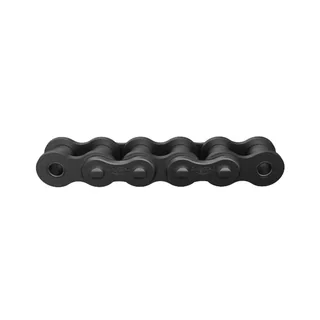
Products with photos in the catalogue
Keep reading
- How to read DIAMOND chain codes: structure, examples and what data to send
What a DIAMOND chain code says, how it relates to pitch in roller chains, how conveyor chains differ and what data to send for a quote.
- GUMMI Couplings: Vibration Absorption and Reliable Power Transmission for Industry
GUMMI elastic couplings absorb vibrations and misalignments, protect machinery, and ensure reliable power transmission. Learn about their configurations and how to choose the right model.
- Tsubaki industrial chains: quality, durability and performance for demanding applications
Discover the types of Tsubaki chains we supply: roller, conveyor, leaf, freewheels, couplings and torque limiters. We help you choose the right one for your application.
Continue here
Need a quote?
Send us the code, size or a photo of the part and we'll quote you shortly.