
Blog
Soft foot in machines: what it is, how to detect it and how to correct it
Soft foot makes the machine not rest evenly on its base. We explain how to detect it, correct it with shims and verify before aligning.
SKF bearings in Argentina: guide and quotes
Technical team at MR Accesorios Industriales · Updated on November 14, 2026
What soft foot is and why it appears
Soft foot is a condition in which the machine does not rest evenly on all its feet. It is like a wobbly table: one of the supports is in the air or barely touches. When the anchor bolts are tightened, the housing deforms to reach the base. That deformation can misalign the bearing housings and generate vibration problems.
Soft foot appears for different reasons. Sometimes the concrete base or the metal bedplate is not perfectly flat. Other times the machine foot has burrs, rust or accumulated paint. It can also be a consequence of a previous assembly with too many stacked shims or bent shims. Even the tension of pipes or ducts connected to the machine can pull on a foot and lift it.
In practice, soft foot shows up when the alignment reading changes as the bolts are tightened. You can align the shafts with a laser aligner and, when you tighten the last bolt, everything goes out of alignment. That is why it is essential to correct soft foot before doing the final alignment. Otherwise, any later adjustment will be unstable.
Types of soft foot: parallel, angular and elastic
Parallel soft foot is the simplest to identify. One foot is shorter than the others or the base is lower at that point. When the machine rests, there is an even gap under the whole foot. That gap can be measured with feeler gauges or thickness probes. The typical correction is to fill that space with shims.
Angular soft foot is more complex. The foot or the base is tilted, so the foot rests only on one edge. If you try to correct it with a flat shim, you will not match the wedge: the shim will rest on a single point. In these cases the support must be corrected by repairing or machining the base or the foot. A flat shim does not solve an angular problem.
Elastic or induced soft foot does not depend only on geometry. It can be caused by too many stacked shims, bent shims, dirt, paint or rust under the foot. It is also caused by the tension of pipes or ducts pulling on the machine. In this case, even if the base is flat, the foot lifts when the bolts are tightened. You must clean thoroughly and check the connections.
Why soft foot affects bearings
When you tighten the bolts with the machine poorly supported, the housing deforms. That deformation is transmitted to the bearing housings. A housing that should be cylindrical can become oval or off-center. That generates uneven loads on the bearings and reduces their service life.
In addition, soft foot makes the shaft alignment change every time a bolt is tightened. You can measure a misalignment, correct it and, when you tighten another bolt, the reading changes again. It is impossible to achieve stable alignment if the machine is not well supported. That is why serious alignment procedures start by checking soft foot.
The result of not correcting soft foot is increased vibration. That vibration can damage bearings, seals and even the machine structure. It can also cause premature coupling failures. Correcting soft foot is a preventive maintenance task that saves a lot of headaches.
How to detect soft foot step by step
Soft foot detection is done with all bolts tightened. You loosen one foot at a time and measure how much it lifts. For that you use a dial indicator resting on the base or feeler gauges that slide under the foot. You note the value, tighten again and move to the next foot.
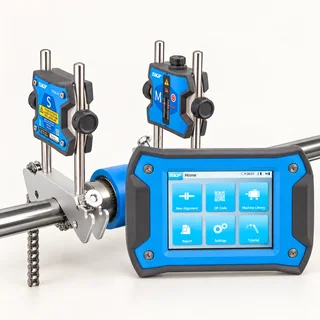
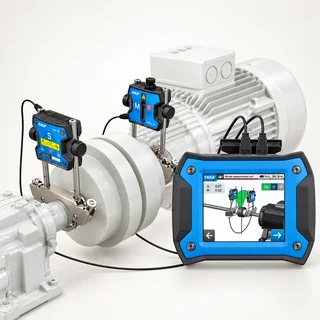
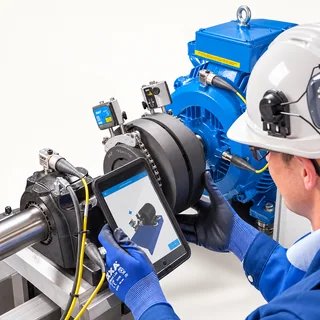
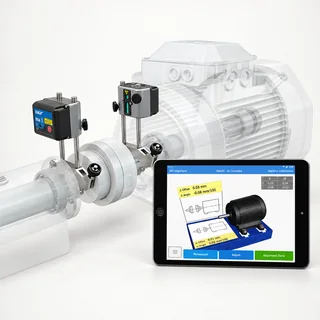
Many laser shaft aligners include a soft foot check function. That function guides you through the measurement foot by foot and shows the values on screen. It is a quick and reliable way to make the diagnosis. If you do not have an aligner, you can do it manually with a dial indicator and a magnetic base.
The measurement must be careful. Make sure the base is clean and the indicator is well supported. Measure at the same point on each foot to compare values. If one foot lifts more than the others, that is the soft foot. Note all the values before you start correcting.
How to correct soft foot with shims
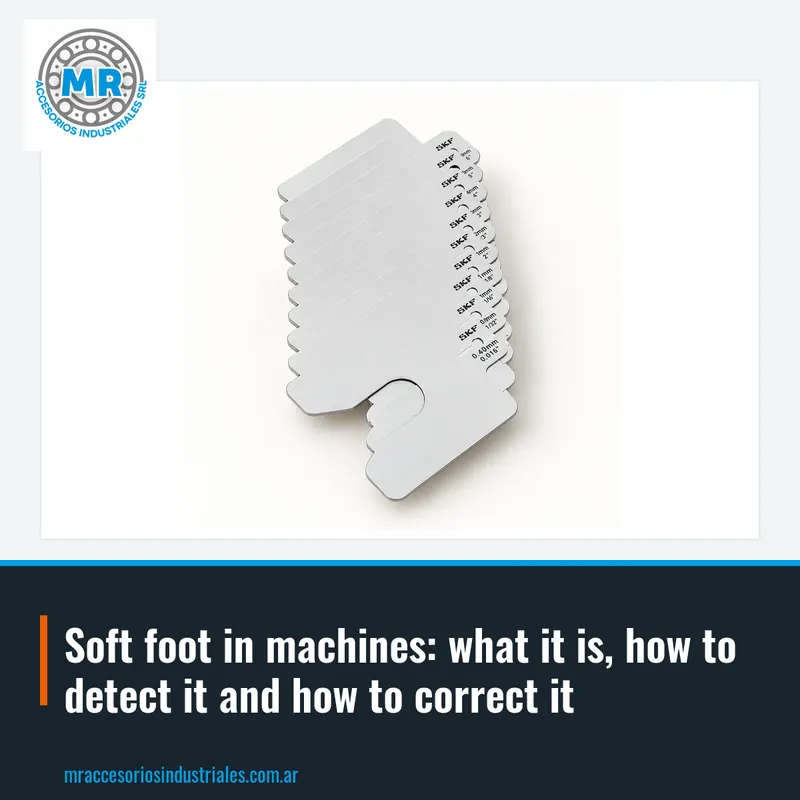
To correct parallel soft foot, the gap is filled with shims. The shims must be the size of the foot, not smaller. They are placed under the foot, between the machine and the base. It is important to use few shims per foot, with the thinnest between the thickest. That avoids the spring effect of a stack of shims.
Before placing shims, the bases must be cleaned thoroughly. Remove rust, paint and burrs. A dirty base can simulate a soft foot that does not actually exist. Also check that there are no old bent or broken shims. If there are connected pipes, loosen them to see if the machine seats better.
In angular soft foot, a flat shim is not enough. The support must be corrected by repairing or machining the base or the foot. If the tilt is not corrected, any shim will rest poorly. After correcting, measure again.
Final verification before aligning
After correcting, repeat the measurement foot by foot. Tighten all bolts and loosen one at a time again. Measure how much each foot lifts. If all feet lift within an acceptable value, the soft foot is corrected. Only then can you align the shafts.
Verification is key because sometimes correcting one foot changes another. The machine can seat differently. That is why it is recommended to do two passes: one for correction and one for verification. If any foot still lifts, add or remove a shim and repeat.
Once soft foot is resolved, laser alignment will be stable. The values will not change when the bolts are tightened. That gives you confidence that the machine will work without abnormal vibrations. And the bearings will be housed without deformation.
Which shims and aligners to use, and how to get a quote
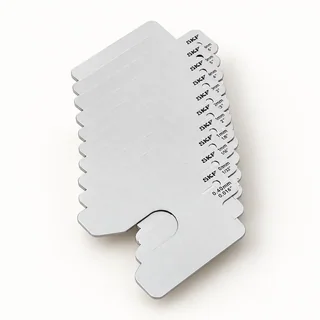
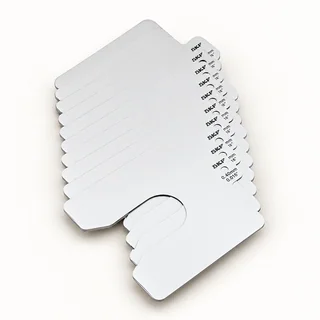
To correct soft foot, precut shims are used, available in different sizes and thicknesses. For example, codes TMAS 75-050, TMAS 100-025, TMAS 100-010 and TMAS 125-050 correspond to shims from the TMAS line. There are also kits such as TMAS 340 that include an assortment of shims.
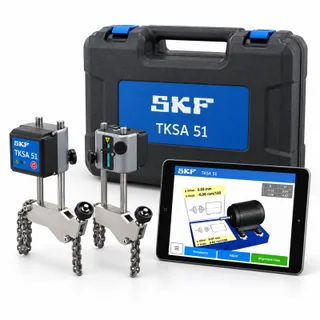
For detection, a laser shaft aligner such as TKSA 41 helps: ask us about the soft foot check for each model. With the aligner, the measurement foot by foot is faster and is recorded. We sell these SKF products and will quote them promptly. If you already have an aligner, you can ask us about loose shims.
To get a quote, send us the foot data via WhatsApp or email: foot width, bolt diameter and the measured gap. With that we will tell you which shim or kit suits you. You can also send us a photo of the base and the foot. We distribute these products in Buenos Aires, Argentina, and advise you on the choice.
Frequently asked questions
What is soft foot in a machine?
It is when the machine does not rest evenly on all its feet. When the bolts are tightened, the housing deforms and can misalign the shafts.
How is soft foot measured?
With all bolts tightened, loosen one foot at a time and measure how much it lifts with a dial indicator or feeler gauges. Many laser aligners include a function to guide you.
How is parallel soft foot corrected?
The gap under the foot is filled with shims the size of the foot. Use few shims, with the thinnest between the thickest.
What do I do if the soft foot is angular?
In angular soft foot, the foot rests only on one edge. A flat shim is not enough: the support must be corrected by repairing or machining the base or the foot.
Which shims do you recommend?
It depends on the foot width and bolt diameter. For example, codes TMAS 75-050, TMAS 100-025 and TMAS 125-050 are shims. Send us the data and we will quote you.
Products with photos in the catalogue
Keep reading
- SKF Chains: Reliable Power Transmission for Industrial Applications
SKF roller chains offer strength and precision for power transmission in industrial machinery. Learn about the PHC series, ASA and BS standards, and how to identify the correct chain for your equipment.
- SKF tools for industrial maintenance: pullers, heaters, aligners and calibrated shims
SKF tools simplify bearing mounting and dismounting, shaft alignment and instrument calibration. Discover TMMA and TMHP pullers, induction heaters, TKSA aligners and calibrated shims.
- How to Choose SKF Bearings by Application: Load, Speed, Environment, and Mounting
Choosing the right SKF bearing requires analyzing load, speed, environment, and mounting. We explain the main types and how to get a quote with the exact code.
Continue here
Need a SKF quote?
Send us the SKF part number, the size or a photo of the part and we will get back to you with a quote.