
Blog
SKF TKBA pulley aligner: guide to choosing the model and aligning belts
The SKF TKBA pulley aligner corrects angular and parallel misalignment in belt drives. We explain how to use it and what data to send for a quote.
SKF bearings in Argentina: guide and quotes
Technical team at MR Accesorios Industriales · Updated on November 14, 2026

What an SKF TKBA pulley aligner is
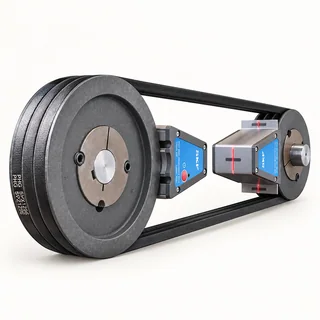
The SKF TKBA pulley aligner is a precision tool used to check and correct alignment between pulleys in belt drives. It works with a laser unit that is attached to one pulley and a target placed on the other; depending on the model, the units rest on the pulley face or in its grooves. The position of the beam on the target shows whether there is angular misalignment, parallel misalignment, or a combination of both. It is a portable device, designed for field use during preventive or corrective maintenance tasks.
A misaligned pulley causes premature wear of belts and pulley grooves. It also causes noise, vibration, and additional loads on the bearings of the motor and driven equipment. That is why correctly aligning pulleys is a key task to extend the service life of the entire drive. The SKF TKBA pulley aligner allows this check to be done quickly and repeatably, without relying on rulers or unreliable visual methods.
At MR we supply SKF pulley aligners from the TKBA series, such as the TKBA 10 and the TKBA 40. We also distribute other codes in the same line, such as TKBA 11, TKBA 21, and TKBA 31. If you have a unit from the series and need spare parts or accessories, we will quote them promptly. To do so, send us the full code shown on the nameplate or in the equipment manual.
Types of misalignment between pulleys
Misalignment between pulleys can be of two basic types: angular and parallel. Angular misalignment occurs when the pulley axes are not parallel to each other, that is, one pulley is tilted relative to the other. Parallel misalignment, also called offset, occurs when the front faces of the pulleys are not in the same plane, even though the axes are parallel. In practice, a combination of both almost always appears.
In both cases the belt enters the groove crooked. The belt flanks and groove walls wear unevenly, noise and vibration appear, and the belt can turn over or come off the pulley. In addition, the drive runs hotter and the bearings receive loads they are not designed for.
The SKF TKBA pulley aligner detects and quantifies both types of misalignment. With the laser beam you can see whether the belt is running crooked and correct the position of the motor or driven pulley. It is important to check alignment every time a belt is changed, a pulley is replaced, or the motor is worked on. A good practice is to include this check in the preventive maintenance plan.
How to use the SKF TKBA pulley aligner step by step
The alignment procedure with the SKF TKBA pulley aligner begins by attaching the laser unit to one of the pulleys, on the face or in the grooves depending on the model. The unit must be firm and well seated. Then the target is placed on the other pulley, facing the emitter. The laser beam strikes the target and shows the relative position of both pulleys.
With the unit turned on, observe where the beam hits the target. If the point does not coincide with the central reference, there is misalignment. Correct it by moving the motor or driven equipment, either by shifting it sideways or adjusting its angle. After each correction, check the beam position again. Repeat the process until the beam is centered on the target, which indicates that the pulleys are aligned.
Once alignment is achieved, tension the belt according to the manufacturer's specifications. After tensioning, it is advisable to check again, because the motor may move during tensioning. The SKF TKBA pulley aligner does not replace a coupled shaft aligner, such as those in the TKSA series: each tool has its function. For belt drives, the TKBA is the right equipment.
Models in the TKBA series: TKBA 10 and TKBA 40
The SKF TKBA series includes several pulley aligner models. The units in the series are the TKBA 10 and the TKBA 40. Each model has its own characteristics in terms of size, mounting type, and included accessories. The choice depends on the type of pulleys to be aligned, the available space, and the working conditions.
In addition to these two, the series includes other codes such as TKBA 11, TKBA 21, and TKBA 31. They are other codes in the line. You do not need to know the technical differences of each code in detail: tell us the equipment you have or the application, and we will guide you toward the right model. At MR we work with SKF pulley aligners from the TKBA series.
To get a quote for an SKF TKBA pulley aligner, send us the full code of the model you are interested in, for example TKBA 10 or TKBA 40. If you already have a unit and need spare parts, send us a photo of the identification plate or the manual. With that data we will send you the quote promptly. We also advise you on accessories.
Spare parts and accessories for TKBA aligners
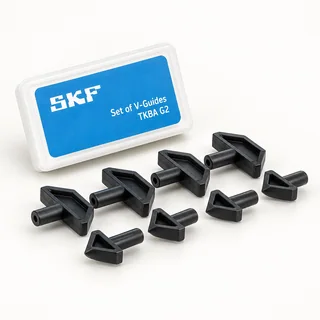
SKF TKBA pulley aligners may require spare parts or accessories over time. With use, a part may need replacement. Spare parts and accessories are identified by the equipment model. It is best to use those that correspond to the aligner so as not to affect the instrument's accuracy.
At MR we supply spare parts and accessories for SKF pulley aligners from the TKBA series. If you have the spare part code, send it along with the equipment model. If you do not have it, a photo of the part or of the place where it is mounted helps us identify it. We work with genuine SKF product.
In addition to spare parts, we can quote other complementary items for belt drive maintenance. If you also need to change belts or pulleys, send us the codes and we will quote them in the same inquiry. That way you can handle the complete drive in a single order.
Common mistakes when aligning pulleys and how to avoid them
One of the most frequent mistakes is aligning pulleys only with a ruler or by eye. That method does not detect small angular misalignments that, over time, ruin belts. Another mistake is not checking alignment after tensioning the belt: tension can slightly move the motor and misalign the assembly. Always align first, tension afterward, and check again.
It is also common to forget to check the condition of the pulleys before aligning. A pulley with worn grooves or damage to the hub cannot be aligned correctly. In those cases, first repair or replace the pulley and then align. That is why it is best to check the grooves and hub before mounting the aligner.
Another mistake is using the pulley aligner to align coupled shafts directly. That requires shaft aligners, such as SKF's TKSA series. Using the wrong tool gives incorrect results. If you have doubts about which tool to use, ask us: we will tell you the right option for your application.
How to get a quote for your SKF TKBA pulley aligner at MR
To get a quote for an SKF TKBA pulley aligner, the most practical way is to send us the code of the model you need. For example, TKBA 10 or TKBA 40. If you are not sure of the model, tell us what type of pulleys you will align, their diameter and width, and the available working space. With that data we will recommend the right equipment.
You can also send us a photo of the equipment plate if you already have one and need spare parts or accessories. That allows us to identify the exact model and quote the corresponding items. Our technical team will reply promptly with the information and the quote. We work with genuine SKF product, without exception.
At MR, based in Buenos Aires, Argentina, we sell and distribute SKF pulley aligners from the TKBA series for all types of industries. Write to us via WhatsApp or email with your inquiry. We are here to help you keep your belt drives perfectly aligned.
Frequently asked questions
What is the difference between a pulley aligner and a shaft aligner?
The SKF TKBA pulley aligner is used to align pulleys in belt drives by checking the relative position of their faces. The shaft aligner, such as the SKF TKSA, is used to align directly coupled shafts. They are different tools for different applications.
How do I know if my pulleys are misaligned?
The most common symptoms are premature belt wear, noise, vibration, and increased temperature in the drive. With an SKF TKBA pulley aligner you can check alignment accurately and correct it before it causes major damage.
Does the SKF TKBA pulley aligner work for any pulley size?
The TKBA series includes several models, such as the TKBA 10 and the TKBA 40, each with different capacities. To find out which one fits your pulleys, send us the dimensions and the application, and we will recommend the right model.
Can I buy spare parts for my TKBA aligner?
Yes, at MR we supply spare parts and accessories for SKF pulley aligners from the TKBA series. Send us the spare part code or a photo, and we will quote it promptly.
How is the SKF TKBA pulley aligner used?
The laser unit is attached to one pulley and the target to the other. Then observe the position of the beam on the target and correct the position of the motor or equipment until the beam is centered. Finally, tension the belt.
Products with photos in the catalogue



Keep reading
- SKF Chains: Reliable Power Transmission for Industrial Applications
SKF roller chains offer strength and precision for power transmission in industrial machinery. Learn about the PHC series, ASA and BS standards, and how to identify the correct chain for your equipment.
- SKF tools for industrial maintenance: pullers, heaters, aligners and calibrated shims
SKF tools simplify bearing mounting and dismounting, shaft alignment and instrument calibration. Discover TMMA and TMHP pullers, induction heaters, TKSA aligners and calibrated shims.
- How to Choose SKF Bearings by Application: Load, Speed, Environment, and Mounting
Choosing the right SKF bearing requires analyzing load, speed, environment, and mounting. We explain the main types and how to get a quote with the exact code.
Continue here
Need a SKF quote?
Send us the SKF part number, the size or a photo of the part and we will get back to you with a quote.