
Blog
SKF Spherical Roller Bearings: Technical Guide for Maintenance
Everything about SKF spherical roller bearings: series, tapered bore with adapter sleeve, internal clearance and mounting. Includes example codes and tips for requesting a quote.
SKF bearings in Argentina: guide and quotes
Technical team at MR Accesorios Industriales · Updated on October 18, 2026
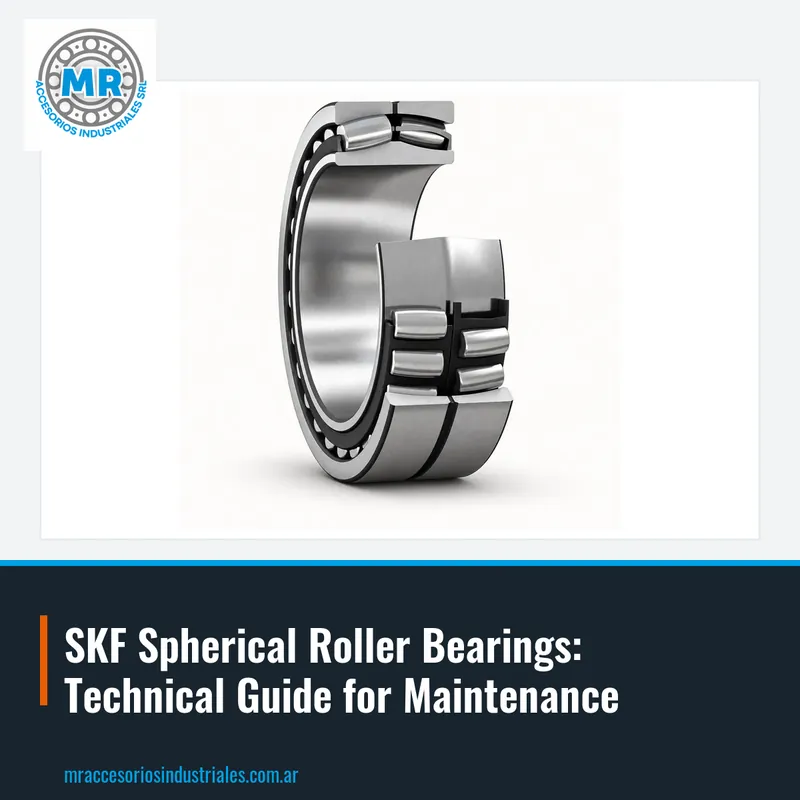
What SKF Spherical Roller Bearings Are
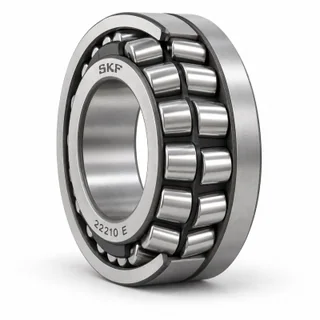
SKF spherical roller bearings are designed to withstand high radial and axial loads, even with shaft misalignment or structural deflection. Their outer raceway is spherical and the rollers are barrel-shaped, which allows them to self-align within the bearing. This self-aligning capability prevents additional stresses on the equipment and extends the service life of the assembly. In Argentine industry they are also known as spherical roller bearings or oscillating roller bearings.
These bearings are used in equipment where mounting rigidity is not perfect or where loads are very heavy. They appear in industrial fans, gearboxes, mills, paper machines, extruders and mining equipment. They are also found in centrifugal pumps, conveyor belts and large agricultural machinery. In all cases, the priority is to withstand combined loads and compensate for misalignment without sacrificing reliability.
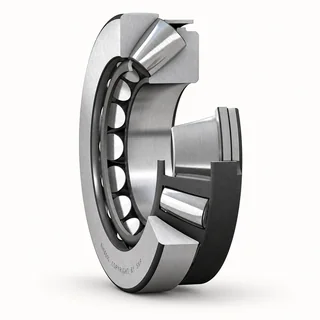
Within the SKF line, spherical rollers are divided into two main subcategories: radial spherical rollers and axial spherical rollers. Radial ones, such as the 22325, are the most common and are mounted in housings or plummer blocks. Axial ones, such as the 29264, are designed for high axial loads and are used in specific applications such as high-demand gearboxes. At MR we supply both variants and help you identify which one corresponds to your equipment.
Series and Designation of SKF Spherical Rollers
The designation of an SKF spherical roller bearing follows a numeric pattern that indicates the series and size. For example, the 22325 belongs to the 223 series, which is characterized by symmetrical rollers and a common spherical raceway. The number 25 at the end indicates the bore diameter in millimeters, which in this case is 125 mm. Other codes in the same line are the 22361, with a 305 mm bore, and the 23666, from the 236 series, with larger dimensions.
Axial spherical rollers have a similar designation but with the 292 series. For example, the 29264 has a 320 mm bore and is designed for axial loads. The 29260 and 29263 are from the same series but with 300 mm and 315 mm bores respectively. The 29252 is smaller, with a 260 mm bore. These codes are the ones engraved on the bearing ring and are the exact reference for ordering a replacement.
In addition to the base code, bearings may have suffixes that indicate special characteristics. The K suffix indicates a tapered bore, which is mounted on an adapter sleeve. The C3 suffix indicates greater internal clearance than normal, useful when there are temperature differences between the shaft and the housing. If your bearing has other suffixes, write them down exactly and consult us: we help you identify the correct replacement.
Tapered Bore and Mounting with Adapter Sleeve
Many SKF spherical roller bearings are offered with a tapered bore, identified by the K suffix. This design allows the bearing to be mounted on an adapter sleeve instead of directly on a machined shaft. The sleeve slides onto the shaft and is tightened with a nut, which facilitates mounting and dismounting on long or hard-to-access shafts. It is a widely used solution in fans, conveyors and process equipment.
Mounting with an adapter sleeve requires controlling the internal clearance of the bearing, which decreases as the sleeve is advanced over the cone. That is why it is important to measure radial clearance before and during mounting, using a feeler gauge. If the bearing is too tight, heat is generated and premature failure occurs. If it is too loose, there is vibration and wear. Correct mounting ensures that the bearing works under the conditions intended by the manufacturer.
To order a bearing with a tapered bore, it is key to indicate the complete code, for example 22325 K, and the corresponding adapter sleeve. At MR we quote the bearing and the adapter sleeve as a set, so you don't have to look for parts separately. We also guide you on the mounting procedure and the necessary tools. If you have doubts about which adapter sleeve to use, send us a photo of the equipment plate or the current bearing.
Internal Clearance and Its Importance in Operation
The internal clearance of a spherical roller bearing is the free space between the rollers and the raceways when the bearing is not mounted. SKF manufactures these bearings with different clearances: normal, C3, C4, etc. C3 clearance is greater than normal and is recommended when there are temperature differences between the inner and outer rings, or when the fit on the shaft is very tight. Choosing the correct clearance prevents overloads and failures due to lack of play.
In applications with a tapered bore, the internal clearance is reduced during mounting, so you must start from a greater clearance. For example, a 22325 K C3 bearing is mounted with an adapter sleeve and adjusted until the residual clearance is adequate. If the original bearing was C3, it should not be replaced with a normal clearance one without analyzing the working conditions. An incorrect change can cause seizure or premature breakage.
To identify the internal clearance, look at the engraving on the bearing ring. If it says C3, C4 or another letter, write it down along with the code. If it says nothing, it is normal clearance. At MR we help you interpret the designation and choose the right bearing for your application. We also recommend checking the clearance after mounting, following the manufacturer's instructions.
Axial Spherical Rollers: Specific Applications
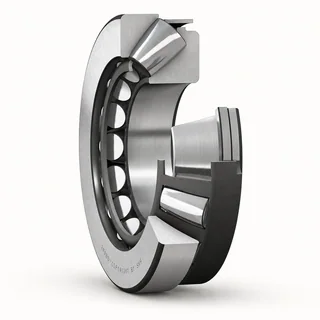
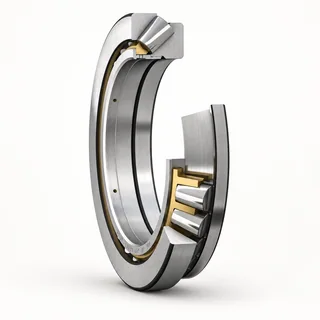
SKF axial spherical roller bearings are designed to withstand very high axial loads in one direction. They have a row of rollers inclined with respect to the axis and the raceway of the housing washer is spherical. They are used in applications such as large gearboxes, paper machines, rolling mills and mining equipment. Their self-aligning capability allows them to absorb small angular deviations of the shaft.
Within this subcategory, the most common codes are those of the 292 series. For example, the 29264 has a 320 mm bore and withstands large axial loads. The 29260 and 29263 are similar but with 300 mm and 315 mm bores. The 29252 is more compact, with a 260 mm bore. The engraved code is the exact reference for ordering the replacement.
When ordering an axial spherical bearing, it is advisable to check whether the original bearing has a brass, steel or other material cage. At MR we distribute these bearings and advise you on the correct selection. Send us the engraved code, the measurements or a photo and we will quote it promptly.
How to Identify Your SKF Spherical Bearing
To order a replacement, the first thing is to read the code engraved on the bearing ring. In SKF spherical rollers, that code is usually on the outer ring or the inner ring, and may include letters such as K or C3. If the bearing is badly damaged or the engraving is not legible, measure the bore diameter, outer diameter and width with a caliper. With those three measurements you can identify the series and size.
It is also useful to note the brand and country of origin, although they are not always visible. If the bearing is from another brand, you can use a cross-reference table to find the corresponding SKF code. At MR we help you make that conversion: bring us the original code and we will indicate the SKF alternative. You don't need to know the exact series; with the data you have, we do the rest.
A common mistake is confusing a spherical bearing with a cylindrical roller bearing or with a deep groove ball bearing. The spherical raceway and barrel-shaped rollers are the visual key. If you have doubts, take a photo of the bearing and send it via WhatsApp. At MR we confirm the type and quote the correct replacement.
Common Mistakes When Ordering or Mounting Spherical Rollers
One of the most frequent mistakes is ordering the bearing only by the series number, without checking the suffixes. For example, a 22325 is not the same as a 22325 K C3. The first has a cylindrical bore and normal clearance; the second, a tapered bore and greater clearance. If you order the incomplete code, you may receive a bearing that does not adapt to your mounting. Always write down the complete code, including additional letters and numbers.
Another mistake is not controlling the adapter sleeve fit on bearings with a tapered bore. If the adapter sleeve is loose, the bearing rotates on the shaft and wears the seat. If it is too tight, all internal clearance is eliminated and the bearing heats up. The correct procedure is to measure radial clearance with a feeler gauge and tighten the nut gradually. At MR we provide step-by-step instructions.
It is also common to replace a C3 bearing with a normal clearance one without analyzing the working conditions. If the equipment works with temperature differences or tight fits, normal clearance may be insufficient. Before changing the bearing, review the original designation and consult with us. We help you choose the correct bearing and avoid unnecessary downtime.
Frequently asked questions
What does the K suffix mean on an SKF spherical bearing?
The K suffix indicates that the bearing has a tapered bore, that is, a bore with 1:12 taper. It is mounted on an adapter sleeve or directly on a tapered shaft. It is common in spherical rollers to facilitate mounting and dismounting.
What is the difference between a radial spherical bearing and an axial one?
The radial one withstands combined radial and axial loads, and has a spherical outer raceway. The axial one is designed for high axial loads and has a spherical housing washer raceway. Radial ones are used in housings and plummer blocks; axial ones, in gearboxes and thrust applications.
How do I know if my SKF bearing is C3?
Look at the engraving on the bearing ring. If it says C3, it is greater internal clearance than normal. If it says nothing, it is normal clearance. It may also say C4 or other letters. Write down the complete code to order the correct replacement.
Can I use an SKF bearing instead of another brand?
Yes, as long as the dimensions and characteristics (bore, internal clearance, cage) are equivalent. Bring us the code of your current bearing and we will indicate the corresponding SKF alternative.
What data do I need to quote an SKF spherical bearing?
We need the complete code engraved on the bearing, or failing that, the bore, outer and width measurements. A photo of the part also works. With that we will quote you promptly via WhatsApp or email.
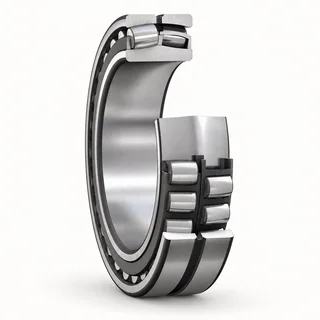
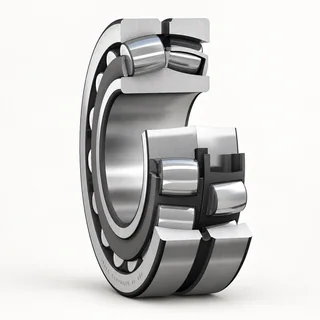
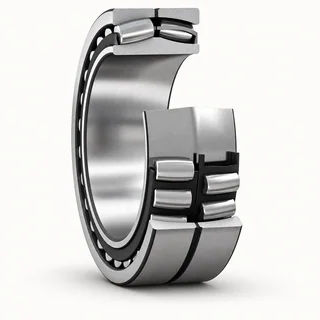
Products with photos in the catalogue
Keep reading
- SKF Chains: Reliable Power Transmission for Industrial Applications
SKF roller chains offer strength and precision for power transmission in industrial machinery. Learn about the PHC series, ASA and BS standards, and how to identify the correct chain for your equipment.
- SKF tools for industrial maintenance: pullers, heaters, aligners and calibrated shims
SKF tools simplify bearing mounting and dismounting, shaft alignment and instrument calibration. Discover TMMA and TMHP pullers, induction heaters, TKSA aligners and calibrated shims.
- How to Choose SKF Bearings by Application: Load, Speed, Environment, and Mounting
Choosing the right SKF bearing requires analyzing load, speed, environment, and mounting. We explain the main types and how to get a quote with the exact code.
Continue here
Need a quote?
Send us the code, size or a photo of the part and we'll quote you shortly.