
Blog
SKF Sizes: How to Identify the Code from the Part and What Data to Send for a Quote
We explain how to read the markings on an SKF bearing to identify its code and dimensions, and what information to send us to quote the correct replacement.
SKF bearings in Argentina: guide and quotes
Technical team at MR Accesorios Industriales · Updated on October 5, 2026
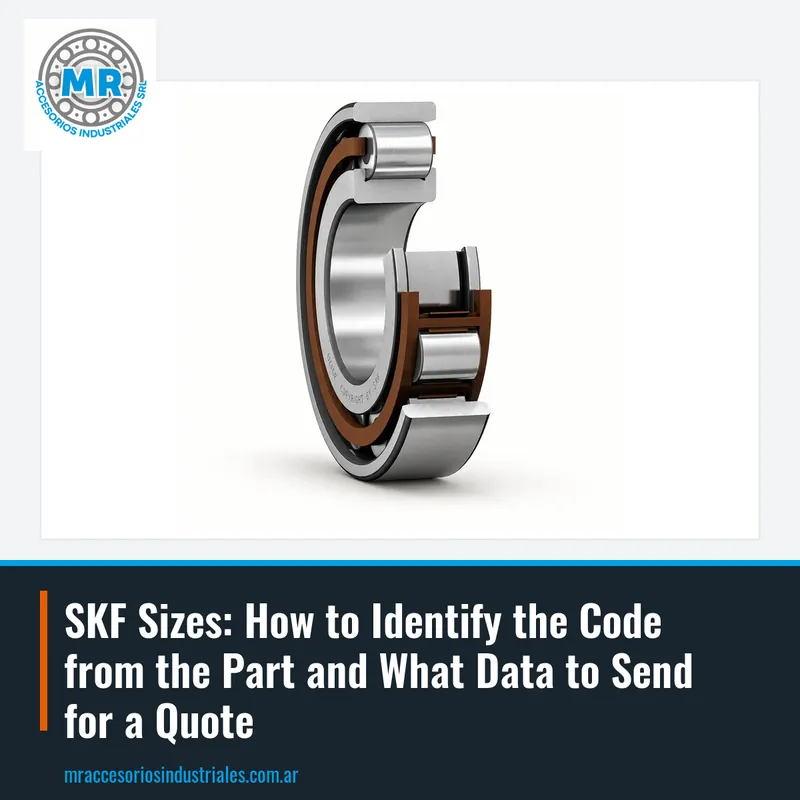
Deep Groove Ball Bearings: The Basis of Transmission
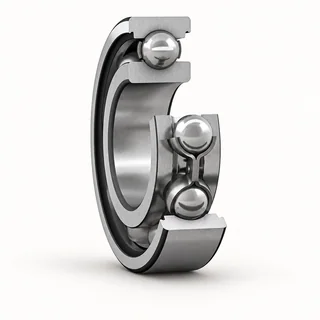
The deep groove ball bearing is the most common in industry due to its simple and versatile design. It supports moderate radial and axial loads and works well at high speeds. At SKF, this category includes series such as 6000, 6200, and 6300, with example codes like 6010, 6008, and 6026. From code 04 onwards, the last two digits multiplied by five give the bore diameter in millimeters: a 6010 has a 50 mm bore.
To identify an SKF deep groove ball bearing, look at the side face of the outer ring. There you will see the complete code engraved, for example 6010, along with the brand name and sometimes a suffix like 2RS or C3. The suffix 2RS indicates it has rubber seals on both sides, and C3 that the internal clearance is greater than normal. If the part is very worn, you can measure the inner diameter, outer diameter, and width with a caliper to deduce the series.
When quoting a deep groove ball bearing, send us the complete code if you see it, or the three main dimensions. A photo of the part and the equipment where it is mounted also helps. A common mistake is confusing the suffix: a 6008 with 2RS is not the same as an open one, and the seal changes the application. We distribute genuine SKF bearings and help you confirm the exact reference.
Cylindrical Roller Bearings: For Heavy Loads
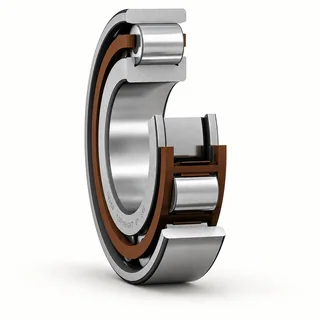
Cylindrical roller bearings are designed to withstand high radial loads and operate under demanding conditions. They are used in electric motors, gearboxes, and mining equipment. At SKF, codes often start with the letter N, such as N3055, or with combinations like RNU 305 and RNU 306. The complete code defines the series and size, so it is best to copy it exactly as engraved.
To identify a cylindrical roller bearing, look at the engraving on the ring. Codes like N3055 or RNU 305 are printed on the side, and sometimes include suffixes like C3 for greater internal clearance. Measure the inner diameter, outer diameter, and width, and note whether it has flanges on one or both rings.
When requesting a quote, send the complete code and a photo of the part. If the code is not legible, the measurements are key, and it is also helpful to clarify whether the bearing has an inner ring or if the rollers run directly on the shaft. We distribute SKF and confirm the correct reference for your application.
Spherical Roller Bearings: Self-Aligning for Misaligned Shafts
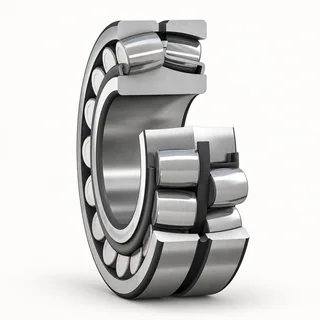
Spherical roller bearings compensate for shaft misalignment and support combined radial and axial loads. They are ideal for fans, crushers, and heavy machinery. SKF codes in this category often start with 2, such as 22325, 22361, and 23666. The last two digits, multiplied by five, give the bore diameter in millimeters.
To identify a spherical roller bearing, look for the code engraved on the side face of the outer ring. For example, 22325 corresponds to a 125 mm bore. If the bearing has a tapered bore, you will see the suffix K, which indicates that feature. If the engraving is not legible, measure the inner diameter, outer diameter, and width with a caliper, and note whether the outer ring has a groove and lubrication holes.
When quoting, send the complete code and a photo of the part mounted if possible. If you only have measurements, indicate whether the bore is cylindrical or tapered. A common mistake is confusing the series: a 22325 is not interchangeable with a bearing from another series with the same bore diameter. We distribute SKF spherical roller bearings and help you verify the reference before purchasing.
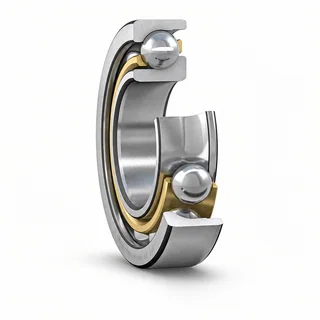
Angular Contact Bearings: For Combined Loads
Angular contact bearings support radial and axial loads in one direction, and are often used in pairs for axial loads in both directions. They appear in pumps, machine tool spindles, and compressors. SKF codes in this category start with 7, such as 7417. As they can be manufactured with different contact angles, the complete code with everything following the numbers is the most important data.
To identify an angular contact bearing, look at the engraving on the outer ring. The code 7417 indicates an 85 mm bore; also copy the letters following the number, as they change the reference. If the bearing is mounted on a spindle, it may be paired with another, and each has its own marking. Measure the inner diameter, outer diameter, and width of each.
When requesting a quote, send the complete code and a photo of the part. If it is a pair, indicate whether they are mounted in tandem, back-to-back, or face-to-face. A common mistake is ordering a single bearing when the equipment uses a paired set. We distribute SKF angular contact bearings and quote the exact reference for your configuration.
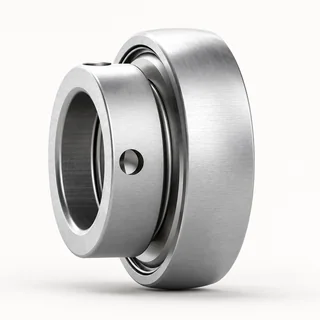
Y-Bearings (Insert Bearings): For Pillow Block Housings
Y-bearings, also called insert bearings, are mounted in pillow block or flanged housings and are used in conveyors, agro-industry, and material handling equipment. They have a spherical outer ring that fits into the housing, allowing self-alignment. SKF codes in this category often start with UC, such as UC 216, UC 315, and UC 212. The last two digits, multiplied by five, give the bore diameter in millimeters.
To identify a Y-bearing, look for the code engraved on the outer ring or on the seal. For example, UC 216 has an 80 mm bore and UC 212 a 60 mm bore. If the engraving is not legible, measure the inner diameter with a caliper and the total width of the inner ring. Also check whether it has set screws or an eccentric locking collar.
When quoting, send the complete code and a photo of the bearing and housing. If the code is not legible, measure the inner diameter and total width. A common mistake is ordering only the insert when the housing is also damaged: check both before quoting. We distribute SKF Y-bearings and help you identify the correct reference for your housing.
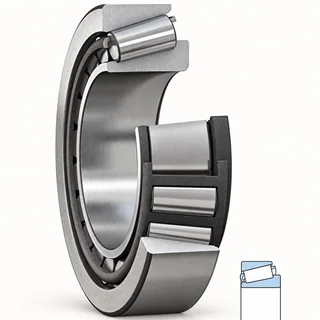
Tapered Roller Bearings: For Combined Loads and Separate Mounting
Tapered roller bearings support high radial and axial loads and are mounted in opposing pairs. They are used in vehicle wheels, gearboxes, and rolling mills. SKF codes in this category include series such as 302, 303, and 313, with numbers indicating the bore diameter. The cone (inner ring with rollers) and cup (outer ring) are separable, and in many references, especially in inches, each has its own code.
To identify a tapered roller bearing, look for the code engraved on the front face of the cone (roller part) and on the cup (outer ring). For example, a cone might say 30210 and the cup 30210, or have different codes if it is a non-standard set. Measure the cone bore, cup outer diameter, and total assembly width.
When requesting a quote, send the cone and cup codes, or the measurements of both. If you only have the cup, indicate its outer diameter and width, and we will help you find the corresponding cone. A common mistake is replacing only the cone and mounting it with the old cup: it is best to replace both parts together. We distribute SKF tapered roller bearings and quote each component.
Rod Ends and Spherical Plain Bearings: For Oscillating Movements
SKF rod ends and spherical plain bearings are components that allow oscillating or aligning movements in mechanical systems. They are used in hydraulic cylinders, suspension arms, and agricultural machinery. Codes in this category vary by type: radial, axial, or rod end spherical plain bearings. Therefore, it is best to copy the complete code exactly as engraved.
To identify a rod end or spherical plain bearing, look for the code engraved on the body or outer ring. If it is a rod end, the code may include the thread type, such as M10 or 1/2 inch. Measure the inner diameter, outer diameter, and width, and note whether it has internal or external thread.
When quoting, send the complete code and a photo of the part. If the code is not legible, indicate the measurements and thread type. A common mistake is confusing a radial spherical plain bearing with an axial one, which have different load capacities. We distribute SKF rod ends and spherical plain bearings and help you select the appropriate reference for your application.
Frequently asked questions
How do I identify the code of an SKF bearing if the part is worn?
If the engraving is not legible, measure the inner diameter, outer diameter, and width with a caliper. With those measurements and a photo of the part, we help you identify the correct SKF reference.
What does the suffix 2RS mean on an SKF bearing?
The suffix 2RS indicates that the bearing has rubber seals on both sides, which protects it against contaminants and retains grease. It is common in deep groove ball bearings and other types.
Can I order an SKF bearing with only the measurements?
Yes, you can send us the main measurements (inner diameter, outer diameter, and width) and a photo of the part. With that, we identify the corresponding SKF reference and quote it.
What is the difference between an SKF bearing with a cylindrical bore and one with a tapered bore?
The tapered bore is identified by the suffix K and is mounted on a tapered adapter sleeve or directly on a tapered shaft. The cylindrical bore is standard and is mounted with a press fit or sliding fit.
How do I quote an SKF bearing with MR?
You can write to us via WhatsApp or email with the complete code, measurements, or a photo of the part. We will respond promptly with the quote.
Products with photos in the catalogue
Keep reading
- SKF Chains: Reliable Power Transmission for Industrial Applications
SKF roller chains offer strength and precision for power transmission in industrial machinery. Learn about the PHC series, ASA and BS standards, and how to identify the correct chain for your equipment.
- SKF tools for industrial maintenance: pullers, heaters, aligners and calibrated shims
SKF tools simplify bearing mounting and dismounting, shaft alignment and instrument calibration. Discover TMMA and TMHP pullers, induction heaters, TKSA aligners and calibrated shims.
- How to Choose SKF Bearings by Application: Load, Speed, Environment, and Mounting
Choosing the right SKF bearing requires analyzing load, speed, environment, and mounting. We explain the main types and how to get a quote with the exact code.
Continue here
Need a quote?
Send us the code, size or a photo of the part and we'll quote you shortly.