
Blog
SKF in the sugar industry: bearings for mills, centrifuges and cane conveyors
Which SKF bearings are used at each stage of the sugar mill and how to order them by code to be ready for the harvest.
SKF bearings in Argentina: guide and quotes
Technical team at MR Accesorios Industriales · Updated on October 22, 2026
Spherical roller bearings for mills
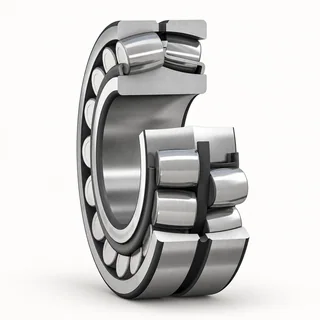
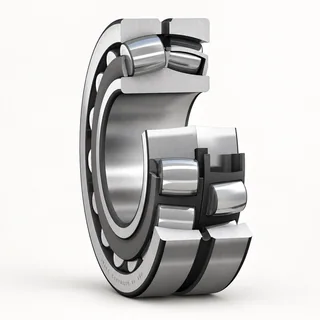
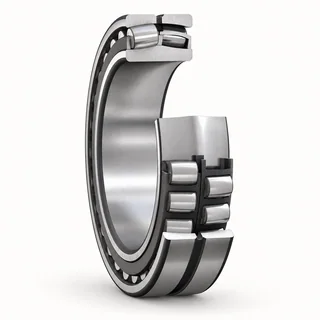
Mills or cane crushers work with very high loads and shafts that misalign due to the pressure of the rollers. Spherical roller bearings absorb this misalignment and withstand impacts without seizing. In mills they are used on the top and bottom rollers, where juice and bagasse demand efficient sealing. We stock codes such as 22325, 22328 and 22336, common in this type of machine.
To order a spherical roller bearing, it is best to have the code engraved on the ring and the bore, outer diameter and width measurements. If the part is very damaged, a photo of the assembly helps identify the variant. It is also useful to know whether the original bearing had a cylindrical or tapered bore, because both configurations are seen in mills. The suffix K indicates a tapered bore and requires an adapter sleeve or tapered seat on the shaft.
A common mistake is replacing a spherical roller bearing with a rigid ball bearing to save on the spare part. This reduces load capacity and shortens service life during the harvest. Another mistake is mounting the bearing without checking internal clearance, which in hot applications should be greater than normal. The C3 suffix indicates this increased internal clearance and is common in mills. Before the harvest, it is advisable to check the condition of the roller bearings and have the spares identified.
Y-bearing units with insert bearing for conveyors
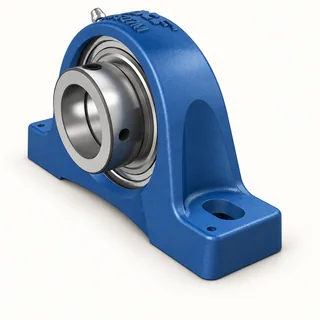
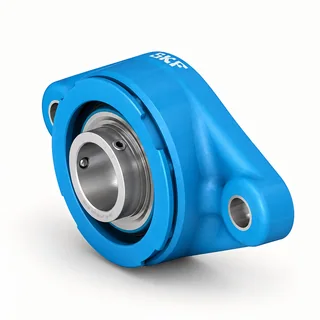
Cane and bagasse conveyors use Y-bearing units with insert bearing for their simple mounting and good tolerance to dirt. These units come in pillow block, flange and take-up versions, and are fixed to the shaft with set screws or eccentric locking collar. In sugar mills they are found on belt rollers, bagasse elevators and intermediate conveyors. We stock codes such as SY 55 TF, SY 503 M, SY 65 TF and SY 504 M.
When ordering a Y-bearing unit, indicate the shaft diameter in millimeters or inches and the unit type: pillow block, round flange or square flange. Also clarify whether the insert bearing has a single or double seal and whether the locking ring is eccentric or with set screws. Codes starting with SY correspond to pillow block units with insert bearing. With the complete code, we quote the exact unit.
A common mistake in conveyors is not aligning the units during mounting, which generates additional loads and premature failures. Another mistake is using a unit smaller than the shaft requires, forcing the mounting. In environments with wash water and juice, it is advisable to verify that the insert bearing seals are in good condition. Before the harvest, it is recommended to check all conveyor units and replace those with play or rust.
Cylindrical roller bearings for centrifuges
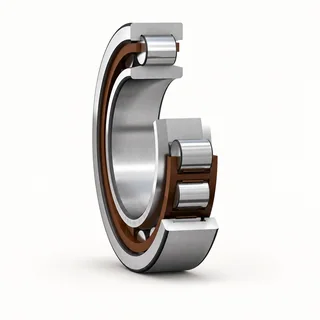
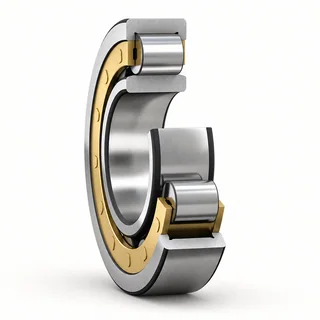
Sugar centrifuges separate sugar crystals from mother liquor at high speed. Cylindrical roller bearings handle radial loads well and allow frequent disassembly for cleaning. In centrifuges they are used on the main shaft and motor, often combined with angular contact ball bearings. We stock codes such as NU 221 ECP, NU 224 ECM, NU 320 ECP and NU 326 ECJ.
To order a cylindrical roller bearing, indicate whether it is type NU, N, NJ or NUP, because each has a different flange arrangement. The code engraved on the ring is the safest reference. Also measure the bore, outer diameter and width, and verify whether the bearing has a sheet metal, brass or polyamide cage.
A frequent mistake is mounting a cylindrical roller bearing by striking the cage, which deforms it and ruins the bearing. Before the harvest, it is advisable to disassemble, clean and inspect the centrifuge bearings and replace those showing flaking or damaged cages. With the code, we quote the exact spare part.
Bearings for mill rollers
Mill rollers rotate at low speed but withstand enormous pressures and contamination from juice and bagasse. Spherical roller bearings are the most used in this position due to their load capacity and tolerance to misalignment. Cylindrical roller bearings are also seen in free supports to allow thermal expansion. In large mills, codes such as 22336 are common on top rollers.
When ordering bearings for rollers, indicate the shaft diameter and the exact position: top roller, bottom roller or feed roller. It is also useful to know whether the original bearing had an adapter sleeve or was mounted directly on the shaft. A photo of the assembly with the bearing mounted helps identify the configuration. If the bearing has a tapered bore, the suffix K indicates it and requires a suitable adapter sleeve.
A common mistake is not checking the condition of the shaft seats before mounting the new bearing. A worn or marked seat reduces the service life of the spare part. Another mistake is using a bearing with normal internal clearance in an application that runs hot, when a C3 clearance is preferable. Before the harvest, it is recommended to measure the radial clearance of the roller bearings and replace those out of tolerance.
Bearings for sugar centrifuges
Centrifuges work in cycles of startup, full speed and braking, with dynamic loads and vibrations. Cylindrical roller bearings handle radial loads well and allow quick disassembly for cleaning between harvests. On the main shaft they are combined with angular contact ball bearings to support axial loads. Codes NU 221 ECP and NU 224 ECM are examples of cylindrical roller bearings used in centrifuges.
To order bearings for centrifuges, indicate the brand and model of the centrifuge, the shaft diameter and the bearing code if visible. It is also useful to know whether the original bearing had a brass or sheet metal cage, because this influences the speed limit. With that data, we quote the exact spare part.
A frequent mistake is not lubricating the centrifuge bearings correctly. Another mistake is mounting the bearing without checking axial adjustment, which generates vibrations and premature failures. Before the harvest, it is advisable to disassemble the centrifuge bearings, clean them and check the condition of the races and rollers. If there is pitting or flaking, it is time to replace them.
Bearings for cane and bagasse conveyors
Cane and bagasse conveyors work at low speed but with a lot of dirt, humidity and impact loads. Y-bearing units with insert bearing are the most practical option for belt rollers, because they mount and dismount quickly. Codes SY 55 TF and SY 65 TF are examples of Y-bearing units for 55 and 65 mm shafts.
When ordering bearings for conveyors, indicate the shaft diameter, the unit type and the position: idler roller, drive pulley or tail pulley. It is also useful to know whether the conveyor works outdoors or under cover, because that defines the seal type. In environments with wash water, bearings with double 2RS seals last longer. With a photo of the unit and the code, we quote the spare part.
A common mistake is not lubricating the Y-bearing units with the proper frequency, which accelerates wear of the seals and the bearing. Another mistake is using thin sheet metal units on heavy conveyors, which deform and misalign. Before the harvest, it is advisable to walk all conveyors and mark units with play or rust for replacement. This avoids unexpected stops during milling.
How to prepare spare parts before the harvest
The sugar harvest concentrates work in a few months and does not allow long stops due to lack of spare parts. Therefore, it is advisable to survey all critical bearings before milling starts. It is recommended to note the codes, measurements and positions of each bearing in mills, centrifuges and conveyors. With that list, you can request a quote from us via WhatsApp or email and get everything in order.
When building the spare parts list, include complete units and not just bearings, because in conveyors both wear out. It is also useful to consider adapter sleeves, nuts and lock washers if the bearings have a tapered bore. If you do not have the exact code, send us a photo of the part with a ruler next to it to estimate the measurements.
A common mistake is waiting for a bearing to fail before ordering the spare part, which forces stopping the machine during the harvest. We quote by code or measurement. Before the harvest, check the bearings of your equipment and order the spare parts you need.
Frequently asked questions
What SKF bearings are used in cane mills?
Mills mainly use spherical roller bearings due to their load capacity and tolerance to misalignment. Codes such as 22325, 22328 and 22336 are common on rollers. Cylindrical roller bearings are also used in free supports.
What SKF bearings do sugar centrifuges use?
Centrifuges use cylindrical roller bearings on the main shaft, often combined with angular contact ball bearings. Codes such as NU 221 ECP and NU 224 ECM are examples.
What SKF units are used in cane conveyors?
Cane and bagasse conveyors use Y-bearing units with insert bearing, such as codes SY 55 TF and SY 65 TF. They are quick to mount and handle dirt well.
How do I order an SKF bearing for a sugar mill?
The best way is to send the code engraved on the bearing, the bore, outer diameter and width measurements, and a photo of the part. If you do not have the code, indicate the machine and position. We quote via WhatsApp or email.
What does the C3 suffix mean on an SKF bearing?
The C3 suffix indicates that the bearing has a greater internal clearance than normal. It is useful in applications that run hot, such as mills, where thermal expansion reduces clearance.
Products with photos in the catalogue
Keep reading
- SKF Chains: Reliable Power Transmission for Industrial Applications
SKF roller chains offer strength and precision for power transmission in industrial machinery. Learn about the PHC series, ASA and BS standards, and how to identify the correct chain for your equipment.
- SKF tools for industrial maintenance: pullers, heaters, aligners and calibrated shims
SKF tools simplify bearing mounting and dismounting, shaft alignment and instrument calibration. Discover TMMA and TMHP pullers, induction heaters, TKSA aligners and calibrated shims.
- How to Choose SKF Bearings by Application: Load, Speed, Environment, and Mounting
Choosing the right SKF bearing requires analyzing load, speed, environment, and mounting. We explain the main types and how to get a quote with the exact code.
Continue here
Need a SKF quote?
Send us the SKF part number, the size or a photo of the part and we will get back to you with a quote.