
Blog
SKF compressor bearings: how to choose the right one
In compressors, the right bearing depends on radial and axial loads, lubrication and mounting. We look at the most used SKF series and what data to send for a quote.
SKF bearings in Argentina: guide and quotes
Technical team at MR Accesorios Industriales · Updated on October 21, 2026
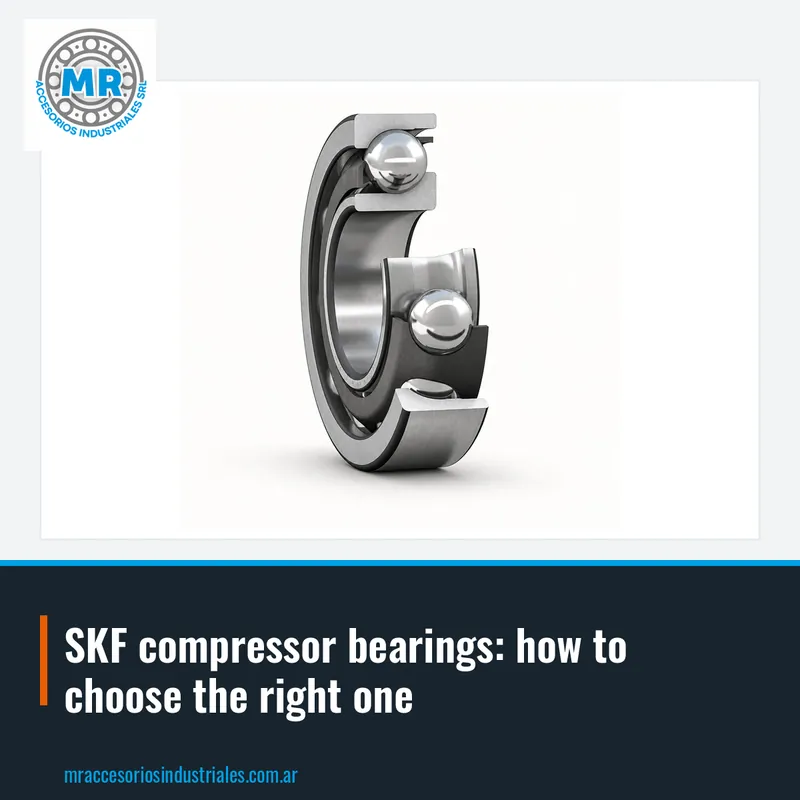
How bearings work in a compressor
In a compressor, bearings support the shaft and allow it to rotate with as little friction as possible. Loads on the bearing are of two types: radial, which push toward the center of the shaft, and axial, which push along the shaft. Depending on the compressor design, one of the two predominates, and that defines which type of bearing is suitable. Choosing wrong can shorten the equipment's service life and cause unplanned downtime.
Screw compressors, for example, generate a significant axial load from the thrust of the rotors. There, angular contact bearings mounted in pairs, face-to-face or in tandem, are usually used to absorb that thrust in both directions. Cylindrical roller bearings, on the other hand, handle the radial load and allow axial displacement due to thermal expansion. That combination is typical in industrial equipment.
In piston compressors or smaller equipment, a well-sized deep groove ball bearing is often enough. These bearings support moderate radial and axial loads and are simple to mount. The key is to know what position the bearing occupies within the compressor: free side, fixed side, pulley or flywheel. With that data, MR's technical team guides you in the selection.
SKF angular contact bearings for axial thrust
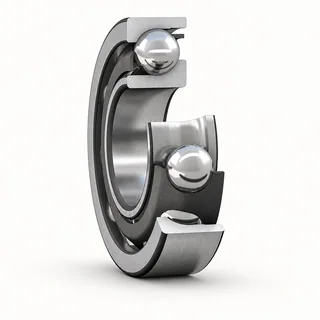
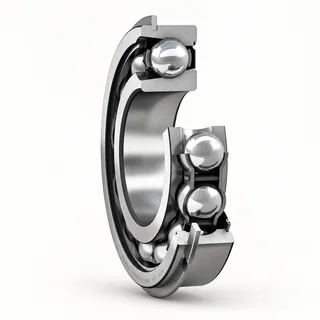
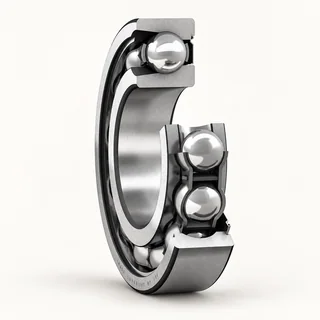
Angular contact bearings are designed to support axial loads in one direction, and radial loads at the same time. The contact angle between the balls and the raceways determines how much axial load they can absorb. In compressors, they are mounted in pairs, with angles face-to-face or in tandem, to take thrust in both directions. SKF manufactures them in single-row versions, with different angles and cages.
A common example is the 7210 BEP, a single-row angular contact bearing with a 40-degree contact angle. Larger sizes such as the 7312 BEM or the 7310 BEP are also used, depending on shaft size and load. To know which one corresponds, it is always best to send the code engraved on the old bearing.
When ordering an angular contact bearing for a compressor, it is important to clarify whether it is mounted in a pair and how: face-to-face, back-to-back or in tandem. That defines the load capacity and internal clearance. You should also indicate whether the bearing has a seal or is open, because in oil-lubricated compressors it is usually open. With the code and the position, at MR we quote the exact SKF bearing.
SKF cylindrical roller bearings for radial load
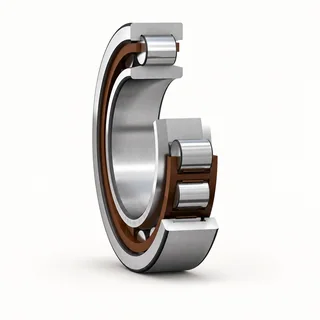
Cylindrical roller bearings support high radial loads and allow axial displacement between the shaft and the housing. That makes them ideal for the free side of the compressor, where the shaft expands due to temperature. They are widely used in screw and centrifugal compressors.
Codes such as NU 209 ECJ, NU 207 ECM or NU 208 ECM appear frequently in medium-sized equipment. There is no need to memorize the nomenclature: with the complete code of the old bearing, or with the shaft and housing dimensions, it is enough to quote. At MR we work with SKF cylindrical roller bearings.
A common mistake is replacing a cylindrical roller bearing with a deep groove ball bearing thinking it is the same. The deep groove ball bearing does not allow free axial displacement, and that can generate extra loads and premature failures. If the compressor uses cylindrical roller bearings, that type must be maintained. If in doubt, send us a photo of the bearing and of the place where it is mounted.
SKF deep groove ball bearings in small and auxiliary compressors
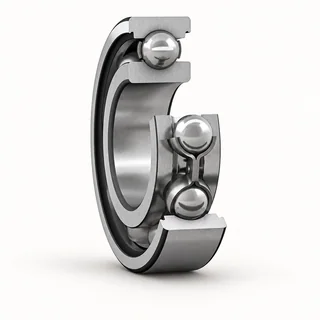
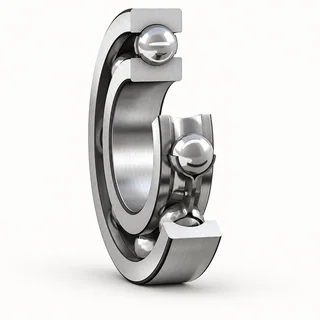
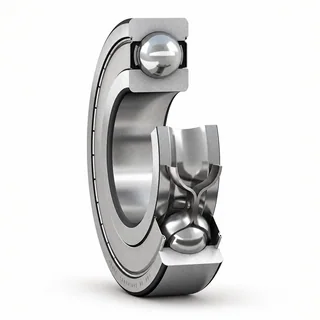
Deep groove ball bearings are the most versatile. They support moderate radial and axial loads and work well at high speeds. In piston compressors, in coupled electric motors or in tensioner pulleys, they are the first option. SKF produces them in a wide variety of sizes, with or without seals, and with different internal clearances.
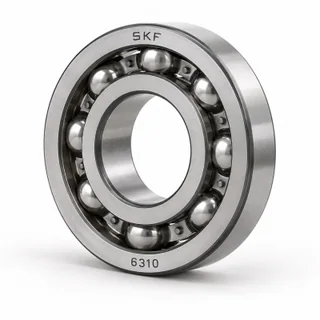
For a small compressor, a 6211 or a 6310 is usually enough. If the bearing is in a dusty or humid environment, the 2RS version is preferable, which has a rubber seal on both sides. If it is lubricated by the compressor oil, it is open. The C3 suffix, for example, indicates greater internal clearance than normal, useful when there is a temperature difference between the shaft and the housing.
When ordering a deep groove ball bearing for a compressor, you must look at the complete code: 6212, 6311, and whether it has 2RS, 2Z or C3. That detail changes the bearing's behavior. At MR we distribute SKF deep groove ball bearings and help you identify the correct one from the code or the dimensions.
Lubrication and oil cleanliness in compressors
Many compressors lubricate the bearings with the same oil as the circuit. That simplifies the design but requires the oil to be clean and at the correct level. Metal particles or degraded oil shorten bearing life. That is why the oil filter and periodic changes are as important as the bearing itself.
In screw compressors, the oil serves a triple function: it lubricates, cools and seals. If the oil loses viscosity or becomes contaminated, the bearings work with extra friction and wear quickly. Open bearings, without seals, depend on that oil for lubrication. Sealed ones, such as 2RS, come with their own grease and do not depend on the circuit, but they are used in auxiliary positions.
When quoting a bearing for a compressor, it is best to clarify whether it is lubricated by oil or grease. That defines whether the bearing should be open or sealed, and what internal clearance is suitable. It also helps to know the approximate operating temperature. With that data, at MR we indicate the appropriate SKF option for your equipment.
How to identify the bearing you need
The first step is to look at the old bearing: the complete code, the brand and sometimes the country of origin are engraved on the side ring. That code is the safest way to order the replacement. If the bearing is badly damaged and cannot be read, the inner diameter, outer diameter and width can be measured with a caliper. With those three measurements, at MR we look for the SKF equivalent.
In addition to the code, it helps to know the compressor brand and model, and the bearing's position within the equipment. For example: pulley-side bearing, free side, or male rotor bearing. That information avoids confusion when the compressor uses more than one type of bearing. It is also worth noting whether the bearing is on the motor shaft or in the compressor block.
A frequent mistake is ordering only by dimension, without checking the bearing type. A 6211 and an NU 211 can have the same inner diameter, but they are not interchangeable. Therefore, it is always best to send a photo of the old bearing and of the place where it is mounted. At MR we quote the correct SKF bearing with that data.
Request your SKF compressor bearing at MR
At MR Accesorios Industriales we sell SKF bearings for screw, piston and centrifugal compressors. We work with the angular contact, cylindrical roller and deep groove ball bearing lines, among others. If you have the code of the old bearing, we quote the same SKF bearing. If you do not have it, with the dimensions and position we help you identify it.
To quote, send us the bearing code by WhatsApp or email, or a clear photo showing the brand and the number. If the bearing is illegible, send us the caliper measurements and the compressor model. With that, we will reply promptly with the SKF option. We also advise you on mounting and lubrication.
We are in Buenos Aires, Argentina. Write to us today and tell us what compressor you are repairing. We help you choose the right bearing so the equipment can work without problems again.
Frequently asked questions
What SKF bearing does a screw compressor use?
It depends on the position. In general, the rotors use angular contact bearings mounted in pairs for axial thrust, and cylindrical roller bearings for radial load. In the motor or in auxiliary pulleys, deep groove ball bearings may be used. Send us the code of the old bearing or the dimensions and we will quote the exact SKF bearing.
How do I know if my SKF compressor bearing is open or sealed?
If the compressor lubricates the bearings with the circuit oil, they are open. If they are in a position with their own grease, they may have 2RS seals. Look at the old bearing: if it has rubber covers on the sides, it is sealed. With a photo we will confirm it.
Can I replace a cylindrical roller bearing with a deep groove ball bearing?
It is not recommended. The cylindrical roller bearing allows axial displacement due to expansion, and the deep groove ball bearing does not. That can generate extra loads and failures. It is always best to maintain the original type. If you have doubts, ask us.
What data do I need to quote an SKF compressor bearing?
Ideally, the complete code engraved on the old bearing. If it cannot be read, measure the inner diameter, outer diameter and width with a caliper. It also helps to know the compressor brand and model and the bearing position. With that we will quote.
Does MR distribute SKF bearings for compressors in Argentina?
Yes, we sell SKF bearings for compressors from Buenos Aires, Argentina. We work with angular contact, cylindrical roller, deep groove ball and other lines. Write to us by WhatsApp or email with your inquiry.
Products with photos in the catalogue
Keep reading
- SKF Chains: Reliable Power Transmission for Industrial Applications
SKF roller chains offer strength and precision for power transmission in industrial machinery. Learn about the PHC series, ASA and BS standards, and how to identify the correct chain for your equipment.
- SKF tools for industrial maintenance: pullers, heaters, aligners and calibrated shims
SKF tools simplify bearing mounting and dismounting, shaft alignment and instrument calibration. Discover TMMA and TMHP pullers, induction heaters, TKSA aligners and calibrated shims.
- How to Choose SKF Bearings by Application: Load, Speed, Environment, and Mounting
Choosing the right SKF bearing requires analyzing load, speed, environment, and mounting. We explain the main types and how to get a quote with the exact code.
Continue here
Need a SKF quote?
Send us the SKF part number, the size or a photo of the part and we will get back to you with a quote.