
Blog
What bearing does an electric motor use: how to choose and order correctly
Maintenance guide: which SKF bearing goes on the drive end and which on the fan end, when to use C3, shielded or sealed, and how to read the motor nameplate.
SKF bearings in Argentina: guide and quotes
Technical team at MR Accesorios Industriales · Updated on October 17, 2026
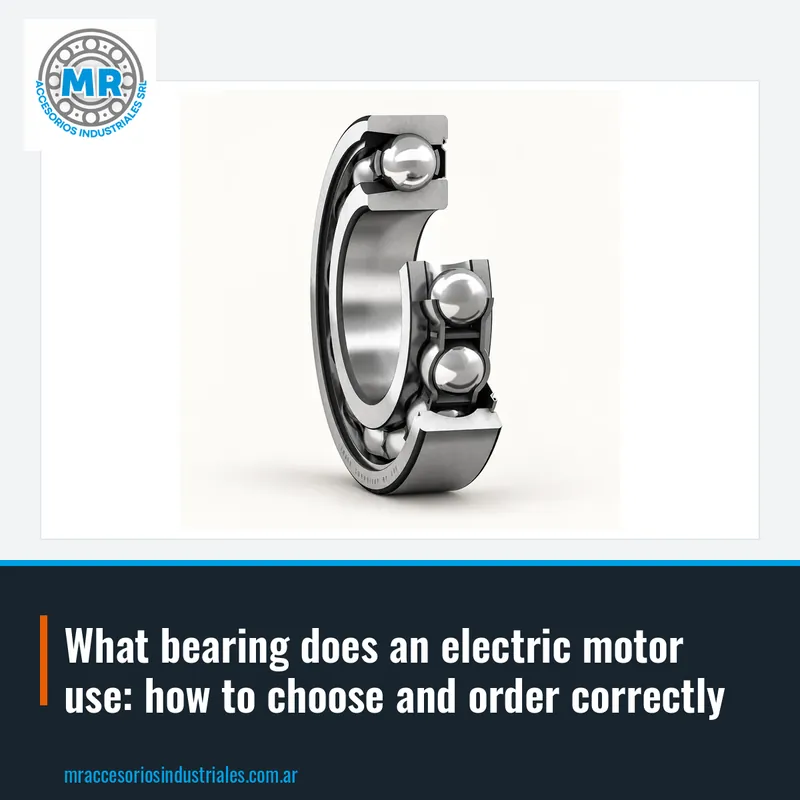
Which bearing goes on each side of the electric motor
In a horizontal electric motor, the shaft is supported by two bearings: one on the drive end and one on the fan end. The drive end bearing receives the load from the transmission, whether a direct coupling or a pulley with belts. The fan end bearing supports less radial load but must allow thermal expansion of the shaft. Therefore, one of the two is mounted fixed and the other free.
The fixed bearing is axially located on the shaft and in the housing, and defines the rotor position. The free bearing allows the shaft to move axially when the motor heats up. In small and medium motors, the fixed bearing is usually a deep groove ball bearing and the free one is another deep groove ball bearing with a sliding fit in the housing. In larger motors or with high radial load, the drive end may use a cylindrical roller bearing, which better supports the pulley load.
When ordering a bearing for an electric motor, it is advisable to indicate which side it is and what type of transmission the machine has. It also helps to know if the motor works directly coupled or with pulley and belts. With that data, at MR we quote the SKF bearing corresponding to each position. If you have the code engraved on the old bearing, even better.
SKF deep groove ball bearings for electric motors
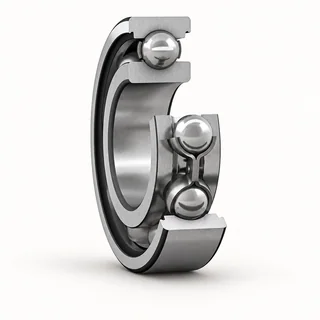
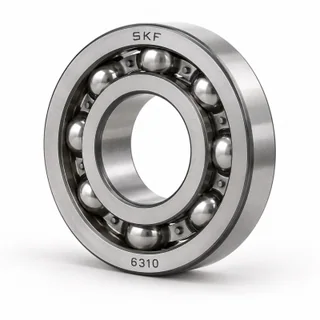
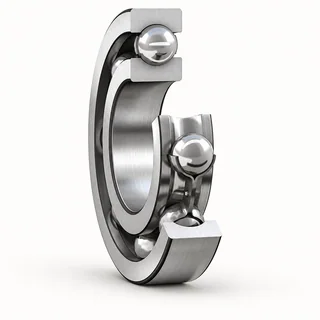
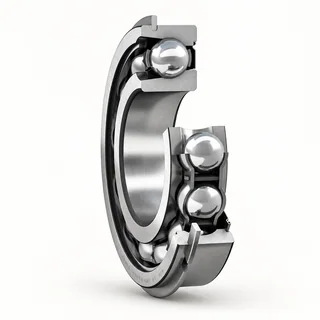
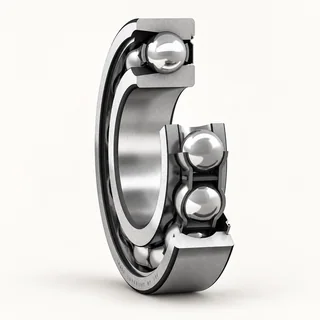
Deep groove ball bearings are the most used in low and medium power electric motors. They support radial loads and also moderate axial loads in both directions. They are suitable for high speeds and operate with low friction. In motors, they are mounted on both the drive end and the fan end, depending on the design.
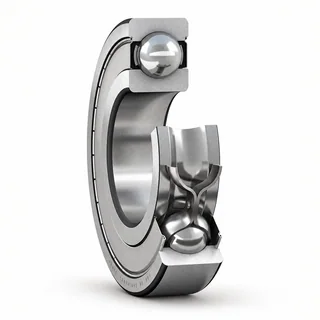
Some examples are 6211, 6212, 6310 and 6311. These codes are engraved on the bearing. When ordering, it is advisable to check if the bearing is open, shielded with metal plates (2Z) or sealed with rubber (2RS).
In motors with periodic greasing, open or metal shielded bearings are used. In lifetime sealed motors, bearings with rubber seals on both sides are used. The suffix 2Z indicates metal shield on both sides, and 2RS indicates rubber seal on both sides. If the motor has a grease nipple, the open bearing allows grease to reach the raceways. If it has no maintenance, the sealed one prevents contamination from entering.
SKF cylindrical roller bearings for the drive end
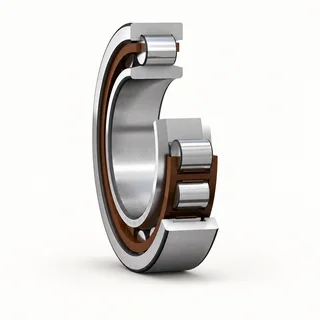
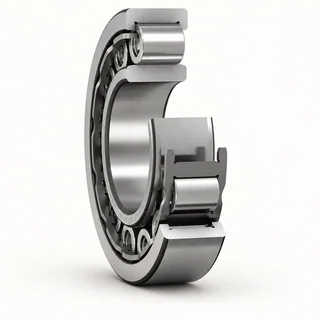
When the motor drives a pulley with belts, the drive end receives a significant radial load. In those cases, many manufacturers mount a cylindrical roller bearing in that position. This type of bearing supports much higher radial loads than a deep groove ball bearing of the same size. It does not support axial loads, so it is combined with a bearing that locates the shaft.
SKF cylindrical roller bearings for motors are usually of the NU series, with separable outer and inner rings. This facilitates assembly and disassembly on the motor. Some examples are NU 209 ECJ, NU 308 ECJ, NU 306 ECM and NU 207 ECM.
When ordering a cylindrical roller bearing, you must indicate if it is for the drive end and if the motor has a pulley. It is also advisable to measure the shaft and housing diameters. At MR we distribute these SKF bearings and help you identify the correct model. Send us a photo of the old bearing or the motor nameplate data.
Fixed bearing and free bearing: how they are mounted
In an electric motor, the fixed bearing is mounted with a firm fit on the shaft and in the housing. This prevents the shaft from moving axially. The free bearing is mounted with a firm fit on the shaft but with clearance in the housing. Thus, the shaft can expand without generating internal loads on the bearings.
The fixed bearing is usually a deep groove ball bearing, because it supports axial loads and locates the rotor. The free bearing can be another deep groove ball bearing with a sliding fit in the housing, or a cylindrical roller bearing. In large motors, the drive end may use a cylindrical roller as the free bearing. The fan end usually carries the fixed deep groove ball bearing.
When disassembling a motor, it is advisable to mark which bearing went on each side. This way each side is reassembled as it was. At MR we quote both bearings together, because it is recommended to change them at the same time.
C3 internal clearance: why many motors use it
The internal clearance of a bearing is the free space between the rolling elements and the raceways. Normal clearance is called CN. C3 clearance is greater than normal. Many electric motors use bearings with C3 clearance. The reason is that the shaft and housing heat up during operation.
When the motor runs, the shaft heats up more than the housing. The inner ring of the bearing expands more than the outer. If the clearance is normal, that expansion can eliminate the internal clearance and generate preload. This increases friction and temperature, and can damage the bearing. With C3 clearance, the bearing maintains sufficient space to work without preload.
When ordering a bearing for a motor, you must check if the nameplate or the old bearing indicates C3. If the original bearing was C3, it must be replaced with another C3. At MR we distribute SKF bearings with C3 clearance for electric motors. If you are not sure about the clearance, send us a photo of the old bearing and we will identify it.
Shielded, sealed or open: what is best for each motor
Bearings for electric motors can be open, shielded with metal plates or sealed with rubber. Open ones have no protection and need external greasing. 2Z shielded have metal plates on both sides, which retain grease and prevent large particles from entering. 2RS sealed have rubber seals that protect better against dust and moisture.
In motors with a greasing system, open or metal shielded bearings are used. Grease is injected through the grease nipple and reaches the raceways. In lifetime sealed motors, bearings with 2RS are used. These require no maintenance and are changed when the internal grease is depleted. 2Z are an intermediate option, with less friction than sealed ones.
When choosing, the original motor design must be respected. If the motor has a grease nipple, a sealed bearing should not be used, because grease would not enter. If the motor has no maintenance, an open bearing would become contaminated quickly. Ask us for the SKF bearing with the correct suffix.
How to read the motor nameplate and order the correct bearing
The electric motor nameplate provides power, speed, voltage and sometimes the bearing type. Some manufacturers indicate the bearing code on the nameplate or in the manual. If not, the code engraved on the old bearing can be read when disassembling the motor. That code includes the model and the protection and clearance suffixes.
When ordering a bearing, it is advisable to send the complete code, for example 6211 2RS C3 or NU 308 ECJ. It also helps to indicate which side of the motor it is and what transmission it has. If the bearing is badly damaged and the code cannot be read, the inner diameter, outer diameter and width can be measured. With those measurements, at MR we identify the equivalent SKF bearing.
It is recommended to change both motor bearings at the same time. Although one may seem in good condition, the other may be worn or contaminated. Changing only one can unbalance wear and shorten the life of the new one. At MR we quote the pair of SKF bearings for your motor. Write to us via WhatsApp or email with the data and we will respond shortly.
Frequently asked questions
What bearing does an electric motor use on the drive end?
It depends on the size and load. In small and medium motors, a deep groove ball bearing is usually used, such as 6211 or 6310. In motors with pulley and high radial load, a cylindrical roller bearing may be used, such as NU 209 ECJ. It is always advisable to verify the original bearing.
Why do electric motors use C3 bearings?
Because the shaft heats up more than the housing and the inner ring expands more. C3 clearance, greater than normal, prevents the bearing from losing internal clearance and becoming preloaded. If the original bearing was C3, it must be replaced with another C3.
What is the difference between 2Z and 2RS in a motor bearing?
2Z indicates metal shields on both sides, which retain grease and prevent large particles. 2RS indicates rubber seals on both sides, which protect better against dust and moisture. In motors with greasing, open or 2Z are used; in sealed motors, 2RS.
Can motor bearings be changed one at a time?
Not recommended. Although one may seem in good condition, the other may be worn or contaminated. Changing only one can unbalance wear and shorten the life of the new one. The correct approach is to change both bearings together.
How do I order an SKF bearing for an electric motor?
Send us the code engraved on the old bearing, for example 6311 2RS C3, and which side of the motor it is. If the code cannot be read, measure the inner diameter, outer diameter and width. With that data we quote the correct SKF bearing.
Products with photos in the catalogue
Keep reading
- SKF Chains: Reliable Power Transmission for Industrial Applications
SKF roller chains offer strength and precision for power transmission in industrial machinery. Learn about the PHC series, ASA and BS standards, and how to identify the correct chain for your equipment.
- SKF tools for industrial maintenance: pullers, heaters, aligners and calibrated shims
SKF tools simplify bearing mounting and dismounting, shaft alignment and instrument calibration. Discover TMMA and TMHP pullers, induction heaters, TKSA aligners and calibrated shims.
- How to Choose SKF Bearings by Application: Load, Speed, Environment, and Mounting
Choosing the right SKF bearing requires analyzing load, speed, environment, and mounting. We explain the main types and how to get a quote with the exact code.
Continue here
Need a quote?
Send us the code, size or a photo of the part and we'll quote you shortly.