
Blog
Pulleys for AIB in Neuquén and Vaca Muerta: what to check before replacing
In the individual pumping unit, pulleys and belts transmit motion from the motor to the gearbox. We explain what wears, how to inspect it and what data to send for a quote.
Technical team at MR Accesorios Industriales · Updated on November 1, 2026

What pulleys for AIB are and why they matter in mechanical pumping
In an individual pumping unit (AIB) in Neuquén or Vaca Muerta, the transmission between the motor and the gearbox is done with pulleys and V-belts. The driving pulley is mounted on the motor shaft, and the driven pulley on the gearbox input shaft. Both work together to transfer the power needed to move the pumping unit.
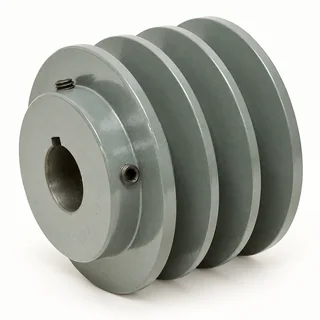
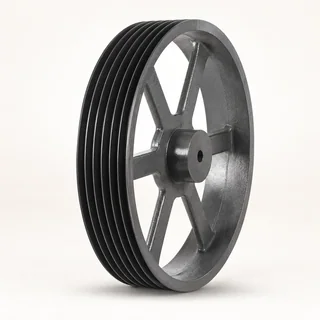
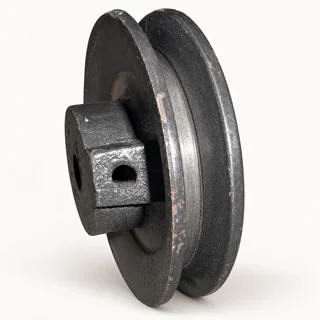
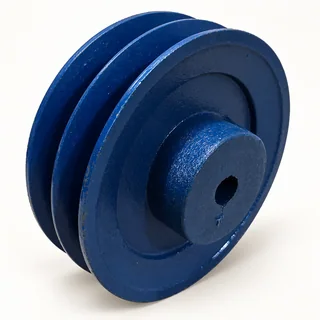
Pulleys for AIB are usually made of cast iron or steel, with machined grooves where the belts seat. The number of grooves depends on the power to be transmitted and the original design of the equipment. In the fields of the Neuquén basin, these components are exposed to dust, temperature changes and continuous operation, so their condition directly influences well availability.
EMMAR manufactures pulleys for this type of application, with options from 1 to 18 grooves and the possibility of making special parts to drawing. Although in this note we focus on pulleys, the V-belts that accompany them are also sold. A well-selected set of pulleys and belts reduces unplanned stops and facilitates field maintenance.
How to identify a pulley for AIB: section, grooves and measurements
To order or replace an AIB pulley, the first step is to identify the belt section it uses. The most common sections in these units are A, B or C, and sometimes combinations such as 1A, 1B, 2A. For example, a code like POLEA 50 1A is an example of how a pulley is identified by its code.
In addition to the section, you must measure the outside or pitch diameter of the pulley and the shaft hole diameter. In AIBs, the hole is usually straight with a keyway, but it can vary depending on the motor or gearbox. It is also important to count the number of grooves: a 2-groove pulley is identified differently from a 1-groove one, such as POLEA 60 2A.
If the pulley has the code visible, the order is more direct. If it is very worn or the code is not legible, it is best to send a photo and measurements taken with a caliper. With that data, the MR team can quote the exact pulley or an equivalent manufactured to drawing.
What wears first: grooves, belts and misalignment
In the pulley and belt transmission of an AIB, wear appears first in the pulley grooves. Over time, the groove flanks become polished or deformed, and the belt starts to run lower than normal. This reduces the contact area and can cause slipping, heating and loss of efficiency.
V-belts also wear: they stretch, crack or break. A stretched belt loses tension and slips, which accelerates groove wear. In dusty or sandy environments, such as the fields of Neuquén, abrasion shortens belt life and requires more frequent inspections.
Misalignment between pulleys is another common cause of failure. If the motor and gearbox shafts are not parallel, the belts enter the grooves twisted and wear unevenly. Checking alignment with a straightedge or a simple laser each time a set of belts is changed helps extend the life of the entire assembly.
When to change pulleys and belts in an AIB
There is no fixed rule of service hours for changing pulleys and belts in an AIB, because it depends on load, environment and prior maintenance. However, there are clear signs: if the pulley grooves are shiny, burred or have a profile different from the original, it is time to replace it.
Belts should be changed when cracks appear at the base, fraying on the sides or loss of tension that cannot be corrected with adjustment. It is also advisable to replace the complete set of belts if one breaks, so that all work with the same tension and length. Mixing new and used belts unbalances the load.
In continuous pumping operations, a good practice is to visually inspect pulleys and belts at each scheduled stop. If vibration, noise or abnormal temperature is detected in the transmission, it must be checked before it fails. Changing in time prevents damage to the gearbox or motor.
How to check grooves and tension in the field
To check the grooves of an AIB pulley, you can use a profile gauge or simply observe the belt seat. If the belt touches bottom in the groove, the pulley is worn. The groove width can also be compared with a new pulley of the same code, if one is available in the workshop.
Belt tension is checked by pressing with a finger at the center of the span between pulleys. The belt should yield slightly, but not be rigid. Excessive tension overloads the motor and gearbox bearings; low tension causes slipping.
Alignment is checked by resting a metal straightedge on the side faces of both pulleys. If the straightedge does not seat evenly, the position of the motor or gearbox must be corrected. In equipment that vibrates a lot, it is also advisable to verify the tightness of the set screws and the condition of the keyway.
EMMAR pulleys for AIB: own manufacturing and special options
EMMAR is an own-manufacturing brand of MR. EMMAR pulleys can be ordered from 1 to 18 grooves, depending on the transmission the equipment needs.
In addition to standard pulleys, EMMAR manufactures special pulleys to drawing. If the equipment has a pulley with non-catalog dimensions, the drawing or the worn part can be sent to replicate it. This is useful in old or modified equipment, where the original spare part is no longer available.
Along with the pulleys, MR sells V-belts to complete the transmission. When requesting a quote, it is best to ask for the complete set: driving pulley, driven pulley and belts. This ensures compatibility of section, number of grooves and diameters.
What data to send to quote a pulley for AIB
To quote a pulley for AIB, the most practical thing is to send the code engraved on the part, such as POLEA 50 1A or POLEA 70 1A. If the code is not legible, you can indicate the belt section, the number of grooves, the outside diameter and the hole diameter with its keyway.
It also helps to know the brand and model of the motor and gearbox, or at least the center distance. With that data, the MR team can verify whether the standard pulley works or whether a special one is better. A photo of the worn pulley, with a ruler next to it, speeds up identification.
Inquiries are answered promptly via WhatsApp or email. You can write directly with the code, measurements or photo of the part. MR is in Buenos Aires, Argentina, and serves orders from the oil industry in Neuquén and Vaca Muerta.
Frequently asked questions
What pulley does an AIB in Neuquén use?
It depends on the motor and gearbox. The most common are V-belt pulleys with one or several grooves. The code engraved on the pulley, such as POLEA 50 1A, allows it to be identified.
When should the AIB belts be changed?
When they show cracks, fraying, loss of tension or if one breaks. In that case, it is best to change the complete set so that all work equally.
Can special pulleys for AIB be manufactured?
Yes, EMMAR manufactures special pulleys to drawing. The drawing or the worn part can be sent to replicate it, even with non-catalog dimensions.
What data do I need to quote a pulley for AIB?
Engraved code, belt section, number of grooves, outside diameter and hole diameter. A photo with a ruler also works.
Does MR serve orders from Neuquén?
MR is in Buenos Aires, Argentina, and handles inquiries via WhatsApp or email. Send the code, measurements or a photo and we will quote the pulley promptly.
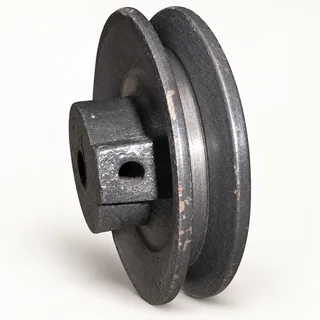
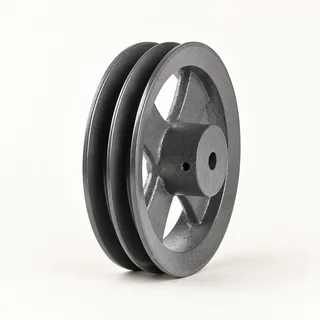
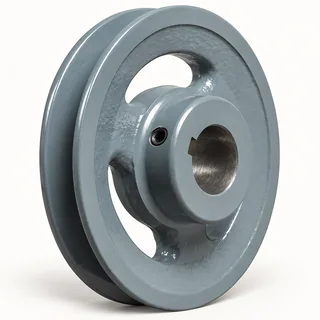
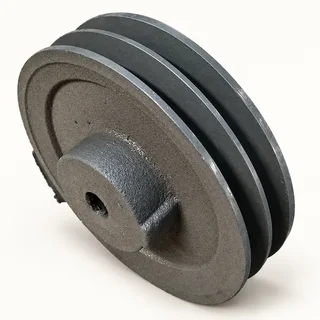
Products with photos in the catalogue
Keep reading
- EMMAR Industrial Pulleys: Power Transmission Solutions for Argentine Industry
EMMAR industrial pulleys are manufactured in Buenos Aires, Argentina with sections A, B and C, in different numbers of grooves and also custom-made. Discover the options for your transmission system.
- How to Read EMMAR Codes: Designation Structure, Prefixes, Suffixes, and Real Examples
Understanding the nomenclature of EMMAR pulleys and chains helps you identify the correct replacement part. We explain how the codes are composed and what each part means.
- EMMAR: applications, selection and maintenance for lasting performance
EMMAR is MR's own brand for pulleys and roller chains. Learn where they are used, how to select them and maintain them to extend their service life.
Continue here
Need a EMMAR quote?
Send us the EMMAR part number, the size or a photo of the part and we will get back to you with a quote.