
Blog
NSK bearing mounting and dismounting: tools, steps and common errors that shorten service life
Practical guide to mounting and dismounting NSK bearings in Argentine industry: methods by type, suitable tools and errors worth avoiding.
NSK bearings in Argentina: guide and quotes
Technical team at MR Accesorios Industriales · Updated on November 10, 2026
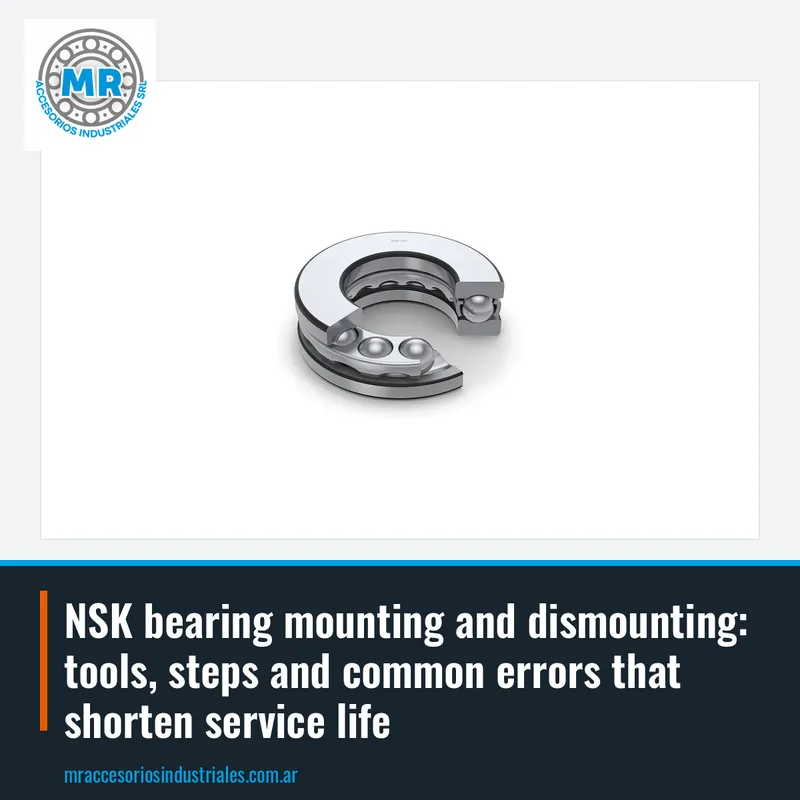
Before starting: identification and preparation of the NSK bearing
NSK bearing mounting and dismounting starts with correct identification of the part. Each bearing has a code engraved on its ring that defines the series, the bore diameter and characteristics such as seals or internal clearance. Check that code against the equipment plate or the manual before removing the old bearing.
In addition to the code, it is advisable to measure the inner diameter, outer diameter and width with a caliper. In tapered roller bearings, mounting is done separately: the cone and the cup are independent parts. In inserts with a spherical outer ring, designed to sit in a self-aligning housing, the procedure is different. Each type changes the way it is installed.
Prepare a clean, dust-free workplace. Have the mounting tools at hand: impact tubes, a hydraulic press or an induction heater for large bearings. Never strike directly on the rings or cages. If the bearing comes with 2RS or 2Z protection, do not wash it with solvent: the internal lubricant is for life and the seal prevents contamination.
Cold mounting: method for small and medium bearings
Cold mounting is used on small bearings with light interference fit. Force is applied only on the ring that is fitted: if the fit is on the shaft, you push the inner ring; if it is in the housing, the outer ring. For a 6011 deep groove ball bearing, an impact tube with a diameter slightly smaller than the inner ring and a ground face is enough to seat it without damaging the raceways.
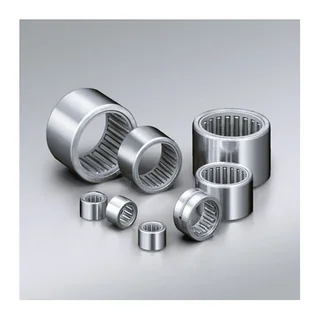
Small needle bearings require care with the cage and the rollers. When inserting them into their housing, use a mandrel that bears evenly on the outer ring. Never press on the cage or on the rollers: they deform and the bearing loses precision. If the fit is very tight, it is better to heat the housing's outer ring instead of forcing the bearing.
A common error is striking directly on the ring with a hammer. That creates marks, microcracks and misalignment. Another error is mounting crooked: the bearing goes in under uneven pressure and jams. Check that the seat is clean, without burrs or rust. Apply a thin film of oil on the seat to facilitate sliding and prevent seizure.
Hot mounting: when and how to heat an NSK bearing
When the fit is heavy interference or the bearing is large, hot mounting is the safest option. Heating the bearing expands the inner ring and allows it to slide onto the shaft without effort. For a spherical roller bearing, an induction heater is ideal: it heats evenly, controls the temperature and does not contaminate.
Never use a direct torch: localized heat deforms the steel and burns the lubricant. Nor should you submerge the bearing in hot oil without temperature control. The maximum temperature is defined by the manufacturer's catalog for each bearing. An infrared thermometer or the heater's own control prevents overshooting.
After heating, place the bearing against the shaft shoulder and hold it pressed until it cools and contracts. If the bearing has a tapered bore with an adapter sleeve, as some spherical roller bearings do, mounting is done by pushing the sleeve with a hydraulic nut. In that case, measure the reduction of radial clearance with feeler gauges to know when to stop.
Mounting tapered and needle bearings: fits and internal clearance
NSK tapered roller bearings are mounted with adjustable internal clearance. The cone and the cup are installed separately and the clearance is adjusted with the shaft nut or with shims. If you leave it too tight, it overheats; if it is loose, there is vibration and premature wear. The correct method is to rotate the bearing while adjusting and measure axial clearance with a dial indicator.
In needle bearings, mounting depends on the cage type. Needle cages with a stamped outer ring are press-fitted into a housing. The shaft must have suitable hardness and roughness so that the needles roll without marking. If the shaft is worn, the new bearing will fail quickly: grind or replace the shaft before mounting.
A frequent error is reusing tapered bearings after a forced dismounting. If you removed the cone with a puller and it marked the raceway, do not mount it again. Nor should you mix cones and cups from different bearings. On needle bearings, check that the cage is not deformed and that the rollers turn freely before installing it.
Dismounting: pullers, methods and care to avoid damaging the shaft
NSK bearing dismounting must be done with pullers that bear on the inner ring, never on the cage or the rollers. For a 6010 deep groove ball bearing fitted on the shaft, a two- or three-jaw puller with central pull is the most common. If the bearing is very tight, heat the inner ring with a portable induction heater or use a hydraulic puller.
On tapered bearings, the cone usually remains tight on the shaft after removing the cup. Use a thin-plate puller that fits between the cone and the shaft shoulder. If there is no space, ask about the right puller instead of forcing it with blows. Never strike the raceway: it chips and contaminates the new mounting.
Inserts with set screws are dismounted by loosening the set screws on the inner ring and sliding the bearing along the shaft. If the shaft is rusted, clean with fine sandpaper before removing. For spherical roller bearings with an adapter sleeve, loosen the nut and use a hydraulic dismounting sleeve: it injects oil between the sleeve and the shaft to release it without damage.
Common errors that shorten the service life of an NSK bearing
The most serious error is striking the bearing during mounting. A single blow on the ring can leave a mark that later becomes premature spalling. Another error is using an impact tube of the wrong diameter: if it bears on the cage or the seals, it deforms them. Always check that the tube bears only on the ring that is fitted.
Contamination is another frequent cause of failure. Mounting a bearing with dirty hands, in a dusty environment or without cleaning the seat introduces particles that scratch the raceways. Open bearings require immediate lubrication after mounting; 2RS sealed bearings are not lubricated, but you should check that the seal is not damaged by handling.
Misalignment between bearings also shortens life. On shafts with two bearings, if one is crooked due to a poorly machined seat or forced mounting, it generates uneven loads. Use a dial indicator to check alignment and correct it before startup. A properly mounted and lubricated NSK bearing lasts as long as the fatigue calculation indicates, no less.
When to ask for help and what data to send for a quote
If the bearing is large, is in critical equipment or you do not have the right tools, it is better to consult before improvising. At MR we sell NSK bearings. You can send us a photo of the old bearing, the engraved code and the shaft and housing dimensions. With that we quote the replacement and tell you the safest mounting method.
For special bearings such as spherical roller bearings, the fit and internal clearance are critical. If you are not sure of the correct fit, consult the NSK catalog or ask us for help: a poorly chosen fit can make the bearing spin on the shaft or jam.
When you request a quote, always include the full code and the brand. If the bearing is from another brand, send the code and we will tell you the NSK equivalent. A photo of the equipment plate or the damaged bearing also helps. At MR we reply promptly with the quote so your maintenance does not stop.
Frequently asked questions
How do you mount an NSK bearing without damaging it?
Use an impact tube that bears only on the fitted ring, or heat the bearing with temperature control if it is large. Never strike directly on the rings, cage or seals.
What tools do I need to dismount an NSK bearing?
Jaw or plate pullers, an induction heater, a bronze hammer and, for spherical roller bearings with an adapter sleeve, a hydraulic dismounting sleeve. The tool depends on the bearing type and size.
Can I reuse an NSK bearing after dismounting it?
If the dismounting was forced and marked the raceways or the cage, no. On tapered bearings, do not mix cones and cups from different bearings. If in doubt, replace it.
What does the 2RS suffix mean on an NSK bearing?
It indicates that it has rubber seals on both sides and comes lubricated for life. Do not wash it with solvent or lubricate it externally; if the seal is damaged, the bearing becomes contaminated.
How do I request a quote for an NSK bearing at MR?
Send us by WhatsApp or email the full code engraved on the bearing, the shaft and housing dimensions, and a photo of the part. We will quote the replacement and advise you on mounting.
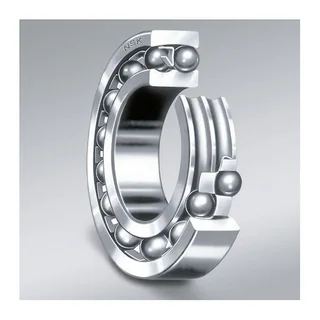
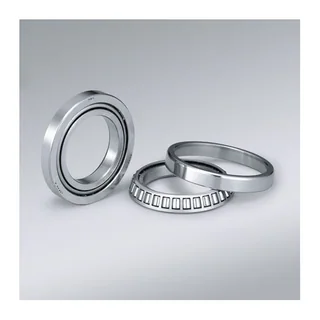
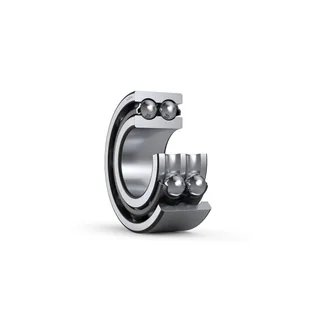
Products with photos in the catalogue
Keep reading
- How to Read NSK Codes: Designation Structure, Prefixes, Suffixes, and Real Examples
We explain how an NSK bearing designation is composed, what the most common prefixes and suffixes indicate, and how to identify the exact part for your order.
- NSK by industry: where it's used, how to select it, assembly and maintenance for durability
Practical guide to choose NSK bearings by application, with assembly and maintenance criteria that extend service life.
- How to choose NSK by application: load, speed, environment and mounting
Choosing the correct NSK bearing depends on load, speed, environment and mounting type. We explain how to identify each type and what data you need for a quote.
Continue here
Need a NSK quote?
Send us the NSK part number, the size or a photo of the part and we will get back to you with a quote.