
Blog
How to Read NSK Codes: Designation Structure, Prefixes, Suffixes, and Real Examples
We explain how an NSK bearing designation is composed, what the most common prefixes and suffixes indicate, and how to identify the exact part for your order.
NSK bearings in Argentina: guide and quotes
Technical team at MR Accesorios Industriales · Updated on October 13, 2026
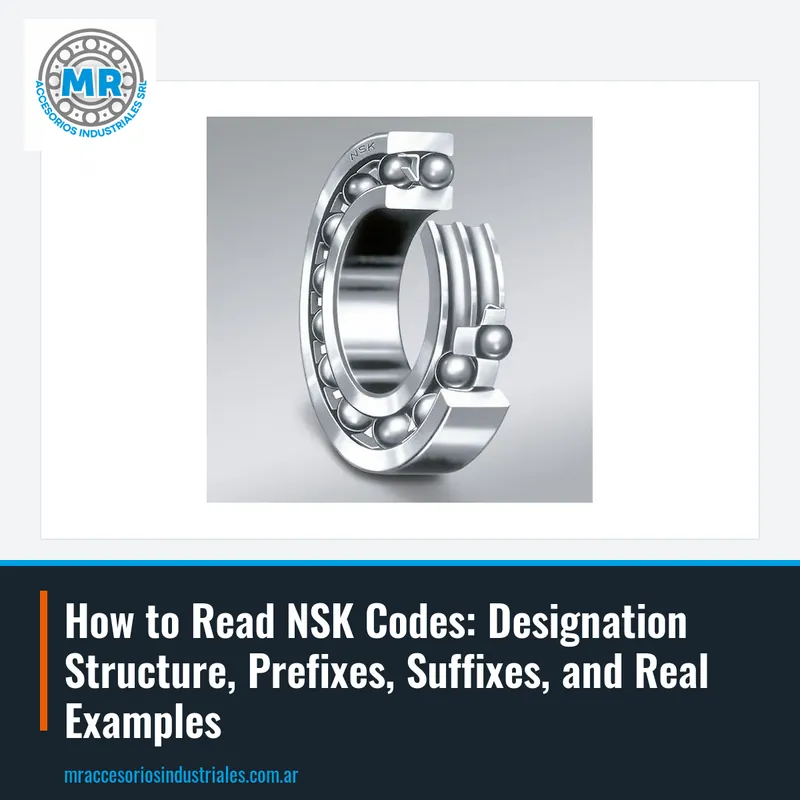
Basic Structure of an NSK Code
NSK codes follow a standardized designation logic that combines a basic number with prefixes and suffixes. The basic number identifies the dimensional series and bore diameter, while prefixes and suffixes provide information about materials, seals, cages, or internal clearance. Understanding this structure allows you to order the correct bearing without relying on memory or a printed catalog.
In a deep groove ball bearing, for example, the base code can be a four- or five-digit number, such as 6952. The last two digits usually indicate the bore diameter in millimeters multiplied by five, although there are exceptions for small diameters. Prefixes and suffixes, such as 2RS or C3, are added after the basic number and modify specific characteristics.
When you look at an NSK bearing, you will find the code engraved on one of its side faces. That inscription is the most reliable source for identifying the part, because it includes the complete designation with all its modifiers. If the bearing is mounted and you cannot read it, it is best to remove it carefully or look for the reference on the equipment plate or in the manufacturer's manual.
Common Prefixes and What They Indicate
Prefixes in NSK codes appear before the basic number and usually indicate the bearing type or a construction variant. For example, in Y-bearings (inserts), prefixes identify specific series with particular mounting and sealing characteristics. These prefixes are important because they differentiate bearings that may appear identical at first glance.
In the case of needle roller bearings, NSK uses designations such as Y-88 or B-97, where the initial letter and the following number are part of the series code. It is not necessary to memorize the meaning of each letter: with the complete code, any technical supplier can identify the exact part and its dimensions.
When ordering a bearing with a prefix, it is always best to copy the complete code exactly as engraved on the part. If you only note the basic number, you may omit critical information about the seal type, cage material, or internal geometry. At MR we work with these codes daily and help you interpret them so you order the correct one.
Most Frequent Suffixes: 2RS, 2Z, C3, and K
Suffixes are letters or numbers added at the end of the basic code and modify bearing characteristics. In the industry, 2RS (rubber seals on both sides), 2Z (metal shields on both sides), C3 (internal clearance greater than normal), and K (tapered bore) are used as general references. In NSK deep groove ball bearings, seals and shields have their own nomenclature: DDU indicates contact seals on both sides, VV non-contact seals on both sides, and ZZ metal shields on both sides.
For example, an NSK deep groove ball bearing with the DDU suffix has contact seals that retain grease and block contaminants. One with the ZZ suffix has metal shields that protect against particles with lower friction. The C3 suffix is used when the bearing will operate at high temperatures or with tight fits, because the increased internal clearance compensates for expansion.
It is important not to confuse these suffixes with other NSK-specific ones that appear in spherical roller bearings, such as those accompanying codes like 23122. Those suffixes are not universally interpreted and should be validated with MR's technical team before assuming their meaning. If in doubt, send us a photo of the engraved code and we will clarify it.
Needle Roller Bearings and Their Codes
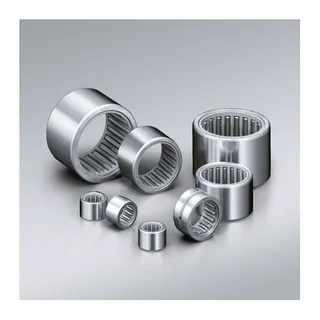
NSK needle roller bearings are identified by codes that combine letters and numbers, such as Y-88, B-97, or Y-66. These codes do not follow the same dimensional logic as ball bearings, because the bore diameter and width are expressed differently. Therefore, it is essential to copy the complete code and not try to deduce dimensions from the number.
These bearings are used in applications where radial space is limited but high load capacity is needed, such as gearboxes, small motors, and reciprocating mechanisms. The NSK code is usually engraved on the outer ring or cage, and sometimes it is necessary to clean the part to read it clearly.
When quoting a needle roller bearing, in addition to the code, it is advisable to measure the inner diameter, outer diameter, and width with a caliper. These measurements help verify that the code corresponds to the physical part, especially if the bearing was replaced before or if the equipment was modified. At MR we help you confirm the exact reference.
Tapered Roller Bearings and Their Designation
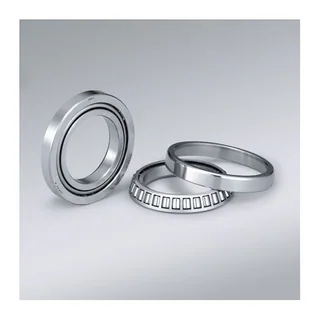
NSK tapered roller bearings usually have four- or five-digit numeric codes, such as 5566, 6376, or 3982. Therefore, it is best to copy the code exactly as engraved, with everything that accompanies it, instead of looking for the part by dimensions alone.
These bearings are used in vehicle wheels, gearboxes, and equipment with combined radial and axial loads. The NSK code is engraved on the cone and on the cup, and it is advisable to note both, because each part has its own reference. If you only have one of the two parts, you can quote that part, but it is ideal to replace the complete assembly.
When ordering a tapered roller bearing, it is helpful to indicate whether you need the cone and cup separately or as a set. It is also advisable to check if the engraved code has additional letters or numbers and copy them completely. At MR we supply NSK tapered roller bearings and quote the exact reference just by providing the engraved code.
Y-Bearings (Inserts) and Their Nomenclature
NSK Y-bearings, also called inserts, are identified by codes such as AR210, AS205, or AS204. These bearings are mounted in pillow block or flanged housings and have a spherical outer ring to compensate for misalignment.
These inserts are used in agricultural applications, conveyors, and machinery where mounting and dismounting must be quick. The NSK code is engraved on the outer ring or on the seal.
When quoting a Y-bearing, it is important to indicate the complete code and, if possible, the type of housing where it will be mounted. It is also advisable to measure the shaft diameter to verify that the bearing bore is correct. At MR we work with the NSK insert line and help you choose the right model for your application.
Spherical Roller Bearings and Their Code
NSK spherical roller bearings have codes that begin with 2, such as 23122, 24130, or 23140. The basic number indicates the series and bore diameter, and may have NSK-specific suffixes that should not be interpreted without technical validation. These bearings support very high radial loads and allow shaft misalignment.
They are used in heavy equipment such as mills, industrial fans, pumps, and mining machinery. The NSK code is engraved on the side face of the outer ring, and it is often necessary to clean the surface to read it well. If the bearing is severely damaged, you can measure the main dimensions and we will help you identify the reference.
When ordering a spherical roller bearing, it is key to indicate the complete code, including any suffix, because there may be variants with different cages or internal clearance. It is also advisable to report whether the bearing operates with grease or oil lubrication, as this can influence the choice of seal or cage. Write to us via WhatsApp or email with the code, measurement, or a photo and we will quote it promptly.
Frequently asked questions
Where do I find the code on an NSK bearing?
The code is engraved on one of the side faces of the bearing, usually on the outer ring or on the seal. If it is mounted, it may be necessary to remove it or use a mirror and flashlight to read it. You can also look for the reference on the equipment plate or in the manufacturer's manual.
What does the DDU suffix mean on an NSK bearing?
In NSK deep groove ball bearings, DDU indicates contact seals on both sides: they perform the function marked as 2RS in other nomenclatures, retaining grease and blocking dust and moisture. If you need less friction, there are VV (non-contact seals) and ZZ (metal shields) versions.
Can I order an NSK bearing with only the measurements?
Yes, you can give us the inner diameter, outer diameter, and width measurements, and we will help you identify the corresponding NSK reference. However, the engraved code is the safest way to avoid errors, because it includes suffixes that indicate internal characteristics not visible to the naked eye.
What do I do if the bearing code is erased?
If the code is illegible, measure the main dimensions with a caliper and note the bearing type (deep groove ball, tapered, spherical, etc.). With that data, at MR we can find the equivalent NSK reference. It is also helpful to send a photo of the part and the location where it is mounted.
Are NSK codes the same as those of other brands?
In many cases, the basic number is similar between brands because it follows international standards, but prefixes and suffixes may vary. Therefore, if you have a bearing from another brand and want an equivalent NSK, it is best to provide us with the complete code and we will indicate the corresponding reference.
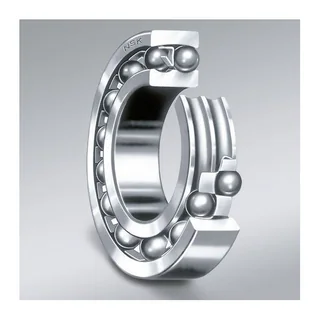
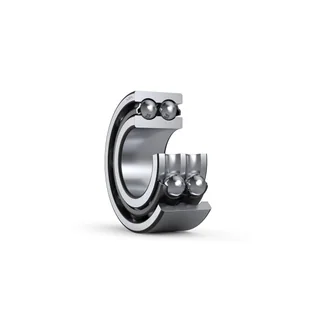
Products with photos in the catalogue
Keep reading
- GUMMI Couplings: Vibration Absorption and Reliable Power Transmission for Industry
GUMMI elastic couplings absorb vibrations and misalignments, protect machinery, and ensure reliable power transmission. Learn about their configurations and how to choose the right model.
- Tsubaki industrial chains: quality, durability and performance for demanding applications
Discover the types of Tsubaki chains we supply: roller, conveyor, leaf, freewheels, couplings and torque limiters. We help you choose the right one for your application.
- SKF Chains: Reliable Power Transmission for Industrial Applications
SKF roller chains offer strength and precision for power transmission in industrial machinery. Learn about the PHC series, ASA and BS standards, and how to identify the correct chain for your equipment.
Continue here
Need a quote?
Send us the code, size or a photo of the part and we'll quote you shortly.