
Blog
NSK by industry: where it's used, how to select it, assembly and maintenance for durability
Practical guide to choose NSK bearings by application, with assembly and maintenance criteria that extend service life.
NSK bearings in Argentina: guide and quotes
Technical team at MR Accesorios Industriales · Updated on October 20, 2026
NSK needle bearings: compact solutions for radial loads
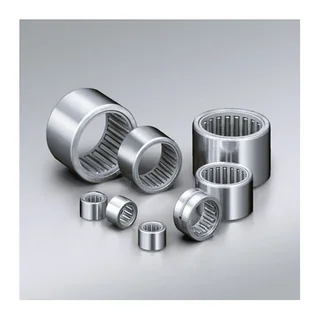
NSK needle bearings stand out for their reduced cross-section and high radial load capacity in limited spaces. They are ideal for applications where compact design is critical, such as gearboxes, small motors, and reciprocating mechanisms. They are also used in power transmission equipment and agricultural machinery.
When selecting a needle bearing, it is essential to verify the shaft diameter, housing width, and lubrication conditions. Many models come with steel or polymer cages, and some include an outer ring with a flange to facilitate axial mounting. References such as F-79, J-57, or J-78 correspond to this type of product.
To get a quote, send the full code or exact dimensions (inner diameter, outer diameter, and width) along with a photo of the part. A common mistake is confusing the needle bearing with a friction bushing; verify that the rolling element is indeed a needle. During assembly, use a mandrel that supports only the ring with the fit, never strike the needles directly.
NSK tapered roller bearings: support for combined loads
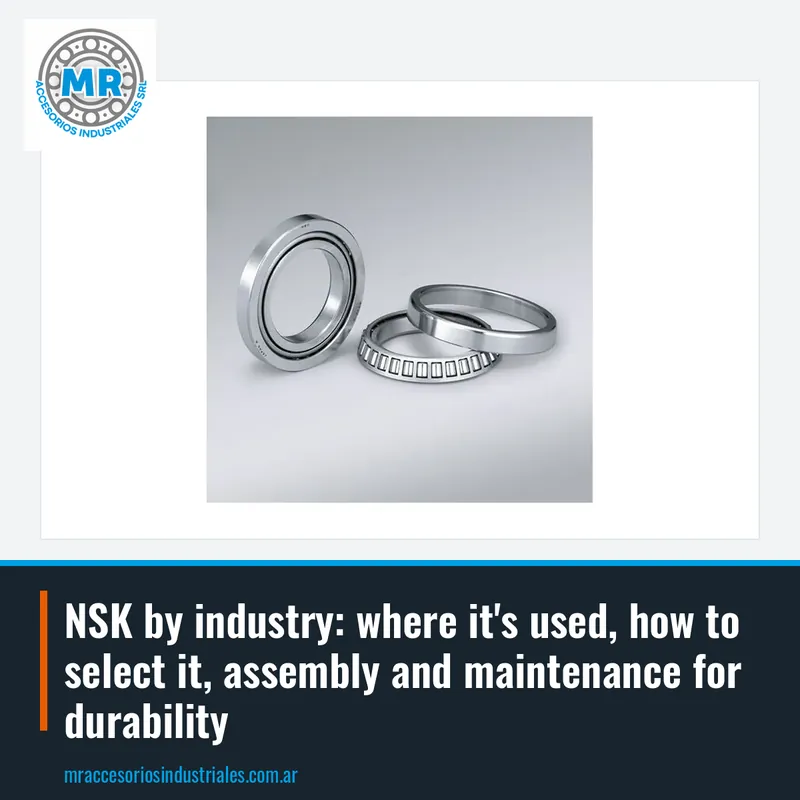
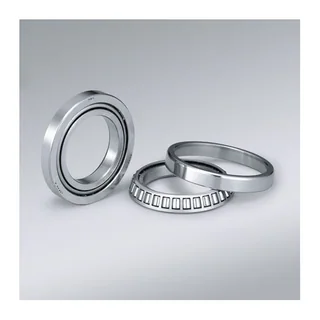
NSK tapered roller bearings are designed to withstand simultaneous radial and axial loads, thanks to the angular arrangement of their raceways. They are typical in vehicle wheels, reducers, rolling mills, and mining equipment where combined forces are demanding. Their dismountable design facilitates maintenance in assemblies where the fit is by interference.
When selecting, pay attention to the contact angle and arrangement (single, double, or facing pairs). References such as 3120, 3320, and 1620 correspond to this type of product. Always verify the recommended axial clearance for the application, as incorrect adjustment generates heat and premature wear.
For assembly, ensure the bearing is clean and lubricated before installation. Adjust the axial clearance with nuts or shims according to the equipment manufacturer's instructions. A frequent mistake is over-preloading the bearing, which reduces service life; if in doubt, send us the code and application and we will quote it.
NSK Y-bearings (inserts): simple fixing for long shafts
NSK Y-bearings, also called inserts, are mounted on pillow block or flange housings and allow quick fixing to the shaft via set screws or eccentric locking collar. They are widely used in conveyors, fans, agricultural machinery, and food processing equipment. Their design with a spherical outer ring compensates for slight housing misalignments.
When choosing a Y-bearing, verify the shaft diameter and the fixing type (set screw or eccentric). References such as AR201, AS210, and AR202 correspond to this type of product. Check in each case the seal type and fixing according to the working environment.
To get a quote, send the bearing code or the shaft and housing dimensions. During assembly, ensure that the fixing screw tightens on a ground area of the shaft and not on the keyway. A common mistake is using a housing with a bearing of a different series; verify compatibility between the insert and the housing.
NSK deep groove ball bearings: versatility for moderate radial and axial loads
NSK deep groove ball bearings are the most widely used in industry due to their versatility, low friction, and ease of assembly. They support moderate radial and axial loads in both directions and perform well at high speeds. They appear in electric motors, pumps, compressors, and a vast array of machine tools.
Selection is based on shaft diameter, load, and rotational speed. References such as 6010, 6011, and 6210 are deep groove ball bearings; the suffix 2RS indicates rubber seals on both sides, 2Z metal shields, and C3 larger internal clearance. Check if your application requires a special internal clearance to compensate for thermal expansion.
For assembly, use suitable tools that apply force only to the ring being fitted. Avoid striking directly on the bearing; if using a hammer, do so with a bronze drift or a tube that supports the inner ring. A frequent mistake is washing the new bearing with solvent and removing the factory grease; only do this if you are going to lubricate with a specific product.
NSK spherical roller bearings: robustness for heavy loads and misalignments
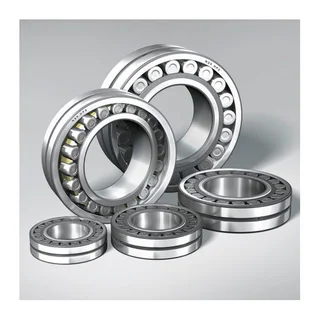
NSK spherical roller bearings have two rows of rollers and an outer ring with a spherical raceway, which allows them to absorb angular misalignments of the shaft. They are ideal for applications with very heavy loads and long shafts, such as in mining, cement, paper, and large equipment. Their self-aligning design reduces stresses on the housings.
When selecting, consider the radial load, speed, and expected degree of misalignment. References such as 23120CE4, 21320CE4, and 23130CE4 are spherical roller bearings; the suffix C3 indicates larger internal clearance than normal, useful when there are temperature differences between shaft and housing. Verify the fixing type: many are mounted with adapter sleeves on shafts without shoulders.
For maintenance, periodically check lubrication and operating temperature. A common mistake is not respecting the recommended minimum radial clearance, which causes overheating and premature failure. If you need to replace one, send the full code and the shaft and housing dimensions to quote the exact option.
NSK cages and needle components: spare parts for specific mechanisms
NSK cages and needle components include needle cages, rollers, and washers used as spare parts in mechanisms where space is limited. They are common in gearboxes, hydraulic pumps, and cam systems. These components allow rebuilding needle bearings without changing the entire housing.
When ordering these spare parts, it is crucial to identify the exact code or the dimensions of the cage and needles. Often the code is engraved on the cage or in the original equipment catalog. If you don't have the code, measure the inner diameter, outer diameter, and width of the cage, and the diameter and length of the needles.
A frequent mistake is reusing worn needles with a new cage; always replace the complete assembly. To get a quote, send a clear photo of the part and the dimensions. During assembly, lubricate the needles well before installing and verify that they rotate freely without jamming.
NSK cylindrical and axial ball bearings: solutions for specific loads
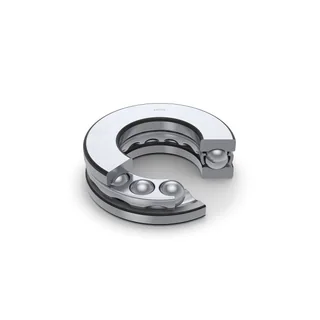
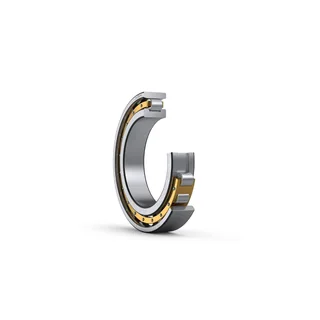
NSK cylindrical roller bearings support high radial loads and allow axial displacements depending on the design. They are used in large electric motors, gearboxes, and machine tools. Axial ball bearings, on the other hand, are designed for purely axial loads in one direction, such as in machine heads or rotary tables.
When selecting cylindrical roller bearings, verify whether the bearing has flanges on one or both rings, as this defines the axial load capacity. For axial ball bearings, check the load direction and maximum permissible speed. You can consult us for any NSK reference in these subcategories.
For assembly, follow the same good practices: cleanliness, adequate lubrication, and applying force only to the fitted ring. A common mistake with axial ball bearings is reversing the washers; respect the original position marked during disassembly. Send the code or dimensions to quote the correct alternative.
Frequently asked questions
How do I identify the code of an NSK bearing?
The code is usually engraved on the side of the outer ring or on the inner ring. If it is not legible, measure the inner diameter, outer diameter, and width, and take a photo. With that data we will quote it promptly.
What does the suffix 2RS mean on an NSK bearing?
2RS indicates that the bearing has rubber seals on both sides, which protects against the entry of contaminants and retains grease. It is ideal for environments with dust or moisture.
Can I use a deep groove ball bearing instead of a tapered roller bearing?
It is not recommended, because each type is designed for different loads. Tapered bearings support combined radial and axial loads, while deep groove ball bearings are for moderate radial and axial loads. Use the type specified by the equipment manufacturer.
How do I mount an NSK bearing without damaging it?
Use a mandrel or tube that supports only the ring being fitted. Never strike directly on the bearing. If the fit is on the shaft, push the inner ring; if it is on the housing, push the outer ring.
What data do I need to quote an NSK bearing?
Send us the full code if you have it, or the dimensions (inner diameter, outer diameter, and width) and a photo of the part. Also indicate the application and working conditions to ensure the correct selection.
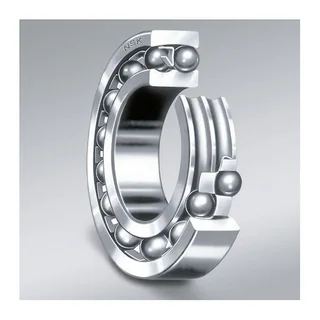
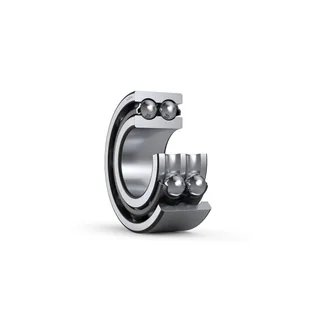
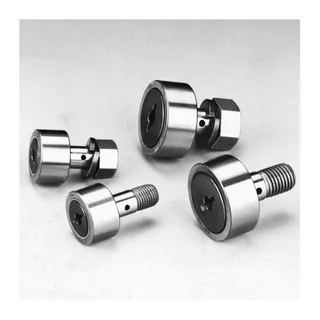
Products with photos in the catalogue
Keep reading
- How to Read NSK Codes: Designation Structure, Prefixes, Suffixes, and Real Examples
We explain how an NSK bearing designation is composed, what the most common prefixes and suffixes indicate, and how to identify the exact part for your order.
- GUMMI Couplings: Vibration Absorption and Reliable Power Transmission for Industry
GUMMI elastic couplings absorb vibrations and misalignments, protect machinery, and ensure reliable power transmission. Learn about their configurations and how to choose the right model.
- Tsubaki industrial chains: quality, durability and performance for demanding applications
Discover the types of Tsubaki chains we supply: roller, conveyor, leaf, freewheels, couplings and torque limiters. We help you choose the right one for your application.
Continue here
Need a quote?
Send us the code, size or a photo of the part and we'll quote you shortly.