
Blog
McGill: how to choose the bearing according to the application
Guide to selecting McGill bearings by load, speed, environment and mounting, with real catalog codes and application criteria.
Technical team at MR Accesorios Industriales · Updated on October 9, 2026
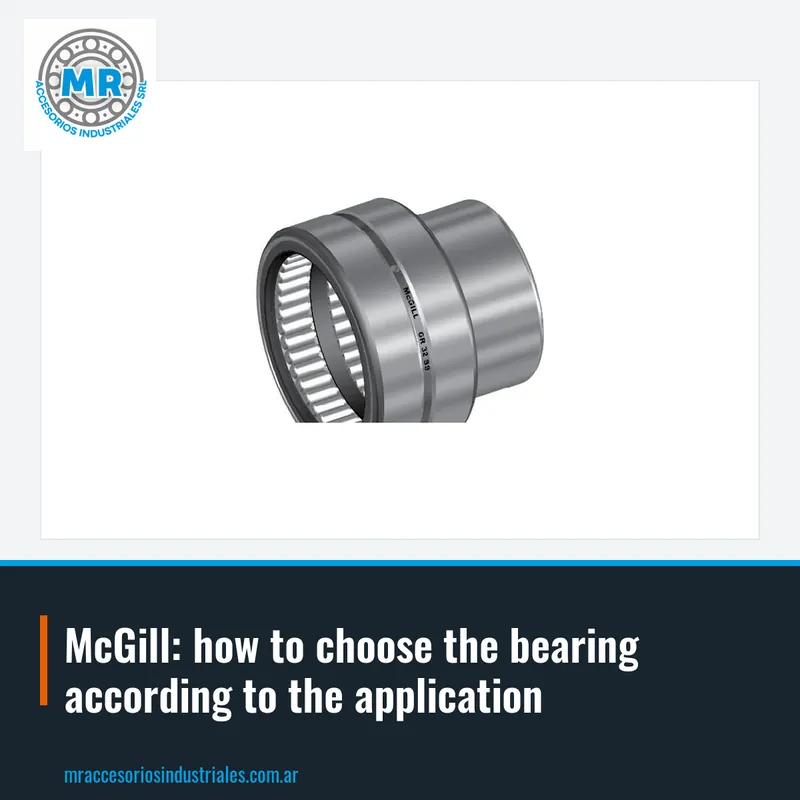
McGill cam followers and support rollers: selection by load and mounting
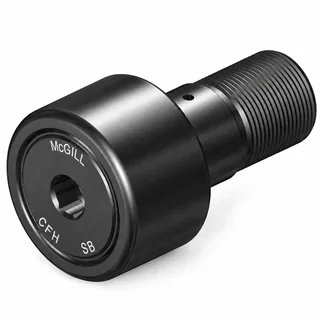
McGill cam followers and support rollers are bearings with a thick outer ring designed to roll on a track or cam. They withstand high radial loads and, depending on the design, also moderate axial loads. They are used in mechanisms where a roller follows a profile, such as feed systems, linear guides or machine cams.
When choosing a McGill cam follower, the first step is to define the radial load and rotation speed. The thick outer ring allows absorbing impacts and off-center loads, but the dynamic load limit of the model must be verified. The type of mounting also matters: some are fixed with a central pin, others with a threaded stud or directly on a shaft.
In the McGill catalog, codes such as CF 3, CF 2 and CF 1 correspond to cam followers with a pin. To get a quote, it is best to send the complete code or the outer diameter, width and type of fixation. A common mistake is to order only by outer diameter without verifying the pin or thread diameter.
McGill needle bearings: when they are suitable due to space and speed
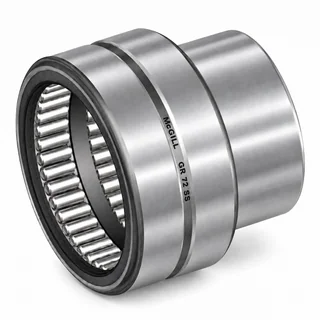
McGill needle bearings are characterized by their thin section and high load capacity in reduced spaces. They use small-diameter cylindrical rollers, allowing a compact design with good rigidity. They are ideal for applications where radial space is limited and speed is moderate to high.
The selection of a McGill needle bearing depends on the load, speed and available lubrication. Because they have little internal space, they require adequate lubrication and precise shaft adjustment. They are mounted in gearboxes, small motors, pumps and reciprocating or rotating motion mechanisms.
Codes such as GR 88, GR 26 and GR 44 are examples of McGill needle bearings. To order, the inner diameter, outer diameter and width, or the engraved code, are needed. Avoid confusing a needle bearing with a bushing: the former has rolling elements, the latter is a sliding sleeve.
McGill special bearings: solutions for non-standard applications
Within the McGill line there are special bearings, designed for applications that cannot be solved with standard series. They may have particular geometries or a design defined for a specific equipment, and therefore are identified with their own code.
When choosing a McGill special bearing, it is key to understand the function it performs in the equipment. It may be a bearing with an integrated flange, a roller with a special profile or a needle design with reduced tolerances. Information from the original manufacturer or the part drawing are essential to identify the correct replacement.
In the McGill catalog, codes such as D-324, D-320 and D-319 appear as special bearings. To get a quote, send the complete code if it is legible, or the exact measurements and a photo of the part. A common mistake is to assume that a special bearing is interchangeable with a standard one of similar dimensions.
McGill spherical roller bearings: for combined loads and misalignment
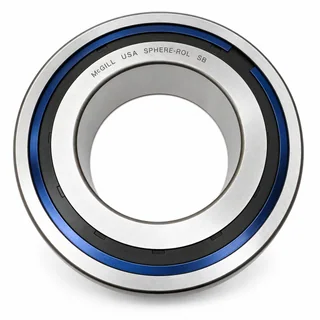
McGill spherical roller bearings are spherical roller bearings that allow angular misalignment between the shaft and the housing. They withstand combined radial and axial loads and are self-aligning. They are used in applications where mounting does not guarantee perfect alignment, such as long shafts or structures that flex.
The selection of a McGill spherical roller bearing depends on the magnitude of the load, speed and expected degree of misalignment. The spherical design of the rollers and the outer ring raceway allows compensating for alignment errors. They require a suitable housing and, in general, grease lubrication.
Codes such as SB-22211, SB-22310 and SB-22216 are examples of McGill spherical roller bearings. To get a quote, the complete code or the inner, outer and width dimensions are needed. Check whether the bearing has a cylindrical or tapered bore, because that changes the fixation system.
How to identify a McGill bearing: codes, dimensions and markings
Correctly identifying a McGill bearing is the first step for a successful replacement. Most McGill bearings have the code engraved on a side face or on the outer ring. That code combines letters and numbers that indicate the series, size and sometimes the type of seal or cage.
In addition to the code, it is advisable to measure with a caliper the inner diameter, outer diameter and width. For cam followers, also the pin or thread diameter. Engraved markings may be worn from use, so a clear photo helps confirm the reference.
When ordering a McGill bearing, send the complete code and measurements. If the code is illegible, a photo of the part and the place where it is mounted facilitates identification. Do not rely only on the measurement: two bearings with the same outer diameter may have different internal design or load capacity.
Application factors: load, speed, environment and mounting
Load is the main factor when choosing a McGill bearing. A distinction must be made between radial load, axial load and combined loads. Cam followers mainly withstand radial load, while spherical roller bearings accept combined loads and misalignment. Dynamic and static load ratings are listed in the catalog tables.
Rotation speed influences lubrication and heat generation. McGill needle bearings, due to their compact design, are often used at moderate to high speeds with oil or grease lubrication. In cam followers, speed is evaluated together with the load and the track on which the outer ring rolls.
The environment also conditions the choice: presence of dust, humidity, chemicals or extreme temperatures. In those cases, seals, materials and special lubricants are evaluated. Mounting is the last factor: type of fit, axial fixation and ease of installation. A well-chosen but poorly mounted bearing fails prematurely.
Common mistakes when ordering or mounting McGill bearings
A frequent mistake is to order a McGill bearing only by measurement, without verifying the complete code. Two bearings with the same outer diameter may have different width, seal type or load capacity. It is always advisable to confirm the engraved code or send a photo of the part.
Another mistake is not considering the type of fixation. In cam followers, the pin may be threaded or plain, and the thread may be metric or inch. In spherical roller bearings, the bore may be cylindrical or tapered. Incorrect mounting generates vibrations, premature wear and even bearing failure.
Mistakes are also made in lubrication: using an inadequate grease or not respecting regreasing intervals. McGill bearings, like any bearing, need a lubricant film to separate the rolling elements from the raceways. If in doubt, write to us via WhatsApp or email with the code, measurement or a photo, and we will respond promptly.
Frequently asked questions
How do I identify a McGill bearing if the code is erased?
Measure with a caliper the inner, outer and width dimensions. For cam followers, also the pin or thread. Take a clear photo of the part and the place where it is mounted. With that data, at MR we help you identify the correct reference.
What does the CF series mean in McGill cam followers?
The CF series corresponds to cam followers with a pin. They are bearings with a thick outer ring designed to roll on a track or cam. They are used in feed mechanisms, linear guides and machine cams.
When is it better to use a McGill needle bearing instead of a ball bearing?
McGill needle bearings are suitable when radial space is limited and high load capacity is needed. They have a thin section and are rigid. They are used in gearboxes, pumps and compact mechanisms.
Do McGill spherical roller bearings withstand misalignment?
Yes, McGill spherical roller bearings are self-aligning. They allow angular misalignment between the shaft and the housing, and withstand combined radial and axial loads. They are ideal for long shafts or structures that flex.
What data do I need to get a quote for a McGill bearing?
Send the complete code engraved on the part, or the inner, outer and width dimensions. If it is a cam follower, also the pin or thread diameter. A photo helps confirm the reference. Send it via WhatsApp or email and we will quote you promptly.
Products with photos in the catalogue
Keep reading
- McGill product guide in Argentina: what lines are available and what they are used for
Discover the McGill product lines we distribute in Argentina: cam followers and yoke rollers, needle bearings, special bearings, and spherical roller bearings. We explain their applications and how to get a quote by code.
- How to Read McGill Codes: Prefixes, Suffixes, and Real Examples
A practical guide to understanding the structure of McGill designations for cam followers, needle bearings, and spherical rollers. With real code examples.
- McGill by industry: where it's used, how to select it, assembly and maintenance for lasting performance
McGill bearings stand out in applications with combined loads, oscillating movements, or limited space. We tell you which industries use them, how to choose the right model, and what care extends their service life.
Continue here
Need a quote?
Send us the code, size or a photo of the part and we'll quote you shortly.