
Blog
How to identify an NSK bearing by its code and what data to send for a quote
Where to read the code, how to interpret common series, and what measurements to take to make quoting an NSK bearing fast.
NSK bearings in Argentina: guide and quotes
Technical team at MR Accesorios Industriales · Updated on November 14, 2026
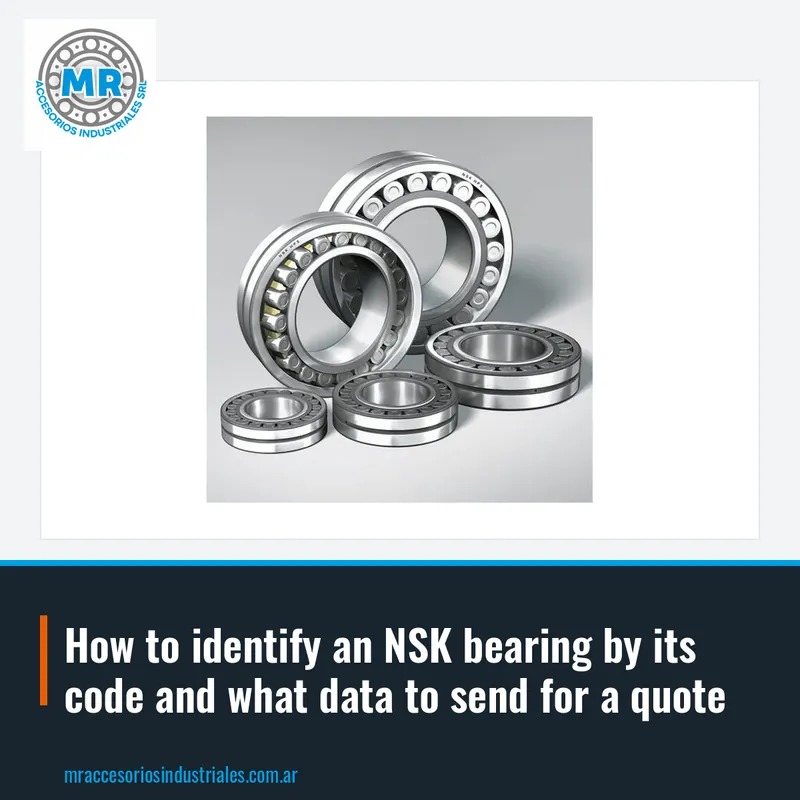
Why it's best to identify the code before ordering an NSK bearing
When equipment stops due to a bearing, the first thing needed is the exact part code. With that data, you know the type, dimensions, and series, and you avoid ordering something that won't fit the housing. An error of one millimeter in the inner diameter or width is enough to make the part unusable.
At MR Accesorios Industriales we sell NSK bearings of various types: needle, tapered roller, Y inserts, deep groove ball, spherical roller, cylindrical, and axial. Each type has its own nomenclature, so reading the code correctly is the first step to quoting without delays. When the code can't be read, measurements taken with a caliper serve the same purpose.
This guide explains how to identify the code from the part, what each part means in the most common cases, and what data to send so we can quote. You don't need to be a specialist: just look at the part with oblique light, clean it, and note what you see.
Where to read the code on an NSK bearing
The code is usually engraved on one of the side faces of the outer ring or inner ring. On sealed or shielded bearings, it sometimes appears on the ring and sometimes on the seal itself. With the equipment stopped and the part clean, an angled flashlight makes the engraved letters easier to see.
After many hours of operation, the engraving may be covered with grease, rust, or paint. Clean it with a cloth and a mild solvent, without scraping with hard objects that could damage the surface. If the code is worn, take a clear photo of each face and of the part in profile, as this helps us identify it along with the measurements.
Also check if there's a reference noted on the housing or in the equipment's datasheet. Many mechanics mark the code with a marker on the housing cover or in the maintenance log. That data, together with what's read on the part, helps confirm it's the same bearing.
Deep groove ball bearings: how to read a series like 6010, 6011, or 6210
Deep groove ball bearings are the most common in motors, pumps, and gearboxes. Codes like 6010, 6011, and 6210 share a structure: the first digits indicate the type and series, and the last two are related to the inner diameter. With that data, you understand which bearing it is before looking it up.
For sizes from 04 onward, the last two digits multiplied by five give the inner diameter in millimeters. Thus, 6210 and 6010 have a 50 mm bore, and 6011 has a 55 mm bore. The difference between 6010 and 6210 is in the series: for the same inner diameter, the series changes the outer diameter and width.
So it's not enough to say the bearing has a 50 mm bore: you must confirm the outer diameter and width. Then add the suffix, if any. A 2RS indicates rubber seals on both sides, a 2Z indicates metal shields on both sides, and a C3 indicates greater internal clearance than normal. These details change the part to be quoted.
Spherical roller and tapered roller bearings: two ways to read the code
Spherical roller bearings are used in applications with heavy loads and misalignment between shaft and housing, such as mills, fans, and conveyors. Codes like 23120CE4, 23130CE4, and 21320CE4 show series 231 and series 213, followed by the inner diameter digits. To quote, copy the complete code, with all following letters.
In this class of part, two bearings with the same numeric base may differ in cage or internal design. Therefore, don't truncate the code or assume the final letters don't matter. If the bearing has a tapered bore, the code includes a K, and in that case it's usually accompanied by an adapter or withdrawal sleeve.
Tapered roller bearings support radial and axial loads in one direction and are mounted in pairs on many wheel axles, gearboxes, and housings. Example codes from the NSK catalog include 3120, 3320, and 1620. In these cases, the part consists of a cone and a cup, and it's best to send the code engraved on each of the two.
Needle and Y insert bearings: parts ordered by code and shape
Needle bearings take up little radial space and are used in joints, gearboxes, and compact mechanisms. Codes like F-79, J-57, and J-78 are examples from the NSK needle bearing subcategory. Since there are versions with inner ring, without inner ring, and loose cages, a photo of the part helps a lot to distinguish them.
Y bearings, or inserts, are ball bearings with a spherical outer surface, designed to be mounted in housings. Codes AR201, AR202, and AS210 belong to this subcategory. To order them, specify the code and, if known, the housing they go into, because the insert must match the housing.
For both types, it's usually helpful to measure the shaft diameter, outer diameter, and width. With these three measurements and the part type, the MR team can help identify it even when the engraving is illegible. This is especially useful on old machines, where the original nomenclature isn't found in any datasheet.
How to measure the part when the code can't be read
To measure with a caliper, you need three data points: inner diameter (d), outer diameter (D), and width (B). Measure with the bearing removed and clean, resting on a flat surface. Take each measurement at two or three points, because a worn part may have slight differences.
Then note the shape: whether the rollers are spherical, tapered, cylindrical, or needle, whether it has seals or shields, whether the bore is cylindrical or tapered, and whether the outer ring is straight or spherical. A profile photo of the part and a front photo complete the information. With that, the type can be deduced and the corresponding code proposed.
When the bearing is damaged and can't be measured accurately, the shaft and housing dimensions are a useful reference. It also helps to say what equipment it works in and where on the shaft it's mounted. Everything you can provide shortens identification and reduces the risk of ordering the wrong part.
What data to send to quote NSK bearings
Ideally, send the complete code exactly as engraved, with letters, numbers, and hyphens. If the part has suffixes, include them too. Along with the code, indicate the quantity needed and whether it's an urgent replacement or a planned maintenance purchase.
If you don't know the code, send the three measurements, the bearing type, and photos of both faces. If it's a replacement for another brand, just send that brand's code and we'll indicate the corresponding NSK reference. You can also send a photo of the housing or equipment to put the bearing in context.
With that data, we prepare the quote and respond promptly. You can write to us via WhatsApp from the button on the product page or by email, indicating the code, measurement, or a photo of the part. We're in Buenos Aires, Argentina, and we'll help you identify the part.
Frequently asked questions
How do I identify an NSK bearing if the code can't be read?
Measure the inner diameter, outer diameter, and width with a caliper, note the bearing type, and take photos of both faces. With that data, the MR team can tell you the corresponding code.
What do the last digits of a code like 6210 mean?
In deep groove ball bearings, from 04 onward, the last two digits multiplied by five give the inner diameter in millimeters. For 6210, that's a 50 mm bore.
What does 2RS, 2Z, or C3 mean on a bearing?
2RS indicates rubber seals on both sides, 2Z indicates metal shields on both sides, and C3 indicates greater internal clearance than normal. You must include them when ordering.
What data do I send to quote an NSK bearing?
The complete code as engraved, the quantity, and if it can't be read, the measurements with photos of the part. You can send it via WhatsApp or email.
Can I order an NSK bearing using another brand's code?
Yes. Send us the other brand's code and we'll indicate the corresponding NSK reference for quoting.
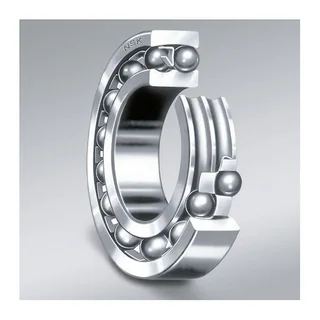
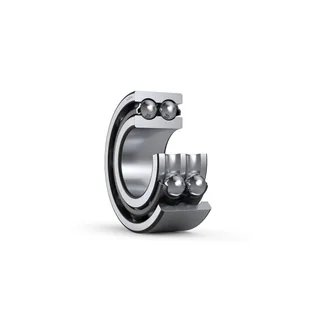
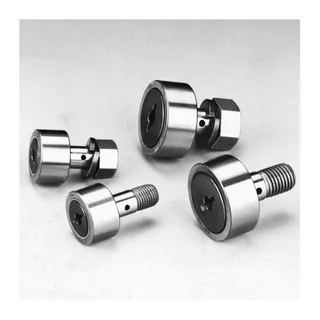
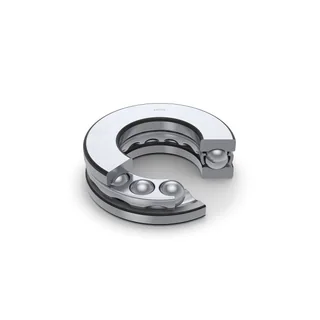
Products with photos in the catalogue
Keep reading
- How to Read NSK Codes: Designation Structure, Prefixes, Suffixes, and Real Examples
We explain how an NSK bearing designation is composed, what the most common prefixes and suffixes indicate, and how to identify the exact part for your order.
- NSK by industry: where it's used, how to select it, assembly and maintenance for durability
Practical guide to choose NSK bearings by application, with assembly and maintenance criteria that extend service life.
- How to choose NSK by application: load, speed, environment and mounting
Choosing the correct NSK bearing depends on load, speed, environment and mounting type. We explain how to identify each type and what data you need for a quote.
Continue here
Need a NSK quote?
Send us the NSK part number, the size or a photo of the part and we will get back to you with a quote.