
Blog
How to choose DIAMOND chains by application: load, speed, environment and mounting
Guide to selecting the right DIAMOND chain for your equipment: we analyze load, speed, environment and mounting, with real catalog codes.
DIAMOND catalog by part number
Technical team at MR Accesorios Industriales · Updated on November 3, 2026
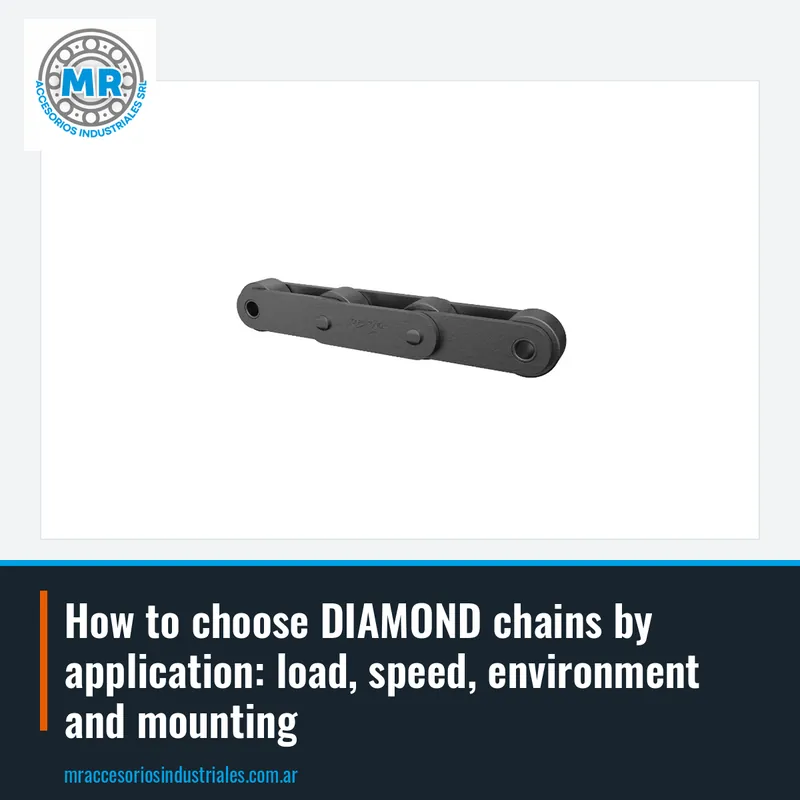
DIAMOND roller chains: the basis of power transmission
DIAMOND roller chains are the core component of many power transmissions in industry. They transmit motion between shafts with a constant speed ratio and without slipping. They are used in machine tools, agricultural equipment, conveyors and lifting systems. Choosing the right chain prevents unplanned downtime and extends system life.
To identify a DIAMOND roller chain, look at the stamping on the links. The code indicates the chain pitch and series. For example, in 40LG and 60LG chains the initial number relates to the pitch: 40 corresponds to 1/2 inch and 60 to 3/4 inch.
When ordering a roller chain, it is best to send the full code and the number of links. A photo of the used chain is also useful to check wear. A common mistake is confusing the pitch: measure the distance between the centers of two consecutive pins. With that data we quote the exact chain for your equipment.
High-strength roller chains: H series
Within roller chains, the DIAMOND H series is designed for high-load, low-speed applications. These chains have thicker plates and larger-diameter pins than standard series. They better withstand shocks and pulsating loads. They are used in elevators, forklifts and heavy machinery.
An example of this series is the 200H chain. It is used in transmissions that require high tensile strength. When choosing an H chain, consider the breaking load and the service factor.
When inquiring about a high-strength chain, specify the application and the transmitted power. It is also key to know whether the chain works in a corrosive or dusty environment. With that information we recommend the right chain and provide the quote.
DIAMOND conveyor chains: for material handling
DIAMOND conveyor chains are designed to move materials on production lines. Unlike roller chains, they usually have attachments, plates or extended pins. They are used in the food, automotive, mining and packaging industries. The choice depends on the type of material to be conveyed and the environment.
The catalog includes conveyor chains such as S81X, 43SB and 63SB. Each code identifies the exact chain configuration.
When ordering a conveyor chain, it is essential to indicate whether it needs attachments and of what type. You also need to know the chain material: carbon steel or stainless steel. Send us a photo of the current chain with a ruler next to it to verify the pitch. That way we quote the right chain.
Selection factors: load and speed
Load and speed are the two main factors when choosing a DIAMOND chain. Load refers to the tension the chain withstands during operation. Speed is how fast the chain moves. Both determine the type of chain and its size.
For high-speed, low-load applications, small-pitch, lightweight chains are preferred. For high load and low speed, large-pitch, heavy-series chains such as 200H are used. The power tables for each series indicate which chain to use based on HP and RPM.
When inquiring, have the motor power and sprocket speed at hand. It is also useful to know whether there are shock loads or frequent starts. With that data we help you select the right chain and provide the quote.
Selection factors: environment and lubrication
The working environment greatly influences the life of a DIAMOND chain. The presence of dust, moisture, chemicals or extreme temperatures requires special chains. For example, in corrosive environments, stainless steel or surface-treated chains are used. In dusty environments, chains with seals that retain lubrication are needed.
Lubrication is key to reducing wear and noise. Depending on the chain type and application, periodic lubrication may be required. Lack of lubrication is a frequent cause of premature failure.
When ordering a chain, describe the working environment: temperature, humidity, presence of water or chemicals. Also indicate whether the chain is exposed to high-pressure water washing. With that information we recommend the right chain for your application.
Mounting and maintenance of DIAMOND chains
Correct mounting of a DIAMOND chain is essential for its durability. The chain must be aligned between the sprockets, without lateral deviation. Tension must be correct: neither too loose nor too tight. A poorly tensioned chain wears quickly and can damage bearings.
Connecting links or connecting pins are used to join the chain ends. It is important to use the correct connecting link for the chain type. A common mistake is using a connecting link from another brand or another series.
Preventive maintenance includes checking tension and lubrication periodically. The wear of pins and plates must also be inspected. If the chain has elongated noticeably, it should be replaced. If in doubt, consult us: we tell you how to measure wear and when to change the chain.
How to order your DIAMOND chain from MR
To get a quote for a DIAMOND chain, the best option is to send us the exact code if you have it. For example, 40LG or S81X. If you do not have the code, send us a photo of the chain with a ruler to measure the pitch. The brand and model of the machine where it is mounted also helps.
In addition to the code, indicate the number of links or the total chain length. If the chain has attachments, describe their shape and position. If it is for a special application, tell us what type of load and environment it has. With that data we quote the right chain.
You can write to us via WhatsApp or email. We will reply promptly with the quote and advise you on selection.
Frequently asked questions
How do I know what pitch my DIAMOND chain has?
Measure the distance between the centers of two consecutive pins in inches. For example, if it measures 1/2 inch, it is pitch 40; if it measures 3/4, it is pitch 60. You can also look at the stamping on the links: the code indicates the pitch.
What is the difference between a roller chain and a conveyor chain?
The roller chain transmits power between shafts, while the conveyor chain moves materials. Conveyor chains usually have attachments or plates to push or hold products. The codes are different: for example, 40LG is a roller chain and S81X is a conveyor chain, according to the catalog.
Can I use a DIAMOND chain in a wet environment?
It depends on the type of water and the frequency of exposure. For humid environments or frequent washing, stainless steel or anti-corrosion-treated chains are recommended. Describe your environment and we will recommend the right chain.
How do I measure the wear of a DIAMOND chain?
Measure the length of a section of several links and compare it with the original length. If the elongation is noticeable, the chain should be replaced. Also check the wear of the pins and plates. If in doubt, consult us.
What data do I need to get a quote for a DIAMOND chain?
Send us the exact code if you have it, or a photo with a ruler to measure the pitch. Also indicate the number of links or the total length, and describe the application. With that we will provide the quote.
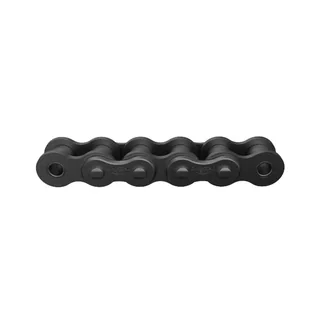
Products with photos in the catalogue
Keep reading
- How to identify a DIAMOND chain by its code and choose the right one
Learn about the DIAMOND chain lines we supply in Argentina: roller chains and conveyor chains. We explain what each one is for and how to quote them by code.
- How to read DIAMOND chain codes: structure, examples and what data to send
What a DIAMOND chain code says, how it relates to pitch in roller chains, how conveyor chains differ and what data to send for a quote.
- Where DIAMOND chain is used and how to choose it for your equipment
We review typical applications of DIAMOND chains in Argentine industry, how to identify the correct model and what care extends their useful life.
Continue here
Need a DIAMOND quote?
Send us the DIAMOND part number, the size or a photo of the part and we will get back to you with a quote.