
Blog
Common DBH seal failures: how to recognize them in time and prevent them
DBH seals fail due to wear, poor installation or contamination. We explain how to identify each failure and what to do to avoid it.
Technical team at MR Accesorios Industriales · Updated on October 16, 2026
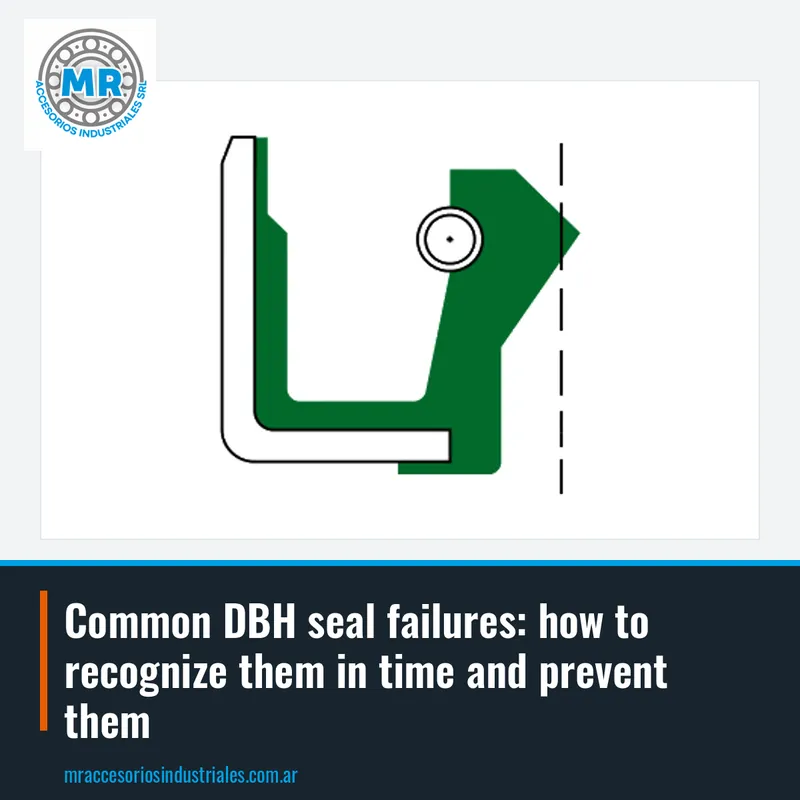
What is a radial seal and why it is key in your equipment
A radial seal, also called oil seal, is a component that prevents lubricant leakage and contaminant ingress on rotating shafts. In Argentine industry it is used in gearboxes, motors, pumps, compressors and all equipment with rotating motion. Choosing the right seal and installing it properly is the first barrier against unplanned downtime.
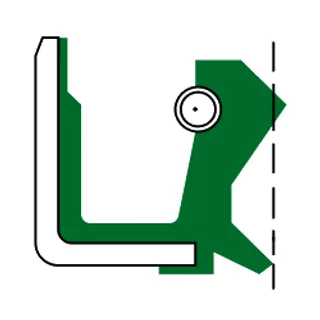
The seal consists of an elastomeric body, a metal reinforcing ring and a sealing lip that rubs against the shaft. That lip is the critical point: if it loses flexibility, wears or gets damaged, the seal stops doing its job. Therefore, recognizing common DBH seal failures in time prevents major damage to bearings and gears. A leaking seal can contaminate the entire system and shorten the service life of other components.
To identify the seal you need, look at the marks engraved on the outer face or on the metal edge. There you will find the code, the dimensions in millimeters (inner diameter, outer diameter and width) and sometimes the material. If it is not legible, measure the shaft and the housing with a caliper. With that data, at MR we quote the exact DBH seal for your application. Send us a photo of the old part or the measurements via WhatsApp and we will reply shortly.
Lip wear failure: the most common
Sealing lip wear is the most frequent failure in radial seals. It is caused by constant rubbing against the shaft, especially if there is a lack of lubrication or the shaft has inadequate roughness. Over time, the lip flattens and loses its ability to follow the shaft surface, letting oil pass. In any radial seal, this wear accelerates if the lubricant is contaminated with abrasive particles.
To recognize it, observe if there is a slight but constant oil leak through the seal. If you disassemble, you will see the lip with a shiny, worn surface, sometimes with small cracks. You may also notice that the shaft has a marked groove right where the lip rests. In that case, replacing the seal is not enough: the shaft must be repaired or replaced, or a seal with an offset lip must be used if the application allows it.
Prevention involves keeping the lubricant clean and at the proper level, and verifying shaft roughness. A shaft that is too rough wears the lip quickly; one that is too polished does not retain the oil film. If the wear is due to normal aging, respect preventive maintenance intervals. At MR we supply DBH seals for replacement; tell us the temperature and the fluid and we will quote the corresponding option.
Failure due to material hardening or cracking
The seal elastomer can harden and crack from exposure to high temperatures, ozone or incompatible fluids. A hardened seal loses elasticity and cannot follow shaft vibrations or eccentricities, causing leaks. One of the most used materials in seals is nitrile (NBR), designed for mineral oils; for other working conditions there are other compounds.
Cracks usually appear on the outer face or at the base of the lip, and are visible to the naked eye when disassembling. You may also notice that the seal is rigid to the touch, as if it were hard plastic. If the seal breaks when you try to flex it, it is a sign of thermal or chemical degradation. In those cases, check the actual working temperature and the type of oil or fluid in contact with the seal.
To prevent, make sure the seal is compatible with the fluid and operating temperature. Verify that the seal material is suitable for the synthetic oil and the temperature of your system. If in doubt, consult us: at MR we distribute DBH seals. Send us the code or the measurements and we will quote the option for your application.
Failure due to contamination and abrasive particles
External contamination is a frequent cause of failure in radial seals. Dust, dirt, metal chips or water can enter the system if the seal does not seal correctly or if the environment is very dirty. Those particles lodge between the lip and the shaft, acting as an abrasive and prematurely wearing both. In equipment working outdoors or in plants with a lot of dust, this problem is critical.
A contaminated seal usually shows a lip with scratches or grooves in the direction of rotation, and sometimes dirt accumulation in the contact area. You may also see rust or mud stuck on the outer face. If the lubricant looks cloudy or has particles, it is a sign that the seal let contaminants pass. In that case, besides changing the seal, the housing must be thoroughly cleaned and the oil changed.
To prevent, use seals with an auxiliary lip or dust guard if the environment is aggressive. There are seals with an auxiliary lip or dust guard that add protection. It is also key to keep the area around the seal clean and protect the equipment with covers if possible. Tell us what environment the equipment works in and we will quote the corresponding DBH seal.
Failure due to poor installation or incorrect mounting
Many seals fail prematurely due to installation errors. Hitting the seal directly with a hammer, mounting it crooked or using inadequate tools can damage the lip or deform the metal case. It is also common to damage the lip when passing it over keyways, threads or sharp shaft edges without protecting it. A poorly mounted seal leaks from the first day or within a few days of use.
To recognize installation damage, look for impact marks on the metal face, a bent or cut lip, or deformation of the outer diameter. If the seal went in too tight and became oval, it will leak at that point. It can also happen that the lip ends up inverted if it was pushed carelessly. In those cases, the seal cannot be saved: it must be replaced and a new one mounted with the correct technique.
Prevention is simple: use a mandrel or sleeve of the appropriate diameter to seat the seal evenly, and lubricate the lip with the same system oil before mounting. Protect the shaft with a thin sheet or tape if it has keyways or threads. Never hit directly on the seal. If you do not have the right tool, get it before mounting: it is what protects the seal the most.
Failure due to shaft misalignment or eccentricity
Misalignment between the shaft and the housing, or excessive eccentricity, subjects the seal lip to irregular movement. That generates uneven wear and leaks in one sector of the seal. It can also cause vibrations that fatigue the material. In equipment with worn bearings or loose housings, the seal suffers the consequences and fails prematurely.
To detect this failure, observe if the lip has asymmetric wear: more marked on one side than the other. You may also notice that the seal leaks only when the shaft rotates at a certain speed or in a certain position. If you measure eccentricity with a dial indicator, you will see values out of tolerance. In that case, replacing the seal is not enough: the alignment must be corrected or the defective bearings replaced.
Prevention requires verifying the alignment of the assembly and the condition of the bearings before mounting a new seal. A shaft that wobbles destroys any seal in a short time. If you notice vibrations or noises in the equipment, address them before they damage the seal. At MR we supply DBH seals and also bearings and housings so you leave the assembly running straight.
How to order your DBH seal and avoid mistakes when quoting
To quote a DBH seal without mistakes, you need the exact code or the three dimensions in millimeters: inner diameter, outer diameter and width. For example, DBH seals 5999, 8888 or 8969 are each identified by their specific dimensions. If you have the old seal, take a photo where the code and marks are visible. If not, measure the shaft and housing with a caliper, and note the seal width.
Besides the dimensions, indicate the type of fluid it will seal (oil, grease, water, etc.) and the approximate working temperature. That allows us to verify that the seal material is compatible. Also tell us if the environment is dusty or humid, because a seal with an auxiliary lip may be advisable. With that data, at MR we quote the correct DBH seal and reply shortly.
A common mistake is ordering only by dimensions without considering the material or lip design. Another is confusing the outer diameter with that of the housing if there is an intermediate cover or flange. If in doubt, send us a photo of the old seal and the place where it is mounted. Write to us via WhatsApp or email with the code, measurements or a photo and we will reply shortly.
Frequently asked questions
How do I know if my DBH seal is failing?
The most common symptoms are visible oil loss, lubricant stains around the seal, noises or vibrations on the shaft, and dirt accumulation in the area. If you disassemble, you can see the lip worn, cracked or scratched. Faced with any of these signs, it is advisable to replace the seal before it damages other components.
Can I reuse a DBH seal after dismounting it?
It is not recommended. When dismounting, the lip deforms and loses its sealing capacity. Even if it looks in good condition, the risk of leakage is high. It is always better to mount a new seal when the assembly is disassembled.
What measurements do I need to order a DBH seal?
You need the inner diameter, outer diameter and width, in millimeters. If you have the old seal, the engraved code is the most accurate. You can also send a photo with a ruler next to it so we can verify the measurements.
Does the DBH seal material matter?
Yes, a lot. The material must be compatible with the fluid and working temperature. Nitrile (NBR) is one of the most used materials for mineral oils, but there are other options for other conditions. If in doubt, consult us with your application data.
How do I avoid damaging a DBH seal when mounting it?
Use a mandrel of the appropriate diameter, lubricate the lip with the system oil and protect the shaft from sharp edges. Never hit directly on the seal. If you do not have the right tool, get it before mounting.
Products with photos in the catalogue
Keep reading
- DBH seals in Argentina: complete product guide and how to quote them
Discover the DBH radial seal line we distribute in Argentina, their typical applications and how to request a quote with the exact code.
- DBH Codes: Guide to Reading Radial Seal Designations
Understanding DBH seal nomenclature helps you order the correct part. We explain the code structure, what prefixes and suffixes indicate, and how to use real examples for your inquiry.
- DBH Oil Seals: Applications, Selection, Installation and Maintenance for Long Life
DBH radial oil seals are critical components in industrial equipment. In this guide, we cover where they are used, how to choose the right model, and what installation and maintenance care extends their service life.
Continue here
Need a quote?
Send us the code, size or a photo of the part and we'll quote you shortly.