
Blog
Common DIAMOND chain failures: how to recognize them in time and prevent them
DIAMOND chains can fail due to wear, fatigue or incorrect installation. We explain how to detect early symptoms and what to do to extend their service life.
DIAMOND catalog by part number
Technical team at MR Accesorios Industriales · Updated on November 8, 2026
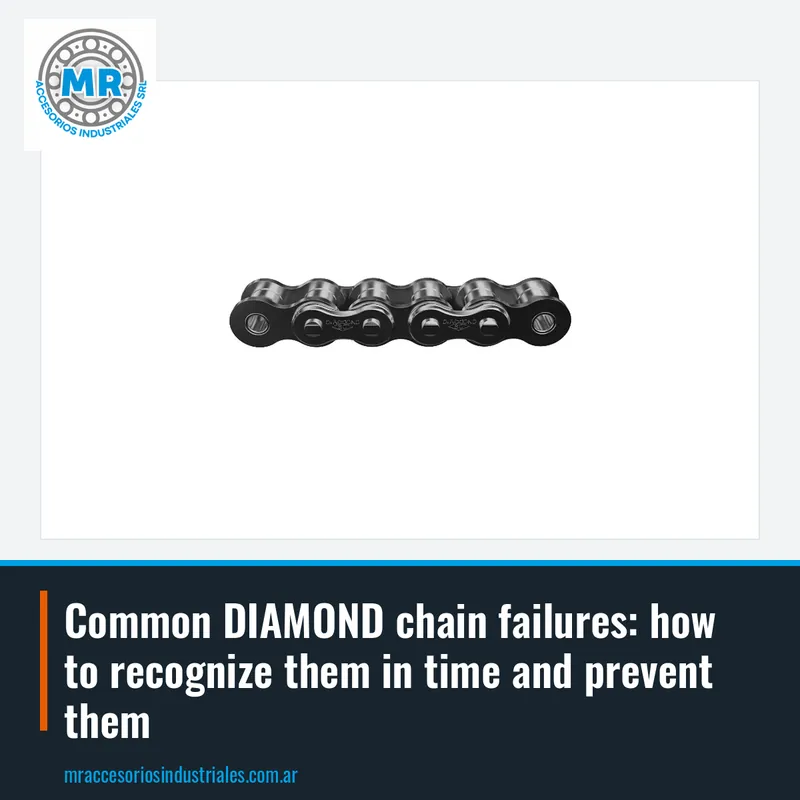
Why DIAMOND roller chains fail
DIAMOND roller chains, such as 40LG or 60LG, are robust components, but they are not exempt from failures. Normal wear from friction between pins and bushings is the most common cause of elongation. If not controlled, this progressive stretching alters the chain pitch and damages the wheel teeth.
Another frequent cause is material fatigue from cyclic loads. Over time, side plates can develop microscopic cracks that end in breakage. This is usually seen in applications with sudden starts, impacts or excessive vibration.
Improper installation also causes premature failures. Excessive tension overloads the shaft bearings and accelerates wear. Conversely, a loose chain can jump teeth or come off the wheel. Incorrect alignment between wheels produces lateral wear on plates and rollers.
Symptoms of wear in roller chains
The first sign of wear is chain elongation. You can measure it by comparing the distance between several pitches with a caliper or a standard ruler. If elongation exceeds the manufacturer's recommended limit, the chain must be replaced to avoid major damage.
Another visible symptom is wear on the wheel teeth. If you notice that the teeth are thinning, hooking or show drag marks, the chain probably no longer seats correctly. In that case, it is also advisable to check the condition of the rollers and pins.
Abnormal noises, vibrations or increased temperature in the drive are indicators of problems. They may be due to lack of lubrication, misalignment or accumulated dirt. Detecting these signs in time allows scheduling corrective maintenance before an unexpected stoppage.
How to prevent failures from inadequate lubrication
Lubrication is key to reducing friction between pins and bushings. A well-lubricated DIAMOND chain dissipates heat and prevents metal-to-metal contact. Lack of lubricant accelerates wear and can cause seizure or breakage from overheating.
The type of lubricant and the application method depend on speed and load. In low-speed applications, manual or drip lubrication may be enough. For high speeds, bath or circulation lubrication is recommended. It is important that the lubricant penetrates to the internal surfaces.
A common mistake is over-lubricating, which attracts dust and forms an abrasive paste. It is also common to use inadequate lubricants that do not withstand the working temperature. Therefore, it is advisable to follow the manufacturer's recommendations and establish a periodic lubrication program.
Correct installation of DIAMOND conveyor chains
Conveyor chains such as S81X or 43SB require careful installation to avoid early failures. Wheel alignment must be precise: an angular deviation causes lateral wear on plates and rollers. Use a ruler or a laser to verify that the shafts are parallel.
Initial tension is another critical factor. A chain that is too tight increases the load on the bearings and accelerates wear. A loose chain can hit the structure or come off the wheel. Follow the sag recommended by the manufacturer for your center distance.
When joining the chain ends, use the appropriate connecting links and respect the installation direction. If the chain has pins with retainers, verify that the retainers are properly placed and in the correct direction. A poorly placed retainer can come loose and cause the chain to break.
Periodic inspection: what to check and how often
Regular visual inspection allows problems to be detected before they become failures. Check the condition of the rollers, pins and side plates. Look for signs of wear, cracks, corrosion or impact damage. Also check tension and alignment.
Inspection frequency depends on operating conditions. In abrasive environments or with heavy loads, inspection should be more frequent. In light and clean applications, it can be spaced out a little more. Record elongation measurements to track wear progression.
During inspection, pay attention to lubrication. Verify that the chain is properly lubricated and that there is no accumulation of dirt. If you find stiff links or excessive play, it is a sign that the chain needs attention. If in doubt, consult a specialist.
Common mistakes when ordering a DIAMOND chain
A frequent mistake is ordering the chain only by the series number, without verifying the pitch and width. Two different codes are not interchangeable even if they look similar. It is always advisable to measure the pitch between pins and the inner width of the chain.
Another mistake is not considering the type of application. A roller chain and a conveyor chain do not serve the same function. If what you need is to convey product, it is advisable to look at conveyor chains, such as 63SB.
It is also common to forget the accessories: connecting links, half links or sprockets. When requesting a quote, it is advisable to indicate the number of meters or links, the pitch, the width and the type of accessory needed. If you have a sample or a photo, even better.
When to replace the chain and how to order it
The chain must be replaced when elongation exceeds the allowable limit or when structural damage such as cracks or breakage is observed. Also if the rollers are worn or the pins show steps. Continuing to use a worn chain damages the wheels and other components.
When ordering a new chain, specify the full code if you know it, such as 200H. If you do not have the code, measure the pitch, the inner width and the roller diameter. With that data, we help you identify the correct chain.
At MR we market and distribute DIAMOND roller and conveyor chains. If you need a roller or conveyor chain, send us the code, the measurements or a photo via WhatsApp or email. We will quote the right option as soon as possible.
Frequently asked questions
How do I know if my DIAMOND chain is worn?
Measure elongation by comparing the distance between several pitches with a caliper. If it exceeds the recommended limit, there is wear. Also visually check rollers, pins and plates for damage.
What lubricant should I use for a roller chain?
It depends on speed and load. For high temperatures or humid environments, special lubricants may be required. Follow the manufacturer's recommendations.
How often should I inspect the chain?
It depends on operating conditions. In abrasive environments or with heavy loads, inspection should be more frequent. Record measurements to track progression.
Can I use a roller chain on a conveyor?
Not always. Conveyor chains are designed to withstand specific loads and conditions. Using a standard roller chain on a conveyor can cause premature failures.
What data do I need to quote a DIAMOND chain?
Send the full code if you have it, or the measurements: pitch, inner width and roller diameter. Also indicate the quantity and type of accessory. A photo of the chain helps identify it.
Products with photos in the catalogue
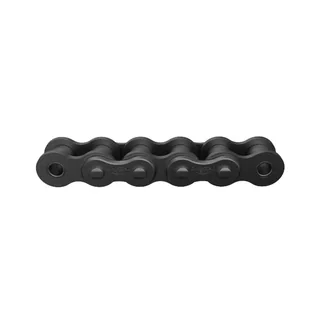
Keep reading
- How to identify a DIAMOND chain by its code and choose the right one
Learn about the DIAMOND chain lines we supply in Argentina: roller chains and conveyor chains. We explain what each one is for and how to quote them by code.
- How to read DIAMOND chain codes: structure, examples and what data to send
What a DIAMOND chain code says, how it relates to pitch in roller chains, how conveyor chains differ and what data to send for a quote.
- Where DIAMOND chain is used and how to choose it for your equipment
We review typical applications of DIAMOND chains in Argentine industry, how to identify the correct model and what care extends their useful life.
Continue here
Need a DIAMOND quote?
Send us the DIAMOND part number, the size or a photo of the part and we will get back to you with a quote.