
Blog
SKF Explorer Deep Groove Ball Bearings: What Changes, How to Read the Code and How to Choose Yours
The deep groove ball bearing is the most used bearing in industry, and SKF manufactures it in its Explorer class. What that means, how to read a code like 6205-2RSH and which seal and internal clearance to order.
SKF bearings in Argentina: guide and quotes
Technical team at MR Accesorios Industriales · Updated on October 10, 2026
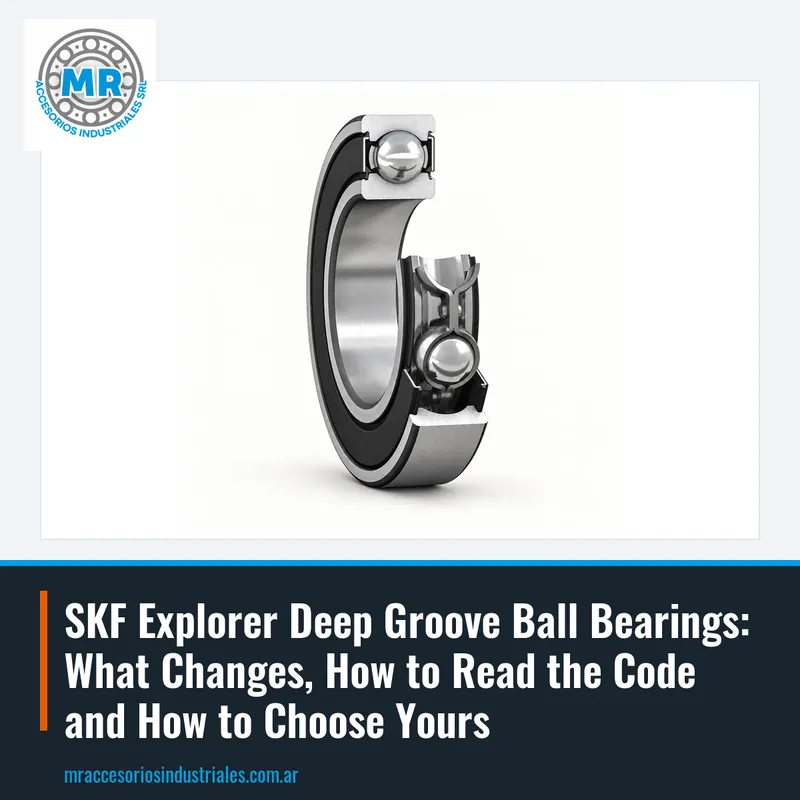
The Deep Groove Ball Bearing: The Bearing in Almost Every Machine
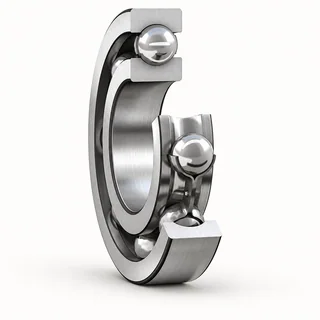
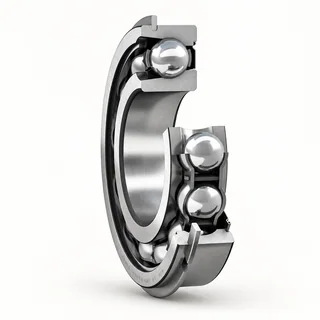
The deep groove ball bearing is the most common in industry. It has a single row of balls between two rings with deep raceways, and this geometry allows it to support radial loads and also moderate axial loads in both directions. That is why it appears in electric motors, pumps, fans, gearboxes, conveyor belts and much of agricultural machinery.
In the workshop it is known in many ways: rulemán in Argentina, balero in Mexico, balinera in Colombia, rolinera in Venezuela or rodaje in Peru. Whatever the name, the code is the same worldwide, because the dimensions of deep groove ball bearings follow the ISO standard. A 6205 measures the same in any brand.
What does change from one brand to another is how it is manufactured: steel quality, heat treatment, raceway finish, seal design and factory lubrication. That is where SKF's Explorer class comes in, and it explains why two bearings with the same code can last very differently in the same machine.
What is SKF Explorer
SKF Explorer is the performance class with which SKF manufactures its most demanding bearings, including deep groove ball bearings. According to the manufacturer itself, an Explorer bearing has higher dynamic load capacity and longer rating life than one of the same size manufactured to the previous standard, and runs with less noise and vibration.
In practice, this opens two paths. With the same bearing size, the machine works with more margin and spaces out stops for bearing changes. Or, in a new design, the same calculated life can be achieved with a smaller bearing, which reduces the shaft, housing and weight of the assembly.
A detail that confuses many buyers: the code does not change. SKF kept the designations when moving to the Explorer class, so a 6205-2RSH is still called that. The reference is in the ring and box markings and in SKF documentation, not in a letter added to the code.
How It Is Achieved: Steel, Heat Treatment and Finish
The life of a bearing depends mainly on material fatigue under the raceways. That is why SKF focuses on steel: the cleaner and more homogeneous, the fewer inclusions where a crack can start. The balls and rings of Explorer deep groove ball bearings are made from high-purity bearing steel.
The second point is heat treatment. A well-controlled hardening gives the steel the necessary hardness to resist contact with the balls and, at the same time, the toughness to tolerate load shocks and small misalignments without cracking. It also helps the bearing retain its dimensions when working hot.
The third is surface finish. Raceways and balls with better finish form a more stable lubricant film, with less metal-to-metal contact. According to SKF, the result is noticeable in less noise, lower operating temperature and longer grease life, something that in a sealed-for-life bearing defines when it must be changed.
How to Read the Code: Type, Series and Bore
In a 6205, the first digit indicates the type: 6 is single row deep groove ball bearing. The second indicates the dimension series: 0 is extra light, 2 is light and 3 is medium. The last two digits give the bore: from 04 onwards they are multiplied by five, so 05 is a 25 mm shaft. The 6205 measures 25 x 52 x 15 mm.
With the same bore, changing series changes robustness. The 6305 also fits a 25 mm shaft, but is larger outside and withstands more load. For small bores there are fixed codes: 00 is 10 mm, 01 is 12 mm, 02 is 15 mm and 03 is 17 mm, as in the 6201 or 6203.
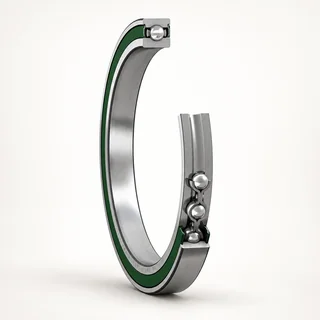
There are thin-section variants, such as the 16002 or 61805-2RS1, designed for housings with little radial space. They should not be replaced by the common series of the same bore without checking the housing, because the outer diameter or width do not match.
Caps or Seals: 2Z, 2RSH, 2RS1 and 2RSL
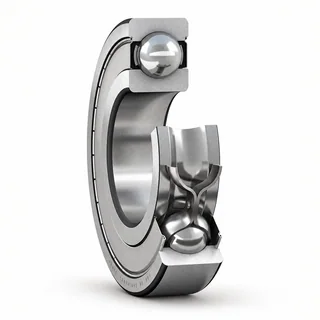
What comes after the hyphen defines how the bearing is protected. The 2Z suffix indicates metal protective caps on both sides, as in the 6205-2Z or 6000-2Z. The caps do not touch the inner ring, so they add almost no friction: they are used in reasonably clean environments and at high speeds.
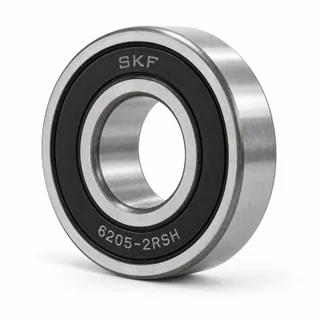
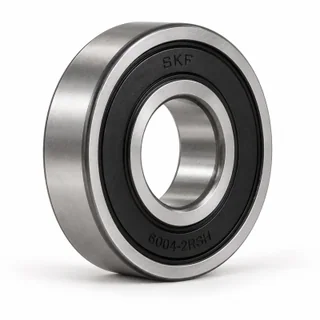
Suffixes that start with 2RS indicate rubber seals on both sides, as in the 6205-2RSH, 6204-2RSH, 6004-2RSH or 6208-2RS1. The letters or numbers after 2RS distinguish different seal executions, and the one your machine needs is confirmed when quoting with the full part number. Compared with a cap, a rubber seal keeps dust and moisture out better, at the cost of somewhat more friction: that is why it is the usual choice in agriculture, conveyors and washdown areas.
There are more sealed executions, such as the 6205-2RSL, and they do not all protect or rub the same. That is why one should not be swapped for another without reviewing the application: when in doubt, ask for the same closure the original bearing had and send us the full part number; we confirm the exact suffix when quoting.
C3 Internal Clearance and Other Executions
At the end of the code, the internal clearance class may appear. C3 indicates a radial internal clearance greater than normal, as in the 6205-2Z/C3, 6305-2Z/C3, 6309-2Z/C3 or 6310/C3. It is common in electric motors and in assemblies with tight fit or temperature difference between rings, because it leaves room for expansion.
The practical rule is simple: if the original bearing was C3, the replacement must be C3. A bearing with normal clearance in an assembly designed for C3 can become preloaded when heated, work at higher temperature and fail prematurely. The same in reverse: C3 where it is not needed adds noise and clearance.
Another difference can be in the cage. If your bearing carries added letters, such as the 6205 ETN9, order it with the full part number and do not replace it with another execution without asking: we confirm what each letter means when quoting.
How to Quote an SKF Deep Groove Ball Bearing at MR
At MR we supply SKF deep groove ball bearings and the fastest way to quote is with the complete code, as engraved on the ring or on the box: 6205-2RSH, 6205-2RSH/C3, 6203-2RSH or 6201-2Z. Every letter counts, because it changes the protection, clearance or cage.
If the code is not legible, send us the inner diameter, outer diameter and width measured with a caliper, and a photo of the bearing faces to see if it has a cap or seal. With that we identify the designation. Also tell us in which machine it works, because it helps confirm the seal and clearance.
Each catalogue code has its data sheet with dimensions and equivalents, and from there you can write to us via WhatsApp with the code already loaded in the message. If you need several bearings, make the list and request the quote for all together.
Frequently asked questions
How do I know if an SKF bearing is Explorer?
The code does not indicate it: SKF kept the same designations. The reference is in the ring and box markings and in SKF documentation.
What is the difference between 6205-2Z and 6205-2RSH?
The 2Z has metal caps that do not touch the inner ring: less friction and less protection. The 2RSH is one of the executions with rubber seals on both sides, which protect better against dust and water with somewhat more friction. The exact suffix your machine needs is confirmed when quoting.
What does C3 mean in a bearing?
That the radial internal clearance is greater than normal. It is used when the assembly is tight or the rings work at different temperatures, as in many electric motors. If the original was C3, the replacement too.
What dimensions does the 6205 bearing have?
Bore 25 mm, outer diameter 52 mm and width 15 mm. The dimensions are the same in all brands because they follow the ISO standard.
What data do I send to quote?
The complete code engraved on the bearing and the quantity. If it is not legible, the three dimensions and a photo of the faces. Write to us via WhatsApp or email.
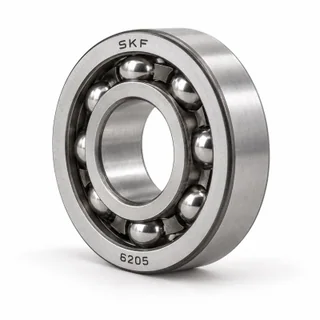
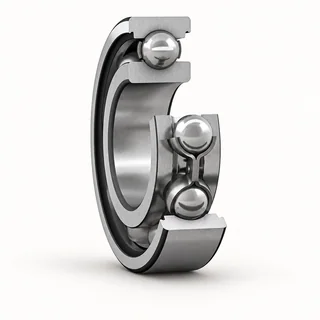
Products with photos in the catalogue
Keep reading
- SKF Chains: Reliable Power Transmission for Industrial Applications
SKF roller chains offer strength and precision for power transmission in industrial machinery. Learn about the PHC series, ASA and BS standards, and how to identify the correct chain for your equipment.
- SKF tools for industrial maintenance: pullers, heaters, aligners and calibrated shims
SKF tools simplify bearing mounting and dismounting, shaft alignment and instrument calibration. Discover TMMA and TMHP pullers, induction heaters, TKSA aligners and calibrated shims.
- How to Choose SKF Bearings by Application: Load, Speed, Environment, and Mounting
Choosing the right SKF bearing requires analyzing load, speed, environment, and mounting. We explain the main types and how to get a quote with the exact code.
Continue here
Need a quote?
Send us the code, size or a photo of the part and we'll quote you shortly.