
Blog
INA dimensions: how to identify the code from the part and what data to send for a quote
When an INA bearing loses its label or the engraving is blurry, identifying the exact code is the first step to getting the replacement. In this guide we show you what to measure, where to look for the reference and what information to send for an accurate quote.
INA bearings in Argentina: guide and quotes
Technical team at MR Accesorios Industriales · Updated on November 12, 2026
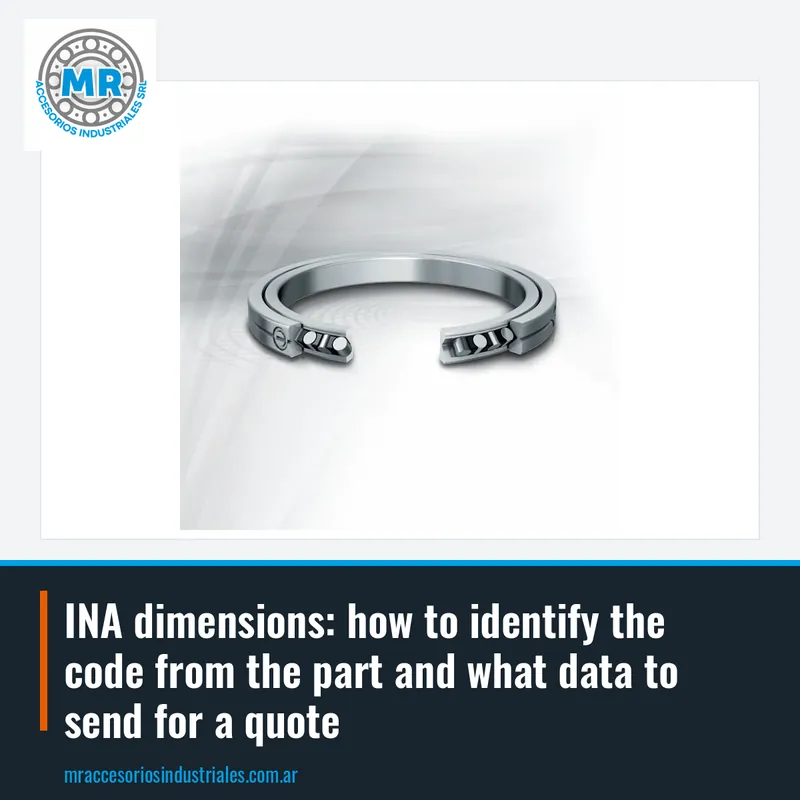
Why INA dimensions are not enough to identify the bearing
In INA bearings, two parts with the same inner and outer diameter can have different internal designs, different seals or specific radial clearances. Therefore, measuring with a caliper only serves as a starting point: the complete reference is what defines the exact replacement. If you only send the dimensions, you may receive a bearing that does not support the axial load or does not have the right cage for your application.
The INA code is engraved on one of the side faces, usually on the outer ring or on the inner ring, depending on the type. In small bearings, the engraving may be very faint and it is advisable to use a magnifying glass or raking light to read it. If the part is very worn, sometimes a part of the code remains visible and that can already narrow the search.
In addition to the code, it is useful to note the main dimensions: inner diameter, outer diameter and width. In needle bearings, also the shaft and housing diameter, because they are often used without rings and the raceways are the machine parts themselves. With this data, the technical team can verify if the reference on the part is correct or if there has been a design change.
INA needle bearings: how to read the code and what to measure
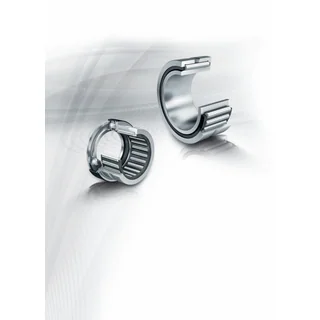
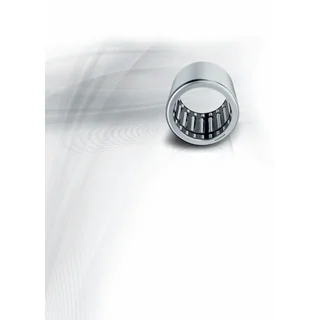
INA needle bearings are identified with series such as NAO, IR or K, followed by numbers indicating dimensions in millimeters. For example, IR20 and IR22 are inner rings to combine with needle cages. In these cases, the code does not always reflect all three dimensions, so it is key to measure the shaft and housing diameter.
When a needle bearing wears out, the raceway on the shaft or housing is often damaged as well. Therefore, it is advisable to check the condition of the surfaces before ordering the replacement: if there are marks or spalling, it may be necessary to grind or replace the part. In machine tools and gearboxes, these bearings operate with very tight clearances and any variation affects precision.
To quote an INA needle bearing, send the complete code if you have it, or the exact dimensions of the shaft, housing and available width. If the cage is broken but retains the reference, a photo of the cage and the mounting location helps confirm the type. It is also important to indicate whether it has seals or if it works lubricated by oil or grease.
INA Y-bearings (inserts): identification by series and dimensions
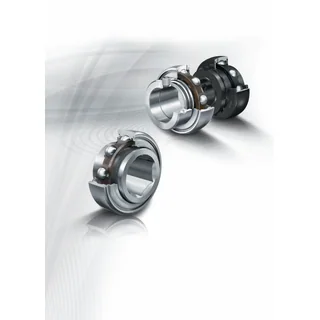
INA Y-bearings, also called inserts, are mounted on pillow block or flanged housings and are identified with series such as UC or UK. In these series, the last two digits multiplied by 5 give the bore diameter in millimeters: a 205 corresponds to 25 mm, a 206 to 30 mm and a 207 to 35 mm.
In addition to the code, it is important to measure the inner diameter of the insert and the spherical outer diameter, because there are versions with the same inner diameter but different outer diameter for different housings. It is also advisable to verify the locking system: some have set screws, others an eccentric ring or adapter sleeve. That changes the reference and the mounting.
When quoting an INA Y-bearing, indicate the complete code and the dimensions of the shaft and the housing where it is mounted. If the housing is from another brand, no problem: MR works with equivalents when the client brings the code from another brand. A photo of the insert and the housing helps confirm the seal type and locking system.
INA cam and support rollers: how to distinguish the reference
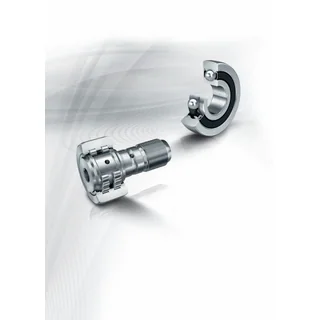
INA cam and support rollers are used in cams, linear guides and transport systems. They are identified with series such as KR, NUKR or PWKR. For example, KR22, KR26 and KR40 are cam rollers with outer diameters of 22, 26 and 40 mm respectively.
In these rollers, the engraved code is usually on the front face or on the side, and may include suffixes indicating seals, cage or surface treatment. If the engraving is blurry, measure the outer diameter, total width and shaft diameter. Also check if it has a hex head, screwdriver slot or through hole, because that defines the variant.
To quote an INA cam roller, send the complete code or the dimensions and a photo of the part. It is key to indicate whether it works with radial, axial or combined load, because there are versions with needle cage, cylindrical rollers or ball bearing. In high-speed or impact applications, the cage type and seal make the difference.
INA cylindrical roller thrust bearings: identification by washers
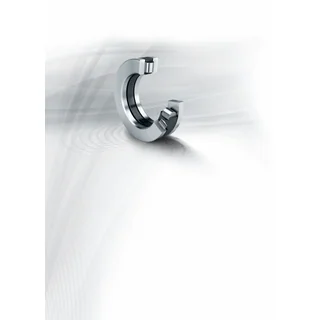
INA cylindrical roller thrust bearings consist of shaft washers, housing washers and roller cages. They are identified with series such as GS or WS. For example, GS81102, GS81103 and GS81120 are housing washers for 811 series thrust bearings, where the final number indicates the bore diameter in millimeters (02 = 15 mm, 03 = 17 mm, 20 = 100 mm).
In these bearings, it is common to replace only the roller cage or only one washer, depending on wear. Therefore, it is advisable to measure the inner and outer diameter of each washer and the total thickness of the assembly. It is also important to verify if the washers are flat or have a recess, because that changes the reference and mounting position.
When quoting an INA thrust bearing, indicate the codes of the washers and cage if you have them, or the dimensions of each component. In applications such as machine tool heads or gearboxes, these thrust bearings work with preload and specific lubrication, so it is advisable to clarify the mounting type and the lubricant used.
INA needle cages and components: how to order the correct replacement
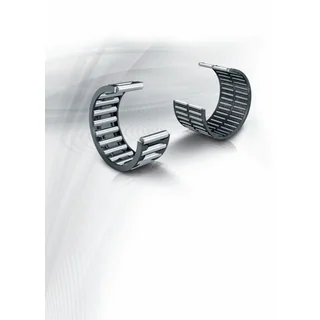
INA needle cages are used when the shaft and housing act as raceways, without rings. Their code indicates the inner diameter, outer diameter and width of the cage, so all three dimensions must be measured before ordering.
To order an INA needle cage, it is essential to measure the shaft diameter, housing diameter and available width. It is also advisable to verify if the cage is single row or double row, and if it has guide flanges or is open type. In applications with high loads or oscillating movements, the cage type and the surface treatment of the needles are critical.
In addition to cages, INA has components such as axial washers and raceways. If the component is very damaged and the code cannot be read, a photo with a ruler next to it and the exact dimensions allow identifying the reference. At MR we sell INA cages and components, and we help you find the exact replacement.
INA special bearings and freewheels: key data for quoting
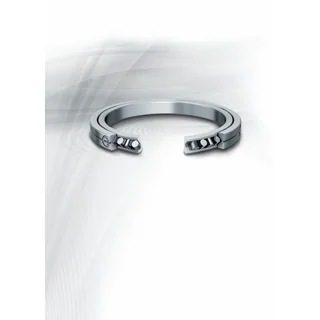
INA also has special bearings for specific applications, such as bearings for ball screws, bearings for pumps or bearings with sensors. In these cases, the code is usually longer and includes letters indicating the design. If the part has no visible code, it is very difficult to identify it only by dimensions, so it is advisable to look for the reference in the machine manual or on the equipment plate.
INA freewheels are used to transmit torque in one direction only, such as in starters, feed systems or safety mechanisms. They are identified with series such as HF, HFL or RC, and the code indicates the shaft diameter and width. It is key to measure the shaft and housing, and verify the free rotation direction.
To quote INA special bearings or freewheels, send the complete code if you have it, or the dimensions and a photo of the part and the mounting location. At MR we work with INA products and quote the exact replacement with the code, dimension or a photo.
Frequently asked questions
Where is the code engraved on an INA bearing?
The INA code is engraved on one of the side faces, usually on the outer ring or on the inner ring. In small bearings it may be faint, so it is advisable to use a magnifying glass or raking light. If it cannot be read, measure the main dimensions and take a photo so the technical team can identify the reference.
What dimensions should I take from an INA bearing to quote?
The basic dimensions are inner diameter, outer diameter and width. In needle bearings, also the shaft and housing diameter. In cam rollers, the outer diameter and total width. It is always better to send the complete code if you have it, because dimensions alone do not define the internal design.
How do I identify an INA Y-bearing if I only have the housing?
The housing usually has the serial number engraved, which indicates the shaft diameter. For example, a P205 housing corresponds to an insert with 25 mm inner diameter. Measure the inner diameter of the insert and the spherical outer diameter, and verify the locking system (set screws, eccentric ring or adapter sleeve).
Can I replace an INA bearing with another brand?
Yes, in many cases there are equivalents between brands. If you have the INA code, we can find the equivalent reference from another brand we sell. If you have the code from another brand, we can also find the corresponding INA. In both cases, it is advisable to verify the dimensions and internal design.
What do I do if the INA code is blurry and cannot be read?
Take photos of the part from various angles, measure the main dimensions with a caliper and note on which machine and position it was mounted. With this data, the MR technical team can identify the exact reference or propose a compatible alternative.
Products with photos in the catalogue
Keep reading
- INA in Argentina: product guide, applications and how to get a quote
Discover the INA bearing lines that MR distributes in Argentina: needle, Y inserts, cam rollers, thrust and more. Learn their uses and get a quote by code.
- How to Read INA Codes: Designation Structure, Prefixes, Suffixes, and Real Examples
INA codes follow a clear logic: each letter and number describes the bearing type, dimensions, and features. In this guide, we explain how to interpret them and show concrete examples from the line we distribute.
- INA Bearings: Where They Are Used, How to Select Them, Mounting and Maintenance
Discover the typical applications of INA bearings in industry, how to choose the right model based on load and mounting, and the maintenance practices that extend their service life.
Continue here
Need a INA quote?
Send us the INA part number, the size or a photo of the part and we will get back to you with a quote.