
Blog
How to store SKF bearings: practical guide for warehouse and storeroom
Correct storage of SKF bearings and greases prevents damage from moisture, vibration or poor rotation. We explain how to preserve them from arrival to mounting.
SKF bearings in Argentina: guide and quotes
Technical team at MR Accesorios Industriales · Updated on October 19, 2026
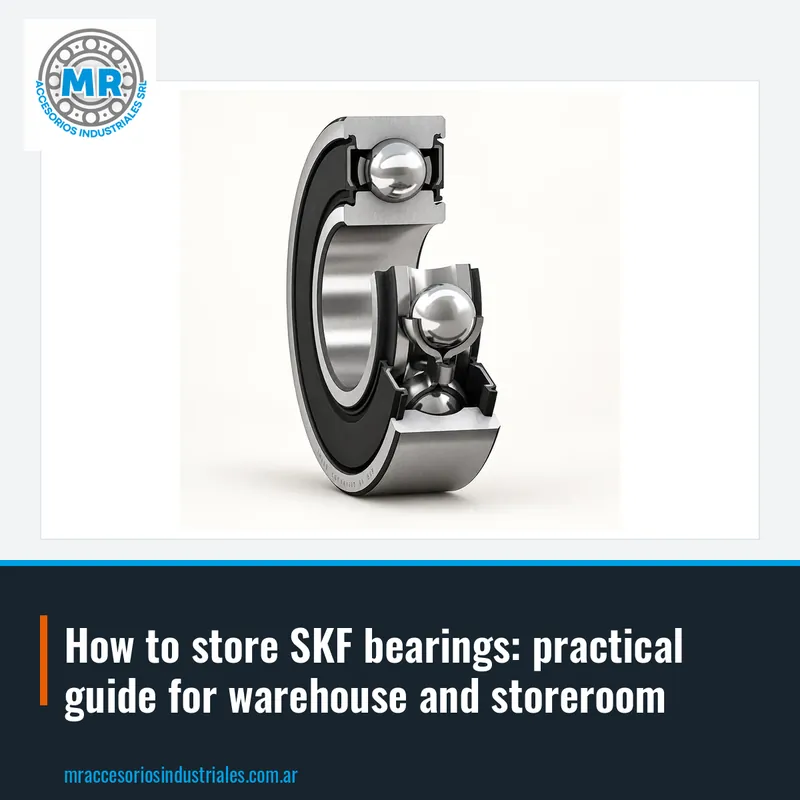
Why SKF bearing storage matters
An SKF bearing is a precision part that can be damaged before entering service if it is not stored properly. Moisture, dust, impacts or vibrations affect the raceways, rolling elements and factory grease. That is why care starts in the warehouse or storeroom, not only at mounting. Incorrect storage shortens service life and can cause premature equipment failures.
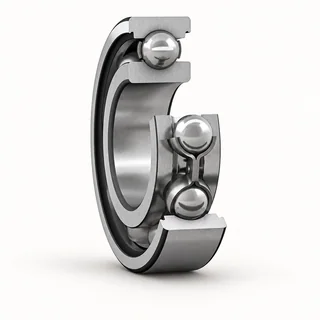
Deep groove ball bearings, such as the SKF ones we supply, come protected from the factory with oil or a corrosion inhibitor. That protector is not washed off or removed until the part is installed. If the bearing is left exposed, the protective film becomes contaminated and loses effectiveness. Keeping it in its original packaging is the first rule to maintain it in good condition.
In industrial plants, workshops and maintenance areas, the warehouse is often a transit place with forklifts, vibrations and temperature changes. That makes it necessary to choose a suitable location and train personnel. A badly stacked bearing or one leaning against a damp wall can rust without anyone noticing. Prevention is cheaper than replacing a damaged part or stopping a production line.
Original packaging: the first protective barrier
SKF bearings are delivered in boxes, blisters or sealed plastic wrappings that provide anti-corrosion protection. That packaging is not opened until the part is going to be mounted. If it is broken or punctured, it should be replaced with a clean, dry plastic bag, but without removing the factory protector. A loose bearing is never stored in a drawer with tools or metal spare parts.
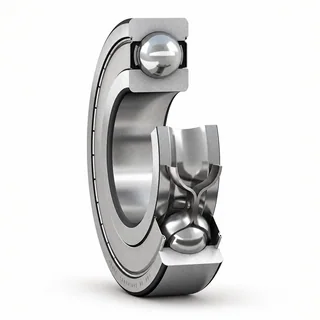
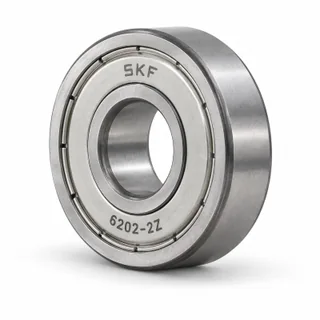
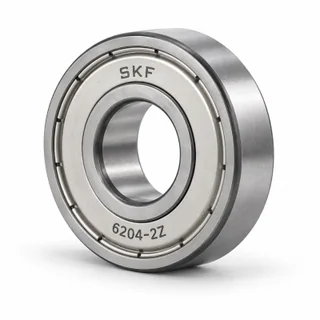
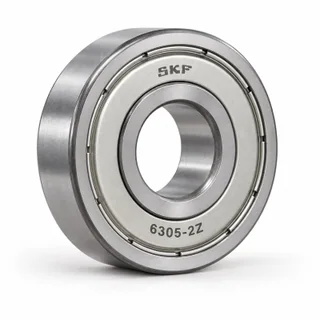
In the case of deep groove ball bearings with seals or shields, such as those with the 2RS or 2Z suffix, the internal grease comes from the factory and does not require additional lubrication in storage. Opening the seal to check the inside only introduces contamination. If the bearing is open, the anti-corrosion protector is even more important and must not be touched with bare hands.
For orders or replenishments, it is always advisable to note the full code, for example 6013, 6211 or 6310, and the quantity. At MR we supply SKF bearings and quote them promptly. If you have doubts about the packaging or the condition of a stored part, send us a photo on WhatsApp and we will guide you.
Position and stacking: how to place bearings on the shelf
Large and medium bearings are stored lying down, never standing on their outer diameter. If they remain standing, their own weight can deform the raceways or mark the rolling elements. Small bearings, on the other hand, can go in boxes or trays without problem, as long as they do not hit each other. The shelf must be firm and away from walkways or vibration.
Heavy boxes should not be stacked on loose bearings or bags hung from hooks. Point pressure damages the packaging and can transfer loads to the part. Bearings should also not be placed directly on the floor, even if packaged: ground moisture passes through the cardboard and reaches the metal. A pallet or shelf made of plastic or dry wood is a good base.
A common mistake is mixing new bearings with used ones or with spare parts from another brand. That complicates rotation and increases the risk of confusing codes. In the storeroom, each reference must have its place identified with the SKF code, for example 6014 or 6211, and the entry date. This applies the first in, first out principle without doubt.
Ideal environment: humidity, temperature and contamination
The storage place must be dry, clean and with the least possible temperature variation. Sudden changes generate condensation on metal, and condensation is the main cause of corrosion in warehouses. A climate-controlled environment is not necessary, but leaking pipes, open windows or damp walls should be avoided. An inexpensive thermo-hygrometer helps monitor conditions.
Bearings should not be stored near chemicals, acids, solvents or batteries. Corrosive vapors attack steel and degrade rubber seals. They should also not be stored next to vibrating machines, such as compressors or pumps, because vibration causes false brinelling: marks on the raceways from repeated micro-impacts. False brinelling ruins a new bearing without being visible to the naked eye.
If the warehouse is in a humid area, a dehumidifier or desiccant bags can be used inside containers. But the most effective measure is to consume inventory in order and not accumulate parts for years. Bearings do not have an expiration date, but the factory protector and internal grease age. Therefore, first in, first out rotation is key to prevent a part from being forgotten at the back of the shelf.
Warehouse rotation: first in, first out
The first in, first out principle (FIFO) prevents older bearings from being buried by new ones. To apply it, each box or bag must visibly show the entry date and code. When replenishing, new stock goes at the back or bottom, and old stock at the front or top. It seems obvious, but in practice many storerooms do not follow it and end up using parts that were stored for years.
In the case of sealed or shielded bearings, such as those with the 2RS or 2Z suffix, the factory grease has a limited service life even if the part is not used. A bearing that spent a long time in the warehouse may have expired or separated grease, and that cannot be seen from the outside. Therefore, if a part has been stored for a long time, it is advisable to consult the manufacturer or a technician before mounting it.
For simple control, a spreadsheet or a maintenance management system can be used. Each withdrawal is recorded with date, code and destination. This shows what is available, since when and how much is consumed. At MR we help you plan your SKF bearing purchases so that inventory rotates without becoming obsolete. Send us your inquiry by email or WhatsApp and we will respond promptly.
SKF greases: storage and lubricant care
The SKF greases we supply also require careful storage. The closed original container is the best protection against contamination and moisture. Grease should not be transferred to open containers or mixed with another brand or type, because thickeners and base oils may be incompatible. Contaminated or mixed grease loses its properties and damages bearings.
Containers must be stored upright, with the lid tightly closed and the label visible. The manufacturing or batch date must remain legible to apply the first in, first out principle. If the container was opened, it is advisable to mark the opening date and consume it within a reasonable period. The lid should not be left open, and dirty spatulas should not be used to remove grease, because dirt is introduced into the product.
A frequent mistake is storing grease near heat sources or outdoors. Heat accelerates oil and thickener separation, and extreme cold can alter consistency. The ideal is a cool, dry place without direct sunlight. If you have doubts about which SKF grease to use for your application, for example LGMT 3/1, LGHP 2/5 or LGEP 2/1, consult us with the code and we will guide you.
Before mounting: inspection and final care
When the time comes to mount a bearing that was stored, the packaging and the part must be inspected. If the box is broken, wet or crushed, the bearing should be carefully inspected. The factory protector is removed only at the workbench, with clean hands and without blowing on the part. Compressed air can carry particles and moisture inside.
Sealed or shielded bearings are not washed or lubricated before mounting: they come ready from the factory. If the bearing is open, it can be lubricated with the grease specified by the equipment manufacturer, not with just any product. The chosen SKF grease must be compatible with the factory grease and with the working conditions. Excess grease is also harmful, because it generates heat and increases friction.
If during storage the bearing suffered impacts, vibration or moisture, it should not be mounted without prior evaluation. A part with corrosion, marks on the raceways or abnormal play must be discarded. At MR we supply SKF bearings and greases, and we quote the replacement as soon as you provide the code, for example 6310 or LGWA 2/5. Write to us on WhatsApp or email and we will coordinate your order.
Frequently asked questions
Can SKF bearings be stored standing up?
No. Large and medium bearings are stored lying down to prevent deformation from their own weight. Small ones can go in boxes or trays, always protected and without impacts.
Can a new bearing be washed before mounting?
No. The factory protector is not washed off or removed until mounting. Sealed or shielded bearings, such as those with 2RS or 2Z, come lubricated from the factory and do not require washing.
How long can an SKF bearing be stored?
There is no fixed expiration date, but the protector and grease age. That is why first in, first out is applied. If a part has been stored for years, it should be inspected before use.
Can SKF greases be mixed with others?
No. Greases with different base oils or thickeners may be incompatible and lose properties. Each grease is kept in its closed original container and consumed in order of entry.
How do I order an SKF bearing or grease from MR?
You provide the full code, for example 6013 or LGMT 3/1, and the quantity. We quote it promptly by WhatsApp or email. If you have doubts, send us a photo of the part.
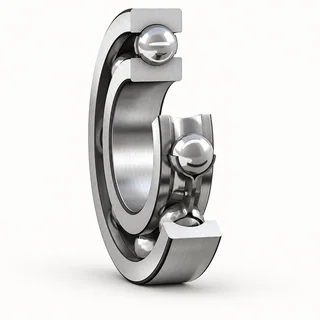
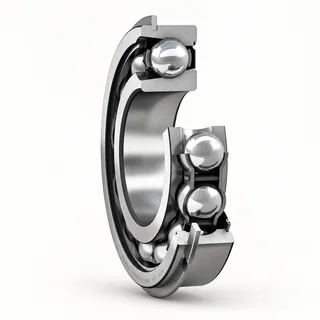
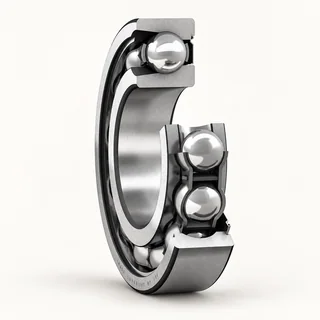
Products with photos in the catalogue
Keep reading
- SKF Chains: Reliable Power Transmission for Industrial Applications
SKF roller chains offer strength and precision for power transmission in industrial machinery. Learn about the PHC series, ASA and BS standards, and how to identify the correct chain for your equipment.
- SKF tools for industrial maintenance: pullers, heaters, aligners and calibrated shims
SKF tools simplify bearing mounting and dismounting, shaft alignment and instrument calibration. Discover TMMA and TMHP pullers, induction heaters, TKSA aligners and calibrated shims.
- How to Choose SKF Bearings by Application: Load, Speed, Environment, and Mounting
Choosing the right SKF bearing requires analyzing load, speed, environment, and mounting. We explain the main types and how to get a quote with the exact code.
Continue here
Need a SKF quote?
Send us the SKF part number, the size or a photo of the part and we will get back to you with a quote.