
Blog
How to choose BGL by application: load, speed, environment and mounting
Practical guide to selecting BGL sleeves, nuts and accessories according to working conditions. Includes real codes and mounting tips.
Technical team at MR Accesorios Industriales · Updated on November 1, 2026
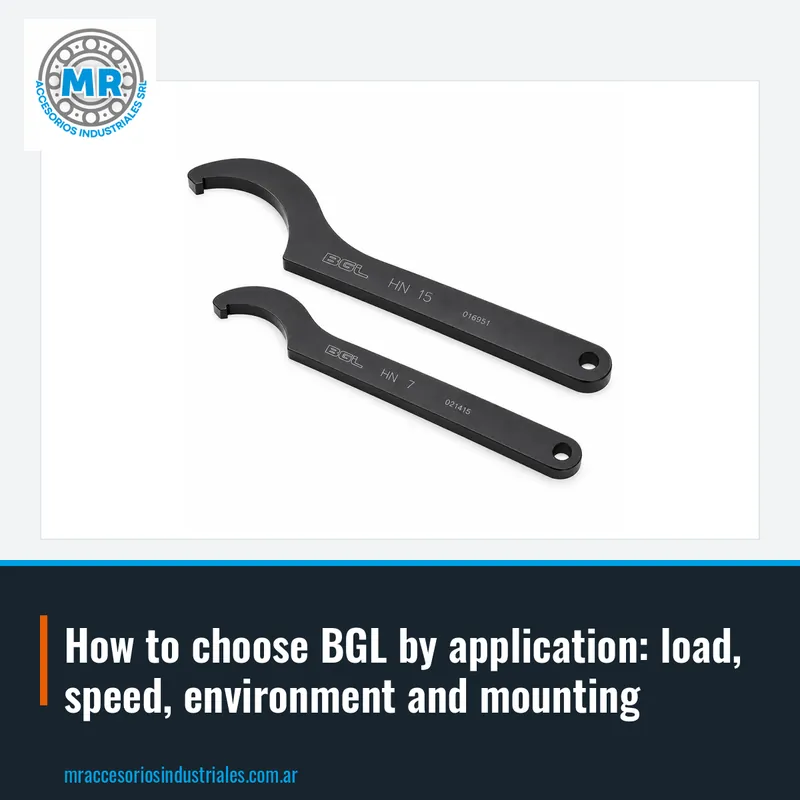
Adapter sleeves: the basis for tapered-bore mountings
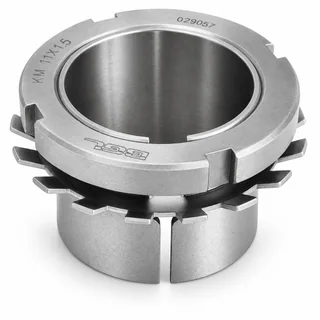
BGL adapter sleeves are cylindrical parts with a tapered bore that are mounted on cylindrical shafts to adapt bearings with a tapered bore. They are used when the shaft is cylindrical and not machined with a taper. The sleeve slides onto the shaft and is secured by a nut, which pushes it against the tapered bore of the bearing. This creates an interference fit that secures the bearing to the shaft without the need for press fits.
To choose the correct sleeve, first measure the shaft diameter and check the bearing code. For example, H210, H211 and H310 are different adapter sleeves: each corresponds to a combination of bearing and shaft, and they are not interchangeable with each other. Always confirm compatibility with the bearing code.
A common mistake is tightening the nut without controlling the axial displacement of the sleeve. If it is exceeded, the bearing can be damaged or its internal clearance reduced too much. When mounting, check the radial clearance and follow the manufacturer's instructions. If you have doubts, send us the bearing code and the shaft size, and we will quote you the appropriate BGL sleeve.
Hydraulic sleeves: precision for demanding applications
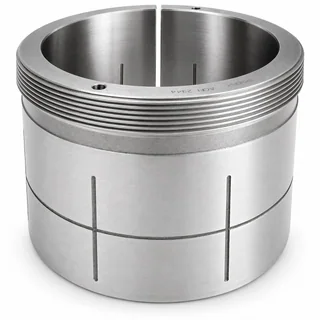
BGL hydraulic sleeves are used when fast and precise mounting and dismounting is needed, especially on large or hard-to-access bearings. Unlike adapter sleeves, these incorporate an oil injection system that facilitates displacement on the shaft. They make maintenance tasks on heavy equipment easier.
The selection depends on the shaft diameter and the bearing. For example, AOH234, AOH248 and AOH252 are three hydraulic sleeves of different sizes. Verify that the hydraulic system is clean and that the oil is the one indicated by the manufacturer.
When mounting a hydraulic sleeve, it is key to control the injection pressure and the sleeve advance so as not to damage the bearing. Many technicians forget to bleed the air from the circuit before starting, which can cause irregular advance. If you need advice, send us a photo of the current mounting and we will indicate the most suitable BGL alternative.
Withdrawal sleeves: to remove bearings without damaging them
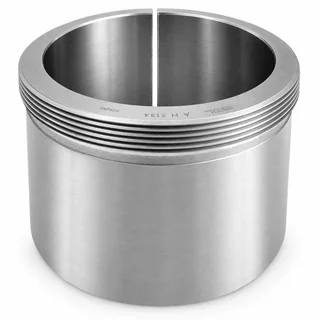
BGL withdrawal sleeves are used to remove bearings with a tapered bore mounted on the shaft, without blows that damage the raceways. They are useful in preventive maintenance.
To order the correct sleeve, you need the shaft diameter and the bearing code. For example, AH210, AH211 and AH310 are three withdrawal sleeves of different sizes. It is important that the size and thread match those of the bearing, otherwise it will not fit.
A frequent mistake is forcing the dismounting without verifying that the sleeve is well supported against the bearing, which can damage the thread. If you are not sure of the code, measure the shaft diameter and the thread pitch, and we will quote you the appropriate BGL withdrawal sleeve.
Lock nuts: the essential complement
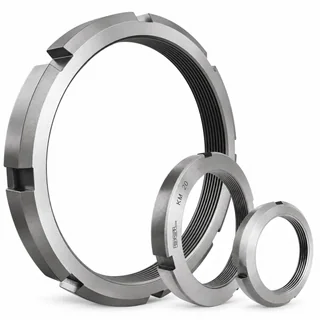
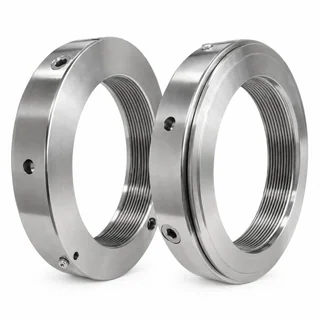
BGL lock nuts are used to secure adapter sleeves and other components on threaded shafts. They have a fine thread for precise adjustment and slots for placing a hook wrench. They are combined with lock washers to prevent loosening due to vibration.
The choice of nut depends on the diameter and thread pitch of the shaft or sleeve. For example, KMP1, KM20 and KMP2 are three lock nuts of different sizes. It is essential to verify the thread pitch, since there are fine and coarse pitches that are not interchangeable.
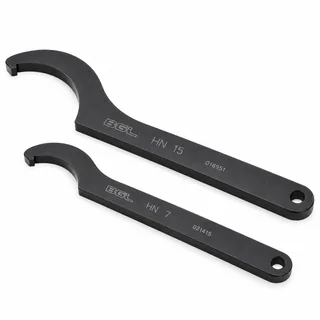
When installing a lock nut, always use the appropriate wrench and do not hit the slots with a chisel, because you can deform them. Tighten evenly and lock it with the lock washer, bending the tab over the slot. If you have doubts about which nut goes with your sleeve, send us the sleeve code and we will indicate the correct BGL nut.
Hydraulic nuts: effortless mounting for large bearings
BGL hydraulic nuts are used to mount and dismount large bearings, where manual torque would be excessive. They incorporate a hydraulic piston that pushes the sleeve or bearing in a controlled manner. Their use reduces the risk of damage and speeds up maintenance tasks.
To select a hydraulic nut, you need the thread diameter of the shaft or sleeve. For example, HMV18E, HMV36E and HMV54E are three different sizes of hydraulic nut. These nuts are connected to a hydraulic pump and allow a precise axial force to be applied. Verify that the pump has the adequate capacity and that the connections are clean.
A common mistake is not lubricating the thread before using the hydraulic nut, which can cause irregular advance or damage the thread. The maximum pressure indicated by the manufacturer must also be controlled so as not to overload the system. If you need a BGL hydraulic nut, send us the diameter and thread pitch and we will quote it.
Lock washers: safety against loosening
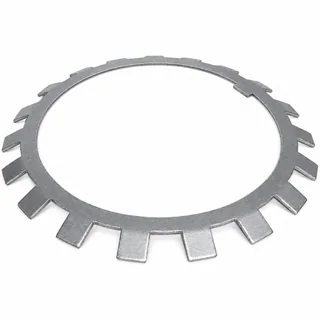
BGL lock washers are placed between the lock nut and the bearing or sleeve to prevent the nut from loosening due to vibration. They have an internal tab that fits into a slot on the shaft or sleeve, and several external tabs that are bent over the nut slots. They are simple parts but critical for the reliability of the mounting.
The selection of the washer depends on the shaft diameter and the type of nut. Each lock nut has a specific lock washer that fits into the shaft slot. It is important that the washer has the same nominal diameter as the nut and that the tabs match the slots. Do not reuse washers whose tabs are bent or damaged.
When mounting, bend an external tab over the nut slot and the internal tab over the shaft slot. If the washer does not seat well, it can rotate and lose its function. If you have doubts about which washer goes with your nut, send us the nut code and we will indicate the corresponding BGL washer.
Mounting and maintenance tools: the right kit
BGL has a line of mounting and maintenance tools designed to work with sleeves and nuts. Having the correct tool prevents damage and reduces intervention time. They are useful for maintenance workshops and plant personnel.
When choosing a tool, consider the size of the components you are going to handle. For example, for small lock nuts a hook wrench of adequate size is used, while for hydraulic nuts a pump with a pressure gauge is needed. BGL tools are designed to work with their sleeves and nuts.
A common mistake is using improvised tools, such as hitting with a punch, which damages the parts and can cause accidents. Investing in the correct tool prolongs the service life of the components. If you do not know which tool you need, tell us what task you are going to perform and we will recommend the appropriate BGL option.
Frequently asked questions
How do I choose the correct BGL adapter sleeve?
Measure the shaft diameter and check the bearing code. The sleeve must match the bearing series and the shaft diameter. For example, H210 and H310 are different sleeves and are not interchangeable.
What is the difference between an adapter sleeve and a hydraulic sleeve?
The adapter sleeve is mounted with a nut and manual torque, while the hydraulic one uses oil injection for more precise and faster mounting, ideal for large bearings.
How do I know which lock nut goes with my sleeve?
The nut must have the same diameter and thread pitch as the sleeve. Consult the catalog or send us the sleeve code.
Can I reuse a lock washer?
It is not recommended if the tabs are bent or damaged. A washer in poor condition may not lock correctly and cause the nut to loosen.
What tool do I need to mount a BGL hydraulic sleeve?
You need a hydraulic pump with a pressure gauge and the appropriate connections. The BGL tool line is designed for controlled mounting.
Products with photos in the catalogue
Keep reading
- BGL in Argentina: product guide, uses and quoting by code
Discover BGL product lines for bearing mounting and locking: adapter sleeves, locknuts, lock washers and tools. We explain how to identify and order them.
- How to Read BGL Codes: Designation Structure, Prefixes, Suffixes, and Real Examples
BGL codes follow a clear logic: letters indicate the part type and numbers define the size. We explain how to interpret them so you order the correct replacement.
- How to choose and maintain BGL sleeves and nuts
Practical guide to choose and assemble adapter, hydraulic sleeves and BGL nuts in industrial equipment. Learn the key codes and dimensions.
Continue here
Need a BGL quote?
Send us the BGL part number, the size or a photo of the part and we will get back to you with a quote.