
Blog
How to choose and maintain BGL sleeves and nuts
Practical guide to choose and assemble adapter, hydraulic sleeves and BGL nuts in industrial equipment. Learn the key codes and dimensions.
Technical team at MR Accesorios Industriales · Updated on October 23, 2026
What are BGL adapter sleeves and what are they for
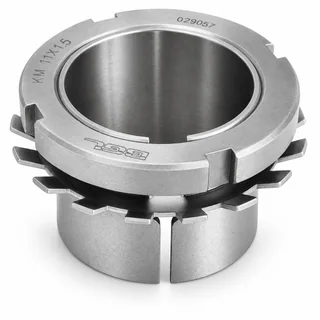
BGL adapter sleeves are machined parts that are mounted on cylindrical shafts to allow the assembly of bearings with tapered bore. They are used in applications where the shaft cannot be machined with taper, such as in fans, centrifugal pumps or belt conveyors. The sleeve slides onto the shaft and is fixed by a nut, which pushes the bearing against the cone of the sleeve. This achieves a firm and removable fit without damaging the shaft.
In Argentine industry, BGL adapter sleeves appear in blowers, speed reducers and food processing machines. They are common in equipment where the bearing must be frequently disassembled for cleaning or repositioning. The sleeve allows quick assembly without the need for presses or heating. That is why they are chosen in process plant maintenance and in electric motor repair shops.
To identify a BGL adapter sleeve, the code is engraved on the front face or on the outer diameter. For example, H210, H211 and H310 are adapter sleeve codes. It is always advisable to measure the shaft diameter and verify the engraved code before requesting a quote. A common mistake is to order the sleeve by the bearing outer diameter instead of the shaft diameter.
BGL hydraulic sleeves: assembly and disassembly with oil pressure
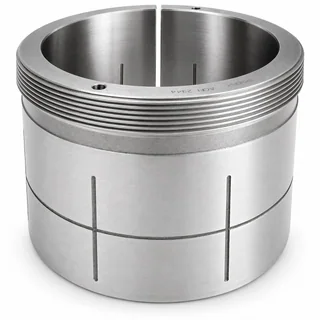
BGL hydraulic sleeves incorporate an oil duct and a thread to connect a manual or electric pump. By injecting oil at high pressure, the sleeve expands slightly and the force required to assemble or disassemble the bearing is reduced. This is especially useful in large bearings or in shafts where the fit is very tight. The hydraulic method avoids blows and excessive heating, protecting the bearing's service life.
In applications such as sugar cane mills, extruders or large fans, BGL hydraulic sleeves are a standard solution. Codes AOH248, AOH234 and AOH252 are hydraulic sleeves. These sleeves are ordered together with the corresponding hydraulic nut and the oil injection pump.
To select a BGL hydraulic sleeve, you need to know the shaft diameter, the bearing number and the bore taper. The standard taper is 1:12 for most spherical roller bearings, but some use 1:30. When requesting a quote, it is advisable to send a photo of the bearing plate and the shaft dimensions to avoid errors.
BGL withdrawal sleeves: how to remove a bearing without damaging it
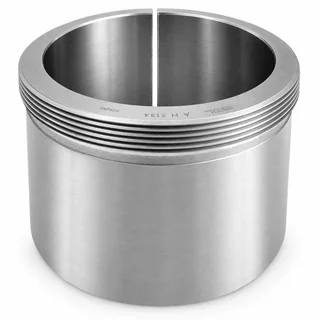
BGL withdrawal sleeves are used to extract bearings with tapered bore when the fit is very tight or the bearing is stuck due to corrosion. It is placed between the shaft and the bearing and, with the appropriate nut, allows the bearing to be removed from its seat in a controlled manner. This avoids hammer blows and damage to the shaft or the bearing.
In industry, BGL withdrawal sleeves are used in gearboxes, rolling mills and machine tools. Codes AH210, AH211 and AH310 are withdrawal sleeves. The choice depends on the space available behind the bearing and the extraction force required. Always verify that the nut thread matches that of the sleeve.
A frequent mistake when using withdrawal sleeves is not lubricating the thread before applying force. Lack of lubrication can damage the thread and make disassembly impossible. It is also important to support the nut against a flat surface and turn it evenly. If the bearing is very rusty, it is recommended to apply penetrating oil and wait before forcing. In all cases, the appropriate withdrawal nut for the sleeve must be used.
BGL lock nuts and lock washers
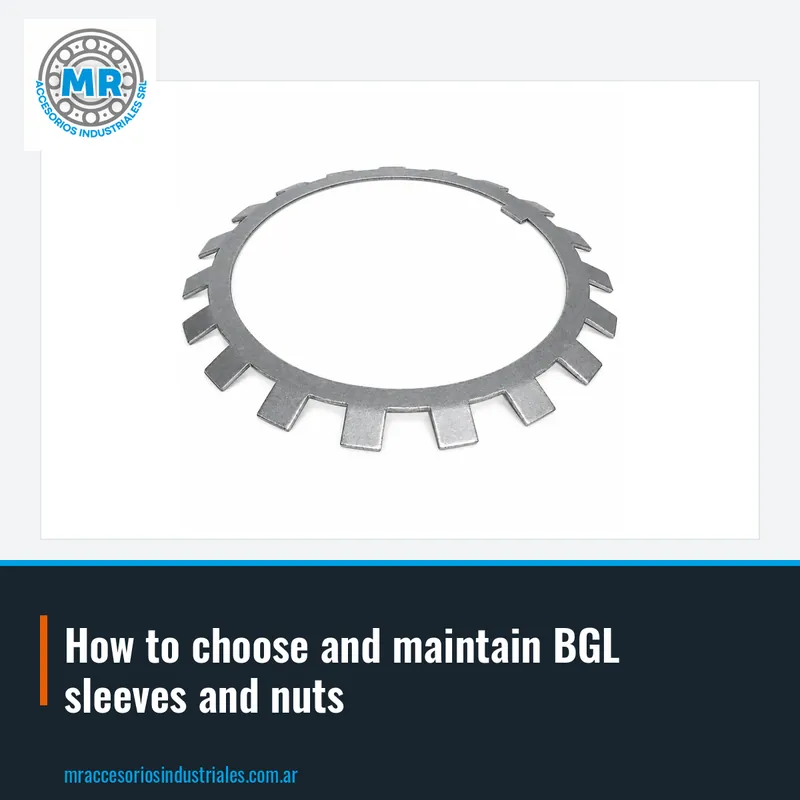
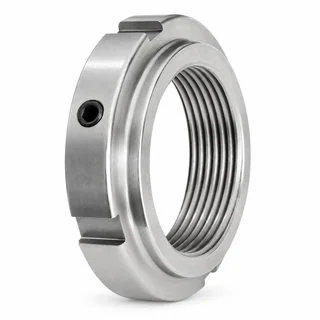
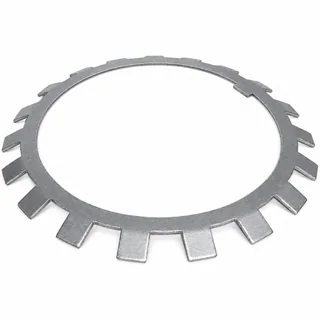
BGL lock nuts are threaded onto the sleeve to push the bearing against the cone. They are precision machined to ensure uniform contact and prevent vibrations. The lock washer, placed between the nut and the bearing, has a tab that is bent into a groove on the sleeve. This prevents the nut from loosening during operation.
In equipment such as pumps, agitators or textile machines, BGL lock nuts are critical components. Codes KMP1, KMP2 and KM20 are lock nuts. When ordering a nut, you must indicate the sleeve code and the shaft diameter to ensure compatibility.
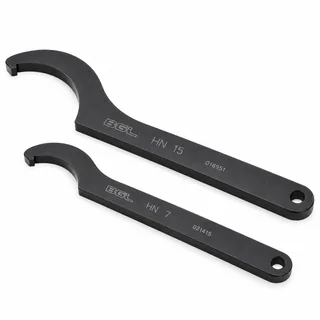
A common mistake is reusing old lock washers or bending the tab several times. The tab hardens and can break, leaving the nut unsecured. Always use a new washer when assembling a bearing. It is also important to tighten the nut with the appropriate wrench and not with chisel blows, which damage the support faces. The nut must be firm but without exceeding the recommended torque.
BGL hydraulic nuts: precise adjustment for large bearings
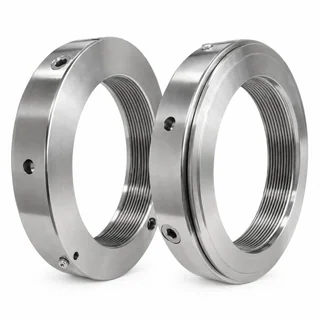
BGL hydraulic nuts are used to assemble and disassemble large bearings with hydraulic sleeves. They incorporate an annular piston that is actuated with high-pressure oil, pushing the bearing against the cone without manual effort. This allows a controlled and uniform adjustment, avoiding damage from over-tightening. They are ideal for spherical roller bearings in heavy applications.
In the mining, cement and steel industries, BGL hydraulic nuts are indispensable maintenance tools. Codes HMV18E, HMV36E and HMV54E are hydraulic nuts. Each nut is connected to a manual pump with a pressure gauge to control the assembly pressure. Disassembly is performed by reversing the direction of the force.
To select a BGL hydraulic nut, you need to know the sleeve code and its thread. The nut must be compatible with the sleeve and with the available oil pump. It is essential to bleed the air from the hydraulic circuit before applying pressure, to avoid sudden movements. The condition of the pump seals and hoses must also be checked. Proper maintenance of the hydraulic nut prolongs its service life.
Inch adapter sleeves and BGL mounting tools
MR also quotes BGL inch adapter sleeves for shafts with imperial dimensions, common in equipment imported from the United States or England. The selection follows the same principles as for metric sleeves: measure the shaft, verify the engraved code and confirm the bearing taper.
BGL mounting and maintenance tools complement the brand's sleeves and nuts.
When quoting an inch sleeve or a BGL mounting tool, it is advisable to send a photo of the original part and the shaft dimensions. A common mistake is to order an inch sleeve for a metric shaft or vice versa. Always measure with a caliper and verify the unit system before placing the order.
How to quote BGL sleeves and nuts in Buenos Aires
To quote BGL sleeves, nuts or tools, the most practical way is to send via WhatsApp or email the code engraved on the part, the shaft dimension and a photo of the bearing. With that data, the MR team will indicate the exact BGL code and provide the quote promptly. If you do not have the code, you can send the measurements and the bearing number, and MR will help you identify the correct sleeve.
MR is the exclusive representative in Argentina of the BGL brand. We work with adapter sleeves, hydraulic sleeves, withdrawal sleeves, nuts, washers and tools. The quote is made without obligation.
When ordering a BGL sleeve, it is important to verify that the bearing has a tapered bore and not a cylindrical one. A bearing with a cylindrical bore is not mounted with a sleeve, but with a direct fit to the shaft. The taper must also be confirmed: 1:12 or 1:30. If you have doubts, send a photo of the bearing and the shaft, and MR will advise you on the selection. This way you avoid costly errors and unnecessary plant downtime.
Frequently asked questions
How do I know which BGL sleeve I need for my bearing?
You need the bearing number and the shaft diameter. With that data, MR will indicate the exact BGL code. You can also send a photo of the old sleeve or the bearing to verify.
Are BGL sleeves suitable for bearings with cylindrical bore?
No. BGL adapter sleeves are used only with bearings with tapered bore. If the bearing has a cylindrical bore, it is mounted directly on the shaft with a fit.
What is the difference between an adapter sleeve and a withdrawal sleeve?
The adapter sleeve is used to mount the bearing and remains fixed on the shaft. The withdrawal sleeve is used to extract the bearing when it is very tight or corroded.
Can I use a BGL hydraulic nut with any hydraulic sleeve?
No. The hydraulic nut must be compatible with the sleeve thread. That is why it is ordered together with the sleeve or the thread code is verified before quoting.
Products with photos in the catalogue
Keep reading
- BGL in Argentina: product guide, uses and quoting by code
Discover BGL product lines for bearing mounting and locking: adapter sleeves, locknuts, lock washers and tools. We explain how to identify and order them.
- How to Read BGL Codes: Designation Structure, Prefixes, Suffixes, and Real Examples
BGL codes follow a clear logic: letters indicate the part type and numbers define the size. We explain how to interpret them so you order the correct replacement.
- GUMMI Couplings: Vibration Absorption and Reliable Power Transmission for Industry
GUMMI elastic couplings absorb vibrations and misalignments, protect machinery, and ensure reliable power transmission. Learn about their configurations and how to choose the right model.
Continue here
Need a quote?
Send us the code, size or a photo of the part and we'll quote you shortly.