
Blog
BGL in Argentina: product guide, uses and quoting by code
Discover BGL product lines for bearing mounting and locking: adapter sleeves, locknuts, lock washers and tools. We explain how to identify and order them.
Technical team at MR Accesorios Industriales · Updated on October 7, 2026
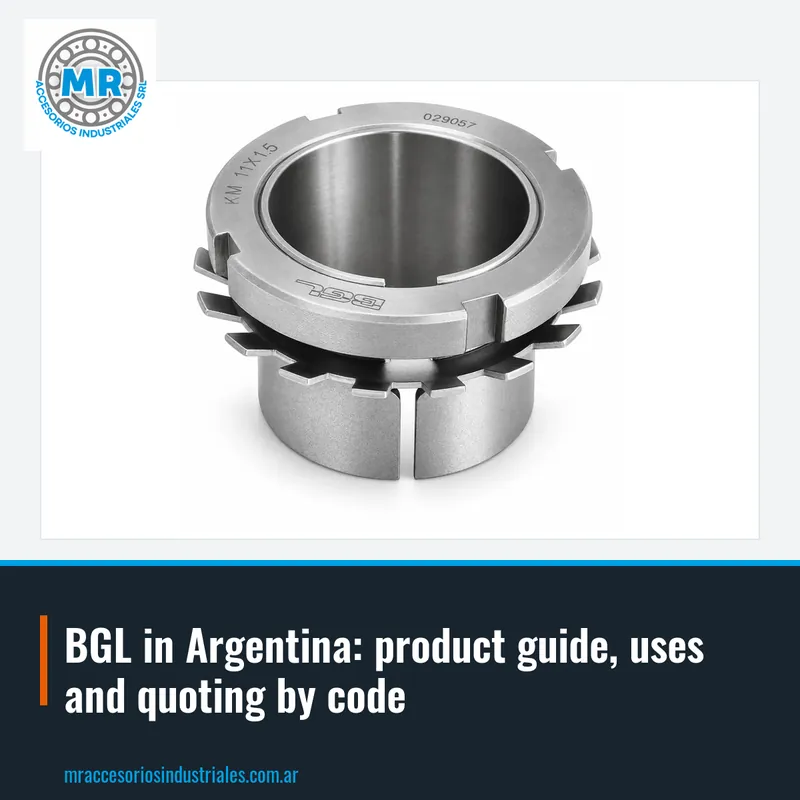
BGL adapter sleeves: simple mounting on cylindrical shafts
BGL adapter sleeves are tapered pieces mounted between the shaft and the tapered bore of a bearing. Their function is to secure the bearing onto a cylindrical shaft without the need to machine the shaft with a taper. They are used in applications where mounting and dismounting must be quick and repeatable, such as conveyors, fans and agricultural machinery. When tightening the locknut, the sleeve is driven into the tapered bore and the bearing is locked in position on the shaft.
In Argentine industry, these sleeves are commonly found in split pillow blocks and foot-mounted housings. The most common codes are H221, H320 and H208. Each code corresponds to a shaft diameter and a bearing series, so it is advisable to have the reference of the mounted bearing at hand.
MR is the exclusive representative of BGL in Argentina. To quote a BGL adapter sleeve, it is advisable to send the complete code engraved on the part or, if it is not legible, the shaft diameter and the bearing reference. A common mistake is to confuse the adapter sleeve with the withdrawal sleeve: they work differently and are not interchangeable. It is also necessary to verify whether the mounting is metric or inch.
BGL hydraulic sleeves: precise mounting with oil pump
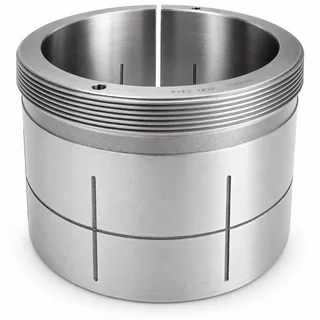
BGL hydraulic sleeves allow mounting and dismounting bearings with tapered bore by means of oil pressure. They differ from common adapter sleeves because they have an internal channel and a threaded hole to connect a hydraulic pump. When injecting oil at high pressure, a film is created that reduces friction and facilitates the axial displacement of the sleeve. This is especially useful for large bearings or applications requiring very precise fit.
These sleeves are used in heavy equipment such as mills, gearboxes and paper machines. Typical codes are AOH234, AOH252 and AOH256. To choose the correct one, the bearing reference and shaft diameter are required.
When ordering a BGL hydraulic sleeve, it is important to indicate whether the hydraulic locknut and oil pump are also needed. Mounting requires a manual or electric pump capable of generating the necessary pressure, and the oil must be clean and of adequate viscosity. A frequent mistake is not purging the air from the system before applying pressure, which can cause incomplete mounting or damage the sleeve.
BGL withdrawal sleeves: safe bearing removal
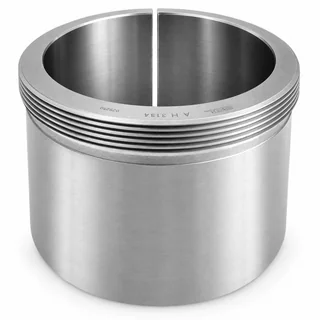
BGL withdrawal sleeves are placed between a cylindrical shaft and the tapered bore of the bearing, and are designed so that the bearing can later be removed easily. They have a thread at the end: when tightening the locknut against the bearing, the sleeve moves axially and releases it. This avoids blows and damage to the bearing or shaft.
In industrial maintenance, these sleeves are indispensable when the bearing must be replaced without disassembling the entire shaft. The most common codes are AH220, AH320 and AH217. As with adapter sleeves, each code is associated with a bearing series and a shaft diameter.
To quote a BGL withdrawal sleeve, it is advisable to send the complete code and, if possible, a photo of the part. A common mistake is to confuse it with an adapter sleeve, which is mounted the other way around and uses a different locknut. It is also necessary to verify that the withdrawal locknut corresponds to that sleeve.
BGL locknuts: secure locking of the sleeve
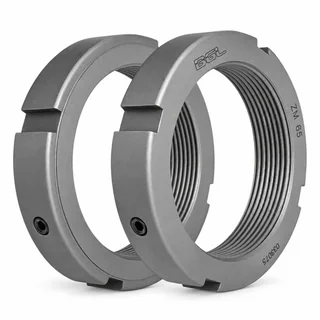
BGL locknuts are threaded onto the sleeve to push it against the tapered bore of the bearing. They have slots on the perimeter where the tab of a lock washer is bent, preventing the locknut from loosening due to vibration. They are critical components for maintaining the axial position of the bearing.
These locknuts are used in all types of machinery with bearings on adapter sleeves, such as pumps, compressors and conveying equipment. Typical codes are ZM15, KM14 and KM32. Each locknut number corresponds to a specific thread, so it is advisable to order it together with the sleeve code.
When ordering a BGL locknut, it is essential to indicate the exact code or, failing that, the thread diameter and pitch. A common mistake is to confuse fine pitch with normal pitch, which prevents threading. It is also necessary to verify the thread direction: most are right-hand, but some applications use left-hand thread. The lock washer must be the same size as the locknut.
BGL hydraulic locknuts: controlled adjustment with oil pressure
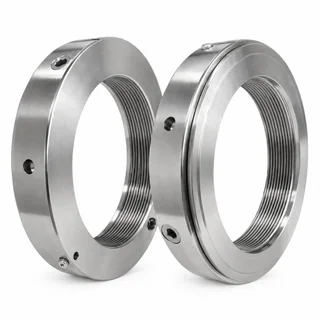
BGL hydraulic locknuts are used to mount and dismount bearings with tapered bore in a controlled manner. They have an internal piston that is actuated with high-pressure oil, generating axial force without manual effort. This allows precise adjustment and prevents damage from overload. They are ideal for large bearings or applications where space is limited.
These locknuts are used in heavy industry, such as steel mills, mining and power generation. The most common codes are HMV24E, HMV42E and HMV60E. To choose one, it is necessary to know the thread of the shaft or sleeve on which it will work.
To quote a BGL hydraulic locknut, it is advisable to send the complete code and the reference of the sleeve or bearing with which it is used. It is important to have a compatible hydraulic pump and a calibrated pressure gauge. A frequent mistake is not lubricating the thread before mounting, which can damage the locknut or sleeve. The maximum pressure indicated by the manufacturer must also be respected.
BGL lock washers: security against loosening
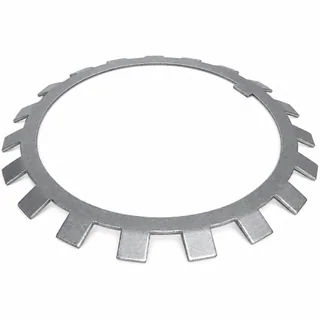
BGL lock washers are placed between the locknut and the bearing or sleeve. They have an internal tab that fits into the slot of the sleeve and an external tab that is bent over the locknut. In this way, they prevent the locknut from turning and loosening due to vibration or dynamic loads. They are simple but essential parts for the reliability of the mounting.
These washers are used in combination with locknuts in a wide variety of industrial equipment. Each locknut has its corresponding lock washer, and we quote it together with the locknut.
When ordering a BGL lock washer, it is important to indicate the code of the locknut with which it is used. A common mistake is to reuse an already deformed washer: the bent tab loses strength and can break. Always use a new washer for each mounting. It is also necessary to verify that the internal tab fits correctly into the slot of the sleeve.
Inch sleeves and BGL tools: complementary solutions
BGL also offers adapter sleeves in inches for shafts and bearings with imperial dimensions. They are used in imported machinery or old equipment that maintains the imperial system. It is essential not to confuse them with metric ones, because the shaft diameter and threads are different.
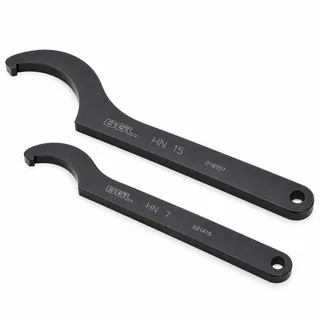
The BGL mounting and maintenance tool line accompanies the sleeves and locknuts. Using the right tool facilitates the work and reduces the risk of damaging the bearing, shaft or sleeve.
To quote an inch sleeve or a BGL tool, it is advisable to send the part code or a photo with the main measurements. A common mistake is to measure the shaft diameter in millimeters and assume it corresponds to a metric sleeve. Always verify whether the system is metric or imperial. The MR team can indicate the correct reference from the shaft and bearing measurement.
Frequently asked questions
How do I identify a BGL adapter sleeve?
Look for the code engraved on the surface of the sleeve, for example H221 or H320. If it is not legible, measure the shaft diameter and the bearing bore. With that data we will quote the correct BGL sleeve.
What is the difference between an adapter sleeve and a withdrawal sleeve?
The adapter sleeve is inserted into the bearing when tightening its locknut and secures it on the shaft. The withdrawal sleeve is placed between the shaft and the bearing and facilitates its later removal. They are not interchangeable.
How is a BGL hydraulic sleeve mounted?
A hydraulic pump is connected to the threaded hole of the sleeve and oil is injected at high pressure. This creates a film that facilitates axial displacement. Then the hydraulic locknut is tightened to complete the mounting.
What data do I need to quote a BGL locknut?
Send the locknut code, for example KM14 or ZM15. If you do not have it, indicate the thread diameter and pitch. A photo of the locknut and sleeve also helps.
Can I use a BGL lock washer with any locknut?
No, the washer must be the same size and designation as the locknut. Using an incorrect washer can cause loosening or breakage. Always use a new washer for each mounting.
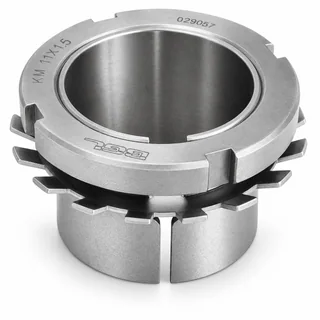
Products with photos in the catalogue
Keep reading
- How to Read BGL Codes: Designation Structure, Prefixes, Suffixes, and Real Examples
BGL codes follow a clear logic: letters indicate the part type and numbers define the size. We explain how to interpret them so you order the correct replacement.
- GUMMI Couplings: Vibration Absorption and Reliable Power Transmission for Industry
GUMMI elastic couplings absorb vibrations and misalignments, protect machinery, and ensure reliable power transmission. Learn about their configurations and how to choose the right model.
- Tsubaki industrial chains: quality, durability and performance for demanding applications
Discover the types of Tsubaki chains we supply: roller, conveyor, leaf, freewheels, couplings and torque limiters. We help you choose the right one for your application.
Continue here
Need a quote?
Send us the code, size or a photo of the part and we'll quote you shortly.