
Blog
History of Argentine Metallurgy: From Port Workshops to Zapla and SOMISA, and Why National Industry Matters
From port workshops to Zapla, Acindar, and SOMISA: how Argentine metallurgy was formed, in which cities it works today, and why national industry still matters.
Technical team at MR Accesorios Industriales · Updated on October 7, 2026
The First Metallurgical Workshops and the 1904 League
The history of Argentine metallurgy begins in small workshops, long before blast furnaces. At the end of the 19th century, blacksmith shops, foundries, and lathe workshops grew around the ports of Buenos Aires and Rosario, repairing machinery that arrived from Europe for railways, meatpacking plants, flour mills, and sugar mills. That trade of fixing and adapting imported goods was the first school of national industry.
In 1904, a group of these industrialists founded the Liga de Industriales Metalúrgicos, the entity now called Asociación de Industriales Metalúrgicos de la República Argentina (ADIMRA). Among its first objectives were fostering association among manufacturers and improving worker training. Because of that founding, every June 5 Argentina celebrates Metallurgical Industry Day.
The two world wars and the 1930 crisis repeatedly cut off the arrival of imported machines and spare parts. When a gear or shaft did not arrive, someone had to make it here, and so workshops learned to produce parts that previously were only bought abroad. From that need was born a good part of the metallurgical network that still keeps industry running today.
Savio, Fabricaciones Militares, and the First Pig Iron from Zapla
The transition from workshops to heavy industry had a name: Manuel Savio, a military engineer. In 1941, Law 12.709 created the Dirección General de Fabricaciones Militares, with Savio at the helm, in the midst of World War II and with imports almost cut off. The idea was clear: a country that does not produce its own steel depends on others to keep its factories, tracks, and ports standing.
Iron ore appeared in the Zapla mountains in Jujuy. There, in Palpalá, the Altos Hornos Zapla facility was built, and on October 11, 1945, the first pig iron heat produced in Argentina was tapped. It was a technical and symbolic milestone: for the first time, the iron that would later be transformed into shafts, gears, and structures was obtained from Argentine ore, in a blast furnace built in the country.
That same year, in Buenos Aires, the history of MR Accesorios Industriales began. Since 1945 we have manufactured housings, chains, and pulleys for industry, in the same climate of the era that pushed to produce here what previously had to be brought in. It is no coincidence: Argentine metallurgy was built with large steel mills and also with workshops that solved, piece by piece, what each plant needed to avoid stopping.
The Steel Plan and SOMISA: Steel at Scale in San Nicolás
On June 13, 1947, Law 12.987, the Argentine Steel Plan, known as the Savio Law, was enacted. Its goal was to produce steel in the country and promote plants that would transform it into sheets, profiles, tubes, and wires. From that law was born Sociedad Mixta Siderurgia Argentina, SOMISA, a company with majority state ownership designed to supply industry on a large scale.
Savio chose the land on the banks of the Ramallo stream, near San Nicolás, on the Paraná River. After successive delays, blast furnace number 1 tapped its first pig iron in June 1960, and in May 1961 the plant's first steel came out. With SOMISA, Argentine steelmaking moved from the Zapla experience to integrated production, designed to supply the domestic market.
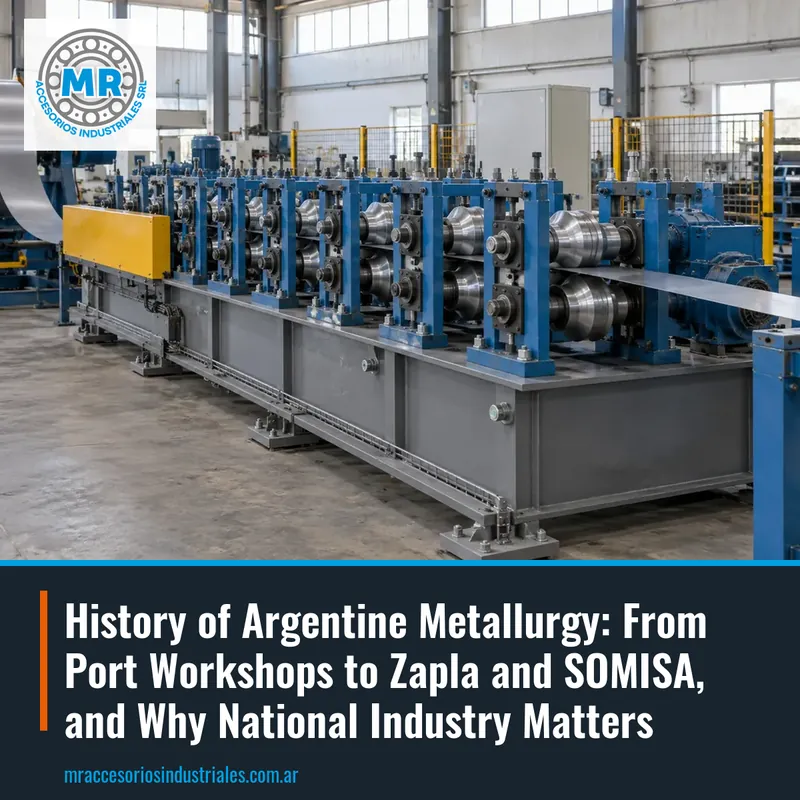
Around the steel mill grew suppliers, maintenance workshops, and service companies that still live from its activity today. SOMISA passed into private hands in the 1990s and the plant continues to produce steel. The corridor linking San Nicolás, Villa Constitución, and Rosario thus became one of Argentina's major metallurgical axes, with rolling mills, roller trains, and conveyors that cannot stop.
Rosario and Southern Santa Fe, Heart of Steel
Rosario has its own chapter in this history. In 1942, Arturo Acevedo and his partners founded Industria Argentina de Aceros, Acindar, there, which installed its first plant in the city to produce steel for construction. In 1951 the company added the Villa Constitución plant, a few kilometers away, which over the years became its most important industrial complex.
Southern Santa Fe added another tradition: agricultural machinery. Towns and cities in the area set up factories for seeders, harvesters, trailers, and silos, and with them a network of lathe workshops and repair shops that work for the countryside. Further north, the city of Santa Fe and its metropolitan area complete a hub where metalworking, food, and agricultural services coexist.
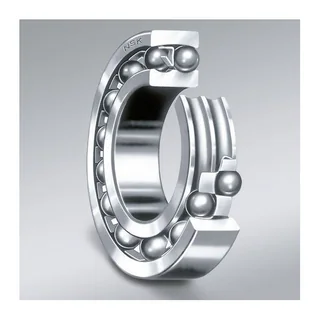
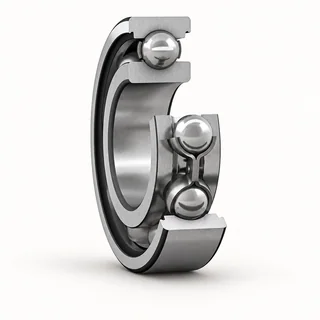
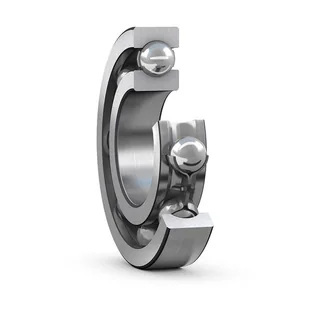
All these plants share a daily need: bearings, housings, chains, and pulleys that withstand load, dust, and many hours of work. From Buenos Aires, to Rosario, Villa Constitución, San Nicolás, and Santa Fe we deliver SKF bearings and those of the other brands we distribute, along with the split housings and chains we manufacture. The inquiry always starts with the code or a photo of the part.
Córdoba, Tucumán, Mendoza, and the Interior That Produces
Córdoba built its industrial profile around engines. On October 10, 1927, the Fábrica Militar de Aviones was founded, the first of its kind in Latin America, and around it dozens of supplier workshops were born. In 1955 the foundation stone of the Industrias Kaiser Argentina plant in Santa Isabel was laid, and in April 1956 the first Jeep rolled off its line.
In Tucumán, metallurgy grew hand in hand with sugar mills: mills, crushers, boilers, and cane transport require heavy maintenance before each harvest. Santiago del Estero adds its agro-industrial and forestry activity, and Mendoza combines winemaking with oil, two industries that depend on pumps, compressors, belts, and transmissions that work throughout the season.
In each of those provinces there are workshops that repair, adapt, and manufacture, just as they did a century ago in the ports. To plants and sugar mills in Córdoba, Tucumán, Santiago del Estero, and Mendoza we deliver from Buenos Aires the spare parts they request for the season: bearings, housings, chains, pulleys, seals, and lubricants. The more complete the order arrives, the fewer back-and-forths it takes to resolve.
Neuquén, Bahía Blanca, the Coast, and Greater Buenos Aires
Patagonia added a new industrial engine in recent decades. In Neuquén, the oil and gas of Vaca Muerta mobilize drilling, pumping, compression, and transport equipment that work with dust, wind, and cold. Around that activity, metalworking workshops and service companies multiplied, needing power transmission spare parts to keep equipment running.
On the coast, Bahía Blanca combines its port with a petrochemical hub, and Mar del Plata lives from fishing, shipyards, and meatpacking plants. In La Plata and Ensenada, the shipyard and refinery are important, and in the suburbs the San Martín district was declared National Capital of Industry due to the number of metallurgical SMEs it gathers. Also in the suburbs, in Tortuguitas, SKF manufactured bearings from 1972 to 2025.
To Neuquén, Bahía Blanca, Mar del Plata, and La Plata we deliver from Buenos Aires bearings, housings, and chains, and in Greater Buenos Aires, from San Martín to the northern zone, we serve workshops and plants that are just minutes away. In all cases the starting point is the same: the code engraved on the part, its measurements, or a clear photo.
Why National Industry Matters
National industry matters for very concrete reasons. A plant that can repair or replace a part near where it works spends less time stopped, and a country that manufactures its own components preserves trades, skilled employment, and technical capacity. Every lathe workshop, every foundry, and every machine factory holds knowledge that took decades to build and that is quickly lost when a line closes.
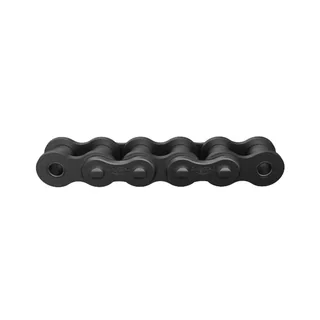
At MR we have followed that tradition since 1945. We manufacture split housings, ASA chains up to sextuple, and pulleys from 1 to 18 grooves, as well as specials made to drawing, and we distribute bearings, power transmission, seals, lubricants, and tools for industry. Combining our own manufacturing with the brands industry already knows allows us to solve both the standard spare part and the piece that must be made to measure.
If you have a plant or workshop in Rosario, Córdoba, Neuquén, Tucumán, Mendoza, or another city, send us via WhatsApp or email the code, the measurement, or a photo of the part and we will quote it. We respond promptly from Buenos Aires, Argentina. Thus, the history of Argentine metallurgy continues to be written as it began: solving, piece by piece, what each plant needs to keep producing.
Frequently asked questions
When did steelmaking begin in Argentina?
On October 11, 1945, with the first pig iron heat from Altos Hornos Zapla, in Palpalá, Jujuy. Large-scale production came with SOMISA, near San Nicolás, which tapped its first pig iron in 1960.
Who was Manuel Savio?
An Argentine military engineer, considered the father of national steelmaking. He led Fabricaciones Militares from its creation in 1941 and promoted the Argentine Steel Plan, Law 12.987 of 1947, which gave rise to SOMISA.
Why is Metallurgical Industry Day on June 5?
Because it commemorates the founding of the entity now known as ADIMRA, born in 1904 as the Liga de Industriales Metalúrgicos.
Where is the Argentine metallurgical industry concentrated?
In Greater Buenos Aires, in the Rosario, Villa Constitución, and San Nicolás corridor, in Córdoba and southern Santa Fe, with regional hubs in Tucumán, Mendoza, Neuquén, and Bahía Blanca, among others.
Can I get a quote for spare parts from Rosario, Córdoba, or Neuquén?
Yes. Send us via WhatsApp or email the code, the measurement, or a photo of the part and we will quote it promptly. From Buenos Aires we deliver the spare parts to those cities.
Products with photos in the catalogue
Keep reading
- Bearings for steel and metallurgical industry: rolling mills, overhead cranes and roller conveyors
In the metallurgical industry, bearings work under extreme loads, high temperatures and contamination. We explain which types are used in each equipment and how to choose them.
- MR Industrial Accessories: over 80 years providing industry solutions
MR Industrial Accessories combines own manufacturing and distribution of leading brands to offer bearings, power transmission, seals and tools to Argentine industry.
Continue here
Need a quote?
Send us the code, size or a photo of the part and we'll quote you shortly.