
Blog
FAG dimensions: how to identify the code from the part and what data to send for a quote
If you have a worn or unlabeled FAG bearing, you can identify its code from the dimensions and engraved markings. Here's what data to collect to quote the correct replacement.
FAG bearings in Argentina: guide and quotes
Technical team at MR Accesorios Industriales · Updated on November 12, 2026
Why it's worth identifying the exact FAG bearing code
When a FAG bearing fails or wears out, the first thing you need is to know which replacement to order. The fastest way is to read the code engraved on the side face of the part. That code, together with the main dimensions, is enough to quote the correct replacement.
In industrial equipment, the wrong bearing can cause unplanned downtime and damage to other components of the equipment. That's why, before disassembling, it's worth recording the code and dimensions. If the part is badly deteriorated, you can measure the bore diameter, outer diameter and width with a caliper.
At MR we stock FAG bearings in different types and sizes. If you send us the code or the dimensions, we'll quote the replacement that matches your application. We also help you interpret the engraved markings when the code is partially erased.
How to read the code engraved on a FAG bearing
The code of a FAG bearing is usually engraved on one of its side faces, sometimes together with the brand name and country of origin. On small bearings, the engraving can be very fine and it's worth using a magnifying glass or raking light. If the part is rusted, a gentle cleaning with a cloth and solvent helps reveal the characters.
The basic code indicates the bearing's series and size. For example, a 6020 is a deep groove ball bearing with a 100 mm bore diameter, a 150 mm outer diameter and a 24 mm width. Suffixes, such as 2RS or C3, add information about seals or internal clearance, but they aren't always present.
If the code is illegible, you can take the dimensions with a caliper and compare them with the FAG dimension tables. With the dimensions or the code, we'll tell you which bearing it corresponds to.
FAG deep groove ball bearings: dimensions and code examples
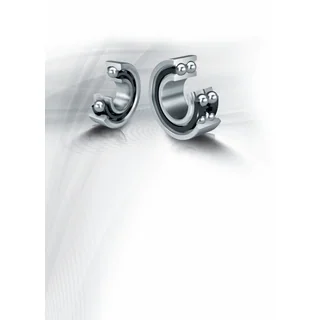
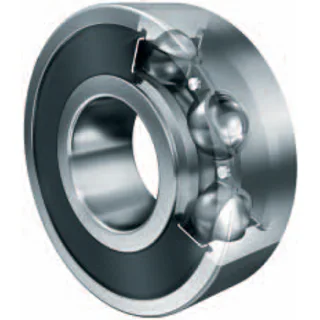
Deep groove ball bearings are the most widely used in industry for their versatility and low maintenance. They support moderate radial and axial loads, and work well at high speeds. They are found in electric motors, pumps, fans and gearboxes, among other equipment.
To identify them, the basic code usually has four or five digits, such as 6020 or 6003. The initial 6 identifies deep groove ball bearings, and the last two digits relate to the bore size. For example, 6020 has a 100 mm bore, while 6003 has a 17 mm bore.
At MR we stock FAG deep groove ball bearings in different sizes. If your bearing has a code like 6020 or 6003, we'll quote it promptly. If you don't have the code, measure the bore, outer and width diameters, and with that we'll help you identify it.
FAG tapered roller bearings: how to recognize and measure them
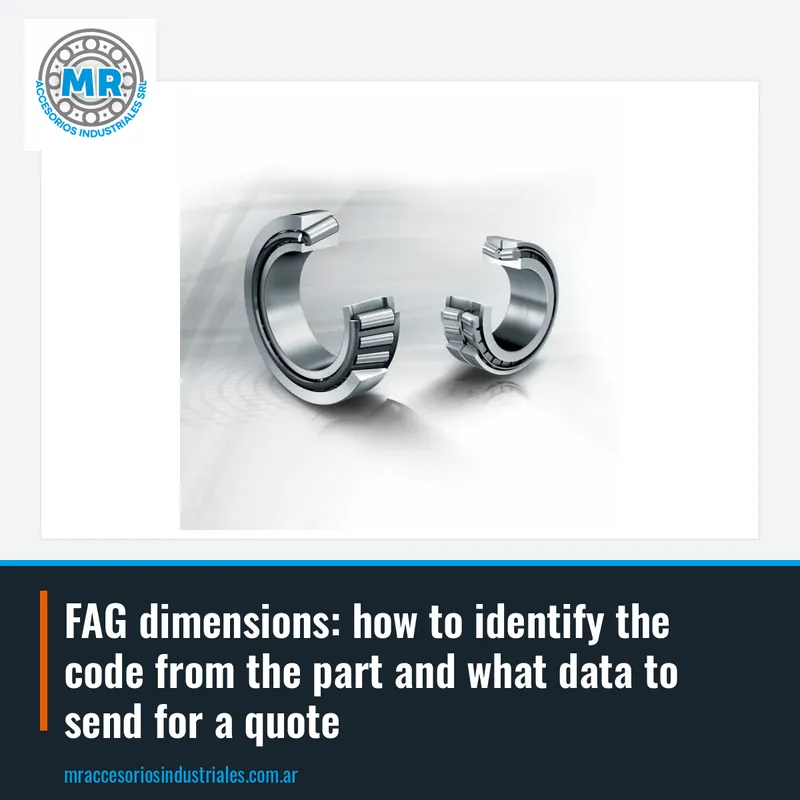
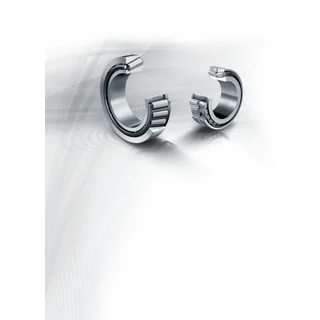
Tapered roller bearings support combined radial and axial loads, and are typical in vehicle wheels, gearboxes and machine tools. They consist of a cone (inner ring with rollers) and a cup (outer ring), which are mounted separately. That's why they are sometimes ordered as individual parts.
The code of a FAG tapered bearing usually has five digits, such as 32326 or 32920. The dimensions vary by series: for example, 32326 has a 130 mm bore diameter, a 280 mm outer diameter and a 93 mm width. In contrast, 32920 has a 100 mm bore diameter, a 140 mm outer diameter and a 25 mm width.
When quoting a tapered bearing, it's worth indicating whether the complete assembly (cone and cup) is needed or only one of the parts. At MR we stock FAG tapered bearings. If you have the code or the dimensions, we'll send you the quote promptly.
FAG cylindrical and spherical roller bearings: identification by dimensions
Cylindrical roller bearings support high radial loads and allow axial displacement in one direction. They are used in large electric motors, rolling mills and gearboxes. Their code usually starts with letters such as N, NU or NNC, followed by numbers that indicate the dimensions.
For example, the code NNC4920V corresponds to a cylindrical roller bearing of the NNC49 series, with a 100 mm bore diameter. Spherical roller bearings, on the other hand, have two rows of rollers and a spherical outer ring that allows them to compensate for misalignment. Their code usually starts with 2, such as 23952-MB or 23972-MB.
At MR we work with FAG cylindrical and spherical roller bearings in different series. If you have the engraved code, we'll quote it directly. If not, with the bore, outer and width dimensions we can identify the correct model for your application.
FAG special bearings: how to order them without mistakes
In addition to the standard types, there are special bearings for specific applications. These bearings usually have long alphanumeric codes, with letters and numbers, that don't follow the common nomenclature.
To order a special bearing, the safest approach is to copy the complete code exactly as it appears on the part or on the equipment plate. If the code is erased, you can take the dimensions and photos of the part and its location. At MR we stock FAG special bearings and help you identify the correct replacement.
When quoting a special bearing, it's worth indicating the equipment brand, model and year if known. That information helps confirm the reference. At MR we ask you for the code or the dimensions, and with that we'll send you the quote.
What data to send to quote a FAG bearing
To quote a FAG bearing, the ideal is to send the complete code engraved on the part, for example 6020 or 32326. If the code can't be read, indicate the dimensions in millimeters: bore diameter, outer diameter and width. A clear photo of the part and, if possible, of the place where it is mounted also helps.
If the bearing has suffixes such as 2RS or C3, include them in the message because they define important characteristics. For example, 2RS indicates rubber seals on both sides, and C3 indicates greater internal clearance than normal. Those details prevent confusion when ordering the replacement.
You can write to us via WhatsApp or email with the code, the dimensions or a photo of the part, and we'll quote you promptly. We also help you interpret the markings if you have doubts about the exact model.
Frequently asked questions
How do I identify the code of a FAG bearing if it's blurry?
If the code is blurry, clean the side face with a cloth and mild solvent, and use a magnifying glass or raking light. If it can't be read, measure the bore, outer and width diameters with a caliper, and send us those dimensions along with a photo. With that we'll help you identify the bearing.
What do the 2RS and C3 suffixes mean on a FAG bearing?
2RS indicates that the bearing has rubber seals on both sides, which protects it against contamination and retains the grease. C3 indicates greater internal clearance than normal.
Can I order a FAG bearing with only the dimensions?
Yes, with the bore, outer and width dimensions we can identify the bearing in most cases. It also helps to know the type (deep groove ball, tapered, etc.) and the equipment where it is mounted. At MR we quote with that data.
What do I do if my FAG bearing is special and doesn't have a standard code?
If the code is alphanumeric, such as NNC4920V, copy it exactly as it appears on the part. If it can't be read, take photos and measure the dimensions. At MR we stock FAG special bearings and help you identify the correct replacement.
How do I quote a FAG bearing at MR?
You can write to us via WhatsApp or email with the bearing code, the dimensions or a photo of the part. We'll reply promptly with the quote and tell you if we need any additional data.
Products with photos in the catalogue
Keep reading
- FAG and INA Bearings: What Line Each Brand Covers and How to Read Their Designations
FAG and INA are two bearing brands with complementary lines. Learn what types each covers and how to interpret their codes to order the correct replacement.
- How to Read FAG Codes: Designation Structure, Prefixes, Suffixes, and Real Examples
Understanding FAG bearing nomenclature allows you to identify the type, dimensions, and design features. In this guide, we explain the structure of the codes, the most common prefixes and suffixes, and how to use them to quote the correct part.
- FAG in Argentine industry: selection, mounting and maintenance to make them last
FAG bearings are in machines of all kinds. We tell you where they are used, how to choose the right one, mount it properly and maintain it to extend its service life.
Continue here
Need a FAG quote?
Send us the FAG part number, the size or a photo of the part and we will get back to you with a quote.