
Blog
Frequent Timken bearing failures: how to recognize them in time and prevent them
Learn about the most common Timken bearing failures, their typical causes and the mounting and maintenance practices that help prevent them.
TIMKEN bearings in Argentina: guide and quotes
Technical team at MR Accesorios Industriales · Updated on October 13, 2026
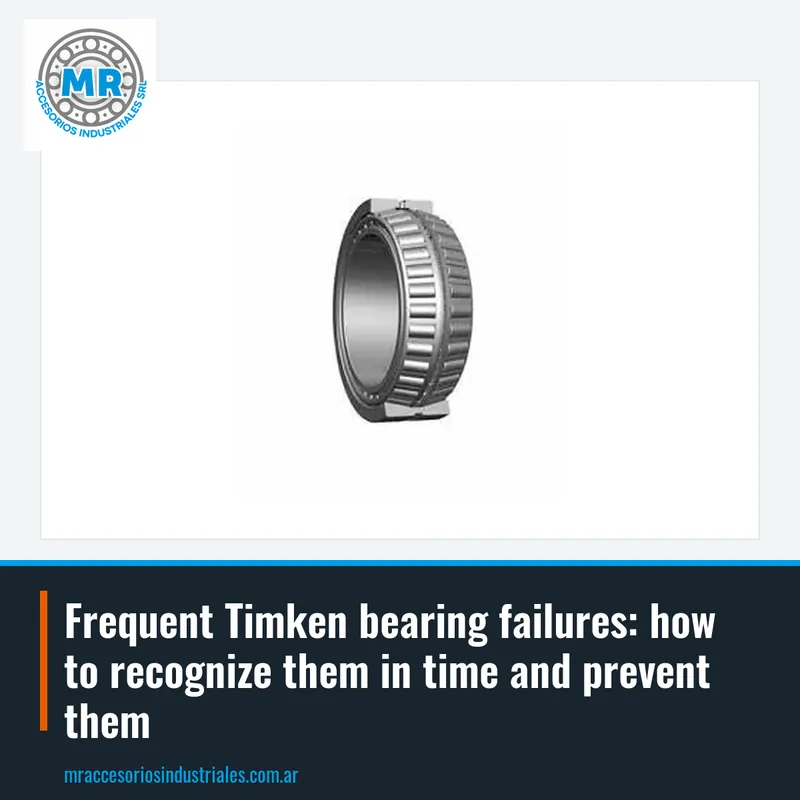
Main causes of Timken bearing failure
Timken bearing failures usually originate from inadequate lubrication, contamination, material fatigue or mounting errors. Lack of lubricant or use of an incorrect lubricant generates excessive friction and temperature rise, which accelerates wear. Contamination with solid particles or water also deteriorates the raceways and reduces service life. Identifying the root cause is key to implementing corrective actions and avoiding recurrence.
Misalignment between shafts and housings causes uneven loads on the rolling elements, generating vibration and premature failures. In tapered roller bearings, incorrect adjustment of axial clearance can cause overload on the rollers and races. Impacts during mounting, such as direct blows on the rings, can also leave marks or cracks that lead to early failures.
Another frequent cause is surface fatigue from cyclic loads, which manifests as flaking or pitting on races and rolling elements. Although it is a normal phenomenon at the end of service life, it can be accelerated by overload, poor lubrication or deficient mounting. Monitoring bearing condition through vibration or temperature analysis helps detect these signs before functional failure.
Symptoms of failure in tapered roller bearings
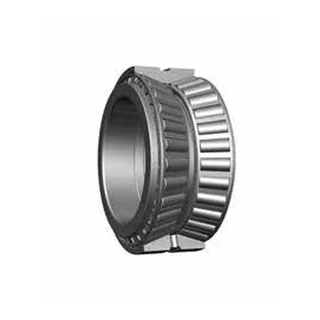
Tapered roller bearings are common in gearboxes, differentials and wheel hubs; in the Timken line there are codes such as 384D, T105 or T402. A typical symptom of failure is increased noise, which can range from a slight hum to a metallic knocking depending on severity. Perceptible vibration can also appear in the housing or shaft, especially at high speeds.
Abnormal heating of the bearing area is another indicator: if the temperature exceeds normal operating values, there may be excessive friction due to lack of lubricant or incorrect preload. In automotive applications, excessive axial clearance in tapered bearings produces wheel play, which is noticed when moving it by hand or hearing a rattle in curves.
To confirm the failure, it is recommended to visually inspect the disassembled bearing: look for flaking, discoloration due to temperature, skidding marks or damage to the seals. If the bearing has noticeable radial or axial play, or if the rollers show pitting, it is time to replace it. When ordering a replacement, it is advisable to indicate the code engraved on the ring and the inner, outer and width diameter measurements.
Typical failures in spherical roller bearings
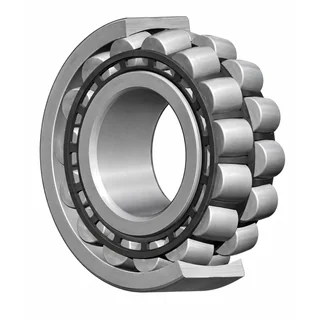
Spherical rollers, such as models 22313EJ, 22214EJ or 22310EM, are used in applications with heavy loads and misalignment, such as industrial fans, mills and conveyors. A frequent failure is cage wear due to lack of lubrication or high speeds, which can lead to roller seizure. Flaking can also occur on the spherical races due to fatigue or overload.
Contamination with dust or water is critical in these bearings, since they often work in aggressive environments. If the seals or protective covers are not properly placed, particles enter and scratch the polished surfaces, generating starting points for failure. The most common symptom is rough noise or increased vibration in the equipment.
To prevent failures, it is essential to control lubrication with adequate grease and respect regreasing intervals. The shaft alignment and fixation of the adapter sleeve, if used, must also be verified. When requesting a quote for a replacement, you can send the complete bearing code and a photo of the failure to identify it and provide a quote promptly.
Common problems in deep groove ball bearings
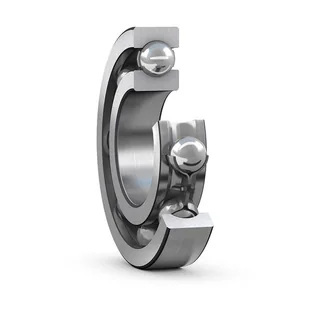
Deep groove ball bearings, such as codes 6301, 6202 or 6004, are for general use in electric motors, pumps and machine tools. A common failure is damage from electric current, which produces a pattern of fluting or pitting on the races, known as fluting. This occurs when stray currents circulate through the bearing.
Another frequent cause is mounting with blows on the outer ring, which can leave brinell marks on the races and generate noise from start-up. Excess grease can also cause heating and loss of lubricant through the seals. If the bearing has 2RS seals, it is important not to wash it with solvents, as this would damage the seal and lose protection.
To diagnose, you can turn the shaft manually and feel if there are hard points or roughness. A bearing in good condition turns smoothly and silently. If excessive radial play or abnormal noise is detected, it should be replaced. When ordering a replacement, the code must be indicated and whether it has seals or metal shields, because that changes the reference.
Failures in angular contact bearings and their prevention
Angular contact bearings, such as 7310 B, 7211 B or 3311 A, support combined loads; single-row ones are usually mounted in pairs or sets. A typical failure is wear due to incorrect preload: if preload is excessive, heat and premature flaking are generated; if insufficient, there is vibration and ball skidding.
The mounting direction is critical: these bearings have a marked face that indicates the direction of axial load. If reversed, the bearing does not work correctly and fails in a short time. Contamination damage is also common in high-speed applications, such as machine tool spindles, where the entry of fine particles scratches the races.
To prevent, the clearance or preload recommended by the equipment manufacturer must be respected and adequate mounting tools used, such as presses or induction heaters. When replacing, it is advisable to change both bearings of the pair to maintain load balance. When requesting a quote, you can indicate the code and mounting arrangement (face-to-face, back-to-back or tandem).
Housings and accessories: failures due to mounting and fixation
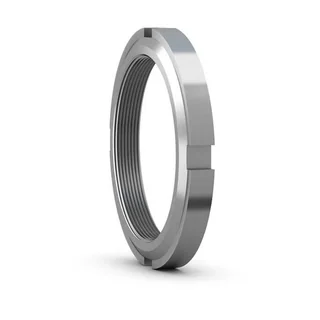
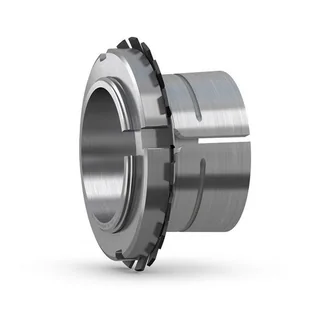
Housings, such as models LSM55, MSM90 or MSM55, house the bearing and fix it to the machine structure. When the bearing is mounted with an adapter sleeve, a frequent failure is loosening of the sleeve, which allows axial displacement of the bearing on the shaft, generating vibration and wear on the seat. This is usually due to insufficient tightening of the locknut.
Another cause of failure is misalignment of the housing with respect to the shaft, which produces edge loads on the bearing and reduces its service life. Also, lack of lubrication in the housing, if not regreased periodically, causes failures due to dry friction. Housings with covers and accessories, such as those we sell from Timken, must be mounted on rigid and level bases.
To prevent, it is recommended to verify the tightening of the fixation screws and the condition of the housing seals. If the housing shows cracks, corrosion or wear in the seat, it should be replaced together with the bearing. When ordering a replacement, the housing number and the bearing number inside it must be indicated, or send a photo of the identification plate.
Good mounting and maintenance practices to prevent failures
Correct mounting is the first barrier against premature failures. Using adequate tools, such as presses, induction heaters or hydraulic pullers, avoids impact damage. The bearing should never be hit directly with a hammer; if necessary, force is applied to the ring that is being fitted. It is also key to clean the shaft and housing before installing the new bearing.
Adequate lubrication is fundamental: choose the correct lubricant according to speed, load and temperature, and respect the amount and regreasing intervals. Excess grease can be as harmful as lack, because it generates heat and internal pressure. In contaminated environments, effective seals must be used and their condition checked periodically.
Condition monitoring allows detecting incipient failures: regularly measuring vibration, temperature and noise helps plan replacement before an unscheduled stoppage. If a change in equipment behavior is detected, the bearing should be inspected. At MR, from Buenos Aires, Argentina, we sell Timken bearings: send us the code, measurement or a photo via WhatsApp or email and we will quote it promptly.
Frequently asked questions
What are the most common failures in Timken bearings?
The most common failures are due to inadequate lubrication, contamination, material fatigue, misalignment and mounting errors. They manifest as noise, vibration, heating or flaking on races and rolling elements.
How can I tell if a Timken bearing is failing?
Typical symptoms are increased noise, vibration, elevated temperature in the bearing area, excessive play or clearance, and presence of metallic particles in the lubricant. A visual inspection can confirm flaking, discoloration or damage to the seals.
What maintenance practices prevent bearing failures?
Use the correct lubricant and respect regreasing intervals, keep the environment clean, verify alignment and adjustment, and monitor vibration and temperature. Careful mounting with adequate tools, without direct blows, is also key.
How is a Timken bearing correctly mounted to avoid failures?
The shaft and housing must be cleaned, use a press or induction heater for interference fits, apply force only on the ring being fitted and verify clearance or preload according to specification. Never hit the bearing with a hammer.
Where can I get Timken bearings in Argentina?
At MR, in Buenos Aires, Argentina, we distribute Timken bearings. Request a quote for your replacement via WhatsApp or email with the code, measurement or a photo of the part and we will respond promptly.
Products with photos in the catalogue
Keep reading
- How to Read Timken Codes: Designation Structure, Prefixes, Suffixes, and Real Examples
Understanding Timken nomenclature helps you identify the correct bearing. We explain how codes are composed, what the most common suffixes mean, and how to get a quote with confidence.
- Timken Bearings: Selection, Mounting and Maintenance for Lasting Performance
Practical guide to choosing and caring for Timken bearings in industrial applications. We cover types, selection, mounting, maintenance and common failures.
- How to Choose Timken by Application: Load, Speed, Environment, and Mounting
Guide to selecting Timken bearings based on working conditions. With real catalog codes and mounting tips.
Continue here
Need a quote?
Send us the code, size or a photo of the part and we'll quote you shortly.