
Blog
Common NSK bearing failures: how to recognize them in time and prevent them
Discover the most common failures in NSK bearings, how to identify them by their symptoms, and which mounting and maintenance practices help prevent them.
NSK bearings in Argentina: guide and quotes
Technical team at MR Accesorios Industriales · Updated on November 4, 2026
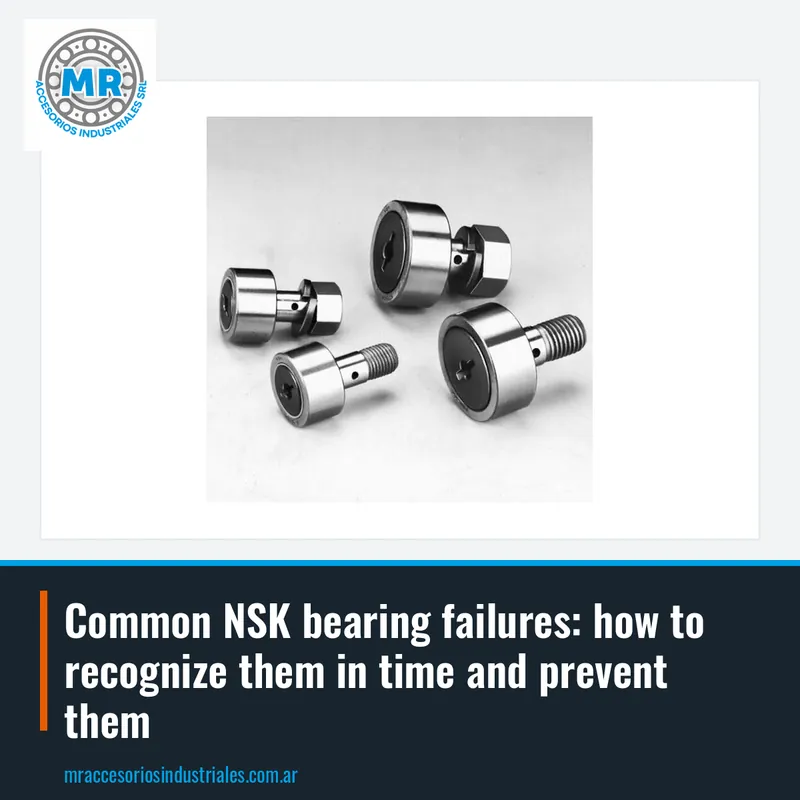
How to recognize an NSK bearing failure in time
Failures in NSK bearings usually announce themselves with clear signals: abnormal noise, vibration, increased temperature or excessive play. Paying attention to these symptoms allows you to intervene before the damage progresses and affects other equipment components. A bearing that begins to fail can cause unplanned downtime and higher repair costs. That is why periodic monitoring is key in any maintenance plan.
Noise is one of the first indicators: a humming, knocking or squealing can reveal anything from lack of lubrication to pitting on the raceways. Vibration, measured with instruments or felt in the structure, also provides information about the condition of the bearing. Excessive heat, on the other hand, usually appears when internal friction is already significant, for example due to misalignment or degraded lubricant.
To confirm the diagnosis, it is advisable to disassemble the part and inspect the raceways, rolling elements and cage. Wear marks, bluish discoloration from temperature or dents are evidence of the root cause. At MR we sell genuine NSK bearings and help you identify the correct replacement from a photo or the engraved code.
Typical failures in deep groove ball bearings and how to avoid them
NSK deep groove ball bearings, such as those in the 6200 or 6000 series, are very versatile but sensitive to contamination and improper mounting. A common failure is fatigue spalling, which appears as small flakes on the raceways or balls. This is usually due to loads higher than expected or a poorly selected internal clearance.
Another frequent failure is seizure due to lack of lubrication: polished surfaces become rough and micro-welds appear. To prevent it, respect the recommended amount and type of grease, and avoid washing the bearing with solvents that strip the lubricant. Mounting also matters: striking the outer ring to install a bearing on a shaft can damage the raceways.
When ordering a replacement, it is useful to provide the full code, for example 6010 or 6210, and the working conditions: load, speed and temperature. At MR we quote the exact NSK bearing and advise you on the variant with seals (2RS) or shields (2Z) depending on the environment.
NSK tapered roller bearings: wear from misalignment and incorrect preload
NSK tapered roller bearings support combined loads, but they are very sensitive to misalignment and incorrect adjustment of axial clearance. A typical failure is wear at the ends of the rollers, which indicates that the inner and outer rings are not properly aligned. This may be due to a machined seat out of tolerance or forced mounting.
Excessive preload also causes failures: heat is generated, the lubricant degrades and the rollers slip or seize. Conversely, insufficient preload produces vibration and premature wear. Adjustment must be made according to the equipment manufacturer's specifications, measuring axial clearance with a dial indicator or following the locking nut procedure.
When replacing a tapered bearing, it is advisable to change both rings and the rollers as a set, not to mix components from different manufacturers. If you have doubts about the adjustment, send us the code and the application; at MR we sell NSK tapered roller bearings, such as codes 3120 or 3320, and advise you on selection.
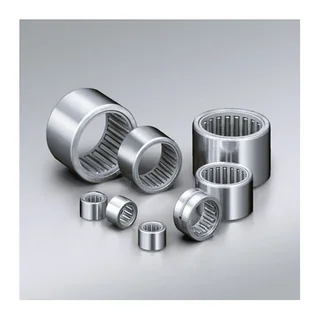
NSK needle bearings: failures from lack of lubrication and damaged cages
NSK needle bearings are used in tight spaces with high load capacity, but they require very careful lubrication. The lack of a lubricant film causes scoring of the needles and raceways, which appears as fine lines in the direction of rotation. In severe cases, the needles weld to the raceway and the bearing locks up.
Needle cages also suffer failures from fatigue or forced mounting: if they deform, the needles lose their guidance and become misaligned. In applications with oscillating loads or reciprocating motion, the cage can break due to impact. It is important to check the condition of the cage when inspecting the bearing, not only the raceways.
When quoting a needle bearing, the code engraved on the cage or on the outer ring is essential; for example, F-79 or J-57. At MR we sell NSK needle bearings and cages separately, and we help you order the correct component for your application.
NSK Y-bearings (inserts): failures from misalignment and ineffective seals
NSK Y-bearings, also called inserts, are mounted in housings with a spherical outer ring that compensates for small misalignments. However, excessive misalignment or a poorly machined housing causes irregular wear on the outer ring and vibration. The damage manifests as polishing marks in localized areas of the ring.
The seals of these bearings are critical: if they are damaged or improperly installed, contamination enters and lubricant is lost. In environments with dust, water or chips, it is advisable to choose versions with reinforced seals or add external protection. Periodic cleaning of the housing and checking the tightness of the set screws also prevent failures.
When ordering an NSK insert, indicate the full code, such as AR201 or AS210, and the type of housing where it will be mounted. At MR we sell NSK Y-bearings and quote the insert plus housing assembly if you need it, to ensure compatibility.
NSK spherical roller bearings: failures from unbalanced loads and inadequate lubrication
NSK spherical roller bearings are chosen for their ability to withstand misalignment and heavy loads, but they are not immune to failures. One of the most common is spalling on the spherical raceway of the outer ring, caused by unbalanced loads or inadequate internal clearance. The wear pattern is usually asymmetric.
Lubrication is another critical point: these bearings often work in large equipment, where relubrication must be systematic. If the grease does not reach all the rollers or an inadequate lubricant is used, scoring and increased temperature appear. In applications with high load and low speed, a grease with extreme pressure additives is recommended.
When replacing a spherical roller bearing, it is key to respect the specified internal clearance (for example, C3 if the manufacturer specifies it) and to check the condition of the seat. If you have the code, such as 23120CE4 or 21320CE4, send it to us to quote the exact NSK replacement at MR, along with the operating conditions.
Good mounting and maintenance practices to prevent NSK failures
Most NSK bearing failures can be prevented with careful mounting: clean the seats, use appropriate tools and heat the bearing only if necessary. Never strike the rings or seals directly; use a tube that presses on the ring being mounted. Keeping the work area clean prevents particles from entering.
Predictive maintenance is a great ally: periodically measuring vibration and temperature allows changes to be detected before failure. Relubrication should follow a program according to load, speed and environment. Excess grease is also harmful, because it increases friction and temperature.
When you need to replace an NSK bearing, send a photo of the code and the damaged part; this helps identify the cause of the failure and choose the correct replacement. At MR, from Buenos Aires, Argentina, we sell genuine NSK bearings and advise you on selection so that your equipment works reliably again.
Frequently asked questions
What are the most common failures in NSK bearings?
The most common failures are fatigue spalling, seizure due to lack of lubrication, wear from misalignment and contamination by particles. Each has characteristic symptoms such as noise, vibration or increased temperature.
How can I tell if an NSK bearing is failing?
Pay attention to abnormal noises (humming, knocking), excessive vibration, increased temperature in the bearing area or axial play. Faced with any of these signs, it is advisable to inspect the part and plan replacement.
What causes spalling in an NSK bearing?
Spalling is usually due to material fatigue from loads higher than expected, inadequate internal clearance, misalignment or defective mounting. It can also appear due to insufficient lubrication or contamination.
How are failures from lack of lubrication in NSK bearings prevented?
By using the lubricant recommended for the application, respecting the amount and relubrication interval, and avoiding washing the bearing with solvents that remove the grease. Excess grease is also harmful.
What data do I need to quote a replacement NSK bearing?
Ideally, send the full code engraved on the bearing (for example, 6010 or 23120CE4), the dimensions if the code is not legible, and a photo of the part. It also helps to describe the application and working conditions.
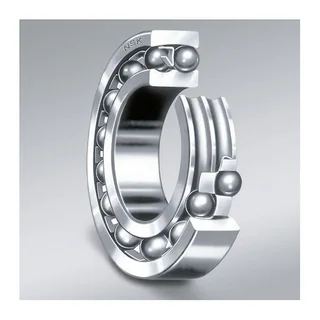
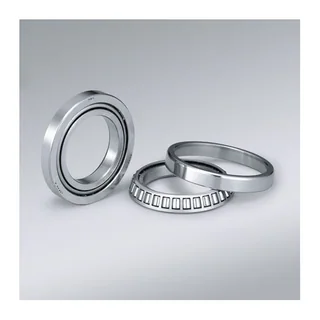
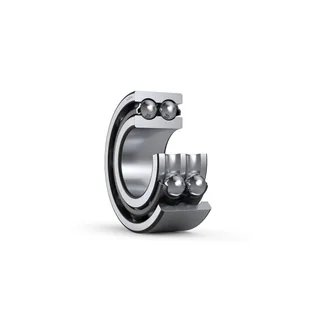
Products with photos in the catalogue
Keep reading
- How to Read NSK Codes: Designation Structure, Prefixes, Suffixes, and Real Examples
We explain how an NSK bearing designation is composed, what the most common prefixes and suffixes indicate, and how to identify the exact part for your order.
- NSK by industry: where it's used, how to select it, assembly and maintenance for durability
Practical guide to choose NSK bearings by application, with assembly and maintenance criteria that extend service life.
- How to choose NSK by application: load, speed, environment and mounting
Choosing the correct NSK bearing depends on load, speed, environment and mounting type. We explain how to identify each type and what data you need for a quote.
Continue here
Need a NSK quote?
Send us the NSK part number, the size or a photo of the part and we will get back to you with a quote.