
Blog
Common FAG Bearing Failures: How to Recognize Them in Time and Prevent Them
Identify typical failure modes in FAG bearings, their causes, and best practices for mounting and maintenance to avoid them.
FAG bearings in Argentina: guide and quotes
Technical team at MR Accesorios Industriales · Updated on October 13, 2026
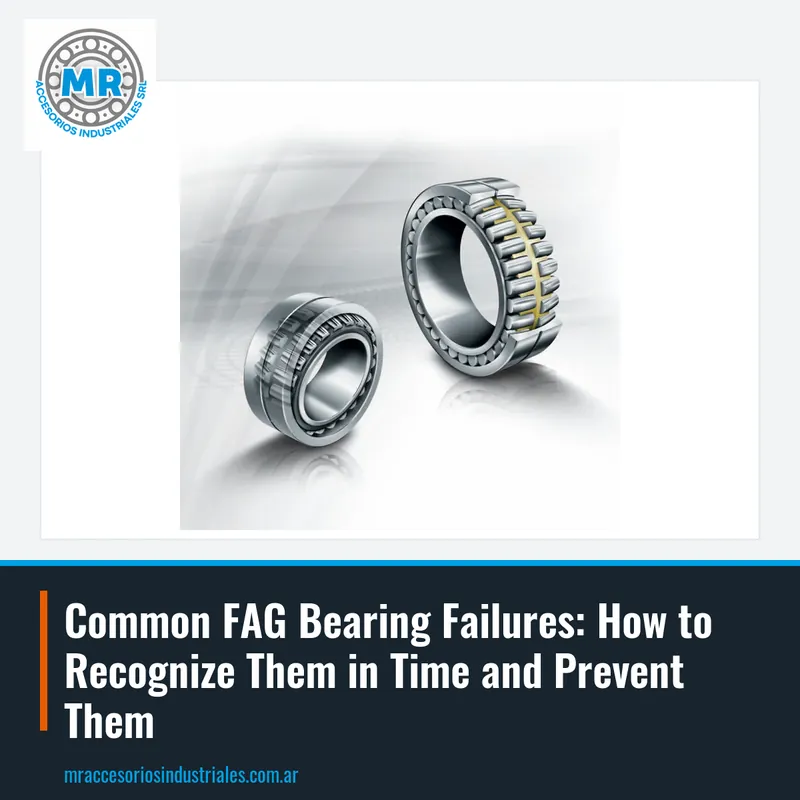
How to Recognize an Incipient Failure in a FAG Bearing
Bearing failures rarely appear suddenly: they almost always start with signs you can detect during an inspection or a maintenance stop. An increase in temperature in the bearing area, abnormal noises such as humming or knocking, and vibrations transmitted to the rest of the equipment are the first indications that something is not working properly. In FAG bearings, as in any precision bearing, these symptoms are usually associated with lubrication, mounting, or load issues. If you detect them in time, you can avoid a catastrophic failure and an unplanned downtime.
To confirm the failure, a visual inspection is advisable when the bearing is dismounted. The raceways may show spalling, pitting, discoloration due to temperature, or skidding marks. In FAG tapered roller bearings, for example, irregular wear on the rollers or raceways usually indicates incorrect preload or misalignment. In deep groove ball bearings, a wear pattern on only one side of the raceway can be a sign of excessive axial load or improper fit on the shaft or housing.
Do not ignore early signs: a bearing that starts to fail can damage other equipment components and generate much higher costs. If you notice noise, vibration, or abnormal temperature, schedule an inspection and, if necessary, replace the bearing. At MR we distribute FAG bearings and help you identify the correct reference for your application. Send us a photo of the damaged bearing and the machine data so we can quote the replacement.
Lubrication Failures: The Most Common Cause and How to Avoid It
Inadequate lubrication is responsible for a large part of premature bearing failures. Both lack of lubricant and excess can cause problems: too little grease or oil causes metal-to-metal contact and accelerated wear, while excess can cause heating due to internal friction and energy loss. In high-speed FAG bearings, such as angular contact bearings, it is critical to use the correct lubricant and respect the amount recommended by the manufacturer.
The type of lubricant also matters. For applications with high loads and low speeds, such as FAG spherical roller bearings in conveyor belts, grease with extreme pressure additives is usually used. In contrast, for machine tool spindle bearings, low-viscosity oils are preferred. Additionally, contamination must be controlled: dust particles, water, or metal debris in the lubricant act as abrasives and shorten bearing life. Use adequate seals and renew the lubricant according to the maintenance plan.
To prevent lubrication failures, establish a relubrication program with frequencies and quantities defined according to the application. Train maintenance personnel to recognize signs of poor lubrication, such as bearing discoloration or dry and carbonized grease. At MR we distribute FAG bearings and can guide you on the lubricant and regreasing frequency for your equipment. Consult us via WhatsApp or email with your machine data.
Mounting Errors That Cause FAG Bearing Failures
Incorrect mounting can damage a new bearing within a few hours of operation. The most common errors include hitting the bearing directly with a hammer, applying force on the rolling elements instead of on the ring that is fitted, and not respecting fit tolerances. In FAG bearings with a tapered bore, such as series 222 with suffix K, excessive tightening of the locknut can reduce internal clearance and cause overheating.
Misalignment between the shaft and the housing is another frequent cause of failure. Deep groove ball bearings tolerate very little misalignment, while FAG spherical roller bearings are designed to compensate for larger misalignments. However, even in the latter, excessive misalignment can generate additional loads and reduce service life. Use adequate mounting tools, such as presses or induction heaters, and verify alignment with measuring instruments.
To avoid mounting errors, follow the manufacturer's instructions and use the recommended methods for each type and size of bearing. In large bearings, such as FAG cylindrical roller bearings of the SL series, controlled heating facilitates mounting without damaging the raceways. If you have doubts about the procedure, consult us: at MR we distribute FAG bearings and advise you on the correct mounting for your application.
Fatigue and Spalling Failures: When to Expect Them
Material fatigue is a normal failure mode at the end of a bearing's calculated service life. It manifests as spalling on the raceways or rolling elements and is the result of accumulated load cycles. In FAG bearings that are correctly lubricated, mounted, and maintained, fatigue appears only at the end of the calculated service life, which depends on load and speed. If spalling appears earlier than expected, causes such as overload, poor lubrication, or inadequate mounting must be investigated.
Premature spalling can have different origins. Excessive load, whether due to miscalculation or a change in operating conditions, generates stresses that exceed the material's fatigue limit. Contamination with hard particles produces indentations that later become starting points for spalling. In FAG tapered roller bearings, excessive preload can cause spalling at the roller ends and raceways.
To prevent premature fatigue failures, it is essential to select the correct bearing for the application, considering loads, speeds, and environmental conditions. Cleanliness during mounting and lubrication must also be maintained. If a FAG bearing fails prematurely due to fatigue, analyze the causes before installing the replacement. At MR we help you choose the right bearing and interpret failures to avoid recurrence.
Contamination and Corrosion: Silent Enemies of Bearings
Particle contamination and corrosion are important causes of bearing failure. The ingress of dust, sand, metal chips, or water into the bearing interior causes abrasive wear, indentations, and corrosion. In humid environments or with chemical agents, corrosion can attack raceway and rolling element surfaces, generating pitting that accelerates fatigue. FAG bearings with seals, such as those with suffix 2RS, offer protection against contaminants, but they are not hermetic.
Corrosion can also appear due to moisture condensation when the equipment is stopped, especially if there are sudden temperature changes. In such cases, it is recommended to use lubricants with corrosion inhibitors and, if possible, keep the equipment in periodic motion to distribute the lubricant. In applications with contamination risk, such as mining or agriculture, it is key to choose bearings with adequate seals and perform preventive maintenance that includes cleaning the housings.
To prevent contamination and corrosion failures, ensure that seals are in good condition and that the lubricant remains clean. Use filters in oil lubrication systems and avoid washing equipment with pressurized water directly on the bearings. At MR we distribute FAG bearings with different sealing options and advise you on the best protection for your work environment. Consult us via WhatsApp or email.
FAG Bearings by Type: Typical Failures and Specific Care
Each bearing type has its characteristic failure modes. FAG deep groove ball bearings, such as models 6012 or 6030, are versatile but sensitive to misalignment and excessive axial loads. Wear on only one side of the raceway can indicate an unforeseen axial load. FAG tapered roller bearings, such as 33115 or 32915, require precise preload adjustment: if too tight, they overheat; if too loose, skidding and wear occur.
FAG spherical roller bearings, such as 20222-MB or 24896-MB, tolerate misalignment but are sensitive to insufficient lubrication, especially in low-speed and high-load applications. FAG cylindrical roller bearings of the SL series, such as SL182226 or SL183018, support high radial loads but require careful alignment between the shaft and housing. FAG angular contact bearings are usually mounted in pairs or sets, and incorrect preload can generate vibrations and premature failures.
For each type, it is essential to follow the manufacturer's mounting and maintenance recommendations. At MR we distribute FAG bearings of these series and help you identify the correct reference for your equipment. If you have a damaged bearing, send us a photo and the machine data so we can quote the appropriate replacement.
Preventive Maintenance Plan for FAG Bearings
A good preventive maintenance plan is the best tool to avoid bearing failures. It includes periodic inspections to detect noises, vibrations, and abnormal temperature, as well as lubrication and cleanliness checks. Establish regreasing frequencies according to operating hours and environmental conditions, and record all interventions to analyze trends. In critical equipment, you can use vibration analysis to monitor bearing condition without dismounting it.
Training maintenance personnel is key. Technicians must know how to recognize signs of incipient failure, use adequate mounting tools, and respect lubrication procedures. It is also important to maintain an inventory of critical bearings to reduce downtime in case of failure. At MR we help you define which FAG bearings should be kept in inventory according to your machine park.
If you detect a failure or need to replace a bearing, contact us. At MR we distribute FAG bearings and quote the exact code you need. Send us a photo of the bearing, the measurements, or the engraved code, and we will respond promptly via WhatsApp or email.
Frequently asked questions
What are the most common failures in FAG bearings?
The most common failures are due to inadequate lubrication (lack or excess), contamination, incorrect mounting, fatigue from overload, and corrosion. Each has characteristic symptoms that you can detect with visual inspection or vibration monitoring.
How can I tell if a FAG bearing is failing?
Typical signs are increased temperature, abnormal noise (humming, knocking), excessive vibration, and, upon dismounting, spalling, pitting, or discoloration on raceways and rolling elements. If you notice any of these symptoms, schedule an inspection.
What causes premature spalling in a FAG bearing?
Premature spalling is usually due to overload, poor lubrication, contamination with hard particles, or inadequate mounting. If it appears before the calculated service life, the operating conditions must be analyzed and the cause corrected.
How do I avoid mounting failures in FAG bearings?
Use adequate tools (presses, heaters), apply force only on the ring that is fitted, respect tolerances, and verify alignment. For bearings with a tapered bore, control the nut tightening to avoid reducing internal clearance.
How often should I lubricate a FAG bearing?
Lubrication frequency depends on speed, load, temperature, and lubricant type. It is best to follow the manufacturer's recommendations for your specific application and adjust the plan based on what inspections show.
Products with photos in the catalogue
Keep reading
- FAG and INA Bearings: What Line Each Brand Covers and How to Read Their Designations
FAG and INA are two bearing brands with complementary lines. Learn what types each covers and how to interpret their codes to order the correct replacement.
- How to Read FAG Codes: Designation Structure, Prefixes, Suffixes, and Real Examples
Understanding FAG bearing nomenclature allows you to identify the type, dimensions, and design features. In this guide, we explain the structure of the codes, the most common prefixes and suffixes, and how to use them to quote the correct part.
- FAG in Argentine industry: selection, mounting and maintenance to make them last
FAG bearings are in machines of all kinds. We tell you where they are used, how to choose the right one, mount it properly and maintain it to extend its service life.
Continue here
Need a quote?
Send us the code, size or a photo of the part and we'll quote you shortly.