
Blog
BGL assembly and disassembly: tools, steps and common errors that shorten service life
Practical guide to mounting and dismounting bearings with BGL sleeves and nuts. Learn the tools, the steps and the errors you need to avoid.
Technical team at MR Accesorios Industriales · Updated on November 6, 2026

BGL adapter sleeves: the basis of mounting
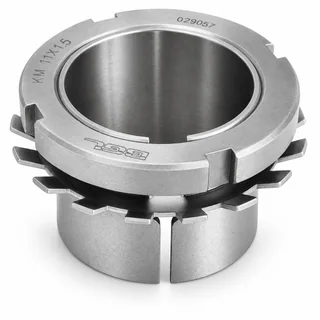
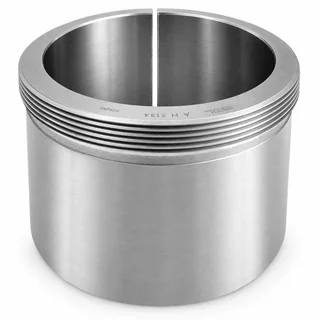
BGL adapter sleeves are tapered parts that slide onto the shaft and fit into the tapered bore of the bearing. When the nut is tightened, the sleeve is compressed and secures the bearing to the shaft. They are the standard option for mounting bearings with a tapered bore on cylindrical shafts. They are used in fans, pumps, conveyors and machine tools, among other equipment.
To identify them, look at the marking on the front face: you will see the code, for example H210 or H310. You can also measure the inner diameter and the total length. If the sleeve is worn or damaged, replace it together with the bearing to avoid premature failures.
During mounting, clean the shaft and the bearing bore thoroughly. Apply a thin layer of oil to the sleeve and the seat. Slide the sleeve, then the bearing, and tighten the nut evenly. A common error is over-tightening: this deforms the sleeve and creates insufficient internal clearance. Always check the radial clearance after mounting.
BGL hydraulic sleeves: precise mounting without impacts
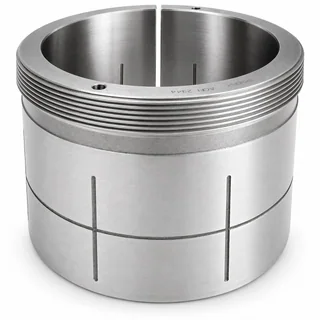
BGL hydraulic sleeves allow large bearings to be mounted precisely and without excessive effort. They work by injecting oil under pressure between the sleeve and the shaft, which reduces friction and facilitates advancement. They are ideal for large bearings in mills, gearboxes and heavy machinery.
To use them, you need a hydraulic pump and a calibrated pressure gauge. The sleeve has a threaded hole to connect the pump. Oil is pumped until the sleeve slides to the correct position, checking the advancement with a caliper or dial indicator. Then the pressure is released and it is left to settle.
A frequent error is not purging the air from the hydraulic system before mounting. This causes irregular advancement and can damage the sleeve. It is also important to use the recommended oil and keep the work area clean. If the sleeve gets stuck, do not force it: release pressure and check the alignment.
BGL withdrawal sleeves: removing without damage
BGL withdrawal sleeves are used to extract bearings with a tapered bore without damaging the shaft or the bearing. They have a thread at the end that allows the bearing to be pushed outward while the nut is loosened. They are essential for scheduled maintenance where the bearing is reused.
Dismounting with a sleeve requires patience: loosen the nut a few turns and tap gently with a rubber mallet on a drift. The sleeve slides outward and releases the bearing. Never use a metal hammer directly on the nut or the sleeve, because you can mark the support surfaces.
Before dismounting, measure the original position of the bearing so it can be remounted in the same place. If the bearing is going to be reused, clean it and inspect it for damage. A common error is losing the lock washers or nuts during disassembly: store all parts in a clean container.
BGL lock nuts and lock washers
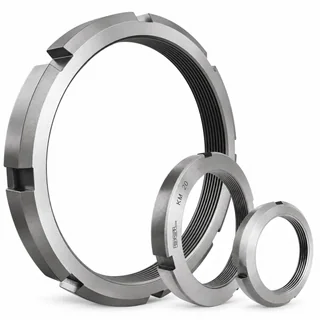
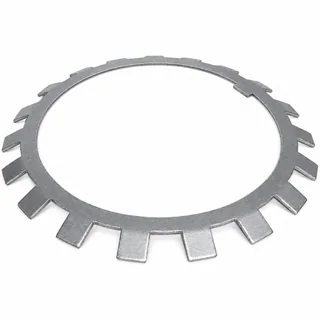
BGL lock nuts, such as KM20, are responsible for tightening the sleeve against the bearing. They come with slots for a hook wrench and are locked with a lock washer to prevent them from loosening. The washer has a tab that is bent into the nut slot and another that fits into the shaft groove.
When choosing the nut, verify that the thread diameter matches that of the sleeve and the shaft. Using the wrong nut can damage the thread and compromise the mounting.
The tightening torque is key: too low and the bearing is loose; too high and the sleeve is deformed. Use a suitable hook wrench and tighten in a cross pattern if the nut has several slots. After tightening, bend the washer tab with a punch. Never reuse old lock washers.
BGL hydraulic nuts: precision for large bearings
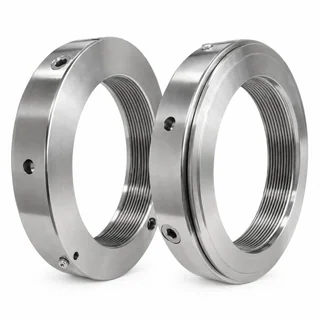
BGL hydraulic nuts, such as HMV18E, allow a controlled and uniform tightening force to be applied to large bearings. They are used instead of mechanical nuts when precision is needed or when space is limited. They are common in rolling mills, cranes and mining equipment.
The principle is simple: the nut has an internal piston that is actuated with oil under pressure. When pumping, the piston pushes the sleeve or the bearing without manual effort. A pressure gauge indicates the pressure, which translates into tightening force. This avoids excessive torque and damage from impacts.
To use them, connect the hydraulic pump to the nut and purge the air. Apply pressure gradually while monitoring the advancement. After reaching the position, release the pressure and remove the nut. A common error is forgetting to release the pressure before disconnecting the hose, which can cause a dangerous oil jet.
BGL inch adapter sleeves
There are inch adapter sleeves for shafts with imperial measurements. They are similar to metric ones, but with dimensions in fractions or decimals of an inch. They are used in imported or US-origin equipment, such as compressors, pumps and agricultural machinery.
To identify them, measure the shaft diameter with a caliper in inches and compare it with the manufacturer's table. If you are not sure, send us a photo of the sleeve and the shaft.
Mounting is the same as for metric ones: clean, lubricate, slide and tighten with the corresponding nut. Pay attention to measurement conversion if you mix metric and imperial components. A common error is using a metric nut on an inch sleeve, which damages the thread.
BGL mounting and maintenance tools
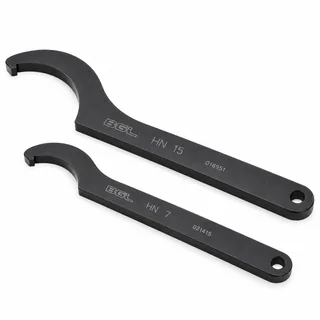
For mounting and maintenance work, it is advisable to have hook wrenches, drifts, mounting plates and extractors suitable for the sleeves and nuts, to avoid damage from using inappropriate tools.
For example, a correct hook wrench prevents marking the nut slots. A bronze or aluminum drift protects the support surfaces. Mounting plates distribute the force evenly when striking the bearing. Using generic tools can damage the parts and shorten their service life.
When choosing tools, consider the size of the bearings and the frequency of use. For occasional maintenance, a basic kit is enough. Always store tools clean and lubricated. If you have doubts, write to us via WhatsApp or email with the code, the measurement or a photo and we will quote you promptly.
Frequently asked questions
How is a BGL adapter sleeve mounted?
The shaft is cleaned, oil is applied, the sleeve and the bearing are slid on, and the nut is tightened evenly. Then the radial clearance is checked.
What is the difference between an adapter sleeve and a hydraulic sleeve?
The adapter sleeve is tightened mechanically with a nut; the hydraulic one uses oil under pressure to facilitate mounting on large bearings.
How is a bearing dismounted with a BGL sleeve?
The nut is loosened, and it is tapped gently with a drift and rubber mallet so that the sleeve slides and releases the bearing.
What tightening torque does a BGL lock nut require?
It depends on the size of the sleeve and the bearing. It is recommended to follow the manufacturer's instructions and check the radial clearance afterward.
Can I reuse a BGL lock washer?
It is not recommended. The tab deforms when bent and loses effectiveness. Always use a new washer for each mounting.
Products with photos in the catalogue
Keep reading
- BGL in Argentina: product guide, uses and quoting by code
Discover BGL product lines for bearing mounting and locking: adapter sleeves, locknuts, lock washers and tools. We explain how to identify and order them.
- How to Read BGL Codes: Designation Structure, Prefixes, Suffixes, and Real Examples
BGL codes follow a clear logic: letters indicate the part type and numbers define the size. We explain how to interpret them so you order the correct replacement.
- How to choose and maintain BGL sleeves and nuts
Practical guide to choose and assemble adapter, hydraulic sleeves and BGL nuts in industrial equipment. Learn the key codes and dimensions.
Continue here
Need a BGL quote?
Send us the BGL part number, the size or a photo of the part and we will get back to you with a quote.