
Blog
BGL in mining: sleeves, nuts and tools for processing equipment
BGL adapter sleeves, hydraulic sleeves and withdrawal sleeves are key in the maintenance of crushers, mills, screens and conveyor belts. We tell you how to identify them and order them.
Technical team at MR Accesorios Industriales · Updated on November 13, 2026
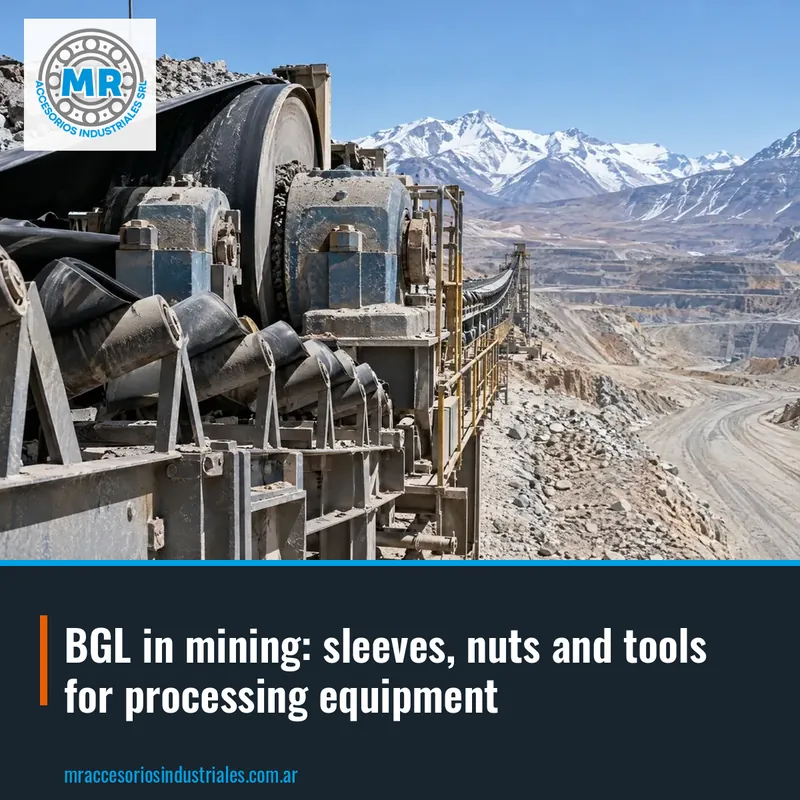
BGL adapter sleeves: safe mounting on crusher shafts
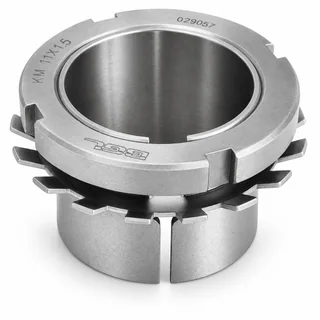
BGL adapter sleeves are tapered parts mounted between the shaft and the bearing with a tapered bore. In mining they are used in jaw and cone crushers, where loads and vibrations demand a firm fit. Their function is to secure the bearing to the shaft without the need to machine a shoulder or use force fits. This simplifies mounting and dismounting in the field, something critical on sites where downtime is costly.
To identify them, look at the marking on the sleeve: the BGL code is usually marked on the front face or on the outside. For example, H210, H211 and H310 are adapter sleeves. You can also measure the shaft diameter and the sleeve width if the code is blurred. Sending a photo of the old part along with the measurements helps avoid ordering errors.
A common mistake is confusing the adapter sleeve with the withdrawal sleeve: the first is used to mount the bearing and the second to extract it. When ordering, indicate whether the bearing has a tapered bore and whether the shaft is keyed. At MR we quote the exact BGL sleeve for your equipment, from Buenos Aires, Argentina, with a prompt response.
BGL hydraulic sleeves: precision for large bearings
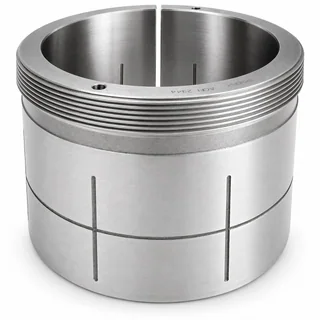
BGL hydraulic sleeves are used when a controlled, impact-free mounting is needed on large bearings, such as those in ball and SAG mills. Unlike conventional adapter sleeves, these incorporate an oil channel that allows the sleeve to expand through hydraulic pressure. This achieves an exact fit and reduces the risk of damaging the bearing or the shaft.
In mining, hydraulic sleeves are seen in mill trunnion bearings and in high-load conveyor pulleys. Codes such as AOH248, AOH234 and AOH252 are hydraulic sleeves. If you have the bearing code, we can derive the corresponding sleeve; if not, measure the shaft diameter and the seat width.
When ordering a hydraulic sleeve, it is advisable to also check the condition of the hydraulic nut thread, since they work together. At MR we are exclusive representatives of BGL in Argentina and we quote the correct hydraulic sleeve for your mining application.
BGL withdrawal sleeves: extraction without damaging the bearing
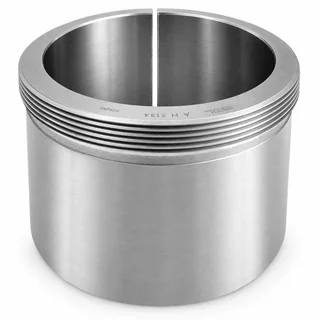
BGL withdrawal sleeves are the counterpart of adapter sleeves: they are used to remove bearings with a tapered bore mounted on adapter sleeves. In mining, where large bearings are changed fairly often, having the right withdrawal sleeve speeds up the task and prevents damage from blows or levers. They are used together with the nut to release the bearing from the tapered seat.
Examples of withdrawal sleeves are AH210, AH211 and AH310. It is important that the withdrawal sleeve is compatible in diameter and thread with the mounted assembly. If you are not sure, send us a photo of the assembled unit and we will tell you the correct code.
A frequent mistake is trying to dismount without the withdrawal sleeve, using hammers or unsuitable pullers, which can ruin the bearing and the shaft. At MR we quote BGL withdrawal sleeves so you can carry out maintenance safely and quickly at your mining plant.
BGL locknuts: the complement for sleeves
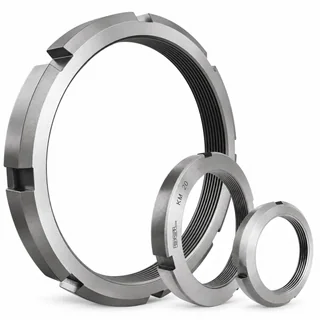
BGL locknuts are threaded onto the adapter sleeve to push the bearing onto the cone and achieve the desired fit. In crushers and screens, these nuts withstand intense vibrations, so they usually carry a lock washer to prevent loosening. Codes such as KM20, KMP1 and KMP2 correspond to locknuts.
When ordering, you need to know the diameter and thread pitch of the sleeve, or directly the adapter sleeve code. If you have the bearing, you can also look up the corresponding nut in the BGL catalog.
An important detail is that locknuts must be tightened with the right wrench and, if possible, with a torque wrench so as not to over-tighten. At MR we quote BGL locknuts with just the code or the thread measurements.
BGL hydraulic nuts: controlled mounting in mills
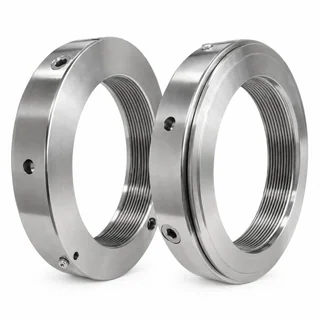
BGL hydraulic nuts are used to mount large bearings with hydraulic sleeves, applying a uniform and measurable force. In ball and SAG mills, these nuts help achieve a controlled mounting. They work with a hydraulic pump that injects high-pressure oil, moving the nut piston and pushing the bearing.
Codes such as HMV18E, HMV36E and HMV54E correspond to hydraulic nuts. When ordering, you need the diameter and thread pitch of the sleeve, or the hydraulic sleeve code.
It is essential to use the hydraulic nut with a calibrated pump and pressure gauge, and to follow the bearing manufacturer's procedure. At MR we quote the right BGL hydraulic nut for your mill or crusher, with a prompt response.
BGL lock washers: safety against loosening
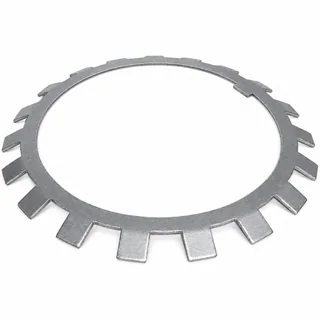
BGL lock washers are placed between the locknut and the bearing or sleeve, and are bent against the nut to prevent it from loosening due to vibration. In mining, vibrations are constant in screens, crushers and conveyor belts, so these washers are a critical safety component. Without a correct lock washer, the nut can turn and cause the bearing to lose its fit.
Each locknut is used with its corresponding lock washer. When ordering, indicate the nut code or the thread measurements and the sleeve outer diameter.
A common mistake is reusing old lock washers, which have already lost their bending capacity and can break. It is always advisable to replace them at every dismounting. At MR we quote BGL lock washers with just the nut code or a photo of the assembly.
BGL mounting and maintenance tools for mining
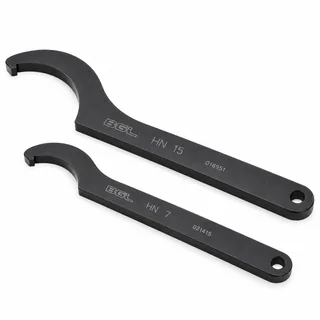
BGL mounting and maintenance tools accompany the mounting and dismounting of sleeves and nuts. In mining, where bearings are large and spaces are tight, having the right tools makes the difference between quick maintenance and one that drags on for hours. Choosing them according to the type of sleeve and nut helps you work safely.
To tighten locknuts, wrenches suited to the nut are used, and for hydraulic nuts a hydraulic pump is needed. When ordering tools, it is important to know the range of nut diameters you will handle and which equipment they are for.
A frequent mistake is improvising tools, such as using a chisel and hammer to tighten nuts, which damages the slots and can cause subsequent loosening. At MR we quote BGL mounting tools for your mining plant, from Buenos Aires, Argentina, with a prompt response.
Frequently asked questions
Which BGL sleeve does a jaw crusher use?
It depends on the model and the bearing. Adapter sleeves of the H series are usually used, such as H210 or H310. If you have the bearing code, you can derive the sleeve; if not, measure the shaft diameter and the seat width and we will quote it.
How do you dismount a bearing with a BGL adapter sleeve?
A withdrawal sleeve compatible with the adapter sleeve is used. Never use hammers or levers directly on the bearing.
Which BGL hydraulic nut do I need for a ball mill?
It depends on the thread diameter of the hydraulic sleeve. For example, HMV18E and HMV36E are hydraulic nuts. You need to know the diameter and thread pitch, or the hydraulic sleeve code, to choose the correct nut.
Can BGL lock washers be reused?
Not recommended. Lock washers are bent against the nut and lose their deformation capacity. It is always advisable to replace them at every dismounting to prevent loosening due to vibration.
How do I order a BGL sleeve if I don't have the code?
You can send us a photo of the old part, along with the shaft measurements (diameter and seat length) and the bearing code if you have it. With that we will tell you the exact BGL sleeve and quote it.
Products with photos in the catalogue
Keep reading
- BGL in Argentina: product guide, uses and quoting by code
Discover BGL product lines for bearing mounting and locking: adapter sleeves, locknuts, lock washers and tools. We explain how to identify and order them.
- How to Read BGL Codes: Designation Structure, Prefixes, Suffixes, and Real Examples
BGL codes follow a clear logic: letters indicate the part type and numbers define the size. We explain how to interpret them so you order the correct replacement.
- How to choose and maintain BGL sleeves and nuts
Practical guide to choose and assemble adapter, hydraulic sleeves and BGL nuts in industrial equipment. Learn the key codes and dimensions.
Continue here
Need a BGL quote?
Send us the BGL part number, the size or a photo of the part and we will get back to you with a quote.