
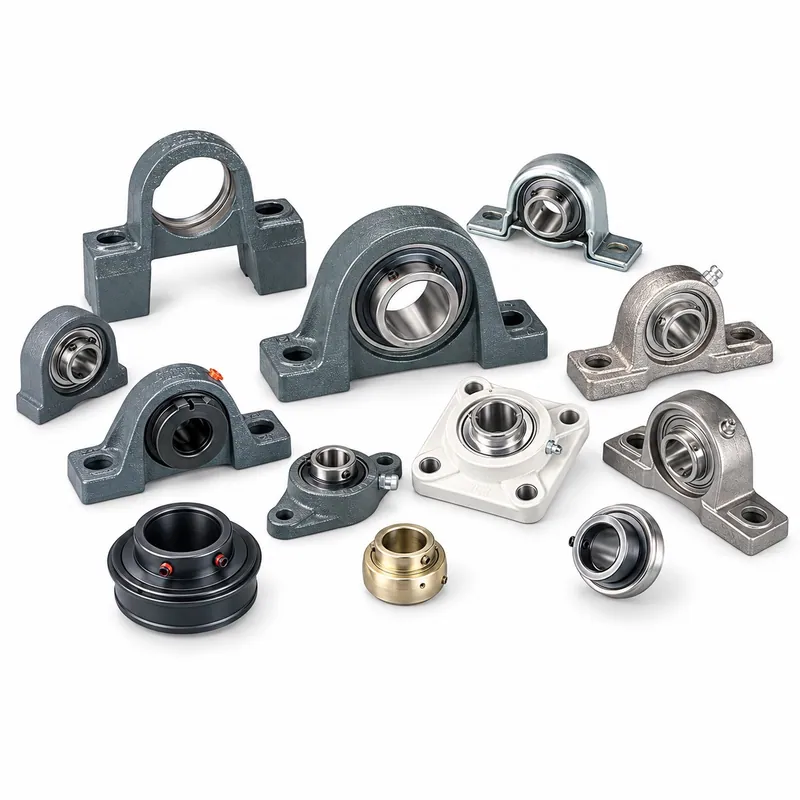

PEER UCPA210-50mm pillow block bearing
- Brand
- PEER
- Category
- Bearing housings
- Subcategory
- Y-bearing unit
We respond promptly.
Request your quote via WhatsApp or email, with the quantity you need.
Can't find the exact model? Write to us with the part number or model you're looking for: we'll find it and quote it, even if it's not listed in the catalog.
Description
PEER UCPA210-50mm is a reference of pillow block bearing, within Bearing housings. Request a quote for UCPA210-50mm via WhatsApp or email with the quantity you need; we respond promptly with the quote and equivalents.
The UCPA pillow block with PEER insert bearing is a foot-mounted assembly that combines an insert bearing unit with a cast iron housing. It is used to support shafts in equipment where quick mounting, good alignment and protection against dust and moisture are required. It is a practical solution for light and medium-duty transmissions in industrial plants, workshops and production lines.
The UCPA designation identifies a pillow block with an insert bearing of the UCPA series. The number that follows —201, 202, 203, 204, 205, 206, 207, 208— indicates the size of the bearing and the shaft: the higher the number, the larger the shaft diameter. The millimeter measurements that accompany the part number (12 mm, 15 mm, 17 mm, 20 mm, 25 mm, 30 mm, 35 mm, 40 mm) correspond to the shaft diameter it accommodates. Thus, UCPA205-25mm is for a 25 mm shaft.
These pillow blocks are used in conveyors, belts, elevators, mixers, fans, pumps and agricultural machinery. In Argentina they are common in food plants, cement plants, tanneries and metalworking workshops, where the environment has dust or moisture. The cast iron housing with lubrication channels allows relubrication without disassembly, and the insert with contact seals retains grease and blocks contaminants.
To select the correct UCPA, take into account the shaft diameter, the radial and axial load, and the environmental conditions. The pillow block is fastened with two bolts to a flat surface; it is advisable to align the shaft before tightening. The insert allows a small angular misalignment. Lubrication should be periodic with good quality grease, and the seals should be checked if there is abrasive dust. During mounting, avoid striking the insert and verify that the outer ring is seated.
UCPA pillow blocks are interchangeable between brands that follow the corresponding mounting standard. If you have a part number from another brand, we can indicate the compatible equivalent. We can also quote the exact part number or size you need. MR Accesorios Industriales sells the PEER brand and other alternatives so you can find the right part.
To request a quote for your UCPA pillow block with PEER insert bearing, send us the full part number or the shaft size by WhatsApp. At MR Accesorios Industriales we will reply shortly with the information you need for your equipment. We can also advise you if you are looking for a variant with a different housing or sealing configuration.
Dimensions
Dimensions and tolerances: Send us the part number via WhatsApp and we'll confirm the dimensions and version against the manufacturer's data sheet.
Frequently Asked Questions
- What does UCPA mean in a pillow block with bearing?
- UCPA identifies a pillow block with an insert bearing. The letter U corresponds to the insert series, C to the cast iron housing, P to the foot shape and A to the fastening type. The number that follows indicates the size of the bearing and the shaft.
- How do I choose the correct size for my shaft?
- Measure the shaft diameter where the bearing is mounted. The UCPA part number includes that measurement in millimeters: for example, UCPA205-25mm is for a 25 mm shaft. If you have doubts, send us the measurement by WhatsApp and we will quote the exact part number.
- Can the UCPA pillow block be relubricated?
- Yes, the housing has a lubrication channel that allows the insert to be relubricated without disassembly. Use good quality grease and follow the recommended frequency according to the environment. Check the seals if there is dust or moisture to prevent contamination.