
Blog
SKF is a good brand: how to evaluate a bearing brand and recognize a genuine product
We tell you how to evaluate if SKF is a good brand for your application, what to look for in the product, and how to avoid counterfeits when buying bearings.
SKF bearings in Argentina: guide and quotes
Technical team at MR Accesorios Industriales · Updated on October 11, 2026
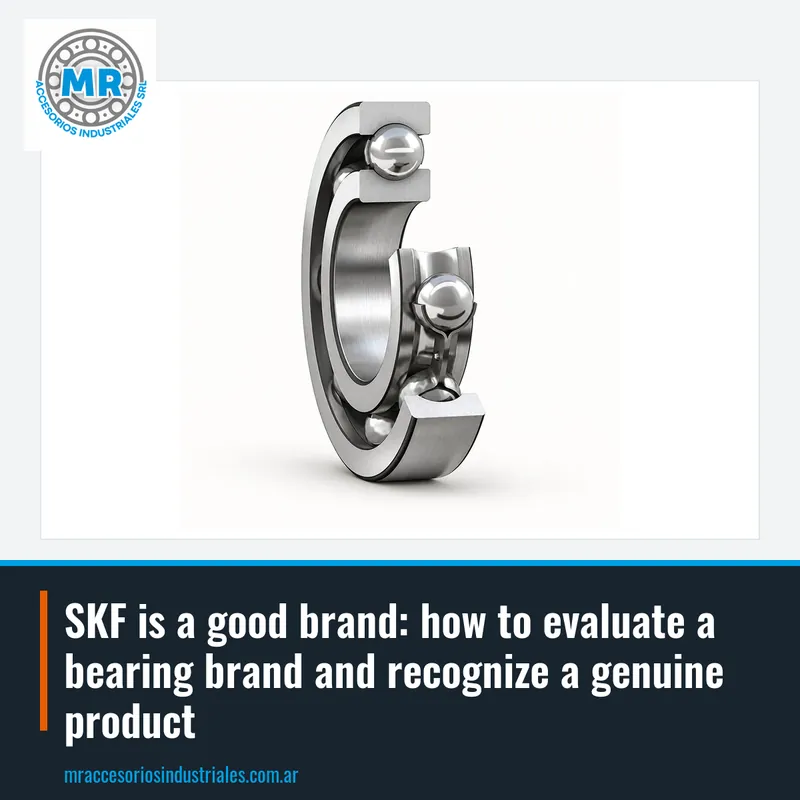
How to evaluate if a bearing brand is good
When you ask yourself if SKF is a good brand, it's worth looking beyond advertising. A bearing brand is evaluated by the consistency of its designation, dimensional precision, and the technical documentation that accompanies the product. In the case of deep groove ball bearings, the code engraved on the ring must match the one on the box and on the invoice. That consistency is the first sign of a serious product.
Another aspect is traceability: an established seller will give you the exact code, measurement, and origin without hassle. If they offer you a bearing without a complete designation or with a generic box, be suspicious. Recognized brands maintain a standard of marking and packaging that is repeated across all series, from a 6206 to a 6247. That allows you to verify what you are buying.
The availability of technical information also counts: drawings, tolerances, load capacities, and mounting recommendations. A brand that publishes this data gives you tools to calculate service life and choose the correct fit. It's not about trusting a name, but about being able to verify that the bearing fulfills what it promises. Therefore, when requesting a quote, always ask for the complete code and the standardized designation.
What to look for in a genuine SKF bearing
To recognize a genuine SKF bearing, start with the packaging. The box must be in good condition, with the complete designation clearly printed and matching the bearing. If the box is damaged, blurry, or has overlapping labels, it may be a sign of tampering. In the case of a deep groove ball bearing like the 6206, the box must say exactly that: 6206, without prefixes or suffixes that do not correspond.
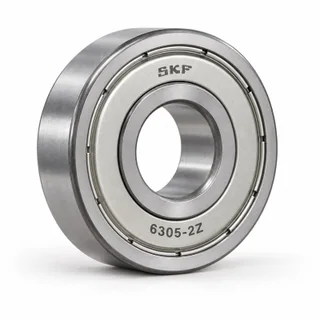
Then look at the engraving on the ring. In a genuine product, the marking is neat, even, and legible, with the complete designation and, depending on the case, the suffix indicating seals or internal clearance. For example, if the deep groove ball bearing has rubber seals, the suffix indicating them must be visible both on the ring and on the box. If the engraving is uneven, incomplete, or easily erased, it's not a good sign.
Also pay attention to the surface finish. Quality bearings have rings and rolling elements with a uniform finish, without burrs or rough machining marks. A bearing like the 6229, of larger size, should rotate smoothly and without hard spots. If you notice noise, roughness, or excessive play, it may be a counterfeit or poorly stored product. If in doubt, consult a seller who assures you of the origin.
The standardized designation: your best tool
The designation of a bearing is not an arbitrary number: it follows international standards that indicate type, dimension series, and bore diameter. In deep groove ball bearings, the base code like 6206 or 6224 tells you that it is a single row ball bearing, with a specific dimensional series and a specific bore. That base designation is used by major manufacturers, which facilitates comparison between brands.
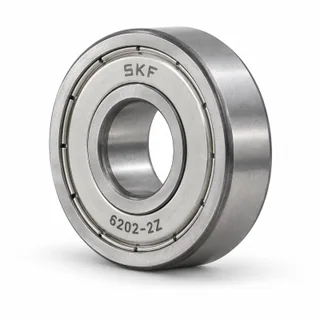
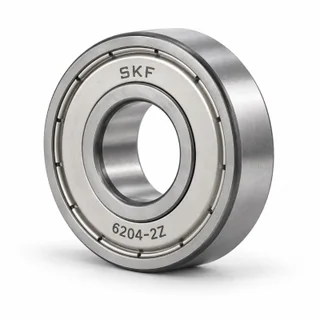
Suffixes add key information. The suffix 2RS indicates rubber seal on both sides, 2Z indicates metal shields, and C3 indicates internal clearance greater than normal. For example, a deep groove ball bearing 6206 with rubber seals on both sides carries the sealing suffix in the designation, making it suitable for dusty or humid environments. Knowing these suffixes helps you ask for exactly what you need and verify that what you receive matches what was requested.
When requesting a quote, send the complete code as you read it on the old part or in the manual. If you have doubts about the suffix, take a photo of the bearing and the box. A serious seller will confirm the designation and indicate if there is an equivalent variant. Don't settle for an approximate code: a digit difference can change the bearing type and compromise the assembly.
Where to buy SKF bearings without risks
Origin is as important as the product. Buying SKF bearings from an established seller allows you to know where each piece comes from. At MR we market SKF and work with the exact code you provide. Thus you can compare the designation, packaging, and engraving of what you receive with what you ordered.
Be wary of offers you cannot trace. If an SKF bearing appears without documentation or clear origin, it is likely not genuine. Counterfeit products often have generic boxes, defective engravings, and much lower performance. In critical applications, a fake bearing can cause plant shutdowns and damage to other components.
When requesting a quote, indicate the complete code, the measurement if you know it, and a photo of the part. That allows us to identify the bearing without margin for error and offer you the correct option. You can also inquire about alternatives within the same series if you need a different seal or special internal clearance. The idea is that you receive exactly what your equipment needs.
Common mistakes when ordering SKF bearings
One of the most frequent mistakes is ordering a bearing only by measurement, without the complete code. For example, saying “a bearing with a 30 mm bore” is not enough: there are several series and types that share that diameter. The code 6206 corresponds to a deep groove ball bearing with a 30 mm bore, but other series with the same measurement also exist. Always specify the complete designation.
Another mistake is ignoring suffixes. If your equipment needs a bearing with rubber seals and you order an open one, you will have lubrication and contamination problems. The same happens with internal clearance: a C3 is not interchangeable with a normal clearance in all applications. Before ordering, check the old bearing or the manual to confirm the suffixes.
It is also a mistake to buy without verifying the origin. A genuine SKF bearing comes with its complete designation, its packaging, and its traceability. If any of that is missing, ask yourself why. At MR we quote the exact code you need. Don't risk your maintenance with a critical part of dubious origin.
What to consider when choosing a SKF deep groove ball bearing
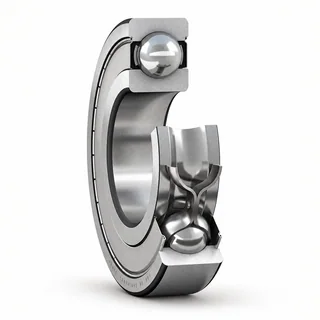
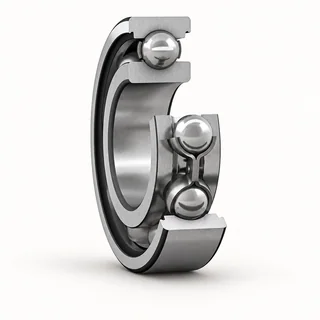
Deep groove ball bearings are the most used in industry for their versatility and low maintenance. They support moderate radial and axial loads and work well at high speeds. Within the SKF line, you find from a 6206 to large pieces like the 6247, each with its specific dimensions and capacities.
When choosing a deep groove ball bearing, consider the type of seal or shield. If the environment is clean and the speed is high, an open bearing or one with 2Z metal shields may be sufficient. If there is dust, humidity, or splashes, a 2RS with rubber seals is better. Internal clearance also matters: a C3 has a greater radial internal clearance than normal, and it is advisable to respect the one that the original bearing has.
For mounting, respect the tolerances of the shaft and housing. An incorrect fit can generate vibrations, overheating, and premature failure. If you are not sure, consult the technical documentation or ask for advice. At MR we help you identify the correct bearing and quote the exact code, whether it's a 6206, a 6224, or any other in the series.
How to quote your SKF bearing at MR
To quote, the most practical is to send us the complete code of the bearing. If you have the box or the old bearing, take a photo where the engraved designation is visible. That allows us to verify the type, series, and suffixes without errors. You can also indicate the bore measurement and outer diameter if you don't have the code.
At MR we market SKF, so we quote the bearing you need with the exact designation. If you have doubts about the suffix or the type of seal, we guide you so you order the correct variant. We do not work with approximate codes: each quote is based on the standardized designation you provide.
Write to us via WhatsApp or email with the code, measurement, or a photo of the part. We respond promptly with the quote and the information you need to decide. Buying a genuine SKF bearing is an investment in the reliability of your equipment, and at MR we help you do it right.
Frequently asked questions
How do I know if an SKF bearing is original?
Check that the box is in good condition and that the printed designation matches the engraving on the ring. The marking must be neat and complete, with the corresponding suffixes. Be wary of offers without clear origin. Buy from established sellers who assure you of the origin.
What do the suffixes 2RS, 2Z, and C3 mean in an SKF bearing?
2RS indicates rubber seals on both sides, 2Z indicates metal shields on both sides, and C3 indicates internal clearance greater than normal. These suffixes are engraved on the ring and must also appear on the box. Choose the one that corresponds to your application conditions.
Can I order an SKF bearing only with the measurement?
It is not recommended. The bore measurement is not enough to identify the bearing: there are several series and types with the same diameter. Always specify the complete code, for example 6206 or 6224, and the suffixes if it has them. If you don't have the code, send a photo of the part.
Where to buy genuine SKF?
At MR we market SKF. You can quote your bearing via WhatsApp or email by sending the complete code, measurement, or a photo of the part. We respond promptly with the quote and the information you need.
Is SKF a good brand for deep groove ball bearings?
To evaluate it, look at the consistency of its designation, dimensional precision, and technical documentation. When evaluating an SKF deep groove ball bearing, look at the packaging, engraving, and surface finish. Buy from an established seller who gives you the exact code and origin.
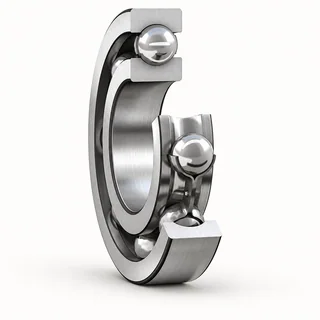
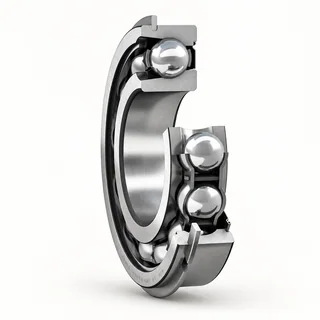
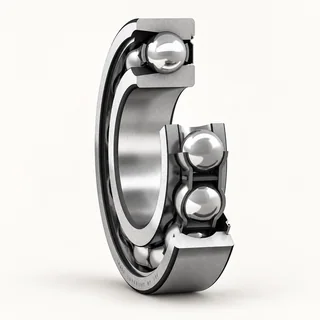
Products with photos in the catalogue
Keep reading
- SKF Chains: Reliable Power Transmission for Industrial Applications
SKF roller chains offer strength and precision for power transmission in industrial machinery. Learn about the PHC series, ASA and BS standards, and how to identify the correct chain for your equipment.
- SKF tools for industrial maintenance: pullers, heaters, aligners and calibrated shims
SKF tools simplify bearing mounting and dismounting, shaft alignment and instrument calibration. Discover TMMA and TMHP pullers, induction heaters, TKSA aligners and calibrated shims.
- How to Choose SKF Bearings by Application: Load, Speed, Environment, and Mounting
Choosing the right SKF bearing requires analyzing load, speed, environment, and mounting. We explain the main types and how to get a quote with the exact code.
Continue here
Need a quote?
Send us the code, size or a photo of the part and we'll quote you shortly.