
Blog
SKF in the metallurgical industry: bearings for heavy loads and heat
How to choose and order SKF bearings for rolling mills, roller tables and gearboxes in the Argentine metallurgical industry.
SKF bearings in Argentina: guide and quotes
Technical team at MR Accesorios Industriales · Updated on October 23, 2026
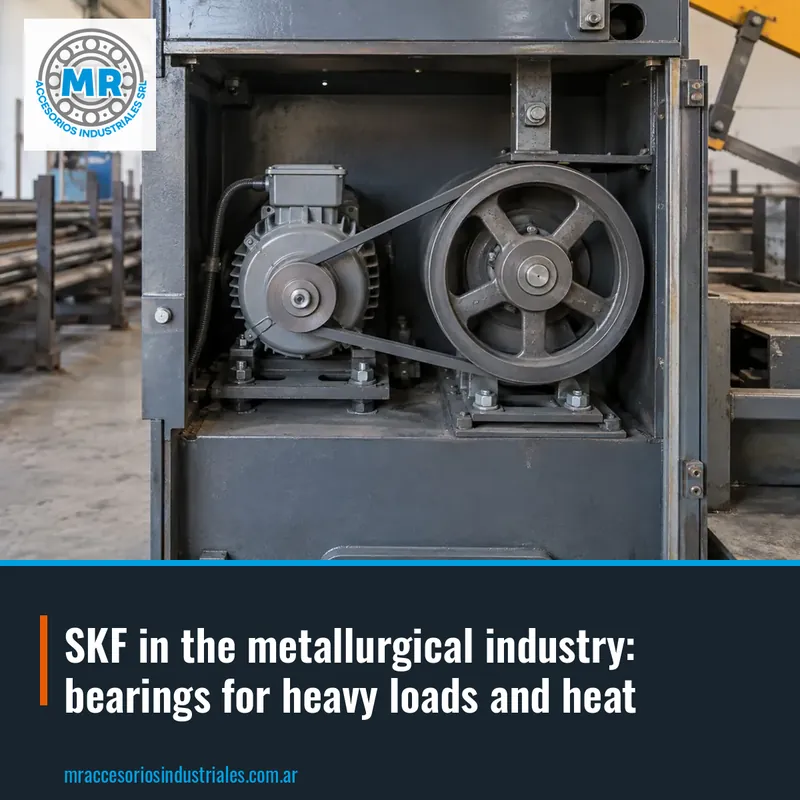
Spherical bearings for misaligned shafts
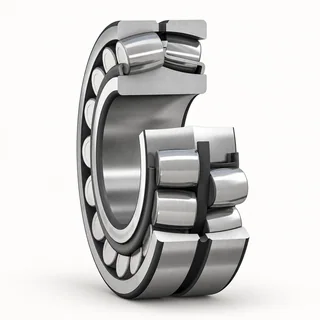
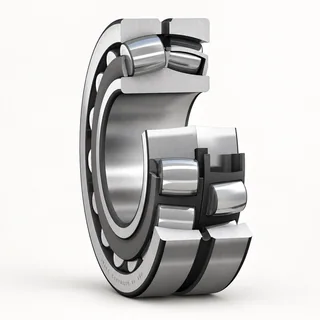
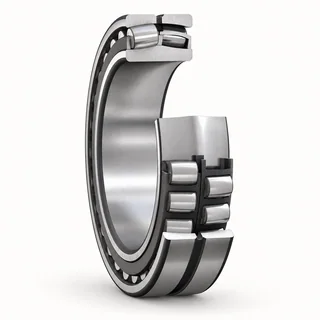
In rolling mills and roller tables, shafts operate under constant bending and misalignment. SKF spherical bearings absorb these deviations without generating additional loads on the housing. Their design with two rows of rollers on a common spherical raceway makes them ideal for supporting high radial loads and some axial load. In the metallurgical industry, they are found in transport rollers, casting drums and bar guiding systems.
When ordering a spherical bearing, it is advisable to identify the code engraved on the side face. For example, codes 22325, 22328 and 22336 correspond to the 223 series, widely used in this sector. If the part is too damaged and the code cannot be read, the inner diameter, outer diameter and width measurements can be taken to find the equivalent.
A common mistake is replacing a spherical bearing with a rigid ball bearing to save cost. This leads to premature failures due to misalignment that the rigid bearing cannot tolerate. Another point to check is internal clearance: in applications with heat, the C3 suffix indicates a larger clearance than normal, which prevents blocking due to thermal expansion. For a quote, send the full code or the measurements and a photo of the part.
Cylindrical bearings for intense radial loads
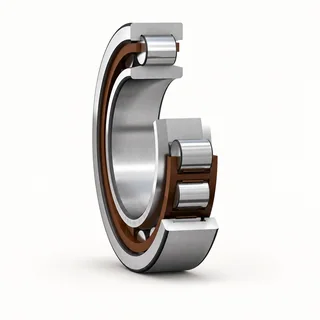
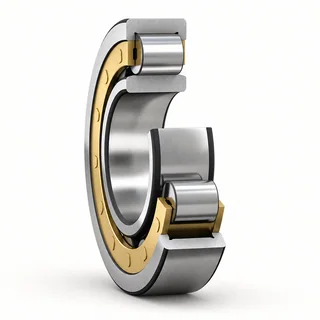
Cylindrical roller bearings stand out for their ability to support very high radial loads and allow axial displacement in one direction. In metallurgy, they are used in rolling mill gearboxes, crane gearboxes and support rollers of transport tables. Their dismountable design facilitates assembly and disassembly, which is key in equipment requiring frequent maintenance.
Within the SKF line, codes NU 221 ECP, NU 224 ECM and NU 320 ECP are examples of single-row cylindrical roller bearings. When ordering them, it is necessary to indicate whether the inner ring, outer ring or complete assembly is needed, because in many cases they are replaced separately.
An important detail is the fit between the inner ring and the shaft: in applications with impacts, an interference fit is recommended to prevent slipping. It is also necessary to check the condition of the raceways and rollers, because localized wear generates vibrations that are transmitted to the entire equipment. Send us the exact code or a photo with the measurement to quote the correct option.
Tapered bearings for combined loads
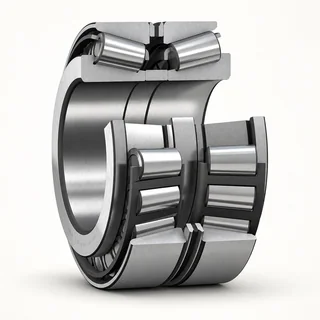
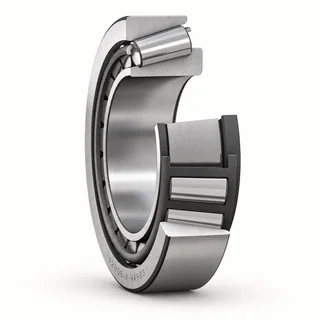
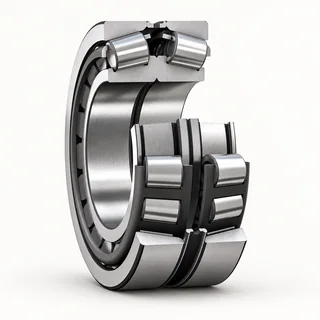
Tapered roller bearings support combined radial and axial loads, which is very common in rolling mill shafts and drive pinions of gearboxes. Their geometry allows adjusting internal clearance during assembly, setting preload according to the application requirements. In the metallurgical industry, they are seen in work rollers, coiler mandrels and shear transmission systems.
Codes 30220, 30221, 30320 and 30222 are examples of single-row tapered bearings with standardized metric dimensions. When ordering a tapered bearing, it is essential to indicate whether the complete bearing or only the cup or cone is needed, because in many workshops they are replaced separately to reduce costs.
Mounting tapered bearings requires measuring axial clearance with a dial indicator and adjusting with nuts or shims. Excessive tightening generates heat and premature wear; excessive clearance causes vibrations and roller breakage. If you have doubts about the adjustment, consult us with the code and application: we will guide you with SKF technical information.
Lubrication and sealing against scale
In metallurgy, scale (iron oxide that flakes off hot steel) is one of the main enemies of bearings. Abrasive particles get into the raceways and destroy the rolling surfaces in a short time. Therefore, lubrication and sealing are as important as the choice of bearing.
Bearings with the 2RS suffix have rubber seals on both sides, which retain grease and block the entry of particles. Those with 2Z use metal shields, more suitable for high speeds but with less protection against liquids. In environments with cooling water, it is recommended to use additional seals or housings with labyrinths. Periodic relubrication with the appropriate grease extends service life.
A frequent mistake is using a common lithium grease in furnaces or hot zones: it carbonizes and loses its properties. For high temperatures, a grease with a synthetic base and special thickener is advisable. When quoting, indicate the working temperature and whether water or scale is present: this way we suggest the correct bearing and lubricant.
How to identify the bearing on the part
Before ordering an SKF bearing for metallurgy, the exact code engraved on the side face or on the ring edge must be identified. In large bearings, the code may be on the outer ring or on the cage. If the part is very deteriorated, measurements can be taken with a caliper: inner diameter, outer diameter and width. With these data, we look for the equivalent in the SKF catalog.
Example codes such as 22325, NU 221 ECP or 30220 follow a standardized nomenclature, but it is not advisable to interpret each letter or number without technical confirmation. Some suffixes such as 2RS, 2Z, C3 and K are commonly used and their meaning is standard: rubber seal, metal shield, larger internal clearance and tapered bore, respectively. For other suffixes, we recommend consulting us with the full code.
In addition to the code, it is useful to send a photo of the part and the place where it is mounted. This allows us to verify the cage type, seal and general condition. If the bearing is from another brand, we can also find the SKF equivalent. Send us the data via WhatsApp or email and we will quote you promptly.
Common mistakes when mounting bearings in metallurgy
One of the most serious mistakes is hitting the bearing directly with a hammer during mounting. This marks the raceways and rollers, and generates vibrations from the first day. For hot mounting, the bearing can be heated in an oil bath or with an induction heater, never with a direct torch. The use of appropriate tools, such as mounting sleeves, avoids costly damage.
Another frequent mistake is not respecting the fit between the shaft and the inner ring. If the fit is loose, the ring rotates on the shaft and wears the surface; if it is excessive, internal stresses are generated that reduce service life. In applications with heavy loads and impacts, a controlled interference fit is recommended. The SKF manual indicates tolerances according to the type of load and shaft size.
It is also common to neglect cleaning the housing before installing the new bearing. Scale and metal dust left in the housing contaminate the grease and shorten bearing life. Before mounting, clean the housing well and verify that the seals are in good condition. If you have doubts about the procedure, consult us: we will provide SKF technical information.
How to quote SKF bearings for metallurgy
To quote an SKF bearing for your metallurgical equipment, the most practical way is to send us the exact code or a photo of the part. With that, we will provide the quote promptly. If you do not have the code, send us the measurements and the application: we will help you identify the correct bearing. We also work with equivalents if your equipment has another brand.
At MR we distribute SKF bearings for the Argentine metallurgical industry. We work with spherical, cylindrical and tapered bearings, among others. If your application is special, such as an annealing furnace or continuous casting, tell us the working conditions: temperature, speed, loads and contaminants. This way we suggest the best option.
You can write to us via WhatsApp or email with the code, measurements or a photo of the part. We will respond promptly with the quote and the technical information you need. We are in Buenos Aires, Argentina.
Frequently asked questions
Which SKF bearing is used in a rolling mill?
It depends on the position: in work rollers, spherical or cylindrical bearings are used, depending on load and speed. In gearboxes, tapered or cylindrical. Send the code or measurements to identify the correct option.
How do I order an SKF bearing if the code cannot be read?
Take the inner diameter, outer diameter and width measurements with a caliper, and take a photo of the part. With these data we look for the equivalent in the SKF catalog.
What does the C3 suffix mean in an SKF bearing?
It indicates a larger internal clearance than normal. It is used in applications with high temperatures or interference fits, common in metallurgy.
Are SKF bearings with 2RS seal suitable for environments with scale?
Yes, rubber seals on both sides retain grease and block the entry of particles. For greater protection, external seals can be added or housings with labyrinths used.
How do I quote an SKF bearing for the metallurgical industry?
Send us via WhatsApp or email the exact code, measurements or a photo of the part. We will respond promptly with the quote.
Products with photos in the catalogue
Keep reading
- SKF Chains: Reliable Power Transmission for Industrial Applications
SKF roller chains offer strength and precision for power transmission in industrial machinery. Learn about the PHC series, ASA and BS standards, and how to identify the correct chain for your equipment.
- SKF tools for industrial maintenance: pullers, heaters, aligners and calibrated shims
SKF tools simplify bearing mounting and dismounting, shaft alignment and instrument calibration. Discover TMMA and TMHP pullers, induction heaters, TKSA aligners and calibrated shims.
- How to Choose SKF Bearings by Application: Load, Speed, Environment, and Mounting
Choosing the right SKF bearing requires analyzing load, speed, environment, and mounting. We explain the main types and how to get a quote with the exact code.
Continue here
Need a SKF quote?
Send us the SKF part number, the size or a photo of the part and we will get back to you with a quote.