
Blog
NTN dimensions: how to identify the code from the part and what data to send for a quote
We show you how to read the dimensions and code of an NTN bearing directly from the part, and what information to send to receive an accurate quote.
NTN bearings in Argentina: guide and quotes
Technical team at MR Accesorios Industriales · Updated on November 11, 2026
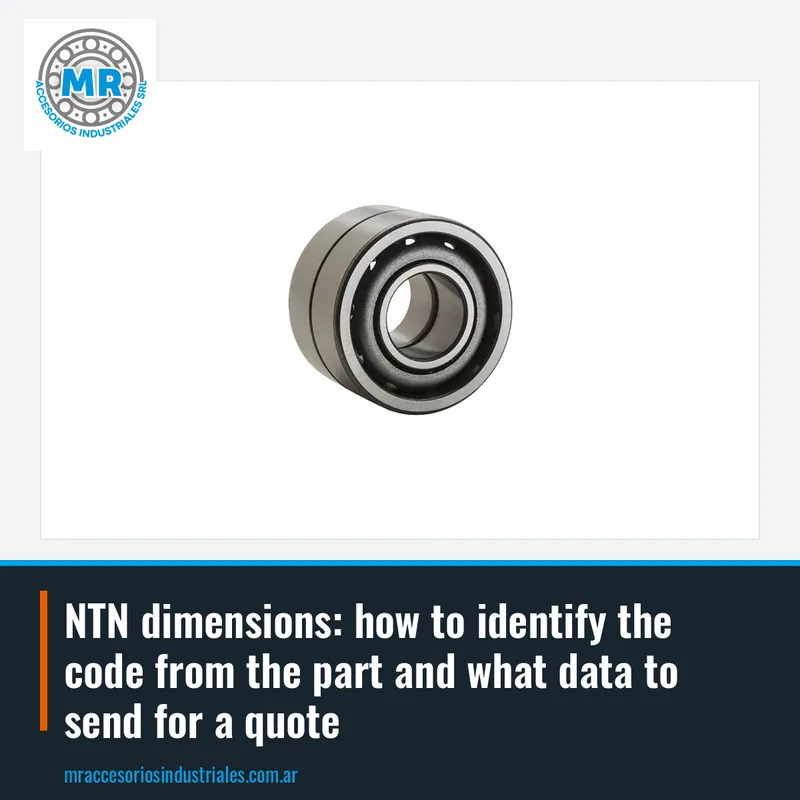
How to read the dimensions and code on an NTN bearing
When you have an NTN bearing in your hand, the first thing to look at is the side engraving. There the basic series appears, usually combining numbers and sometimes letters, and it is the key to identifying the main dimensions: inner diameter, outer diameter, and width. In many cases, the code follows the ISO standard, so a 6205, for example, indicates a deep groove ball bearing with standard dimensions. If the part is very worn or the engraving is erased, you can measure these three dimensions with a caliper and compare them with an NTN dimension table.
In addition to the basic code, NTN uses suffixes and prefixes that describe internal characteristics: seals, internal clearance, cage design, or heat treatment. Suffixes such as 2RS (rubber seal on both sides), 2Z (metal shields), or C3 (radial clearance greater than normal) are common and worth noting. If you see other letters or numbers you don't recognize, do not omit them: send them as they are when requesting a quote, because they can completely change the bearing variant.
A common mistake is to assume that two bearings with the same basic number are identical even if they have different suffixes. For example, a 6205-2RS and a 6205-2Z share dimensions but not the type of protection. Therefore, it is always best to send the complete code, including prefixes and suffixes, or a clear photo of the side of the part.
NTN tapered roller bearings: how to order them without mistakes
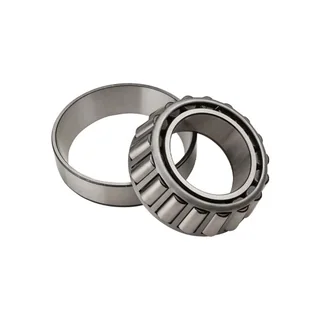
NTN tapered roller bearings support combined loads (radial and axial) and are typical in gearboxes, differentials, wheel hubs, and mining equipment. They are identified with codes such as 32920, 32924, or 32926, where the number indicates the series and the bore size. In this type of bearing, the inner ring with the rollers and cage forms a separable assembly from the outer ring, which facilitates mounting and dismounting.
When quoting an NTN tapered bearing, it is advisable to clarify whether you need the complete bearing or only the inner assembly (cone and rollers) or only the outer cup. It is also key to verify whether the bearing has a sheet metal, polymer, or machined cage, because that affects the limiting speed and lubrication. If the original part has a special suffix, such as a letter after the number, it must be included.
An important detail in tapered bearings is the fit and preload. If you are replacing a bearing in a spindle or pinion, the preload is adjusted with nuts or shims, and a bearing with a different contact angle can change the behavior. Therefore, if you have doubts between two similar codes, send us the bore, outer diameter, and total width measurements, and we will help you confirm the correct NTN reference.
NTN angular contact bearings: what to check before ordering
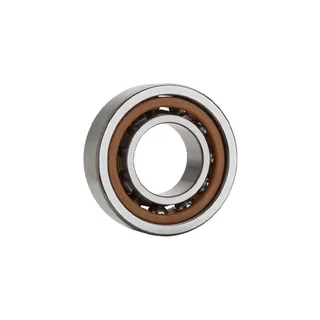
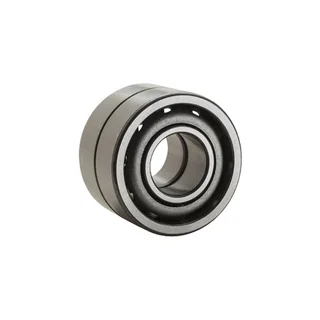
NTN angular contact bearings are designed to support axial loads in one direction and radial loads, and are usually mounted in pairs or sets to absorb loads in both directions. Codes such as 7010, 7011, or 7210 correspond to series widely used in pumps, electric motors, machine tool spindles, and compressors. The contact angle of each series defines its axial capacity.
When identifying an NTN angular contact bearing, in addition to the basic number, pay attention to the suffix that indicates the angle and mounting arrangement. Any letter after the number can indicate the contact angle or mounting arrangement, so note it completely. If the bearing comes with a machined brass or polyamide cage, it is also worth noting, because it influences lubrication and operating temperature.
A common mistake is to order a single angular contact bearing when a matched pair is actually needed. Matched pairs come with a specific suffix and cannot be assembled from any two single bearings, because the manufacturer controls the preload and internal clearance. If you are replacing a pair, send the complete code of each bearing or a photo of the side, and we will quote the correct NTN set.
NTN Y-bearing (insert): identification by dimensions and housing
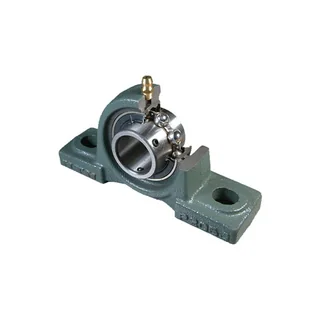
NTN Y-bearings, also called inserts, are used in pillow blocks, flanges, and take-up units for agricultural, transport, and material handling applications. They have a spherical outer ring that allows them to align within the housing, and an extended inner ring with set screws or eccentric locking collar to secure to the shaft.
To order an NTN insert, the most practical way is to identify the code engraved on the inner or outer ring. If it is not legible, measure the shaft diameter where it is mounted, because the insert is designated by that diameter in inches or millimeters. It is also advisable to verify the locking type: whether it has two set screws, an eccentric collar, or an adapter sleeve, because that changes the reference and mounting.
In addition to the insert, the complete housing is often needed. NTN housings for Y-bearings have their own designations depending on whether they are pillow blocks, flanges, or take-up units. If you are replacing an assembly, send photos of the insert and housing, or the codes of both, and we will quote the corresponding NTN kit. Do not forget to indicate whether the shaft is metric or inch.
NTN cylindrical roller bearings: keys to getting the code right
NTN cylindrical roller bearings support high radial loads and allow axial displacement in one direction, depending on the design. They are used in large electric motors, gearboxes, rolling mills, and construction equipment. Codes such as NU416, NU317, or NU218 indicate the series and size, but pay attention to the prefix: NU, NJ, NUP, or N, which define the flange configuration.
When identifying an NTN cylindrical bearing, note the complete code, because an NU and an NJ with the same basic number are not interchangeable. The NU has two flanges on the outer ring and none on the inner, while the NJ has one flange on the inner ring, which allows it to support axial load in one direction. If the bearing has a brass, sheet metal, or polyamide cage, that detail may also be in the suffix.
A common mistake is to measure only the inner diameter and assume that all cylindrical bearings with that bore are the same. The series (2, 3, 4, etc.) defines the outer diameter and width, so two bearings with the same bore can have very different external dimensions. Therefore, if you do not have the code, send the three measurements (inner, outer, and width) and we will help you identify the exact NTN reference.
NTN spherical roller bearings: how to recognize and order them
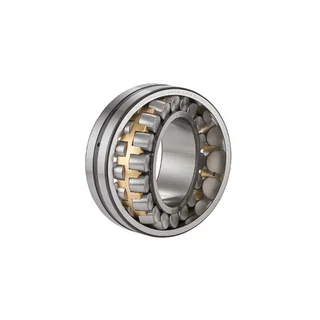
NTN spherical roller bearings have two rows of rollers and a spherical outer ring, which allows them to absorb shaft misalignment without losing load capacity. They are common in industrial fans, mills, conveyors, and heavy equipment. Codes such as 21317, 21318, or 21319 correspond to series with cylindrical bore, but there are also versions with tapered bore, identified with the suffix K.
When quoting an NTN spherical bearing, it is essential to indicate whether the bore is cylindrical or tapered. The tapered bore is mounted on an adapter sleeve or directly on a tapered seat, and requires a different locking method. If the original bearing has the K suffix, do not replace it with a cylindrical bore one without verifying the mounting.
Another important data is the internal clearance. Many NTN spherical roller bearings have C3 internal clearance, greater than normal. If the original bearing is marked C3, order the same clearance. Send us the complete code or a photo of the side, and we will quote the NTN bearing with the exact characteristics.
NTN cam follower, support roller, and needle bearings: quick identification
NTN cam followers and support rollers, also called track rollers, are used in cams, linear guides, conveyors, and indexing mechanisms. They have a thick outer ring that rolls on a track or cam, and can be with a stud, with a through shaft, or with a housing. They are identified with series-specific codes, which usually include letters and numbers, and it is important to note the stud type and whether they have seals or not.
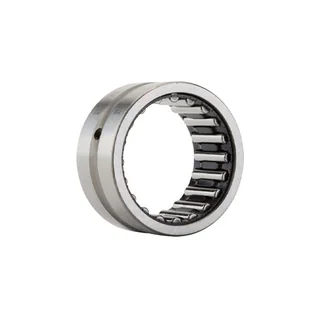
NTN needle roller bearings are compact and support high radial loads in reduced spaces. They come as needle cages, bushings, complete bearings with or without rings, and are used in gearboxes, small motors, and oscillating mechanisms. To order them, it is advisable to measure the shaft diameter, housing diameter, and available width, or send the engraved code if visible.
In the case of NTN needle cages and components, identification can be more difficult because they sometimes have no engraving. If you have a loose needle cage, measure the inner diameter, outer diameter, and width, and count the number of needles if possible. With that data we will help you find the equivalent NTN reference. It is always useful to send a photo of the part and the place where it is mounted.
Frequently asked questions
How do I identify the code of an NTN bearing if it is blurred?
If the side engraving is not legible, measure the inner diameter, outer diameter, and width in millimeters with a caliper. With those three measurements we can find the corresponding NTN reference. A photo of the part and the equipment where it is mounted also helps.
What do the suffixes 2RS, 2Z, and C3 mean on an NTN bearing?
2RS indicates rubber seal on both sides, 2Z indicates metal shields on both sides, and C3 indicates internal clearance greater than normal. These suffixes are important for ordering the correct bearing, because they change the protection and internal fit.
Can I replace an NTN bearing with another with the same basic number but a different suffix?
Not always. Suffixes describe characteristics such as seals, internal clearance, or cage design, and can affect operation. It is always best to respect the complete code of the original bearing or consult a specialist before changing it.
What data do I need to quote an NTN bearing?
Ideally, send the complete code engraved on the part, including prefixes and suffixes. If it is not legible, send the measurements (inner diameter, outer diameter, and width) and a clear photo. Also indicate the application or equipment where it is mounted.
How do I order an NTN Y-bearing with its housing?
For a complete assembly, send the code of the insert and the housing, or photos of both. If you do not have the codes, measure the shaft diameter and describe the housing type (pillow block, flange, or take-up). With that we will quote the appropriate NTN kit.
Products with photos in the catalogue
Keep reading
- How to Read NTN Codes: Structure, Prefixes, and Suffixes
Understanding the designation of an NTN bearing allows you to identify its features and order the correct replacement. We explain the basic nomenclature and the most common suffixes.
- How to Choose NTN Bearings by Application: Load, Speed, Environment and Mounting
Choosing the right NTN bearing involves analyzing load, speed, environment and mounting. We show you what to consider and real catalog codes for each case.
- Common NTN Bearing Failures: How to Recognize and Prevent Them
NTN bearing failures usually have identifiable causes: poor lubrication, incorrect mounting, or contamination. We explain how to detect them early and avoid them.
Continue here
Need a NTN quote?
Send us the NTN part number, the size or a photo of the part and we will get back to you with a quote.