
Blog
Mounting and dismounting McGill: tools, steps and common errors that shorten service life
Practical guide to mounting and dismounting McGill bearings: preparation, tools, correct techniques and errors to avoid.
Technical team at MR Accesorios Industriales · Updated on October 26, 2026
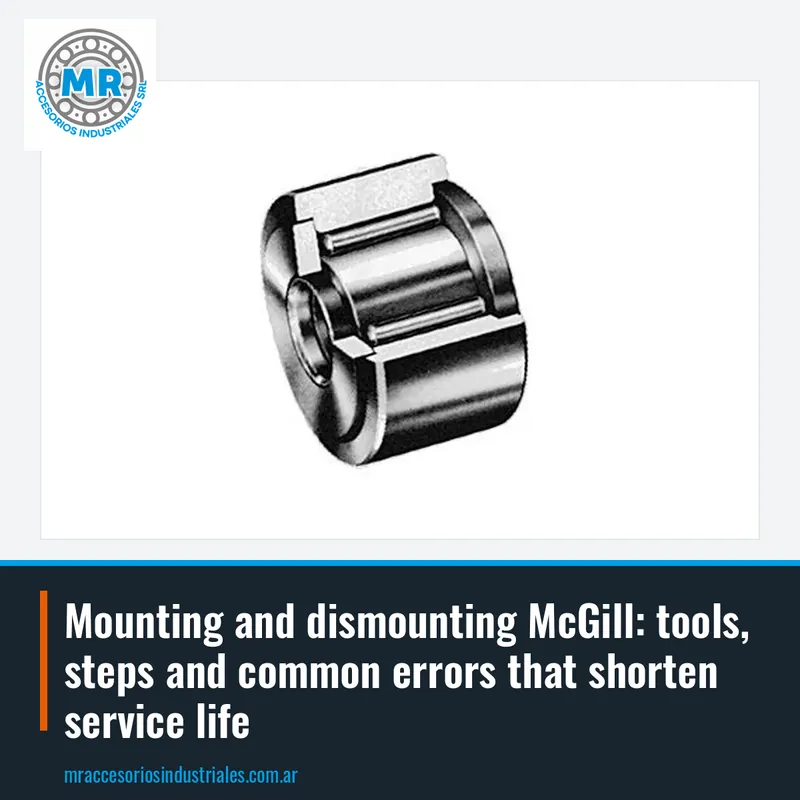
Preparation before mounting a McGill bearing
Before starting, check the condition of the shaft and the housing. The surfaces must be clean, without burrs or impact marks. Any irregularity can misalign the bearing and generate vibrations. Also verify the dimensional tolerances with a micrometer or caliper.
Check that the new bearing is the correct one for the application. Compare the code engraved on the part with the one on the order or the technical data sheet. On cam rollers such as CF 1 or CF 2, make sure the outer diameter and the stud type match the original. An identification error here leads to forced mounting and premature failure.
Have the right tools at hand: hydraulic or mechanical press, mounting tubes, nylon hammer, induction heater if needed. Do not improvise with pipes or screwdrivers. Preparing the work area and cleaning elements prevents contaminating the bearing with particles.
Recommended tools for mounting and dismounting
To mount bearings with a firm fit, a press that applies force evenly is ideal. Use a mounting tube that bears only on the ring that is fitted: if the fit is on the shaft, the tube bears on the inner ring; if it is on the housing, on the outer ring. Never strike the opposite ring, because you transmit the force through the rolling elements.
Induction heating or oil-bath heating facilitates mounting large bearings or those with a tight fit. Heat the bearing to a moderate, controlled temperature, without exceeding the manufacturer's limits. For cam rollers such as CF 3, which are usually mounted on threaded studs, you can use a suitable wrench and a stop to avoid damaging the outer raceway.
For dismounting, mechanical or hydraulic pullers are the safest option. Choose a puller with jaws that grip the ring to be removed firmly. If the bearing is to be reused, avoid applying force on the rolling elements or the cages. On spherical roller bearings such as SB-22220, the puller must bear on the inner ring to avoid deforming the spherical seat.
Step-by-step mounting of McGill cam rollers
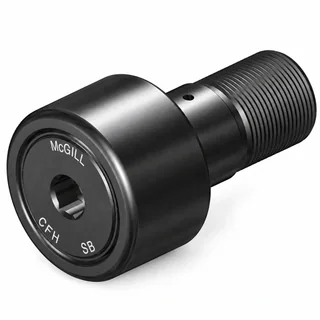
McGill cam rollers, such as CF 1 or CF 2, are generally mounted by threading the stud into the housing. First clean the stud thread and the housing. Apply a suitable lubricant to the thread to facilitate the fit and prevent seizing. Thread the roller by hand until it seats, taking care not to cross the thread.
Tighten the stud with a torque wrench to the torque recommended by the manufacturer. Insufficient tightening allows loosening in service; excessive tightening can deform the outer ring or damage the raceway.
After mounting, turn the roller by hand to verify that there are no hard spots or abnormal noises. Check that the roller bears correctly on the cam or the guide. A misaligned mounting or one with dirt on the raceway reduces service life and can damage the mating part.
Mounting McGill needle bearings
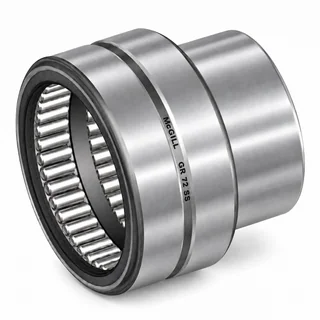
McGill needle bearings, such as GR 88 or GR 10, have a cage with needles that requires special care. Do not remove the cage from the packaging until the moment of mounting. Handle it with clean hands and prevent it from falling, because the needles can come apart. If it comes apart, do not try to reposition the needles under pressure because they deform.
Mount the needle bearing with a mandrel that bears on the outer ring if the fit is in the housing. If the fit is on the shaft, use a tube that bears on the inner ring. The needle cage must not receive axial force during mounting. In the case of GR 12, verify that the contact surfaces are clean and free of marks.
To dismount a needle bearing, use a puller that grips the outer or inner ring as appropriate. If the bearing is damaged and will not be reused, you can carefully cut the ring to release it. Never use a torch directly on the bearing, because the heat can alter the properties of the shaft or the housing.
Mounting McGill special bearings
McGill special bearings, such as D-220 or D-320, usually have particular designs for specific applications. Before mounting, review the technical data sheet for the code and confirm the fit and the orientation of the part. If you have doubts, send us the code and we will help you identify it.
Mount these bearings with a press or heating, depending on the fit. If the fit on the shaft is firm, heat the bearing in a controlled manner to expand it and slide it on without excessive force.
Dismounting special bearings requires pullers suited to their geometry. Use a puller that grips the ring that is fitted. Do not strike the outer ring to remove it, because you can damage the raceway or the housing. If the bearing is very tight, apply a penetrating oil and let it act before extracting.
Mounting McGill spherical roller bearings
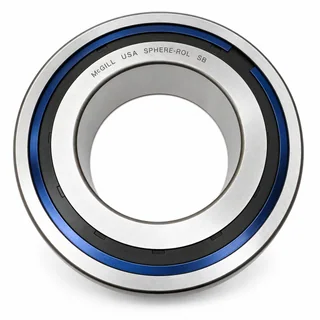
McGill spherical roller bearings, such as SB-22220 or SB-22320, have a spherical outer ring that allows angular misalignment. When mounting them, verify that the housing has the proper shape for the spherical ring. If the housing is split, make sure the halves close properly and that the bearing is centered.
Mount the spherical roller bearing with a press or heating, applying force only on the ring that is fitted. If the fit is on the shaft, heat the bearing or use a tube that bears on the inner ring. Do not apply force on the spherical outer ring, because you can deform the spherical seat and lose the self-aligning capability.
For dismounting, use a puller that grips the inner ring. If the bearing is in a split housing, open the housing and remove the bearing carefully. In the case of SB-22204, which is smaller, you can use a fine-jaw puller. After dismounting, inspect the raceways and rollers to assess whether it can be reused.
Common errors that shorten service life
One of the most frequent errors is striking the bearing directly with a metal hammer. This generates marks on the raceways and rolling elements, which then become points of noise and vibration. Always use a nylon hammer or a mounting tube that distributes the force. If you do not have the tool, it is better to wait than to damage the bearing.
Another error is not cleaning the shaft or housing well before mounting. Dirt, burrs or rust prevent correct seating and generate premature wear. Applying too much or too little lubricant is also an error: follow the manufacturer's indications for the type and amount of grease or oil.
Finally, not respecting the tightening torque or the heating temperature can ruin a new bearing. Excessive tightening deforms the rings and increases friction; loose tightening allows slipping and wear. If you have doubts about the procedure, write to us via WhatsApp or email with the code, the size or a photo and we will quote you promptly.
Frequently asked questions
How is a McGill cam roller mounted?
The stud is threaded into the housing with a torque wrench to the recommended torque. Before that, clean the thread and apply lubricant. Tighten without exceeding the limit so as not to deform the outer ring.
Can I strike a McGill bearing to mount it?
Striking directly with a metal hammer is not recommended. Use a nylon hammer or a mounting tube that bears only on the ring that is fitted. Impacts transmitted through the rolling elements damage the raceways.
Which puller do I use to dismount a McGill bearing?
It depends on the type and size. For cam rollers, a jaw puller that grips the outer ring. For needle or spherical roller bearings, a puller that bears on the inner ring. If the bearing is very tight, apply penetrating oil and wait.
Can a McGill bearing be heated for mounting?
Yes, it can be heated by induction or in an oil bath to expand the ring and facilitate mounting. Control the temperature so as not to exceed the manufacturer's limits. Do not use a direct torch.
How do I avoid errors when mounting McGill bearings?
Clean the surfaces well, use the right tools, respect the tightening torques and do not apply force on the rolling elements. If you have doubts, write to us via WhatsApp with the code, the size or a photo.
Products with photos in the catalogue
Keep reading
- McGill product guide in Argentina: what lines are available and what they are used for
Discover the McGill product lines we distribute in Argentina: cam followers and yoke rollers, needle bearings, special bearings, and spherical roller bearings. We explain their applications and how to get a quote by code.
- How to Read McGill Codes: Prefixes, Suffixes, and Real Examples
A practical guide to understanding the structure of McGill designations for cam followers, needle bearings, and spherical rollers. With real code examples.
- McGill by industry: where it's used, how to select it, assembly and maintenance for lasting performance
McGill bearings stand out in applications with combined loads, oscillating movements, or limited space. We tell you which industries use them, how to choose the right model, and what care extends their service life.
Continue here
Need a McGILL quote?
Send us the McGILL part number, the size or a photo of the part and we will get back to you with a quote.