
Blog
GATES sizes: how to identify the code from the part and what data to send for a quote
Identifying the GATES belt code from the part is key to replacing the drive without errors. We explain how to read sizes and markings, and what data to send us for a quote.
Technical team at MR Accesorios Industriales · Updated on November 16, 2026

GATES belts: what they are and why to identify them correctly
GATES belts transmit motion and power between pulleys in motors, compressors, pumps and industrial machines. They are sold in two main types: timing belts and V-belts. Each has a different profile and identification system, and confusing them can cause slipping, premature failure or damage to the shafts. That is why, before ordering a replacement, it is best to read the code engraved on the back or on the side of the belt.
In Argentine industry, GATES belts are present in production lines, material handling equipment and agricultural machinery. Often the old belt can no longer be read because the print has worn off or it has been cut. In those cases, the belt can be measured and the code reconstructed using the catalog tables. We help you interpret those measurements so you order the correct belt.
A common mistake is ordering the belt only by length or width, without considering the tooth profile or the section angle. Each GATES series has a nomenclature that combines letters and numbers, and that combination defines the pitch, width and length. If you have the old belt, take a photo where the code is visible and send it to us: with that we can already move forward with the quote.
GATES timing belts: how to read the code
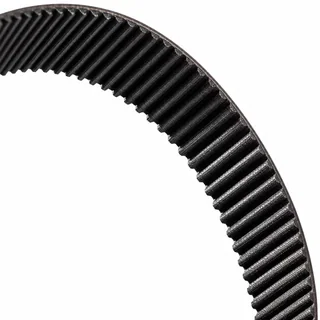
GATES timing belts, also called toothed belts, have teeth that mesh with toothed pulleys to prevent slipping. The code engraved on the belt combines numbers and letters, as in 80-2MGT3, 90-2MGT3 or 74-2MGT3: one part describes the length and another the tooth profile and width. Read it completely, exactly as engraved, because every part matters.
To identify a GATES timing belt without the code, count the number of teeth and measure the length with a flexible tape measure. Also measure the belt width and the pitch between teeth, which is the distance between two consecutive teeth. With that data you can look up the corresponding series in the catalog. If you are not sure, send us the measurements and a photo of the pulley: we will tell you the alternative.
A frequent mistake is confusing the metric profile with the inch profile. A metric-profile belt and an inch one cannot be mixed on the same pulley. If the old belt has an inch profile, do not replace it with a metric one even if the length seems similar. We sell GATES timing belts and help you confirm the exact profile before ordering.
GATES V-belts: profiles and nomenclature
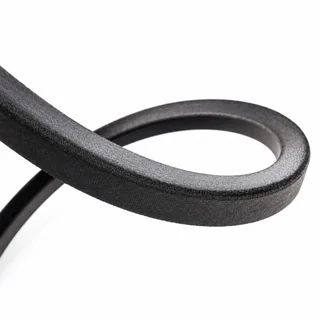
GATES V-belts have a V-shaped section and work by friction in grooved pulleys. The classic code combines a letter indicating the profile (A, B, C, D, etc.) and a number indicating the length. For example, B107 is a profile B belt and C115 or C250 are profile C. There are also narrow-profile belts, with another nomenclature.
If the old belt does not have a legible code, measure the top width of the section and the length with a flexible tape, and send us that data along with a photo. With that we help you confirm the profile and the reference.
A common mistake is ordering a V-belt only by length, without checking the profile. Two belts of the same length but different profile are not interchangeable: the width and angle of the V must match the pulley. If you have doubts, send us a photo of the old belt and the pulley, and we will quote the correct GATES belt.
Key measurements to order a GATES belt
To quote a GATES belt without errors, you need three basic data: the belt type (timing or V-belt), the code or the main measurements, and the quantity. If you have the engraved code, that solves everything. If not, measure the outside length, the width and, for timing belts, the pitch and the number of teeth. With that data we can identify the exact reference.
In timing belts, the length shown in the code is not the same as the one you measure on the outside of the belt. That is why, if you have the old belt, count the teeth and measure the pitch: that is more reliable. We help you convert those measurements into the GATES code.
In V-belts, the length in the code does not exactly match what you measure by hand on the outer edge. If the belt is very worn, the length may vary. In those cases, the best thing is to send us the pulley measurements, the center distance and photos of the assembly.
Where to find the code on the GATES belt
The code of a GATES belt is usually printed on the back (the flat outer part) or on one of the sides. On new belts, the print is clear and durable. On used belts, it may be blurred or have disappeared due to wear. If it cannot be read, try cleaning the surface with a dry cloth and looking with raking light: sometimes traces of ink remain.
On timing belts, the code may be repeated at intervals along the belt. If the belt is cut, the section you have may not include the complete code. In that case, count the teeth and measure the pitch to reconstruct the reference. We work with the GATES catalog and can identify the belt from those measurements.
A common mistake is confusing the belt code with the pulley code or with the equipment manufacturer's part number. The pulley may have its own code engraved, which is not useful for ordering the belt. Always look for the code on the belt itself. If it does not appear, take photos of the belt and the pulley, and send them to us: we will tell you how to proceed.
Common mistakes when identifying GATES belts
One of the most frequent mistakes is ordering a belt only by the hand-measured length, without the code or the profile. A belt that is too long or too short does not work properly. Another mistake is not checking the profile: a B belt does not fit an A pulley, and forcing it damages the pulley and the belt.
In timing belts, confusing the metric pitch with the inch pitch is a serious problem. A metric-pitch belt is not compatible with an inch-pitch pulley, even if the width seems similar. Attention must also be paid to the width: a wider belt may rub against the sides of the pulley or with other components.
Another mistake is assuming that any belt of the same length works, without considering the application. Each GATES belt series has a construction designed for its application. If the application is critical, it is best to respect the original series. We help you choose the correct belt according to the equipment and working conditions.
How to quote your GATES belt with us
To quote a GATES belt, write to us by WhatsApp or email with the belt code if you have it, or with the measurements you took. If you have the old belt, take a photo where the code or the section is visible, and attach it. A photo of the pulley or the equipment where it is mounted also helps. With that information we will send you the quote as soon as possible.
If you are not sure of the code, do not worry: tell us what machine it is, what motor it has and what measurements you were able to take. We sell GATES belts. We help you confirm the exact reference before you place the order, so you do not buy the wrong belt.
We sell GATES timing and V-belts from Buenos Aires, Argentina. If your equipment uses a GATES belt and you need to replace it, send us the code or the measurements and we will quote the correct belt. That way you avoid plant downtime and keep the drive working as it should.
Frequently asked questions
How do I identify the code of a GATES belt if it is erased?
If the code is erased, measure the outside length, the width and, on timing belts, the pitch and the number of teeth. With that data we can identify the exact reference in the GATES catalog. You can also send us a photo of the belt and the pulley.
What does the code of a GATES timing belt like 80-2MGT3 mean?
In a code like 80-2MGT3, one part describes the length and the rest indicates the tooth profile and the width. Each series has its own pitch and dimensions; send us the complete code and we will confirm the reference.
How do I measure a GATES V-belt to order the correct one?
Measure the length with a flexible tape and the top width of the section, and send us that data with a photo of the belt. With the engraved code, for example B107 or C115, identification is direct.
Can I replace a GATES belt with another brand with the same measurements?
It is advisable to respect the original belt series, because each one is designed for its application. Send us the code or the measurements and we will help you identify the correct GATES belt.
What data do I need to quote a GATES belt?
We need the belt code if you have it, or the main measurements: type (timing or V-belt), length, width and, for timing belts, pitch and number of teeth. A photo of the old belt or the pulley also helps.
Products with photos in the catalogue
Keep reading
- How to identify a GATES belt by its code and get a quote
We review the GATES belt lines we supply in Argentina, their typical applications, and the data needed to request an accurate quote.
- GUMMI Couplings: Vibration Absorption and Reliable Power Transmission for Industry
GUMMI elastic couplings absorb vibrations and misalignments, protect machinery, and ensure reliable power transmission. Learn about their configurations and how to choose the right model.
- Tsubaki industrial chains: quality, durability and performance for demanding applications
Discover the types of Tsubaki chains we supply: roller, conveyor, leaf, freewheels, couplings and torque limiters. We help you choose the right one for your application.
Continue here
Need a GATES quote?
Send us the GATES part number, the size or a photo of the part and we will get back to you with a quote.