
Blog
Difference between 2RS and 2Z: which to choose and when to request C3
We explain what 2RS, 2Z, and C3 mean in an SKF deep groove ball bearing, how each option affects performance depending on the environment, and what data you need to quote the correct code.
SKF bearings in Argentina: guide and quotes
Technical team at MR Accesorios Industriales · Updated on October 16, 2026
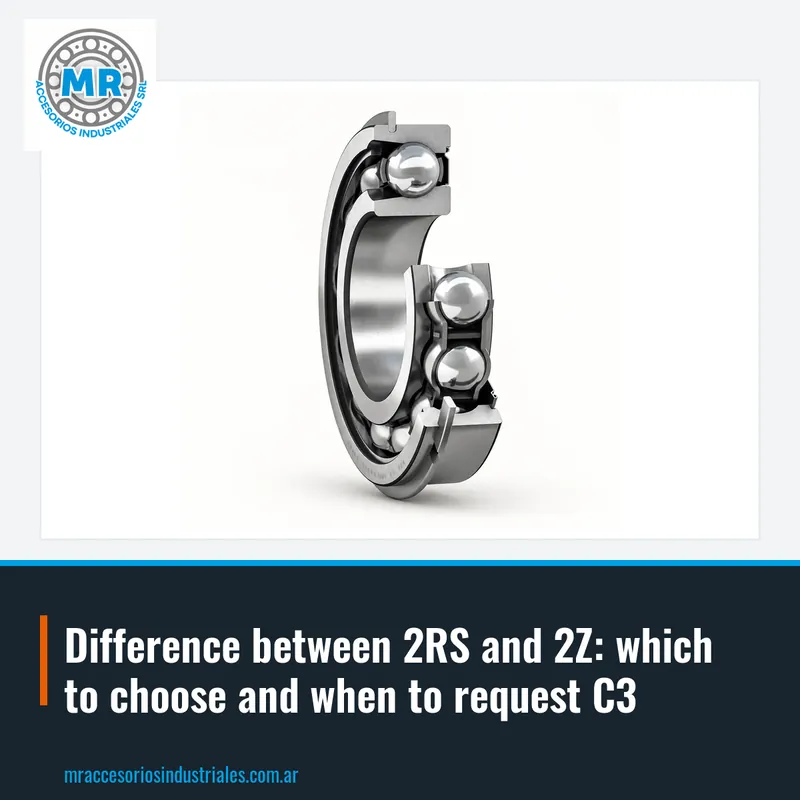
What 2RS and 2Z mean in a bearing
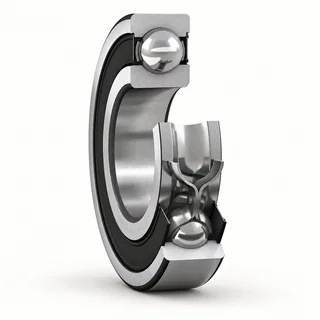
When you see an SKF deep groove ball bearing with the suffix 2RS, it means it has a rubber seal on both sides. That seal lightly rubs against the inner ring and retains grease inside, while blocking dust and moisture from entering. It is the most common option in equipment working in environments with suspended particles or water splashes.
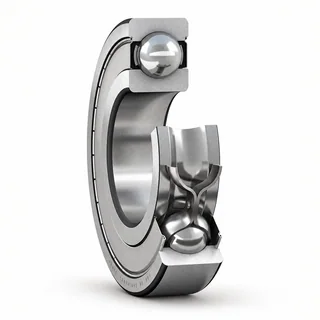
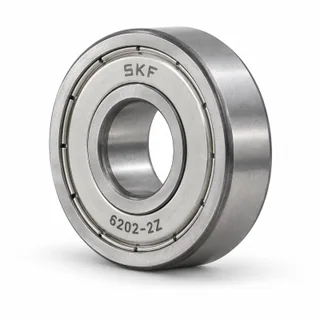
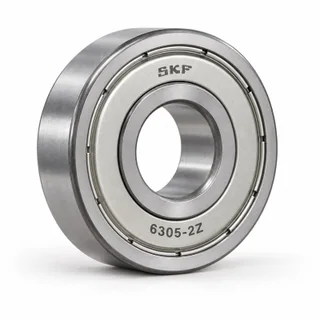
The suffix 2Z, on the other hand, indicates that the bearing has a metal shield on both sides. The shield does not rub against the inner ring: it is fixed to the outer ring and leaves a small gap. This reduces friction and allows higher speeds, but provides less protection against fine contaminants or liquids.
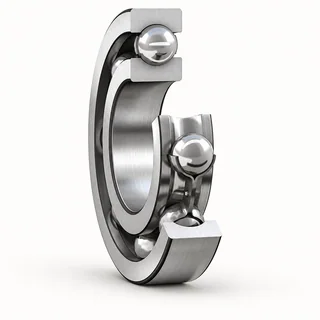
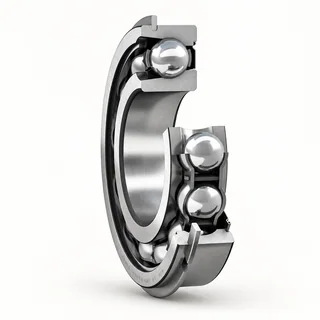
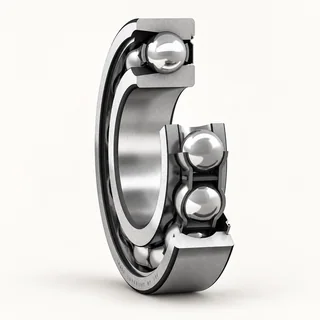
In the example codes it is clear: 6008-2Z has metal shields on both sides, and 6021-2RS1 has rubber contact seals, reinforced with steel sheet, also on both sides. If you have doubts about a specific code, we confirm it for you when quoting.
When a 2RS bearing is recommended
The bearing with 2RS rubber seals is the safest choice for most industrial and agricultural applications. By rubbing against the inner ring, the seal creates an effective barrier against dust, dirt, chips, and moisture. That is why it is widely used in conveyor belts, mixers, pumps, and equipment operating outdoors.
The trade-off is higher internal friction, which slightly limits maximum speed and slightly increases operating temperature. In practice, for standard maintenance equipment, that difference is usually not a problem. What matters is that the grease stays inside and contaminants stay outside, extending the bearing's service life.
If you are replacing a bearing that came with a metal shield and notice it fails due to contamination, switching to 2RS is usually a direct improvement. An example code is 6309-2RS1, a deep groove ball bearing with contact seals on both sides. When ordering, provide the full code and the shaft size.
When a 2Z bearing is recommended
The bearing with 2Z metal shields is chosen when the priority is speed or low friction. Since the shield does not rub against the inner ring, the bearing rotates more freely and can reach higher rpm without heating up as much. It is common in electric motors and applications where the environment is relatively clean.
The protection of the metal shield is good against large particles and occasional splashes, but not against fine dust or constant moisture. If contaminants enter, there is no rubber seal to stop them. Therefore, in environments with dirt, water, or chemicals, it is better to switch to 2RS.
An example is 6026-2Z, a larger deep groove ball bearing with metal shields on both sides. When quoting it, it is helpful to clarify whether the equipment works in a clean or dirty environment, so we can confirm if 2Z is suitable or if you should consider a 2RS.
C3 internal clearance: what it is and when to request it
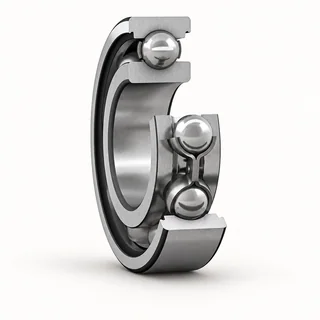
The suffix C3 indicates that the bearing has greater internal clearance than normal. That clearance is the free space between the balls and the rings, and is measured in microns. A bearing with C3 can absorb thermal expansion and tighter fits without seizing.
C3 is recommended when the bearing operates at high temperatures, with forced fits on the shaft or housing, or when there are temperature differences between the inner and outer rings. It is also common in electric motors and applications where the bearing heats up during operation.
If your original bearing does not indicate C3, you can continue with normal clearance. If the bearing overheats, consult us before changing the clearance: the cause may be something else. An example code is 6005/C3. When quoting, indicate if the equipment runs hot or with tight fits.
How to identify the bearing you have
To order the correct replacement, the first step is to read the code engraved on the side ring of the bearing. In SKF bearings, that code includes the series, size, and suffixes. For example, 6203/C3 indicates a deep groove ball bearing of size 6203 with C3 internal clearance.
If the code is blurred or unreadable, measure the inner diameter, outer diameter, and width with a caliper. With those three measurements we can identify the equivalent bearing. A photo of the part also helps, especially if it has visible seals or shields.
A common mistake is ordering only by size and forgetting the suffix. A standard 6203 and a 6203/C3 are not interchangeable in all applications. Therefore, it is always best to send the full code or a clear photo. We quote the exact bearing you need.
Common mistakes when choosing seal or clearance
One of the most frequent mistakes is using a 2Z bearing in an environment with dust or moisture. The metal shield does not seal hermetically, and contaminants end up entering. The result is a bearing that fails prematurely, even if the size code is correct.
Another mistake is requesting C3 unnecessarily. Greater internal clearance in a bearing that does not require it can generate vibrations and noise, especially at low speeds. C3 is not "better" in all cases: it is a specification for particular temperature and fit conditions.
It also happens that a bearing with a rubber seal is replaced with one with a metal shield just because it was the one on hand. That can shorten the bearing's life. If you have doubts, send us the code and the application, and we will indicate the correct option.
How to order your SKF bearing from MR
To get a quote, write to us via WhatsApp or email with the full bearing code, for example 6021-2RS1 or 6008-2Z. If you do not have the code, send the measurements and a photo of the part. With that, we will provide the quote shortly.
We are from Buenos Aires, Argentina, and we sell genuine SKF bearings. We work with the deep groove ball bearing line, among others, and we help you choose between 2RS, 2Z, and C3 according to your application. You do not need to be an expert: tell us what equipment it goes in and what problem you had.
Avoid asking only for "a 6203 bearing" without specifying the suffix. The difference between 2RS, 2Z, and C3 changes performance. Send us all the data you have and we will quote the exact code. That way you ensure the replacement lasts as it should.
Frequently asked questions
Which is better, 2RS or 2Z?
It depends on the environment. 2RS (rubber seal) protects better against dust and moisture, ideal for dirty or outdoor equipment. 2Z (metal shield) has less friction and allows higher speed, but protects less. For most industrial applications, 2RS is the safest option.
Can I replace a 2Z bearing with a 2RS one?
Yes, in general it is an improvement if the environment has contamination. 2RS seals better and keeps grease inside. Just keep in mind that maximum speed may be slightly lower due to seal friction. If the equipment rotates very fast, consult us before changing.
When do I need a bearing with C3 clearance?
When the bearing operates at high temperatures, with forced fits on the shaft or housing, or with temperature differences between rings. It is also common in electric motors. If your original bearing does not say C3 and there are no temperature issues, you can use normal clearance.
How do I know if my bearing is 2RS or 2Z?
Look at the code engraved on the side ring. If it ends in 2RS (or 2RS1, 2RSH, etc.) it has rubber seals. If it ends in 2Z, it has metal shields. You can also see it physically: the seal is rubber and rubs against the inner ring; the metal shield is sheet metal and leaves a small gap.
What data do I need to quote an SKF bearing?
The full code (for example, 6309-2RS1), or the inner, outer, and width measurements, and a photo of the part. It also helps to know what equipment it goes in and whether the environment is dirty or hot. With that, we will provide the quote shortly.
Products with photos in the catalogue
Keep reading
- SKF Chains: Reliable Power Transmission for Industrial Applications
SKF roller chains offer strength and precision for power transmission in industrial machinery. Learn about the PHC series, ASA and BS standards, and how to identify the correct chain for your equipment.
- SKF tools for industrial maintenance: pullers, heaters, aligners and calibrated shims
SKF tools simplify bearing mounting and dismounting, shaft alignment and instrument calibration. Discover TMMA and TMHP pullers, induction heaters, TKSA aligners and calibrated shims.
- How to Choose SKF Bearings by Application: Load, Speed, Environment, and Mounting
Choosing the right SKF bearing requires analyzing load, speed, environment, and mounting. We explain the main types and how to get a quote with the exact code.
Continue here
Need a quote?
Send us the code, size or a photo of the part and we'll quote you shortly.