
Blog
DBH seals in agriculture: components for combine harvesters, seeders, bucket elevators and storage plants
DBH radial seals are key in agricultural equipment. We explain how to identify them, what data to provide for a quote and the most common mistakes when ordering them.
Technical team at MR Accesorios Industriales · Updated on November 7, 2026
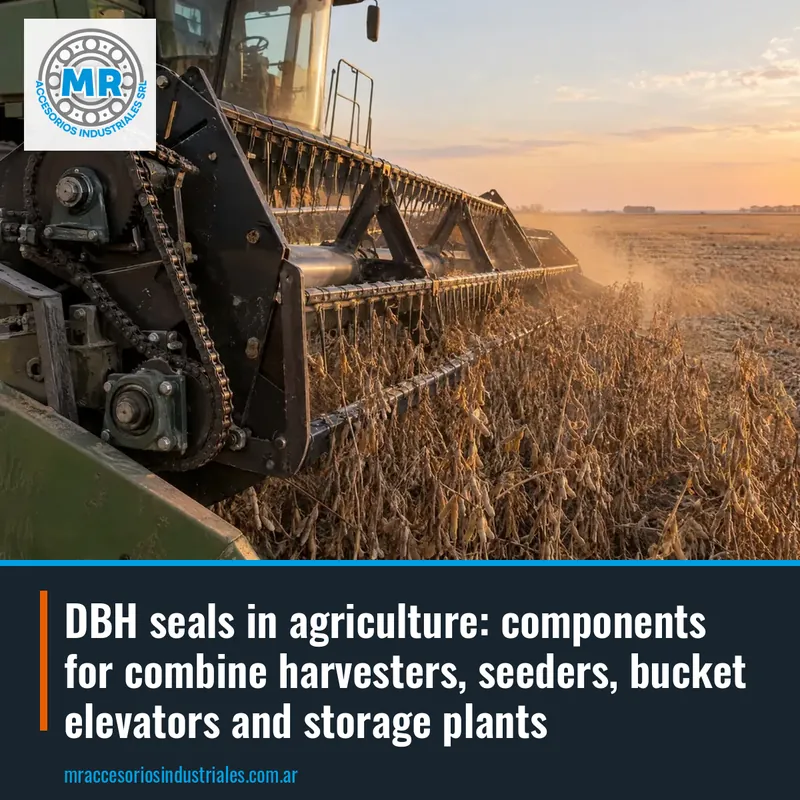
What DBH radial seals are and what they are used for in agriculture
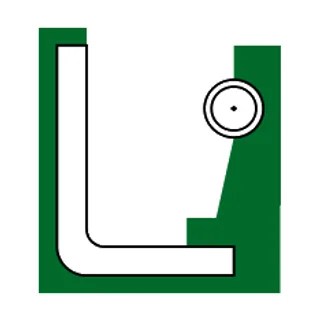
DBH radial seals are seals that prevent lubricant leaks and the ingress of contaminants in rotating shafts. They are mounted in fixed housings and their flexible lip bears against the shaft, keeping oil or grease inside. In agriculture, this function is critical because machines work in environments with dirt, dust, crop residue and moisture. A seal in good condition extends the life of bearings and gears.
In combine harvesters, DBH seals are found in transmission boxes, augers, rotors and traction systems. In seeders, they protect the metering shafts and the contact wheels. Bucket elevators and grain elevators use them in their pulleys and bearing housings. Storage plants need them in conveyors, dryers and extractors, where an oil leak can contaminate the grain.
We supply DBH radial seals in different sizes and materials. When ordering them, it is advisable to have clear the shaft diameter, the housing outer diameter and the width. With that data we quote the right seal for your equipment.
DBH seals in combine harvesters: critical points and how to identify them
Combine harvesters concentrate many sealing points: control box, unloading auger, threshing rotor, fan and hydraulic system. Each one has seals of different sizes, and a mistake when replacing them can leave the machine stopped in the middle of harvest. Therefore, when removing a seal, it is advisable to note the measurements engraved on the body or measure the shaft and housing with a caliper.
If the seal still has the marked code, such as 5999, 8888 or 8969, that data allows exact replacement. If the seal is damaged and cannot be read, it can be measured: inner diameter (shaft), outer diameter (housing) and width. With those three measurements, we quote the corresponding DBH seal.
A common mistake is ordering only by shaft size and forgetting the outer diameter or width. Another is not checking the condition of the shaft: if it has scratches or wear, the new seal will not seal properly. Before mounting, clean the housing and lubricate the lip with the same oil or grease as the system. This way you avoid premature leaks and unplanned stops.
DBH seals in seeders: protection in metering and wheels
In seeders, DBH seals are used on the seed and fertilizer metering shafts, on depth-limiting wheels and on seeding units. These components rotate at low revolutions but are exposed to fine dust and agrochemical residues. A seal that loses grease allows dirt to enter, which accelerates wear of bushings and bearings.
To identify the correct seal, you can look for the code on the original seal or in the seeder parts manual. If that information is not available, measure the shaft and housing. Codes such as 5999, 8888 or 8969 are examples of DBH radial seals. You can also send a photo of the seal with a ruler next to it so we can help you identify it.
When replacing seals in seeders, check that the lip is oriented correctly: toward the lubricant side. An inverted installation causes immediate leaks. It is also advisable to check the condition of neighboring seals, because if one failed due to contamination, others are likely compromised. Replacing them together reduces stops during seeding.
DBH seals in bucket elevators and grain elevators
Bucket elevators and grain elevators have shafts at the head and at the foot, mounted on bearing housings with bearings. Seals protect those bearings from grain dust, which is highly abrasive. They are also used in the gearmotors that drive the bucket elevator. A defective seal allows dust to enter the bearing and destroy it in a short time.
In these equipment, DBH seals usually work with grease, so the lip must retain it and at the same time prevent the ingress of particles. When ordering them, it is advisable to indicate whether the equipment works outdoors or under cover, because that influences the seal material. Codes such as 5999, 8888 or 8969 are examples of DBH radial seals.
A frequent mistake is not cleaning the housing well before mounting the new seal, leaving remains of the old seal or dirt. That can misalign the seal and cause leaks. You also have to strike evenly, using a tube of the seal diameter, never directly on the lip. If the shaft is marked, it can be repaired with a wear sleeve or the part can be replaced.
DBH seals in storage plants: conveyors and dryers
In storage plants, seals are used in belt conveyors, augers, screws, fans and dryers. These equipment operate many hours per day during harvest, and an oil leak can contaminate the grain or cause a fire. Therefore, preventive seal maintenance is key in post-harvest.
DBH seals are identified by the code, such as 5999, 8888 or 8969, or by the measurements. In storage plants, it is advisable to identify in advance the seals of critical equipment. We quote the DBH seals you need, with the code or the size.
When mounting seals in conveyors, check the alignment of the shaft and housing. Misalignment causes uneven lip wear and leaks. It is also important to use the seal with the appropriate lip material: for high temperatures in dryers, viton or silicone lips are recommended. Ask us about the right option for your application.
How to measure a DBH seal and what data to provide for a quote
To quote a DBH seal, the ideal is to have the exact code, for example 5999, 8888 or 8969. If it cannot be read, measure three things: inner diameter (the shaft where the lip bears), outer diameter (the housing where it is mounted) and width. These measurements are taken in millimeters with a caliper. With those three numbers, we quote the correct DBH seal.
It also helps to send a photo of the old seal, from both sides, and if possible a photo of the place where it is mounted. That helps us confirm the type of seal and the material. If the seal has engraved marks, even if blurry, it is advisable to pass them all on. Sometimes the code includes letters that indicate the type of lip or material.
A common mistake is measuring only the outer diameter and assuming the inner one. Another is confusing the total width with the lip width. You also have to consider whether the seal has an additional dust lip or spring. All those details influence the selection. Send all the information you have and we will respond promptly.
Frequent mistakes when ordering or mounting DBH seals in agriculture
The most common mistake is ordering the seal only by shaft size, without verifying the outer diameter and width. That leads to receiving a seal that does not fit into the housing or does not seal. Another mistake is not checking the condition of the shaft: if it has wear or scratches, the new seal will fail soon. The contact surface must always be inspected.
When mounting, many strike the seal directly with a hammer, deforming the casing or damaging the lip. A tube or driver of the outer diameter should be used and struck evenly. The lip must also be lubricated before mounting and the mounting direction respected. A seal mounted backwards loses oil immediately.
In agricultural equipment, contamination is the main cause of seal failure. Therefore, when replacing a seal, it is advisable to clean the housing well and check that there are no remains of the old seal. If the equipment works in extreme conditions, seals with an additional lip or special materials can be chosen. We advise you to choose the best option.
Frequently asked questions
How do I identify a DBH seal for a combine harvester?
Look for the code marked on the seal, such as 5999, 8888 or 8969. If it cannot be read, measure with a caliper the inner diameter (shaft), the outer diameter (housing) and the width. With that data we quote the correct DBH seal.
What measurements do I need to order a DBH seal?
You need three measurements in millimeters: inner diameter, outer diameter and width. A photo of the old seal and of the place where it is mounted also helps. With that we indicate the right option.
Are DBH seals suitable for grain bucket elevators?
Yes, DBH radial seals are used on bucket elevator shafts, pulleys and gearmotors. They protect bearings from grain dust and prevent grease leaks. We supply DBH seals for these applications.
Can I order a DBH seal only with the shaft size?
No, the shaft diameter alone is not enough. You also need the outer diameter and width, or the exact seal code. If you have the old seal, send us a photo with a ruler next to it and we will help you identify it.
How do I prevent a DBH seal from failing quickly in agriculture?
Check that the shaft has no wear or scratches, clean the housing well, lubricate the lip before mounting and respect the mounting direction. If the equipment works with a lot of dust, consider seals with an additional lip or special material.
Products with photos in the catalogue
Keep reading
- DBH seals in Argentina: complete product guide and how to quote them
Discover the DBH radial seal line we distribute in Argentina, their typical applications and how to request a quote with the exact code.
- DBH Codes: Guide to Reading Radial Seal Designations
Understanding DBH seal nomenclature helps you order the correct part. We explain the code structure, what prefixes and suffixes indicate, and how to use real examples for your inquiry.
- DBH Oil Seals: Applications, Selection, Installation and Maintenance for Long Life
DBH radial oil seals are critical components in industrial equipment. In this guide, we cover where they are used, how to choose the right model, and what installation and maintenance care extends their service life.
Continue here
Need a DBH quote?
Send us the DBH part number, the size or a photo of the part and we will get back to you with a quote.