
Blog
Common McGill Bearing Failures: How to Recognize Them in Time and Prevent Them with Proper Mounting and Maintenance
Learn about the most common failures in McGill bearings, how to identify them before they cause downtime, and what mounting and maintenance practices help prevent them.
Technical team at MR Accesorios Industriales · Updated on October 18, 2026
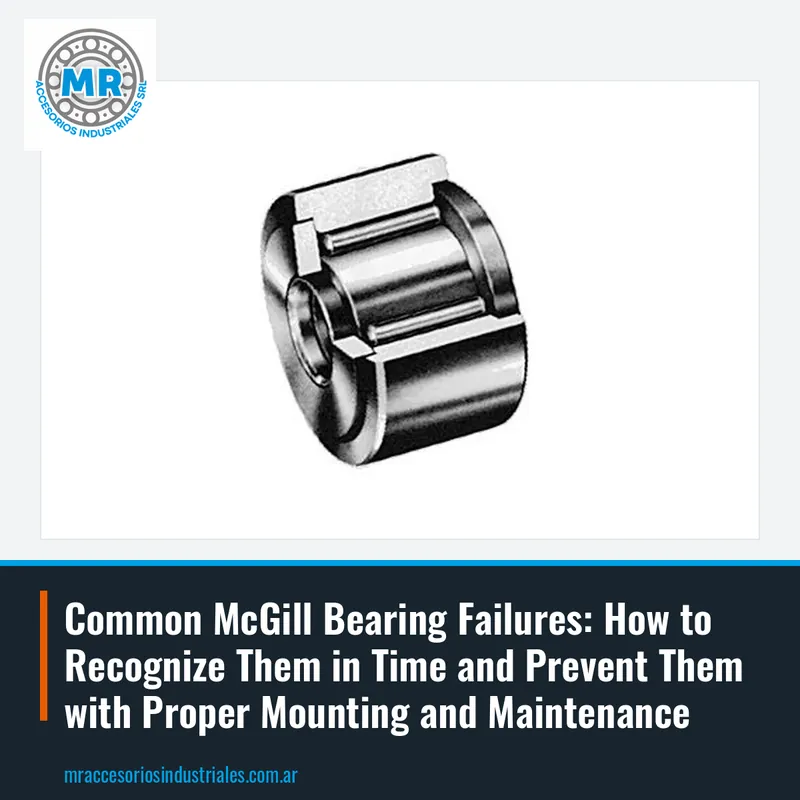
How to Recognize a McGill Bearing Failure
Failures in McGill bearings often announce themselves with noise, vibration, or increased temperature. A cam follower like the CF 1 may start knocking if internal clearance increases due to wear. In needle bearings like the GR 88, a high-pitched hum indicates lack of lubrication or contamination. Paying attention to these symptoms allows intervention before the failure stops the machine.
Premature wear almost always leaves visible marks on the raceways or rolling elements. In a special bearing like the D-220, you may notice spalling or pitting on the contact surface. A spherical roller like the SB-22220 may show scratches on the outer ring if it operated under misaligned load. Inspecting the part during scheduled shutdowns helps detect these signs.
Contamination is another typical cause of failure. The ingress of dust, chips, or moisture accelerates the deterioration of any McGill bearing. A CF 2 cam follower operating in a dirty environment without adequate protection will fail sooner than expected. Therefore, it is advisable to check seals and lubricant condition at each inspection.
Correct Mounting to Prevent Cam Follower Failures
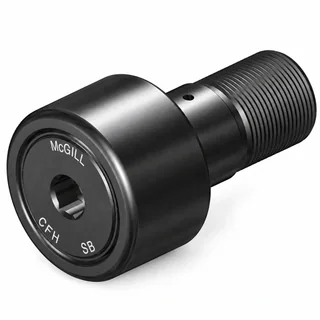
McGill cam followers, such as the CF 1, require careful mounting to avoid abnormal loads. A common mistake is over-tightening the mounting bolt, which generates excessive preload and overheating. Also ensure the roller sits evenly on the cam or guide. If it is tilted, the load concentrates on one edge and marks the raceway.
Alignment is key in applications with cams or linear guides. A misaligned CF 2 roller works with bending stresses that reduce its service life. Before fixing the roller, verify that the contact surface is flat and free of burrs. A small deviation can generate vibration and noise from startup.
Bolt adjustment must respect the manufacturer's recommended torque. For the CF 3, excessive torque deforms the outer ring and causes intermittent binding. If the roller turns with difficulty after mounting, review the installation before starting the machine. A neat mounting prevents most premature failures.
Lubrication and Maintenance of Needle Bearings
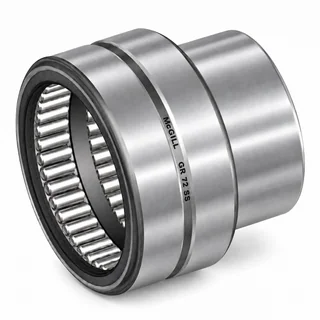
McGill needle bearings, such as the GR 88, depend on adequate lubrication to withstand high radial loads. Lack of grease or oil causes metal-to-metal contact and rapid wear of the needles. In high-speed applications, insufficient lubrication raises temperature and degrades the material. Therefore, the maintenance plan must include periodic re-greasing.
The type of lubricant also matters. A bearing working near a heat source needs a grease suitable for that temperature, and one in a humid environment requires corrosion protection. Using the wrong lubricant can be as harmful as not lubricating. Always consult the bearing's technical data sheet.
Lubricant contamination is a frequent cause of failure in needle bearings. Abrasive dust mixes with the grease and acts like sandpaper on the raceways. To prevent this, keep seals clean and replace the lubricant according to the schedule. A well-lubricated and clean bearing performs much better.
Special Bearings: Identification and Care
McGill special bearings, such as the D-220, often have particular designs for specific applications. Identifying them correctly is essential to order the exact replacement. The code engraved on the ring is the most reliable reference. If it is not legible, you can measure inner diameter, outer diameter, and width.
These bearings often work under demanding conditions, such as combined loads or extreme temperatures. Knowing the application helps choose the right bearing, whether a D-220, a D-320, or a D-222.
Mounting a special bearing requires more attention than a standard one. Respect the specified fits and avoid direct blows on the rings. Poor mounting can damage the rolling elements and cause immediate failure. If in doubt, consult the supplier before installing.
Spherical Rollers: Failures from Misalignment and Load
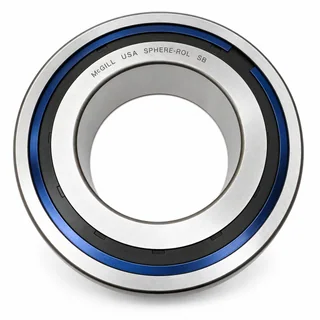
McGill spherical rollers, such as the SB-22220, are designed to compensate for misalignment. However, excessive misalignment generates uneven loads and premature wear. The outer ring may scratch if the roller operates crooked. Therefore, check the alignment of the housings during mounting.
Load also influences the life of a spherical roller. An overloaded spherical roller suffers spalling on the raceways, and under insufficient load it may skid and damage the rollers. Respecting the manufacturer's load capacity is essential to prevent failures.
Maintenance of these rollers includes checking internal clearance and lubricant condition. Excessive clearance produces vibration and noise. Degraded lubricant does not protect against wear. Regular inspections can detect problems before they worsen.
Common Mistakes When Ordering or Replacing a McGill Bearing
A frequent mistake is ordering a McGill bearing by approximate dimensions without verifying the code. Two bearings with the same diameter may have different internal designs. Two parts that look similar may not be interchangeable. Always confirm the exact code engraved on the part.
Another mistake is not considering operating conditions when choosing the replacement. A standard bearing may fail quickly if used in a corrosive environment or at high temperature. In such cases, it is advisable to opt for a special bearing like the D-220 or consult the supplier. The correct choice prevents unexpected downtime.
It is also common to reuse damaged bearings without knowing their condition. A SB-22220 spherical roller with pitting should not be reinstalled. Even if it seems to turn well, the failure will progress. Replacing in time prevents a major breakdown.
How to Quote Your McGill Bearing at MR
To quote a McGill bearing, the most practical way is to send us the exact code. For example, if you need a cam follower, you can write CF 1 or CF 2. If the code is not legible, send us a photo of the part and the main dimensions. With that, we will indicate the correct reference.
You can also inquire about a needle bearing like the GR 88 or a spherical roller like the SB-22220. We market and distribute McGill bearings, including special bearings.
Write to us via WhatsApp or email with the code, measurement, or a photo of the part. We will quote you promptly and advise you on the best option for your application. At MR, we help keep your equipment running without surprises.
Frequently asked questions
How do I know if a McGill bearing is failing?
The most common symptoms are noise, vibration, increased temperature, or excessive clearance. If you notice any of these signs, it is advisable to inspect the bearing and replace it if it shows wear or damage.
What causes premature failure in a McGill cam follower?
The most frequent causes are incorrect mounting, misalignment, inadequate lubrication, and contamination. Respecting the tightening torque and keeping the roller clean and lubricated helps extend its service life.
Can I reuse a McGill bearing that looks good but has many hours of use?
It is not recommended. Even if it shows no visible damage, internal wear can cause sudden failure. It is preferable to replace it according to the preventive maintenance schedule.
What data do I need to quote a McGill bearing?
Ideally, the exact code engraved on the part, for example CF 1 or GR 88. If it is not legible, you can send a photo and the main dimensions. With that, we will indicate the correct reference.
Does MR market McGill bearings in Argentina?
Yes, at MR we market and distribute McGill bearings in Buenos Aires, Argentina. You can inquire about any code or application and we will quote you promptly.
Products with photos in the catalogue
Keep reading
- McGill product guide in Argentina: what lines are available and what they are used for
Discover the McGill product lines we distribute in Argentina: cam followers and yoke rollers, needle bearings, special bearings, and spherical roller bearings. We explain their applications and how to get a quote by code.
- How to Read McGill Codes: Prefixes, Suffixes, and Real Examples
A practical guide to understanding the structure of McGill designations for cam followers, needle bearings, and spherical rollers. With real code examples.
- McGill by industry: where it's used, how to select it, assembly and maintenance for lasting performance
McGill bearings stand out in applications with combined loads, oscillating movements, or limited space. We tell you which industries use them, how to choose the right model, and what care extends their service life.
Continue here
Need a quote?
Send us the code, size or a photo of the part and we'll quote you shortly.